
Anne Higonnet
Author of Berthe Morisot
About the Author
Works by Anne Higonnet
Associated Works
A History of Women in the West, Volume IV: Emerging Feminism from Revolution to World War (1993) — Contributor — 247 copies, 2 reviews
A History of Women in the West, Volume V: Toward a Cultural Identity in the Twentieth Century (1992) — Contributor — 231 copies, 2 reviews
Tagged
Common Knowledge
- Canonical name
- Higonnet, Anne
- Birthdate
- 1959
- Gender
- female
- Education
- Harvard University (BA|1980)
Yale University (Ph.D|1988) - Occupations
- art historian
professor
curator - Organizations
- Barnard College
Wellesley College - Nationality
- France
- Associated Place (for map)
- France
Members
Reviews
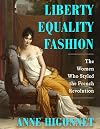
Move over, fraternité: sisterhood rules in this group biography of Juliette Récamier, Térézia Tallien and Marie Josèphe Rose Tascher de La Pagerie, better known as Joséphine Bonaparte. Today the three friends would be called fashion influencers, or perhaps fashion disruptors. Like Marie-Antoinette, the Austrian-born queen of France, all three were outsiders in their own ways: Joséphine came to Paris from the French colony of Martinique, Térézia from Spain and Juliette from Lyon. All show more three underwent makeovers at their families’ insistence, adopting the latest Paris fashions in hopes of snagging aristocratic husbands. But each woman eventually became the architect of her own fate (and wardrobe) after the French Revolution left both the fashion industry and the aristocracy in tatters.
Fashion is an alluring and effective historical lens for examining women’s lives, as demonstrated recently by Caroline Weber (Marie-Antoinette), Kate Strasdin (Anne Sykes) and Hilary Davidson (Jane Austen). Fashion has served as a form of communication, creativity and protest at times when more conventional avenues of expression were closed to women. ‘If it had not been perceived as an expression of women’s freedom, it would not have been so virulently opposed’, Higonnet writes. These particular women certainly used fashion as a persuasive method of what we would today call ‘personal branding’ – even if it was motivated by self-preservation more than political conviction – and just as surely suffered opposition.
But while Liberty, Equality, Fashion captures the big picture of its heroines’ unconventional lives and dress in the decade 1794-1804, it stumbles over the details. Higonnet, a professor of art history, credits Joséphine, Juliette and Térézia with inventing fashions they merely popularised. In order to highlight the originality of ‘revolutionary dress’, she dismisses all pre-revolutionary fashion as ugly, uncomfortable, elitist and sexist. In fact, the roots of this sartorial insurgency were evident almost a decade before the Revolution, which accelerated changes already in motion. Early adopters of minimalist fashions à la grecque (such as Elisabeth Vigée-Lebrun, Antoinette Saint-Huberty and Emma Hamilton) and ancien régime clothes designed to accommodate pregnancy, outdoor activities or middle-class budgets are ignored. The innovative artisans who actually made the garments these women ‘styled’ are given scant notice.
Read the rest of the review at HistoryToday.com.
Kimberly Chrisman-Campbell is a fashion historian based in Los Angeles. Her latest book is Skirts: Fashioning Modern Femininity in the 20th Century (St. Martin’s Press, 2022). show less
Fashion is an alluring and effective historical lens for examining women’s lives, as demonstrated recently by Caroline Weber (Marie-Antoinette), Kate Strasdin (Anne Sykes) and Hilary Davidson (Jane Austen). Fashion has served as a form of communication, creativity and protest at times when more conventional avenues of expression were closed to women. ‘If it had not been perceived as an expression of women’s freedom, it would not have been so virulently opposed’, Higonnet writes. These particular women certainly used fashion as a persuasive method of what we would today call ‘personal branding’ – even if it was motivated by self-preservation more than political conviction – and just as surely suffered opposition.
But while Liberty, Equality, Fashion captures the big picture of its heroines’ unconventional lives and dress in the decade 1794-1804, it stumbles over the details. Higonnet, a professor of art history, credits Joséphine, Juliette and Térézia with inventing fashions they merely popularised. In order to highlight the originality of ‘revolutionary dress’, she dismisses all pre-revolutionary fashion as ugly, uncomfortable, elitist and sexist. In fact, the roots of this sartorial insurgency were evident almost a decade before the Revolution, which accelerated changes already in motion. Early adopters of minimalist fashions à la grecque (such as Elisabeth Vigée-Lebrun, Antoinette Saint-Huberty and Emma Hamilton) and ancien régime clothes designed to accommodate pregnancy, outdoor activities or middle-class budgets are ignored. The innovative artisans who actually made the garments these women ‘styled’ are given scant notice.
Read the rest of the review at HistoryToday.com.
Kimberly Chrisman-Campbell is a fashion historian based in Los Angeles. Her latest book is Skirts: Fashioning Modern Femininity in the 20th Century (St. Martin’s Press, 2022). show less

Anne Higonnet's biography of the artist Berthe Morisot is everything a biography should be. It traces the story of the artist's life, balancing the sort of details the reader would want to know about Morisot with the wider world of nineteenth century Paris - and the Impressionist movement that Morisot was instrumental in helping to launch.
For a century Morisot's legacy lay in tatters. Demoted to an also-ran in the art world, on account solely of her gender, there was a danger that her show more magnificent work would eventually be forgotten entirely. Luckily her more recent biographers have seen fit to return her to the place she once held, right at the centre of the movement that truly revolutionised the world of art. show less
For a century Morisot's legacy lay in tatters. Demoted to an also-ran in the art world, on account solely of her gender, there was a danger that her show more magnificent work would eventually be forgotten entirely. Luckily her more recent biographers have seen fit to return her to the place she once held, right at the centre of the movement that truly revolutionised the world of art. show less
Lists
Awards

You May Also Like


Associated Authors
Statistics
- Works
- 10
- Also by
- 3
- Members
- 254
- Popularity
- #90,186
- Rating
- 3.9
- Reviews
- 2
- ISBNs
- 22
- Languages
- 2