
Sports Illustrated
Author of The Baseball Book (Sports Illustrated)
About the Author
Image credit: By LogoSubcheck - Own work, Public Domain, https://commons.wikimedia.org/w/index.php?curid=28310135
Series
Works by Sports Illustrated
Baseball: Four Decades of Sports Illustrated's Finest Writing on America's Favorite Pastime (Sports Illustrated) (1993) 81 copies, 1 review
The Amazing World of Sports: The Ultimate Sports Photography Book (Sports Illustrated Kids) (1996) 45 copies
In the Paint: The Complete Body-Painting Collection from the SI Swimsuit Issue (2007) 45 copies, 1 review
Sports Illustrated Golf (Four Decades of Sports Illustrated's Finest Writing on the Game of Golf) (1996) 25 copies
Photo Finishes: The Best Photos from the Fast-Paced World of NASCAR (Sports Illustrated Kids) (2008) 15 copies
Hockey Talk: From Hat Tricks to Headshots and Everything In-Between (Sports Illustrated) (2011) 12 copies
Sports Illustrated | February 17, 2006 | Swimsuit Issue (All-Star SI Cover Model Beach Party) (2006) — Author — 10 copies
Sports Illustrated The New York Mets: Celebrating Six Decades of Amazin' Baseball (2023) 6 copies, 1 review
Sports Illustrated The World Series: A History of the Fall Classic from the Pages of Sports Illustrated (2023) 5 copies
Sports Illustrated | February 15, 2007 | Swimsuit Issue (Beyoncé Knowles) (2007) — Author — 5 copies
Pro Football: Four Decades of Sports Illustrated's Finest Writing on America's Most Popular Sport (Collector's Library) (1993) 5 copies
Book of the outdoors 4 copies
Sports Illustrated The Baseball Vault: Great Writing from the Pages of Sports Illustrated (2024) 4 copies
The Giants: A Season to Believe - Commemorative Issue Deluxe Edition (Sports Illustrated) (2008) 4 copies
Sports Illustrated Presents St. Louis Cardinals World Champions 2006 (World Series Commemorative Edition) (2006) 3 copies
Sports Illustrated The Stanley Cup: A History of Hockey's Greatest Prize from the Pages of Sports Illustrated (2024) 3 copies
Sports Illustrated | February 13, 2008 | Swimsuit Issue (Barely Bikinis/Marisa Miller) (2008) 3 copies
Sports Illustrated The Football Vault: Great Writing from the Pages of Sports Illustrated (2023) 3 copies
Sports Illustrated | December 15, 2023 | Sportsperson of the Year: Deion Sanders (2023) — Author — 3 copies
Sports Illustrated Presents A Special Collector's Edition Boston Red Sox World Champions 2007 (2007) 3 copies, 1 review
Sports Illustrated Chicago Cubs 2016 World Series Champions Commemorative Issue - Team Celebration Cover: Cubs Win! (2016) 3 copies
Sports Illustrated Magazine - Cal Ripken Jr. - A Tribute To The Iron Man - Special Commemorative Issue - October 03, 2001 (2001) 2 copies
Sports Illustrated (SPECIAL COLLECTOR'S EDITION, RETURN TO GLORY: KENTUCKY WILDCATS 1996 NCAA CHAMPIONS) (1996) 2 copies
Sports Illustrated Presents: San Antonio Spurs NBA Champions 2003, A Special Collector's Edition (2003) 2 copies
SPORTS ILLUSTRATED PRESENT - ISSUE 51 / SPECIAL TRIBUTE ISSUE 1978-2020 - KOBE BRYANT (2020) 2 copies
Sports Illustrated Presents Crowning Glory, 1997-98 Chicago Bulls NBA Champions, No. 28536, A Special Collector's Edition (1998) 2 copies
Totally Michael 2 copies
Sports Illustrated San Antonio Spurs NBA Champions 2004-05 A Special Collector's Edition (2005) 2 copies
Book Of Horseback Riding 2 copies
Sports Illustrated | Winter 2004 | 40th Anniversary Swimsuit Issue (Hall of Fame/Veronica Varekova) (2004) 2 copies
Super Bowl XLIII Champions Commemorative Issue Sports Illustrated Presents Pittsburgh Steelers (2009) 2 copies, 1 review
Sports Illustrated | January 28, 1980 | This One Was Really Super / Pittsburgh Steelers John Stallworth (1980) 2 copies
Sports Illustrated Book of Golf 2 copies
Sports Illustrated Magazine Special Commemorative Issue Super Bowl LIII Champs New England Patriots The Joy of 6 (2019) 1 copy
Sports Illustrated | February 13, 2012 | Super Bowl XLVI Champtions: They Must Be Giants (2012) 1 copy
North Carolina Tarheels 1 copy
Sports Illustrated | April 30, 1984 | The Toughest Coach That Ever Was: An American Tragedy (1984) 1 copy
Sports Illustrated Presents Three-peat! Los Angeles Lakers World Champions 2002 (Special Collector's Edition) (2002) 1 copy
Sports Illustrated Presents: A Special Collector's Edition San Antonio Spurs NBA Champions 2006-2007 1 copy
Sports Illustrated Presents Winston Cup 2001 (Special Commemorative Issue Dale Earnhardt) (2002) 1 copy
Flyer Without Wings (#130) 1 copy
1993: The Year in Sports 1 copy
Sports Illustrated Presents The Giants: A Season to Belive - Commemorative Issue Deluxe Edition (2008) 1 copy
Sports Illustrated | June 13, 1994 | Mark Messier and the Rangers Chase That Elusive Stanley Cup (1994) 1 copy
Sports Illustrated | May 19, 1980 | The Shame of American Education/The Student-Athlete Hoax (1980) 1 copy
Wonderful World of Sport 1 copy
The Meaning of Yogi 1 copy
Sports Illustrated | August 22, 2016 | Olympics: Katie Ledecky, Michael Phelps, Simone Biles (2016) 1 copy
Sports Illustrated Magazine July 18 1994 Rare Birds Baltimore Pitchers Mike Mussina and Ben McDonald (1994) 1 copy
Totally Michael 1 copy
Basketball Legends 1 copy
Sports Illustrated Presents: Steelers World Champions Super Bowl XL Special Collector's Edition (2006) 1 copy
Sports Illustrated Magazine March 25 - April 1, 2019 ALL THE PHILLIES, RHYS HOSKINS, BRYCE HARPER, AARON NOLA, J.T. REALMUTO (2019) 1 copy
The Centennial Olympic Games 1 copy
Best of Sports Illustrated 1 copy
The Year in Sports,1994 VHS 1 copy
Sports Illustrated Magazine, August 21, 1978 (Vol 49, No. 8) : Bill Walton's Shocking Decision 1 copy
Le Siecle Du Canadien 1 copy
Sports Illustrated Kids Magazine: Winter Olympic Preview [January/February 2014] (2014) 1 copy, 1 review
Sports Illustrated Presents the Best!: 1998 New York Yankees World Champions, A Special Collector's Edition (1998) 1 copy
Sports Illustrated: Seattle Seahawks: Super Bowl XLVIII Champions [Special Commemorative Issue] (2014) 1 copy
The Spectacle of Sport 1 copy
Sports Illustrated Kids Magazine: Team Xtreme's Big Three Baseball Preview Carl Crawford [April 2011] (2011) 1 copy
Champs! 1 copy
Steelers, world champions 1 copy
Sports Illustrated Football 1 copy
Great Rivalries in Sports 1 copy
Sports Illustrated, December 27, 1999, "50 Greatest Sports Figures from Indiana and Other States" 1 copy
Rare Back Issue, Sports Illustrated Dallas Cowboys 50 Years Of Football by Peter King (2010 Single Issue Magazine) (2010) 1 copy
Favre on Fire 1 copy
Sports Illustrated Philadelphia Eagles Super Bowl Champions Commemorative Issue (Nick Foles Trophy Cover): Finally Flying (2018) 1 copy
Sports Illustrated | February 14, 1994 | Swimsuit Issue (The Dream Team: Kathy Ireland, Elle Macpherson & Rachel Hunter) (1994) 1 copy
Sports Illustrated | October 3, 1994 | The Catch! Colorado's Hail Mary Touchdown Shocks Michigan (1994) 1 copy
Sports Illustrated | August 29, 1994 (College Football Preview: Rock Solid Arizona is No. 1) (1994) 1 copy
Sports Illustrated | November 28, 1977 | College Basketball's Secret Weapon, Explosive Larry Bird (1977) 1 copy
Sports Illustrated | May 2, 1977 | Can Reggie Jackson Find Love and Happiness in New York? (1977) 1 copy
Sports Illustrated | September 9, 2019 | Millennial Man JuJu Smith-Schuster (2019) — Author — 1 copy
Sports Illustrated Washington Capitals 2018 Stanley Cup Champions Special Commemorative Issue: All Caps (2018) 1 copy
Sports Illustrated | November 4, 2019 | Emoni Bates & College Basketball Preview (2019) — Author — 1 copy
Sports Illustrated Special Issue 80 Players Behind College Football's Evolution & Game Breakers (2000) 1 copy
Book of shotgun sports 1 copy
Soccer the Complete Player 1 copy
Tagged
Common Knowledge
Members
Reviews
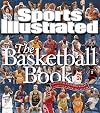
I usually do not review coffee table books. They aren’t books really, but works of art – or at least that’s what they intend to be / attempt to be: works of art. You are not expected to read them, but to browse through them casually while your hostess puts the finishing touches on that very formal informal dinner or you feel you have made conversation for a respectable length of time with your prospective father-in-law. Coffee table books don’t belong in a library, but – well, on a show more coffee table. I don’t know anyone who ever pays the price for them that’s printed on the inside of the dust jacket. Of course, not. You pick them up on a remainder table with the little black swatch on the bottom edge. I always wonder how they make back the money that’s invested in those glossy, brilliantly colored photographs, those oversize pages and fancy bindings and fly-leaves, the careful design with art work bleeding off the pages, the permissions for all those copyrighted selections and photographs. Maybe those overpaid CEOs on Wall Street use them as Christmas or bar mitzvah gifts for their cousins in Iowa. Or maybe someone finances them so they can take the loss off their income tax. (Not that we Iowa cousins understand that.)
No, I don’t usually review them. And if I did, I might never be able to stop. For I’m a sucker for buying them on a remainder table or in a good, reasonable used bookstore. I have cords of them, stacked somewhere in the closet of my study. All right, I’ve browsed already! But who could pass it up – a $34.95 book for $8.98 plus tax at Barnes & Noble? One on a subject that you’re crazy about to begin with? That’s what I paid for The Basketball Book by Sports Illustrated (2007). Why, I could clip out any number of pages, frame them or put them in a fancy portfolio, and sell them to sports fans to display in their dens or offices. Here’s a coffee table book that deserves better than a coffee table.
Please understand. This book tells the story of my life. Oh, not the life others have seen me live, but the life I’ve imagined, the life I lived in daydreams beginning when I was, maybe, ten years old or so. First I was a Bob Cousy – back when Cousy was leading Holy Cross to unprecedented berths in the NCAA championship tournament, himself making All-American three years in a row; then when I was in high school and Cousy was creating the Boston Celtics, a team I came to love, creating the NBA as we know it now, indeed along with teammates and Coach Red Auerbach, creating professional basketball as the popular, profitable sport it is today. Like Cousy, I was a point guard – in my dreams. I mean what other choice would there have been for a kid who , as a high-school senior, was 5’8”, weighing 128 pounds? We knew – Cousy and I – that basketball was a game that required not only physical skill and agility, but also mental acumen and personal determination.
In my daydreams, I was Pistol Pete Maravich even before he was Pistol Pete , when his father was teaching the seven-year-old ball handling, head fakes, and long-range shooting. I envisioned that style and that success for myself, years before Pete made the headlines, averaging 44.2 points a game and making All-American all three years at LSU (this before the three-point shot, which would probably have raised his average to something like 57 points a game). Of course, even in my imagination, I could never have achieved Maravich’s fame, but his style – oh, his style was what I envied and admired.
But, in one’s mind’s eye, it’s possible to revert to youth even as one approaches middle age, settling into family life and a professional career. So there was Larry Bird for me to identify with. I became a power forward. Of course, I wanted to be Magic Johnson, too, and to this day my blood pressure rises to threatening levels when I think of those two heroes having to face off against one another. I watched with dismay as Bird’s Indiana State Sycamores lost in the NCAA finals to Johnson and the Michigan State Spartans, but then I managed to balance exhilaration and remorse as Larry and Magic led their Celtics and Lakers through thirteen exciting seasons. It’s never been the same since.
So that’s my story; those are my favorites: Cousy, Pistol Pete, Larry Bird, and Magic – not to mention Bill Russell, John Havlicek, Nate Archibald, Dr. J, Bill Bradley, Jerry West, Kareem Abdul-Jabbar, Bill Walton, Hakeem Olajuwon, Michael Jordan, Scotty Pippin, Shaquille O’Neal, Coach Phil Jackson, and – well, the list goes on and on. This book is their story, and it’s a page-turner. Of course, it’s a coffee table book, so the visuals jump out at you. And I mean that quite literally: they JUMP up and up and up and out at you. On page after page. Hold on!
Such a mammoth book requires multiple frontispieces. So take you pick:
Bob Cousy’s Chuck Taylor All Star [well-worn gym shoe], in his Celtics’ signature black
Eye-popping are Kareem Abdul-Jabbar’s NBA stats: 38,387 points, six MWPs, multiple scratched corneas. [shown in a close-up in his special eye-glasses]
[a wrinkled, scratched, well-worn basketball of 1908] A good lacing was what the mighty Maroons of Chicago gave powerful Penn by sweeping a home and home.
[a spanking new Spalding from 1996, labeled “NBA Season Record 70th Victory”] The Bulls’ run was not done when they beat the Bucks for a 70th win. Two more W’s were to follow.
[a Hollywood-handsome, well-combed Wisconsin Ten from 1918, their short shorts held up with broad buckled leather belts, their flies laced like their shoes, their hands folded prayerfully, all the same, and their knees all padded to the max:] In his first year at Madison, Guy Lowman led the Badgers to a 14-3 record and their seventh Big Ten championship.
2007 | The driving ambition of LeBron James was momentarily diverted by the D of Tim Duncan during the NBA finals. [one of those jump shots, viewed from above the rim]
[James Naismith (of course!) with his soccer ball and peach basket] Dr. Naismith’s first goal was produced by happenstance, but it proved peach-perfect for his invention and gave the fledgling sport its name.
1962 | The cheering stopped for Ohio State when Cincinnati beat the Buckeyes 71-59 for the NCAA title. [a double-page spread of a packed arena, with Ohio cheerleaders doing the leaping in this one]
Kevin Garnett / Minnesota Timberwolves | Forward [Title page, with a scowling, yowling Garnett leaping off the page, his long legs spread-eagled border to border]
And, once again, the list goes on and on: Super Snapper Reggie Jackson; Arkansas’s Kareem Reid playing hide-and-seek with the ball; a disappointed Kentucky team (b&w) with Coach Adolph Rupp after losing in an upset to unheralded Texas Western, “the first title-winning all-black starting five” (not shown!); a young Larry Bird with two super-cute cheerleaders from Indiana State; a photocopy of Dr. Naismith’s original thirteen rules, on two-pages, typewritten, double-spaced, yellowed with age.
That’s what I mean by a big book, the sort that basketball requires, deserves, enhances. I can’t even count the frontispieces, and the full-page, full-color photos just keep a-comin’, with lots of two-page spreads, and even one four-page foldout, called “Inch by Inch: The Alltime, All-Size All-Stars,” going from 7’7” Manute Bol all the way down to 5’3” Muggsy Bogues, including 7’5” Yao Ming, 6’7” Julius Irving, 6’1” Bob Cousy, 5’8” Ann Meyers, 5’7” Spud Webb, 5’4” Suzi McConnell, and every inch in between.
But, of course, you know my favorite photo. It’s a two-page spread:
Two Pistons get all fouled up trying to do the near impossible: put the brakes on Boston’s ball-bearing Bob Cousy
Cousy is dribbling, in his white Celtic uniform trimmed with green, and his familiar black gym shoes, his lower body at a perfect ninety-degree angle with the floor (and his left foot), but hinged at the waist to form a vee, his right arm controlling the ball and his balance, his eyes slanted at the hole he’s created by tricking two Pistons (in red, white, and blue) into bumbling into one another. One knows what’s next: another layup or assist or quick pump for two.
But I told you, didn’t I, that this is more than a coffee table book; so it’s more than magnificent photographs, too. Already, in these captions, you hear the poet behind the prose, playing with language like a Harlem Globetrotter playing with basketballs: Naismith’s baskets were “peach-perfect”; a victory with the old laced-up ball was “a good lacing”; and bouncing alliteration lets us see someone “put the brakes on Boston’s ball-bearing Bob Cousy.”
Some books are for reading; some are for careful study or analysis; some, for quick skimming or scanning; and some, for leisurely browsing. This one is for leisurely browsing. It is divided, more or less, into decades, with all-star NCAA and NBA teams for each decade; players’ nicknames; leaders in scoring, rebounds, and the like; “Wish You Were There”; important transactions; innovations; “By the numbers” (curious stats from these years); “Elsewhere in Sports”; and a feature called “What’s Happening,” providing historical contexts as represented by the covers of news magazines like Time, Life, People. Vogue, Scientific American, National Lampoon, etcetera, etcetera. Each decade has a frontispiece: one of the stars of the era dressed to the hilt in fashions of the times; e.g., George Mikan with the necktie, kerchief, and rimless glasses of a BMOC in the pre-1950s, Bill Bradley in the beret, scarf, corduroy, and arched eyebrow of Princeton in the 1970s, street-tough Allen Iverson with the beads, open collar, and tattoos of the 1990s, and naturally the hip LeBron James in the low-slung jeans and floppy white t-shirt of the 2000s.
The foreword to the book as a whole is an historical essay, giving all the details of Dr. Naismith’s invention to keep boisterous YMCA students – missionaries to be – under (in “the Phys. Ed. class from Hell at the International YMCA Training School in Springfield, Mass.” in December, 1891). The title assigned to the foreword by Alexander Wolff is “GOOD GAWD! how ever did we get here from there?” Wolff has another historical essay, “The Golden Rules,” specifically on Naismith’s development and preservation of his original thirteen rules. The formal introduction, by Jack McCallum, catalogs “seminal moments in hoops history” (how’s that for alliteration, assonance, and consonance all in one precise phrase?). He lists one moment for each of the 24 seconds on the shot clock – an innovation in the sport dating from 1954, coincidentally the same year Sports Illustrated began publishing. McCallum concludes his list at :00 with the “one-year-wonders,” those kids who play basketball in college for only one year, now that they can be drafted at nineteen. These three prefatory essays (having just one would not do!) lead us into the prose texts at the heart of the book. (One major deficiency: no poetry, not even John Updike’s “Ex-Basketball Player”)
But scattered all through the book, among the photos and decades are little one-page essays, excerpted from Sports Illustrated articles, with an accompanying full-page photo. They are a little bit frustrating in that they almost always make me want to read the whole article, but they do make fascinating browsing. The subjects are ones you would expect: the Boston Celtics, Kareem, Carolina’s winning coach Dean Smith, Wilt Chamberlain, Bill Russell, Dr. J, Pistol Pete, Larry, Magic, Michael Jordan, Shaquille, UCLA in the Sixties under John Wooden, Bob Knight’s Indiana Hoosiers of 1976, and the last one, devoted to the first “big man” who changed the game, the geeky George Mikan. And some you might find a little bit surprising: the Duke-Carolina rivalry, the Harlem Globetrotters, the Duke-Kentucky “greatest college game ever played,” in which the lead changed hands five times in the last 31.5 seconds, Diana Taurasi of the UConn women’s champions, ghetto playgrounds, and a moving eulogy for Jimmy Valvano after his death from cancer.
I can’t resist one long quote to illustrate the prose you might expect in these essays. It’s about Pete Maravich, of course, from 1968: “The LSU offense is Pete Maravich with the ball.” Here’s a description of the Pistol in action (it’s me in my wildest dreams):
Here he comes now . . . . The first defensive man slows him at the top of the zone, but Maravich goes right and is immediately swarmed over and double-teamed. He jumps, gliding forward through the air, and either hits the open man in the corner or puts the ball up to the basket himself. The next minute he dribbles by the first man, but he is hit by three defenders at the foul line and throws a hook pass to his blind side or slams the ball behind his back, a bounce pass to the corner again. He comes up once more and takes the shot himself, sliding through the zone and hooking from the corner on the run, or driving under and, with his back to the basket, flipping the ball in with a lefthanded, underhand double-jump shot.
After a time-out, Maravich looks his man in the eye and fires a push shot from 40 feet or gives him the head fake for the push shot and then is quickly on the move with a crossover dribble under his leg, around the man, to the left and up for his jump shot. If he misses, he is following, leaping, crashing over bigger and stronger players to tap the ball into the basket.
Dream on, man, dream on!
But it’s the photos that take the day in this book; action shots put you on the spot; close-ups let you read character (Pistol Pete’s dreamy-eyed, smooth-faced portrait shows why he’s called “America’s Sweetheart, Every Mother’s Son, the Teeny Boppers’ Top Cat”), some old b&w snapshots, wide-lens panoramas of crowded arenas, dazzling special effects. And for the connoisseur of souvenirs, there are pages of historic artifacts, a museum in print: sneakers, the old short shorts vs. today’s long, baggy ones, championship rings, game tickets, basketballs themselves, trading cards, Hollywood videotapes, an old-time knee pad, Jerry Lucas’s retired #11 jersey from Ohio State, held neatly in place by buttoning under the crotch. . . .
So how does one close out The Basketball Book that opened with Bob Cousy’s well-worn black high-topper shoe? Of course. What else? A big double-page spread of Shaquille O’Neal’s bright red, “Dunkman” sneaker, size 22, the largest in NBA history, its surface gleaming like glossy plastic, its logo a slam dunk, its lines elegant and futuristic. Did I say bright red? Shiny bright red?
“Good Gawd! How ever did we get here from there?” show less
No, I don’t usually review them. And if I did, I might never be able to stop. For I’m a sucker for buying them on a remainder table or in a good, reasonable used bookstore. I have cords of them, stacked somewhere in the closet of my study. All right, I’ve browsed already! But who could pass it up – a $34.95 book for $8.98 plus tax at Barnes & Noble? One on a subject that you’re crazy about to begin with? That’s what I paid for The Basketball Book by Sports Illustrated (2007). Why, I could clip out any number of pages, frame them or put them in a fancy portfolio, and sell them to sports fans to display in their dens or offices. Here’s a coffee table book that deserves better than a coffee table.
Please understand. This book tells the story of my life. Oh, not the life others have seen me live, but the life I’ve imagined, the life I lived in daydreams beginning when I was, maybe, ten years old or so. First I was a Bob Cousy – back when Cousy was leading Holy Cross to unprecedented berths in the NCAA championship tournament, himself making All-American three years in a row; then when I was in high school and Cousy was creating the Boston Celtics, a team I came to love, creating the NBA as we know it now, indeed along with teammates and Coach Red Auerbach, creating professional basketball as the popular, profitable sport it is today. Like Cousy, I was a point guard – in my dreams. I mean what other choice would there have been for a kid who , as a high-school senior, was 5’8”, weighing 128 pounds? We knew – Cousy and I – that basketball was a game that required not only physical skill and agility, but also mental acumen and personal determination.
In my daydreams, I was Pistol Pete Maravich even before he was Pistol Pete , when his father was teaching the seven-year-old ball handling, head fakes, and long-range shooting. I envisioned that style and that success for myself, years before Pete made the headlines, averaging 44.2 points a game and making All-American all three years at LSU (this before the three-point shot, which would probably have raised his average to something like 57 points a game). Of course, even in my imagination, I could never have achieved Maravich’s fame, but his style – oh, his style was what I envied and admired.
But, in one’s mind’s eye, it’s possible to revert to youth even as one approaches middle age, settling into family life and a professional career. So there was Larry Bird for me to identify with. I became a power forward. Of course, I wanted to be Magic Johnson, too, and to this day my blood pressure rises to threatening levels when I think of those two heroes having to face off against one another. I watched with dismay as Bird’s Indiana State Sycamores lost in the NCAA finals to Johnson and the Michigan State Spartans, but then I managed to balance exhilaration and remorse as Larry and Magic led their Celtics and Lakers through thirteen exciting seasons. It’s never been the same since.
So that’s my story; those are my favorites: Cousy, Pistol Pete, Larry Bird, and Magic – not to mention Bill Russell, John Havlicek, Nate Archibald, Dr. J, Bill Bradley, Jerry West, Kareem Abdul-Jabbar, Bill Walton, Hakeem Olajuwon, Michael Jordan, Scotty Pippin, Shaquille O’Neal, Coach Phil Jackson, and – well, the list goes on and on. This book is their story, and it’s a page-turner. Of course, it’s a coffee table book, so the visuals jump out at you. And I mean that quite literally: they JUMP up and up and up and out at you. On page after page. Hold on!
Such a mammoth book requires multiple frontispieces. So take you pick:
Bob Cousy’s Chuck Taylor All Star [well-worn gym shoe], in his Celtics’ signature black
Eye-popping are Kareem Abdul-Jabbar’s NBA stats: 38,387 points, six MWPs, multiple scratched corneas. [shown in a close-up in his special eye-glasses]
[a wrinkled, scratched, well-worn basketball of 1908] A good lacing was what the mighty Maroons of Chicago gave powerful Penn by sweeping a home and home.
[a spanking new Spalding from 1996, labeled “NBA Season Record 70th Victory”] The Bulls’ run was not done when they beat the Bucks for a 70th win. Two more W’s were to follow.
[a Hollywood-handsome, well-combed Wisconsin Ten from 1918, their short shorts held up with broad buckled leather belts, their flies laced like their shoes, their hands folded prayerfully, all the same, and their knees all padded to the max:] In his first year at Madison, Guy Lowman led the Badgers to a 14-3 record and their seventh Big Ten championship.
2007 | The driving ambition of LeBron James was momentarily diverted by the D of Tim Duncan during the NBA finals. [one of those jump shots, viewed from above the rim]
[James Naismith (of course!) with his soccer ball and peach basket] Dr. Naismith’s first goal was produced by happenstance, but it proved peach-perfect for his invention and gave the fledgling sport its name.
1962 | The cheering stopped for Ohio State when Cincinnati beat the Buckeyes 71-59 for the NCAA title. [a double-page spread of a packed arena, with Ohio cheerleaders doing the leaping in this one]
Kevin Garnett / Minnesota Timberwolves | Forward [Title page, with a scowling, yowling Garnett leaping off the page, his long legs spread-eagled border to border]
And, once again, the list goes on and on: Super Snapper Reggie Jackson; Arkansas’s Kareem Reid playing hide-and-seek with the ball; a disappointed Kentucky team (b&w) with Coach Adolph Rupp after losing in an upset to unheralded Texas Western, “the first title-winning all-black starting five” (not shown!); a young Larry Bird with two super-cute cheerleaders from Indiana State; a photocopy of Dr. Naismith’s original thirteen rules, on two-pages, typewritten, double-spaced, yellowed with age.
That’s what I mean by a big book, the sort that basketball requires, deserves, enhances. I can’t even count the frontispieces, and the full-page, full-color photos just keep a-comin’, with lots of two-page spreads, and even one four-page foldout, called “Inch by Inch: The Alltime, All-Size All-Stars,” going from 7’7” Manute Bol all the way down to 5’3” Muggsy Bogues, including 7’5” Yao Ming, 6’7” Julius Irving, 6’1” Bob Cousy, 5’8” Ann Meyers, 5’7” Spud Webb, 5’4” Suzi McConnell, and every inch in between.
But, of course, you know my favorite photo. It’s a two-page spread:
Two Pistons get all fouled up trying to do the near impossible: put the brakes on Boston’s ball-bearing Bob Cousy
Cousy is dribbling, in his white Celtic uniform trimmed with green, and his familiar black gym shoes, his lower body at a perfect ninety-degree angle with the floor (and his left foot), but hinged at the waist to form a vee, his right arm controlling the ball and his balance, his eyes slanted at the hole he’s created by tricking two Pistons (in red, white, and blue) into bumbling into one another. One knows what’s next: another layup or assist or quick pump for two.
But I told you, didn’t I, that this is more than a coffee table book; so it’s more than magnificent photographs, too. Already, in these captions, you hear the poet behind the prose, playing with language like a Harlem Globetrotter playing with basketballs: Naismith’s baskets were “peach-perfect”; a victory with the old laced-up ball was “a good lacing”; and bouncing alliteration lets us see someone “put the brakes on Boston’s ball-bearing Bob Cousy.”
Some books are for reading; some are for careful study or analysis; some, for quick skimming or scanning; and some, for leisurely browsing. This one is for leisurely browsing. It is divided, more or less, into decades, with all-star NCAA and NBA teams for each decade; players’ nicknames; leaders in scoring, rebounds, and the like; “Wish You Were There”; important transactions; innovations; “By the numbers” (curious stats from these years); “Elsewhere in Sports”; and a feature called “What’s Happening,” providing historical contexts as represented by the covers of news magazines like Time, Life, People. Vogue, Scientific American, National Lampoon, etcetera, etcetera. Each decade has a frontispiece: one of the stars of the era dressed to the hilt in fashions of the times; e.g., George Mikan with the necktie, kerchief, and rimless glasses of a BMOC in the pre-1950s, Bill Bradley in the beret, scarf, corduroy, and arched eyebrow of Princeton in the 1970s, street-tough Allen Iverson with the beads, open collar, and tattoos of the 1990s, and naturally the hip LeBron James in the low-slung jeans and floppy white t-shirt of the 2000s.
The foreword to the book as a whole is an historical essay, giving all the details of Dr. Naismith’s invention to keep boisterous YMCA students – missionaries to be – under (in “the Phys. Ed. class from Hell at the International YMCA Training School in Springfield, Mass.” in December, 1891). The title assigned to the foreword by Alexander Wolff is “GOOD GAWD! how ever did we get here from there?” Wolff has another historical essay, “The Golden Rules,” specifically on Naismith’s development and preservation of his original thirteen rules. The formal introduction, by Jack McCallum, catalogs “seminal moments in hoops history” (how’s that for alliteration, assonance, and consonance all in one precise phrase?). He lists one moment for each of the 24 seconds on the shot clock – an innovation in the sport dating from 1954, coincidentally the same year Sports Illustrated began publishing. McCallum concludes his list at :00 with the “one-year-wonders,” those kids who play basketball in college for only one year, now that they can be drafted at nineteen. These three prefatory essays (having just one would not do!) lead us into the prose texts at the heart of the book. (One major deficiency: no poetry, not even John Updike’s “Ex-Basketball Player”)
But scattered all through the book, among the photos and decades are little one-page essays, excerpted from Sports Illustrated articles, with an accompanying full-page photo. They are a little bit frustrating in that they almost always make me want to read the whole article, but they do make fascinating browsing. The subjects are ones you would expect: the Boston Celtics, Kareem, Carolina’s winning coach Dean Smith, Wilt Chamberlain, Bill Russell, Dr. J, Pistol Pete, Larry, Magic, Michael Jordan, Shaquille, UCLA in the Sixties under John Wooden, Bob Knight’s Indiana Hoosiers of 1976, and the last one, devoted to the first “big man” who changed the game, the geeky George Mikan. And some you might find a little bit surprising: the Duke-Carolina rivalry, the Harlem Globetrotters, the Duke-Kentucky “greatest college game ever played,” in which the lead changed hands five times in the last 31.5 seconds, Diana Taurasi of the UConn women’s champions, ghetto playgrounds, and a moving eulogy for Jimmy Valvano after his death from cancer.
I can’t resist one long quote to illustrate the prose you might expect in these essays. It’s about Pete Maravich, of course, from 1968: “The LSU offense is Pete Maravich with the ball.” Here’s a description of the Pistol in action (it’s me in my wildest dreams):
Here he comes now . . . . The first defensive man slows him at the top of the zone, but Maravich goes right and is immediately swarmed over and double-teamed. He jumps, gliding forward through the air, and either hits the open man in the corner or puts the ball up to the basket himself. The next minute he dribbles by the first man, but he is hit by three defenders at the foul line and throws a hook pass to his blind side or slams the ball behind his back, a bounce pass to the corner again. He comes up once more and takes the shot himself, sliding through the zone and hooking from the corner on the run, or driving under and, with his back to the basket, flipping the ball in with a lefthanded, underhand double-jump shot.
After a time-out, Maravich looks his man in the eye and fires a push shot from 40 feet or gives him the head fake for the push shot and then is quickly on the move with a crossover dribble under his leg, around the man, to the left and up for his jump shot. If he misses, he is following, leaping, crashing over bigger and stronger players to tap the ball into the basket.
Dream on, man, dream on!
But it’s the photos that take the day in this book; action shots put you on the spot; close-ups let you read character (Pistol Pete’s dreamy-eyed, smooth-faced portrait shows why he’s called “America’s Sweetheart, Every Mother’s Son, the Teeny Boppers’ Top Cat”), some old b&w snapshots, wide-lens panoramas of crowded arenas, dazzling special effects. And for the connoisseur of souvenirs, there are pages of historic artifacts, a museum in print: sneakers, the old short shorts vs. today’s long, baggy ones, championship rings, game tickets, basketballs themselves, trading cards, Hollywood videotapes, an old-time knee pad, Jerry Lucas’s retired #11 jersey from Ohio State, held neatly in place by buttoning under the crotch. . . .
So how does one close out The Basketball Book that opened with Bob Cousy’s well-worn black high-topper shoe? Of course. What else? A big double-page spread of Shaquille O’Neal’s bright red, “Dunkman” sneaker, size 22, the largest in NBA history, its surface gleaming like glossy plastic, its logo a slam dunk, its lines elegant and futuristic. Did I say bright red? Shiny bright red?
“Good Gawd! How ever did we get here from there?” show less
(Advance copy provided by NetGalley)
Beginning with a sing-song rhythm,
"The great big stadium is outside of town.
Fans and friends come from miles around."
and ending with a nod to Margaret Wise Brown's Goodnight Moon,
"Goodnight, popcorn boxes under the stands
Goodnight, mascot and goodnight, fans!
Goodnight, friends. Goodnight, cars.
Goodnight, stadium, under the stars ..."
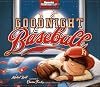
Goodnight Baseball takes the reader on a baseball outing with a small boy and his father. Snacks, caps, and even a foul show more ball are part of a winning day. Brightly colored full-bleed illustrations offer a broad view of the game, the fans, and the park with a focus not on the boy and his dad, but rather, on their place in the larger context of the day. Expressive faces show the myriad expressions seen during a day at the park - excitement, determination, surprise (no sadness here - the home town wins). Creative endpapers evoke the Green Monster, the boy's favorite team, and tickets stuffed in the pocket of denim jeans. Goodnight Baseball is a hit.
(Due on shelves March 1, 2013)
http://shelf-employed.blogspot.com show less
Beginning with a sing-song rhythm,
"The great big stadium is outside of town.
Fans and friends come from miles around."
and ending with a nod to Margaret Wise Brown's Goodnight Moon,
"Goodnight, popcorn boxes under the stands
Goodnight, mascot and goodnight, fans!
Goodnight, friends. Goodnight, cars.
Goodnight, stadium, under the stars ..."
Goodnight Baseball takes the reader on a baseball outing with a small boy and his father. Snacks, caps, and even a foul show more ball are part of a winning day. Brightly colored full-bleed illustrations offer a broad view of the game, the fans, and the park with a focus not on the boy and his dad, but rather, on their place in the larger context of the day. Expressive faces show the myriad expressions seen during a day at the park - excitement, determination, surprise (no sadness here - the home town wins). Creative endpapers evoke the Green Monster, the boy's favorite team, and tickets stuffed in the pocket of denim jeans. Goodnight Baseball is a hit.
(Due on shelves March 1, 2013)
http://shelf-employed.blogspot.com show less
Sports Illustrated The New York Mets: Celebrating Six Decades of Amazin' Baseball by Sports Illustrated
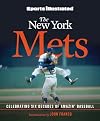
The New York Mets (2023) by Sports Illustrated. Ahhh…, the joy of baseball. There is nothing like going out to the ball park, catching some rays, shagging a beer or two, or the soft drink of your choice, and watching your favorite team hopefully win the game. Myself, I loved playing the game with all the effort and near misses and strategy involved. Baseball is a great game because when you play it you lose yourself in the effort, all else flies away and it is just you and the show more ball.
Watching it is another thing. Unless you tie yourself to one particular team, unless you live and die with their fates, baseball can be pretty boring. Don’t get me wrong, I love going out to games and getting the buzz of the crowds and hearing the vendors shouting, smelling the aroma of hot dogs and popcorn, and watching the “exciting” parts of the game.
But if I’m not there, the game is pretty blah. I don’t sit around watching broadcasts of the games. There are so many teams, and the season seems to be getting longer every year, and unless my team is playing well and is atop the standings, I’d rather watch soccer.
Having said all that, I want to talk about this coffee table sized homage the those marvelous Mets. I’m not a Mets fan (Go Chicago!!!) but I’m a fan of history and that is what this book is all about. As you would expect from Sports Illustrated, there are a lot of great photos included. A lot! Players, full teams, managers, owners, the hype guys, scouts, stadiums, seemingly everything but the bat boys (or is that now the bat children?) The photos are arrayed strategically throughout the book with the first being a photo of the magnificent Casey Stengel. If you don’t know who that is, don’t call yourself a fan of the game. Shame on you.
We start the book with portraits of some of the most outstanding, or misunderstood, players in the past 60 years. You may not know the team, but Gil Hodges, William Shea (as in, you know, that stadium?), Mookie Wilson (had to be a great guy just from his name), Darryl Strawberry (a great pick), Randy Staub and Tom Seaver just to name a few. There are thirty different profiles of Mets’ greats offered, each with a unique history.
Then comes the stories from the pages of SI and written by an all-star cast in their own way. We start with the worst team of 1962, a few more years follow as a pretty bad team, a few of the so-so years and what caused them, and into the “World Champion Mets” of 1969. There are the full stories of the team gleaned as originally written along with significant photos of the action or lack thereof in the early years. The stories continue beyond the Miracle Mets and up to recently, all well written, amusing and entertaining.
There is a very nice introduction to the book by pitcher John Franco, a life-long fan of the Mets and one of the Mets’ hall-of-famers. At the other end of the book are a collection of stats for the team and finally a gallery of the fantastic SI covers that featured the team.
In short this is a great read about a baseball team that over came the odds of their rookie season and rapidly won it all. As usual, Sports Illustrated has lived up to their own high standards and, even if you aren’t a fan of the team, you can be a fan of the book. show less
Watching it is another thing. Unless you tie yourself to one particular team, unless you live and die with their fates, baseball can be pretty boring. Don’t get me wrong, I love going out to games and getting the buzz of the crowds and hearing the vendors shouting, smelling the aroma of hot dogs and popcorn, and watching the “exciting” parts of the game.
But if I’m not there, the game is pretty blah. I don’t sit around watching broadcasts of the games. There are so many teams, and the season seems to be getting longer every year, and unless my team is playing well and is atop the standings, I’d rather watch soccer.
Having said all that, I want to talk about this coffee table sized homage the those marvelous Mets. I’m not a Mets fan (Go Chicago!!!) but I’m a fan of history and that is what this book is all about. As you would expect from Sports Illustrated, there are a lot of great photos included. A lot! Players, full teams, managers, owners, the hype guys, scouts, stadiums, seemingly everything but the bat boys (or is that now the bat children?) The photos are arrayed strategically throughout the book with the first being a photo of the magnificent Casey Stengel. If you don’t know who that is, don’t call yourself a fan of the game. Shame on you.
We start the book with portraits of some of the most outstanding, or misunderstood, players in the past 60 years. You may not know the team, but Gil Hodges, William Shea (as in, you know, that stadium?), Mookie Wilson (had to be a great guy just from his name), Darryl Strawberry (a great pick), Randy Staub and Tom Seaver just to name a few. There are thirty different profiles of Mets’ greats offered, each with a unique history.
Then comes the stories from the pages of SI and written by an all-star cast in their own way. We start with the worst team of 1962, a few more years follow as a pretty bad team, a few of the so-so years and what caused them, and into the “World Champion Mets” of 1969. There are the full stories of the team gleaned as originally written along with significant photos of the action or lack thereof in the early years. The stories continue beyond the Miracle Mets and up to recently, all well written, amusing and entertaining.
There is a very nice introduction to the book by pitcher John Franco, a life-long fan of the Mets and one of the Mets’ hall-of-famers. At the other end of the book are a collection of stats for the team and finally a gallery of the fantastic SI covers that featured the team.
In short this is a great read about a baseball team that over came the odds of their rookie season and rapidly won it all. As usual, Sports Illustrated has lived up to their own high standards and, even if you aren’t a fan of the team, you can be a fan of the book. show less
What is it about college football that makes fans like me drool over the television every Saturday? Why do we act with such passion, love, and hatred over this sport? My answer to these questions include the FACT that no other sport carries with it the rich traditions and pageantries of over 100 different schools. What other sport can say it has Play Like a Champion Today, between the hedges, the dotting of the "i", and "Hook 'em horns?" Where else can you find Touchdown Jesus, Michie show more Stadium, Howard's Rock, and the Boomer Schooner? How about hearing the Notre Dame Victory March, The Victors, Fight On, and Rocky Top? The answer is only with COLLEGE FOOTBALL!
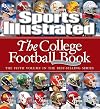
This book, published by Sports Illustrated, captures all of these wonderful things (and more) that I have highlighted already. It is filled with wonderful stories about some of the game's most important players and coaches. It presents beautiful and vivid pictures from over 100 years worth of games and places. It is a PERFECT compliment to this colorful (and corrupt) sport that has enthralled millions for decades. As the 2014 season approaches, I could not think of a better way to prep for that first kickoff than by reading this titanic tribute to the game that I love the most. show less
This book, published by Sports Illustrated, captures all of these wonderful things (and more) that I have highlighted already. It is filled with wonderful stories about some of the game's most important players and coaches. It presents beautiful and vivid pictures from over 100 years worth of games and places. It is a PERFECT compliment to this colorful (and corrupt) sport that has enthralled millions for decades. As the 2014 season approaches, I could not think of a better way to prep for that first kickoff than by reading this titanic tribute to the game that I love the most. show less
Lists
Awards

You May Also Like


Associated Authors
Statistics
- Works
- 908
- Members
- 4,142
- Popularity
- #6,078
- Rating
- 3.9
- Reviews
- 34
- ISBNs
- 218
- Languages
- 1