
Michael Lark
Author of Gotham Central, Book One: In the Line of Duty
About the Author
Image credit: Picture taken at X Xornaes de Cómic d'Avilés.
Series
Works by Michael Lark
The Amazing Spider-Man: The Gauntlet, Vol. 2 – Rhino & Mysterio (2010) — Illustrator — 62 copies, 1 review
The Invisibles Vol. 3 #03 — Illustrator — 4 copies
Lazarus, Vol. 1: Family 3 copies
Lazarus, Vol. 3: Conclave 2 copies
Lazarus, Vol. 2: Lift 2 copies
Terminal City #9 — Illustrator — 2 copies
The Pulse #10 — Illustrator — 1 copy
Terminal City Aerial Graffiti #2 of 5 — Illustrator — 1 copy
Lazarus, Vol. 4: Poison 1 copy
Gotham central n. 02 1 copy
Lazarus Sourcebook #3: Vassalovka — Illustrator — 1 copy
Lazarus, Vol. 1 1 copy
Terminal City #1 — Illustrator — 1 copy
Associated Works
Captain America: Winter Soldier, Book One (2005) — Illustrator, some editions — 318 copies, 11 reviews
9-11: The World's Finest Comic Book Writers & Artists Tell Stories to Remember (2002) — Illustrator — 256 copies, 1 review
Secret Avengers: Run the Mission, Don't Get Seen, Save the World (2012) — Illustrator — 78 copies, 2 reviews
The Amazing Spider-Man (Vol. 2) #637: The Grim Hunt, Part 4 (2010) — Penciller — 3 copies, 2 reviews
Tagged
Common Knowledge
- Gender
- male
Members
Reviews
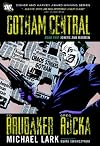
With the Gotham TV show coming soon, got inspired to read more of the Gotham Central series focusing on the police of Gotham City. This is a very clever series, able to mix in classic Batman villains while keeping the actual Batman appearances to a minimum.
How could a Batman comic be good without Batman? It's all about strong characters and compelling mystery! Writers Brubaker and Rucka are each masters of the gritty detective genre, and artist Michael Lark gives the comic that classic noir show more look.
The Joker story "Soft Bullets" is a particular highlight in the collection, with the writers striking the right balance for Joker of being a psychotic murderer who still makes you laugh despite yourself. It's definitely one of the best Joker stories I've read in a while. show less
How could a Batman comic be good without Batman? It's all about strong characters and compelling mystery! Writers Brubaker and Rucka are each masters of the gritty detective genre, and artist Michael Lark gives the comic that classic noir show more look.
The Joker story "Soft Bullets" is a particular highlight in the collection, with the writers striking the right balance for Joker of being a psychotic murderer who still makes you laugh despite yourself. It's definitely one of the best Joker stories I've read in a while. show less

A superb volume, continuing to follow the hard-working detectives of Gotham City Police Department's Major Crimes Unit (the only one, it is implied, with an organisational reputation for having no corruption, each member being hand-picked by the now retired James Gordon). A short and cute one-shot story about the receptionist and Bat-Signal-wielder aside, the book is taken up by three larger investigations -- each utterly different from the other, except in that they are dark, gritty and show more engaging. The first story is a thriller where a mysterious sniper assassin keeps killing Gotham officials in the days before Christmas, and the police are at their wits end to stop the next one from happening. The second has a female accountant turn up dead in a dumpster, creating an investigative chain of events that sees us follow six different detectives (in partnered groups of two) over the course of three days to figure out how and why she ended up there. The third story is the best in my eyes (which is saying something), where an unexpected public suicide cause two detectives to re-open an 8 year old case about a school bombing, once belonging to the disgraced former cop Harvey Bullock.
If you like crime noir and think a dash of Batman's fantastic rogues gallery at unpredictable intervals sounds like a great additional ingredient, "Gotham Central" is about as good as it gets. show less
If you like crime noir and think a dash of Batman's fantastic rogues gallery at unpredictable intervals sounds like a great additional ingredient, "Gotham Central" is about as good as it gets. show less
One of the neat things about the setup of Gotham Central is that the cast is divided up into a day shift and a night shift. Greg Rucka writes the stories about the day shift, and Ed Brubkaer writes the ones about the night folks. They cowrite the stories that are so big both shifts get involved. In the first two GC collections I read, nine of the twelve stories were Rucka day-shift ones, whereas just five were Brubaker night-shift ones, so it was nice to get Jokers and Madmen, where show more Brubaker's characters seem to dominate. Mind you, the writing the two do is so well-integrated that if it wasn't for the character thing, I wouldn't've known who was writing at any given point.
The first story, Brubaker's "Daydreams and Believers," is a one-off about Stacy, the temp who operates the Bat-Signal. She's a bit of an outside in the G.C.P.D for obvious reasons, and the story nicely capitalizes on that to show her perspective on the various other people who work in the Major Crimes Unit-- not to mention the Batman himself. There's a hilarious two-page sequence featuring Batman here that I didn't see coming. Brian Hurtt's detailed art doesn't really fit the Gotham Central style, but it works for this one tale.
The next story, "Soft Targets," is co-written by Brubaker and Rucka, and it seems to have been the basis for the recent Batman film The Dark Knight, as it sees the Joker terrorizing Gotham City solely as a way to get at Batman. (Okay, this probably happens a lot, but the political assassinations and the scene with the Joker in the interrogation room really made it seem Dark Knight-esque to me.) This is the single most successful story in all of Gotham Central, I think, seeing the cops scrambling to stop the Joker when really the Joker just sees them as ways to aggravate the Batman. All of the characters here are just caught in the struggle between these two figures, and the story is all the more intense for it. From the second page, I was gripped, and like "In the Line of Duty" in the first volume, it really manages to merge the considerations of a police story with a Batman one, as the characters have to negotiate city politics and the media as they try to do their jobs and take down the Joker before he blows the city to kingdom come. The story's set at Christmas, which helps too, as the art (which sees Stefano Gaudiano taking over for Michael Lark and doing just as good a job) can be all snowy and moody. This story actually has the cops figuring it out before Batman, which is nice. But in the end, as far as they can tell, they're just pawns in his insane game with the Joker.
After this is "Life is Full of Disappointments," a story which has an interesting form, as it take the form of a case that keeps on getting bumped from detective to detective, meaning each of its three different parts focuses on a different pair. This lets the series focus on some people who haven't had much page time thus far, like Sarge Davies, who is one of my favorites. Some of the tales are kinda trite, though, like the one about the mother whose son plays in the Orchestra. Greg Scott's frankly weird art, which struggles to ape Lark's style unsuccessfully, doesn't help, either. I did like the one about the cop who knew the Huntress, though. The mystery here is so-so, but it's of minimal importance in a decent character exercise.
The last story in the book is Brubaker's "Unresolved," which has Driver and Josie Mac investigating a long-closed case that Harvey Bullock-- longtime member of the G.C.P.D. forced into retirement after killing a suspect-- was never able to figure out. The best part of this story is again the character work, especially Bullock's. A cop's cop, he can't deal with being off the force, and it's killing him. The scene between him and his old partner Montoya is particularly good. It's not really a Batman story, nor even a peripheral-to-Batman story, but it works all the same on the strength of the characters. Lark and Gaudiano work together on the art for this one, and it looks great, too.
Overall, the stories I find most fascinating in the series are the ones that really feel like peripheral Batman stories; the ones like that could be told in any cop story live and die on the characters, and though most of these characters are fine, there's too many of them to be effective, and not all of them are Renee Montoyas, Crispus Allens, or Marcus Drivers. Or even Josie Macs. Of those, some work, and some are kinda dull. It doesn't help that I can't always tell the characters apart, even with the handy (if inaccurate) guide in the front of the book. The book also has an overreliance on cop-killing to make things dramatic. It might be accurate to the way these things are shown in a Batman book, but here it sometimes feels like a gimmick to prove the situation is serious-- this department has a ridiculous rate of attrition. But this volume is definitely the series' finest hour, really showing what it's like to be an ordinary person caught in the middle of a Batman story.
Gotham Central: « Previous in sequence | Next in sequence » show less
The first story, Brubaker's "Daydreams and Believers," is a one-off about Stacy, the temp who operates the Bat-Signal. She's a bit of an outside in the G.C.P.D for obvious reasons, and the story nicely capitalizes on that to show her perspective on the various other people who work in the Major Crimes Unit-- not to mention the Batman himself. There's a hilarious two-page sequence featuring Batman here that I didn't see coming. Brian Hurtt's detailed art doesn't really fit the Gotham Central style, but it works for this one tale.
The next story, "Soft Targets," is co-written by Brubaker and Rucka, and it seems to have been the basis for the recent Batman film The Dark Knight, as it sees the Joker terrorizing Gotham City solely as a way to get at Batman. (Okay, this probably happens a lot, but the political assassinations and the scene with the Joker in the interrogation room really made it seem Dark Knight-esque to me.) This is the single most successful story in all of Gotham Central, I think, seeing the cops scrambling to stop the Joker when really the Joker just sees them as ways to aggravate the Batman. All of the characters here are just caught in the struggle between these two figures, and the story is all the more intense for it. From the second page, I was gripped, and like "In the Line of Duty" in the first volume, it really manages to merge the considerations of a police story with a Batman one, as the characters have to negotiate city politics and the media as they try to do their jobs and take down the Joker before he blows the city to kingdom come. The story's set at Christmas, which helps too, as the art (which sees Stefano Gaudiano taking over for Michael Lark and doing just as good a job) can be all snowy and moody. This story actually has the cops figuring it out before Batman, which is nice. But in the end, as far as they can tell, they're just pawns in his insane game with the Joker.
After this is "Life is Full of Disappointments," a story which has an interesting form, as it take the form of a case that keeps on getting bumped from detective to detective, meaning each of its three different parts focuses on a different pair. This lets the series focus on some people who haven't had much page time thus far, like Sarge Davies, who is one of my favorites. Some of the tales are kinda trite, though, like the one about the mother whose son plays in the Orchestra. Greg Scott's frankly weird art, which struggles to ape Lark's style unsuccessfully, doesn't help, either. I did like the one about the cop who knew the Huntress, though. The mystery here is so-so, but it's of minimal importance in a decent character exercise.
The last story in the book is Brubaker's "Unresolved," which has Driver and Josie Mac investigating a long-closed case that Harvey Bullock-- longtime member of the G.C.P.D. forced into retirement after killing a suspect-- was never able to figure out. The best part of this story is again the character work, especially Bullock's. A cop's cop, he can't deal with being off the force, and it's killing him. The scene between him and his old partner Montoya is particularly good. It's not really a Batman story, nor even a peripheral-to-Batman story, but it works all the same on the strength of the characters. Lark and Gaudiano work together on the art for this one, and it looks great, too.
Overall, the stories I find most fascinating in the series are the ones that really feel like peripheral Batman stories; the ones like that could be told in any cop story live and die on the characters, and though most of these characters are fine, there's too many of them to be effective, and not all of them are Renee Montoyas, Crispus Allens, or Marcus Drivers. Or even Josie Macs. Of those, some work, and some are kinda dull. It doesn't help that I can't always tell the characters apart, even with the handy (if inaccurate) guide in the front of the book. The book also has an overreliance on cop-killing to make things dramatic. It might be accurate to the way these things are shown in a Batman book, but here it sometimes feels like a gimmick to prove the situation is serious-- this department has a ridiculous rate of attrition. But this volume is definitely the series' finest hour, really showing what it's like to be an ordinary person caught in the middle of a Batman story.
Gotham Central: « Previous in sequence | Next in sequence » show less
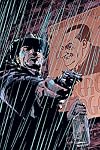
Most readers of graphic novels are well-acquainted with Gotham City from the world of DC comics. This title takes an interesting approach, though. It reads more like a version of "CSI" or "Law and Order." It's Gotham from the point of view of the cops charged with its protection. In other Gotham stories, we mostly see this police force as background clutter, usually obstructing Batman or being embarrassed by the Joker. This book portrays the force as a collection of realistic law enforcement show more professionals who just happen to work a beat plagued with more than its share of costumed supervillains. It’s good drama and a fresh take on a genre that can sometimes get a little formulaic. show less
Lists
Awards


You May Also Like


Associated Authors
Statistics
- Works
- 55
- Also by
- 34
- Members
- 3,454
- Popularity
- #7,359
- Rating
- 4.0
- Reviews
- 107
- ISBNs
- 105
- Languages
- 7
- Favorited
- 1