
Darwyn Cooke (1962–2016)
Author of Richard Stark's Parker: The Hunter
About the Author
Darwyn Cooke was born in Toronto, Ontario, Canada on November 16, 1962. He was an illustrator of numerous heroes in the DC universe. He began as an animator on two key cartoon series in the 1990s: Batman: The Animated Series and Superman: The Animated Series, before joining the print medium. His show more breakthrough performance in print came with Batman: Ego, which was published in 2000. He won the 2006 Eisner Award for Best Single Issue for his work on DC's Solo #5 and also was recognized five times by the Joe Shuster Awards for achievement by Canadian comic book creators. He died from cancer on May 14, 2016 at the age of 53. (Bowker Author Biography) show less
Image credit: Nightscream
Series
Works by Darwyn Cooke
Before Watchmen: Minutemen #1 (2012) — Author; Illustrator; Cover artist, some editions — 30 copies, 3 reviews
Before Watchmen: Minutemen #2 (2012) — Author; Illustrator; Cover artist, some editions — 19 copies, 1 review
Before Watchmen: Minutemen #4 (2012) — Author; Illustrator; Cover artist, some editions — 16 copies, 1 review
Before Watchmen: Minutemen #3 (2012) — Author; Illustrator; Cover artist, some editions — 14 copies, 1 review
Before Watchmen: Minutemen #5 (2013) — Author; Illustrator; Cover artist, some editions — 12 copies, 1 review
Before Watchmen: Minutemen #6 (2013) — Author; Illustrator; Cover artist, some editions — 8 copies, 1 review
Catwoman (2002-2010) #2 — Illustrator — 4 copies
Wolverine/Doop #1 - The Pink Mink, Part 1: Day of the Pink Psychos — Illustrator — 3 copies
Wolverine/Doop #2 - The Pink Mink, Part 2: Cherchez La Femme — Illustrator — 3 copies
Spirit #10 2 copies
The Spirit #10 2 copies
Spider-Man's Tangled Web #21 1 copy
Superman, kryptonita 1 copy
SUPERMAN CONFIDENTIAL first issud — Author — 1 copy
Human Values 1 copy
Detective Comics (1937) #788 1 copy
Strażnicy - początek 1 copy
Associated Works
9-11: The World's Finest Comic Book Writers & Artists Tell Stories to Remember (2002) — Contributor — 256 copies, 1 review
Monsters and Madmen (The Haunted Strangler / Corridors of Blood / The Atomic Submarine / First Man into Space) (1958) — Cover artist, some editions — 11 copies
Detective Comics #761 — Illustrator — 5 copies
Detective Comics #762 — Illustrator — 5 copies
Detective Comics #760 — Illustrator — 4 copies
X-Statix (2002) #1 - Good Omens, Part 1: Code X — Illustrator — 4 copies
Tagged
Common Knowledge
- Canonical name
- Cooke, Darwyn
- Birthdate
- 1962-11-16
- Date of death
- 2016-05-14
- Gender
- male
- Education
- George Brown College
- Occupations
- comic book artist
- Organizations
- Warner Bros.
DC Comics - Awards and honors
- Eisner Award
- Relationships
- Cooke, Marsha (spouse)
- Cause of death
- lung cancer
- Nationality
- Canada
- Birthplace
- Toronto, Ontario, Canada
- Places of residence
- Safety Harbor, Pinellas County, Florida, USA
- Place of death
- Safety Harbor, Pinellas County, Florida, USA
- Burial location
- cremated
- Associated Place (for map)
- Safety Harbor, Pinellas County, Florida, USA
Members
Reviews
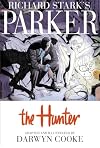
Somewhat overrated, I can, nevertheless, see why 'The Hunter' caused a stir and why it has become a cult since it was published in 1962. It was made into one of the best and most taut crime films ever made - 'Point Blank' (1967), starring Lee Marvin.
The main protagonist is Parker, a sociopathic criminal who follows a very simple pattern of behaviour, expecting to get what is due to him and prepared to do anything to achieve that end. Like many sociopaths he craves order. A betrayal has show more disrupted him: it must be corrected.
Stark (possibly named for the very stark adaptation of the hard-boiled style) is really Donald E. Westlake who was still publishing Parker noves in the year he died (2008). The opening pages are an exemplar of good hardboiled writing. Indeed the writing is good throughout.
Where it falls down a little is not in the characterisation or the atmosphere but in a fault that is not his entirely - an unrealistic description of organised crime and a plot line that is far too tied to his market: men in grey suits who wished they were sociopaths but are not and never could be.
This is the period of the FBI's and public's final coming to terms with the existence of organised crime after a raid on the farcical Apalachin Mafia Summit in 1957 but one still well before effective wire-tapping was to show the public what a bunch of foul-mouthed thugs made up the business.
As a result Stark buys into the contemporary mythos of organised crime as some sort of parallel and sophisticated capitalism structured like General Motors and shadowing the world of organisational man (the depressing 'Organisation Man' had appeared in 1956).
A manichean situation emerges of a 'bad' capitalism sitting alongside a good capitalism (the one in which many readers actually sat and which is now given subtle meaning by being heaven to hell) where the practices and ideology of daily life are precisely mirrored but implicitly demonic.
The readers will go home to wives or aspire to wives and homes but the criminals have callous and disposable relationships with much better looking whores. The sexual element in the novel is a case study in repressed desire for the reader.
The situation is complicated further by the fact that the sociopathic Parker who steals kills, beats women and seeks revenge is presented somewhat heroically only because he is not an organisation man - he is a fantasy for the 'good' managers in meaningless jobs who envy his freedom.
Parker is, in fact, that classic American myth - the free gun-toting individualist (at the frontier of capitalism this time) whose fantasy existence somehow manages to be a cathartic project for men who had become trapped in work and management long after the excitement of war.
Parker is a self-made man, an independent businessman (perhaps like the fathers of many organisation men) who seems to have no problem acquiring wealth (through crime) or women, and hits back and threatens organised crime/business when it fails to give him what he wants.
The absurd fantasy that Parker's culture of independent traders - bank robbers ultimately drawn from the history of the Wild West and closer to the James-Younger or Dalton gangs - would operate like a society to undermine the business model of the 'Outfit' is a point of true absurdity.
'The Outfit', by the way, is the name given 'in real life' to the Chicago Mob led at that time by Sam Giancana who, arguably, did run an operation that was the closest the Mafia ever came to General Motors but even that concession to history is not enough to make the back story credible.
The reason why the book stands as a cult novel (and a reason why the character of Parker was sustained for so many years) is simply this - it is not social realism, despite the illusion given us by the hard-boiled style, it is a fantasy that hits a nerve for a certain type of American male.
All the anger (including the bitter attitude to women who cannot be trusted and yet still declare their 'feelings') and resentments of one of the most constrained and repressed generations of male in history are expressed in this story. From that point of view, it is 'mythic'.
In other words, the importance of the novel lies not in its literary merit (though it mostly reads very well) and certainly not in its flawed representation of external reality but in its success in representing an inner psychological reality for many readers.
It is no accident that these same men were only just coming out of an extended period of cultural obsession with the West before it was tamed, of outlaws and law men. Westlake's transfer of the Western mythos into the canyons of the City was perfectly timed. show less
The main protagonist is Parker, a sociopathic criminal who follows a very simple pattern of behaviour, expecting to get what is due to him and prepared to do anything to achieve that end. Like many sociopaths he craves order. A betrayal has show more disrupted him: it must be corrected.
Stark (possibly named for the very stark adaptation of the hard-boiled style) is really Donald E. Westlake who was still publishing Parker noves in the year he died (2008). The opening pages are an exemplar of good hardboiled writing. Indeed the writing is good throughout.
Where it falls down a little is not in the characterisation or the atmosphere but in a fault that is not his entirely - an unrealistic description of organised crime and a plot line that is far too tied to his market: men in grey suits who wished they were sociopaths but are not and never could be.
This is the period of the FBI's and public's final coming to terms with the existence of organised crime after a raid on the farcical Apalachin Mafia Summit in 1957 but one still well before effective wire-tapping was to show the public what a bunch of foul-mouthed thugs made up the business.
As a result Stark buys into the contemporary mythos of organised crime as some sort of parallel and sophisticated capitalism structured like General Motors and shadowing the world of organisational man (the depressing 'Organisation Man' had appeared in 1956).
A manichean situation emerges of a 'bad' capitalism sitting alongside a good capitalism (the one in which many readers actually sat and which is now given subtle meaning by being heaven to hell) where the practices and ideology of daily life are precisely mirrored but implicitly demonic.
The readers will go home to wives or aspire to wives and homes but the criminals have callous and disposable relationships with much better looking whores. The sexual element in the novel is a case study in repressed desire for the reader.
The situation is complicated further by the fact that the sociopathic Parker who steals kills, beats women and seeks revenge is presented somewhat heroically only because he is not an organisation man - he is a fantasy for the 'good' managers in meaningless jobs who envy his freedom.
Parker is, in fact, that classic American myth - the free gun-toting individualist (at the frontier of capitalism this time) whose fantasy existence somehow manages to be a cathartic project for men who had become trapped in work and management long after the excitement of war.
Parker is a self-made man, an independent businessman (perhaps like the fathers of many organisation men) who seems to have no problem acquiring wealth (through crime) or women, and hits back and threatens organised crime/business when it fails to give him what he wants.
The absurd fantasy that Parker's culture of independent traders - bank robbers ultimately drawn from the history of the Wild West and closer to the James-Younger or Dalton gangs - would operate like a society to undermine the business model of the 'Outfit' is a point of true absurdity.
'The Outfit', by the way, is the name given 'in real life' to the Chicago Mob led at that time by Sam Giancana who, arguably, did run an operation that was the closest the Mafia ever came to General Motors but even that concession to history is not enough to make the back story credible.
The reason why the book stands as a cult novel (and a reason why the character of Parker was sustained for so many years) is simply this - it is not social realism, despite the illusion given us by the hard-boiled style, it is a fantasy that hits a nerve for a certain type of American male.
All the anger (including the bitter attitude to women who cannot be trusted and yet still declare their 'feelings') and resentments of one of the most constrained and repressed generations of male in history are expressed in this story. From that point of view, it is 'mythic'.
In other words, the importance of the novel lies not in its literary merit (though it mostly reads very well) and certainly not in its flawed representation of external reality but in its success in representing an inner psychological reality for many readers.
It is no accident that these same men were only just coming out of an extended period of cultural obsession with the West before it was tamed, of outlaws and law men. Westlake's transfer of the Western mythos into the canyons of the City was perfectly timed. show less
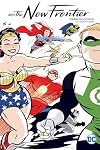
Even when I had only seen the movie, I noticed that The New Frontier felt somewhat Watchmen-adjacent. It lacks Watchmen’s genre deconstruction, and its politics aren’t nearly as forceful, but that’s hardly surprising. There’s a reason DC wouldn’t allow Moore to use canonical characters to tell the story he wanted to tell. But the parallels are even more obvious when enjoying the story in its intended form. Seeing it on the page, with its thick white borders around each panel and show more impressive full-page spreads and intertextual elements like newspaper articles and investigation notes makes it feel like a much more literary experience. Its narrative consequently feels less “boring”/slow and more… measured? Deliberate? There’s a pretty big difference with this kind of pacing when it feels on purpose, like it has a point.
I think probably the most important element of the plot that comes across better in print than on the screen is that the menacing threat of the Centre, which isn’t even fully revealed until towards the end of the penultimate issue of this six-issue miniseries, feels a heck of a lot more genuinely foreboding and threatening instead of just being a kind of boring and weird antagonist that doesn’t show up until the movie is almost over.
The print medium also does wonders for the clash of style between Golden Age and Silver Age heroes, an element that frankly didn’t even really come across in the movie? I do wonder if I would feel differently about the movie if I had read the comic first, but I guess that’s something I’ll never know. And while the comic is a huge improvement (anachronistically, given that it came first) over the movie, it does share many of its shortcomings.
You probably already guessed where I’m going here. This story, in either medium, is some serious American propaganda. Like, it goes out of its way to be propaganda. It ends with a speech from President Kennedy for crying out loud. It mostly portrays the U.S. as the good guys in the Cold War, the most egregious example probably being the ridiculously contrived scenario where Wonder Woman rescues a bunch of Vietnamese women from Viet Cong soldiers. Because yeah, sure! It was definitely the Viet Cong soldiers most commonly menacing the women of their own country, not the foreign invaders who came to enforce imperialism on them. Sure. Sure. That’s totally real.
The comic, while still largely misguided, does have two pretty substantial advantages over its movie adaptations in this arena. For one thing, while the U.S. comes across pretty unambiguously as the good guys in the Korean War in the movie, the comic actually gives a lot more weight to Hal’s pacifism having a point to it, with him explicitly saying he doesn’t think what the U.S. was fighting for in Korea is worth killing anyone over. This is difficult to reconcile against the comic’s otherwise wholehearted endorsement of the U.S. labeling communism as “tyranny,” but it’s something, and the movie had a whole lot of nothing on this front.
But when it comes to politics, and storytelling in general, the beating heart of the comic is just totally missing. And that’s John Wilson, who took on the persona of John Henry. The tragic story of John Henry, and the iconic panel of a young John Henry Irons sitting by his grave, is probably the single most affecting thing in this entire comic. It’s the only time the comic’s politics have the vital force of truth behind them. And they just don’t include it in the movie at all.
It completely reframed my opinion of this story. Its politics are still deeply misguided, it still seems to buy that the U.S. is an essentially good but deeply flawed country that can Do Better, that while the government’s responses to communism threaten civil liberties communism is still Bad Actually. But in spite of that, John Henry’s story is something raw, something real. Something bigger than the supposedly larger text around him.
And they just didn’t include it at all in the movie. There’s like two blink and you miss it references to it. It would be like excising Valerie Page’s autobiography from V for Vendetta. It’s so much more important than the rest of the text around it, it’s just kind of nothing without it.
I mean, the comic would still be way better than the movie for all the reasons I already listed, but that just makes it unfair. show less
I think probably the most important element of the plot that comes across better in print than on the screen is that the menacing threat of the Centre, which isn’t even fully revealed until towards the end of the penultimate issue of this six-issue miniseries, feels a heck of a lot more genuinely foreboding and threatening instead of just being a kind of boring and weird antagonist that doesn’t show up until the movie is almost over.
The print medium also does wonders for the clash of style between Golden Age and Silver Age heroes, an element that frankly didn’t even really come across in the movie? I do wonder if I would feel differently about the movie if I had read the comic first, but I guess that’s something I’ll never know. And while the comic is a huge improvement (anachronistically, given that it came first) over the movie, it does share many of its shortcomings.
You probably already guessed where I’m going here. This story, in either medium, is some serious American propaganda. Like, it goes out of its way to be propaganda. It ends with a speech from President Kennedy for crying out loud. It mostly portrays the U.S. as the good guys in the Cold War, the most egregious example probably being the ridiculously contrived scenario where Wonder Woman rescues a bunch of Vietnamese women from Viet Cong soldiers. Because yeah, sure! It was definitely the Viet Cong soldiers most commonly menacing the women of their own country, not the foreign invaders who came to enforce imperialism on them. Sure. Sure. That’s totally real.
The comic, while still largely misguided, does have two pretty substantial advantages over its movie adaptations in this arena. For one thing, while the U.S. comes across pretty unambiguously as the good guys in the Korean War in the movie, the comic actually gives a lot more weight to Hal’s pacifism having a point to it, with him explicitly saying he doesn’t think what the U.S. was fighting for in Korea is worth killing anyone over. This is difficult to reconcile against the comic’s otherwise wholehearted endorsement of the U.S. labeling communism as “tyranny,” but it’s something, and the movie had a whole lot of nothing on this front.
But when it comes to politics, and storytelling in general, the beating heart of the comic is just totally missing. And that’s John Wilson, who took on the persona of John Henry. The tragic story of John Henry, and the iconic panel of a young John Henry Irons sitting by his grave, is probably the single most affecting thing in this entire comic. It’s the only time the comic’s politics have the vital force of truth behind them. And they just don’t include it in the movie at all.
It completely reframed my opinion of this story. Its politics are still deeply misguided, it still seems to buy that the U.S. is an essentially good but deeply flawed country that can Do Better, that while the government’s responses to communism threaten civil liberties communism is still Bad Actually. But in spite of that, John Henry’s story is something raw, something real. Something bigger than the supposedly larger text around him.
And they just didn’t include it at all in the movie. There’s like two blink and you miss it references to it. It would be like excising Valerie Page’s autobiography from V for Vendetta. It’s so much more important than the rest of the text around it, it’s just kind of nothing without it.
I mean, the comic would still be way better than the movie for all the reasons I already listed, but that just makes it unfair. show less
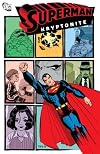
This one is pretty special; Darwyn Cooke and Tim Sale are both high up in my rankings. This is a story from early in Superman's career, when he first learns that he has a vulnerability: ironically enough, the fragments of his home world Krypton. This is also a re-telling of how he learned of his origin, and how he and Lois Lane took their first steps on a relationship path that would lead to their eventual marriage. The story about how an alien historian becomes trapped in a large Kryptonite show more fragment which follows young Kal-El to Earth, and manages to join his path with Superman's as he begins his exploits, is clever and engaging. But the really special stuff here is the emotional side of the story: how Lois ends her relationship with Superman when she realizes she can't share him with the world and its demands upon him, how Superman realizes that his newfound mortality provides him a common link with humanity, and the scenes when he tells his adoptive parents of his fears and hopes for himself. This is excellent work, and it is interesting to compare it to the recent Superman - Batman tale, "The Search for Kryptonite". There, a more experienced Superman decides that the best thing all around is to rid the world of Kryptonite, and enlists Batman to help him. Here, in a far more mature portrayal, a young Superman rejoices that he now knows the fear of pain and death, which gives him a new bond he shares with the beings of the planet he protects. Fine artwork by Tim Sale, as usual, with a nicely appropriate nostalgic touch to it. show less

This volume collects two of the Before Watchmen series that DC commissioned and published against the wishes of Watchmen author Alan Moore. The first series is the six-issue Minutemen, chronicling the WWII-era predecessors to the Watchmen, and the second is four numbers of Silk Spectre, with a story about Laurie Jupiter in the 1960s. Darwyn Cooke serves as auteur for Minutemen, both writing and drawing throughout, and he gets a co-writer credit on the Silk Spectre issues by Amanda Conner. I show more wasn't interested in the individual issues when they were on comic shop shelves about five years ago, but curiosity got the better of me when I saw this book at the public library.
The opening of Minutemen is clever and effective. Cooke imitates Moore's portentous voice and the panel designs from Watchmen (i.e. stacked full-width panels, with a repeating geometric motif--in this case the centered circle that turns out to be a clock), only to pull the perspective back and reveal Hollis Mason (the original Nite Owl) frustrated with his own prose style as he composes his memoirs. That breaks the tension and assuages the anxiety of influence so that Cooke can get down to work telling a story that really does share the ethos of Watchmen in exploring the interactions of deeply flawed costumed vigilantes and their efforts to work together as a team. Cooke's visual characterizations are very different than those of Watchmen artist Dave Gibbons, but still suited to the material.
I was not as pleased with the shorter Silk Spectre story. It has Laurie running away from home and going to San Francisco to fall in with the sixties counterculture. It cast Owsley Stanley as a villain, collaborating to use hallucinogenic mind-control to re-instill materialistic consumerism in hippies. Neither Laurie nor her mother Sally were especially likable characters--the general approach of highlighting their personal flaws seemed to backfire here. I did enjoy Amanda Conner's art, though. It has a polished 21st-century comics ambiance, and she did excellent work depicting the retro-psychedelic subject matter. show less
The opening of Minutemen is clever and effective. Cooke imitates Moore's portentous voice and the panel designs from Watchmen (i.e. stacked full-width panels, with a repeating geometric motif--in this case the centered circle that turns out to be a clock), only to pull the perspective back and reveal Hollis Mason (the original Nite Owl) frustrated with his own prose style as he composes his memoirs. That breaks the tension and assuages the anxiety of influence so that Cooke can get down to work telling a story that really does share the ethos of Watchmen in exploring the interactions of deeply flawed costumed vigilantes and their efforts to work together as a team. Cooke's visual characterizations are very different than those of Watchmen artist Dave Gibbons, but still suited to the material.
I was not as pleased with the shorter Silk Spectre story. It has Laurie running away from home and going to San Francisco to fall in with the sixties counterculture. It cast Owsley Stanley as a villain, collaborating to use hallucinogenic mind-control to re-instill materialistic consumerism in hippies. Neither Laurie nor her mother Sally were especially likable characters--the general approach of highlighting their personal flaws seemed to backfire here. I did enjoy Amanda Conner's art, though. It has a polished 21st-century comics ambiance, and she did excellent work depicting the retro-psychedelic subject matter. show less
Lists
Awards


You May Also Like


Associated Authors
Statistics
- Works
- 113
- Also by
- 48
- Members
- 5,557
- Popularity
- #4,474
- Rating
- 4.0
- Reviews
- 146
- ISBNs
- 211
- Languages
- 11
- Favorited
- 13