
Sylvia McNicoll
Author of Crush. Candy. Corpse.
Series
Works by Sylvia McNicoll
Associated Works
Tagged
Common Knowledge
- Canonical name
- Sylvia McNicoll
- Birthdate
- 1954-09-30
- Gender
- female
- Education
- Concordia University, Montreal
- Relationships
- McNicoll, Bob (husband)
- Nationality
- Canada
- Associated Place (for map)
- Canada
Members
Reviews
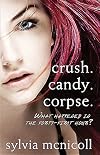
My thoughts on Crush. Candy. Corpse. By Sylvia McNicoll
Crush. Candy. Corpse. Isn’t a typical young adult book. I was completely taken by surprise when I started reading it. But I have to make this perfectly clear…
I loved it. I think everyone should read it.
But don’t go into thinking it’s going to be a sappy, romantic contemporary love story with a happily ever after ending like I did, because it isn’t and it won’t. This is a totally different experience. One that can potentially show more change lives.
Crush. Candy. Corpse. Follows the court hearing of Sunny who is charged with murdering one of the Alzheimer patients she was assigned to work with for her high-school’s mandatory forty-hour community service hours. The chapters alternate between the courtroom scenes and scenes at Paradise Manor, the Alzheimer home.
The book is riveting. I couldn’t put it down. I had to know what was going to happen next, what witness was going to be called and what they would say…what was going to be revealed in the scene at Paradise Manor…I was immersed in the story.
Sunny starts out her mandatory forty-hour community service hours hating her placement. She doesn’t want to be at Paradise Manor. She thinks it smells, the old people are weird, she doesn’t know how to deal with them. She wants to be anywhere but there.
But as the story progresses, we see Sunny mature. She begins to develop relationships with the patients, care about them. She worries if they are eating enough, if their families are visiting enough, if their clothes fit right. She develops a sense of empathy toward them that she didn’t have at the beginning of the book. We watch this growth as we go through her murder trial with her.
This book touches on some very deep and emotional subjects. Alzheimer’s disease and the effects it has on a family and the person afflicted. And, perhaps even harder to deal with, euthanasia. Is it okay to end a person’s life if they ask you to? When is the time to do so? Or is it never an option?
Crush. Candy. Corpse. Looks at these questions form a young adult’s view. It’s a powerful book.
Bottom line: Would I recommend it? Yes! Most definitely. Would I read it again? That’s a hard question. As much as I loved the book, it was also emotionally draining. I don’t know if I would read it again. Also, knowing the outcome, it wouldn’t have the same impact as the first time I read it.
Five Stars. It was an exceptional book. Not what I was expecting at all. It was much, much better! show less
Crush. Candy. Corpse. Isn’t a typical young adult book. I was completely taken by surprise when I started reading it. But I have to make this perfectly clear…
I loved it. I think everyone should read it.
But don’t go into thinking it’s going to be a sappy, romantic contemporary love story with a happily ever after ending like I did, because it isn’t and it won’t. This is a totally different experience. One that can potentially show more change lives.
Crush. Candy. Corpse. Follows the court hearing of Sunny who is charged with murdering one of the Alzheimer patients she was assigned to work with for her high-school’s mandatory forty-hour community service hours. The chapters alternate between the courtroom scenes and scenes at Paradise Manor, the Alzheimer home.
The book is riveting. I couldn’t put it down. I had to know what was going to happen next, what witness was going to be called and what they would say…what was going to be revealed in the scene at Paradise Manor…I was immersed in the story.
Sunny starts out her mandatory forty-hour community service hours hating her placement. She doesn’t want to be at Paradise Manor. She thinks it smells, the old people are weird, she doesn’t know how to deal with them. She wants to be anywhere but there.
But as the story progresses, we see Sunny mature. She begins to develop relationships with the patients, care about them. She worries if they are eating enough, if their families are visiting enough, if their clothes fit right. She develops a sense of empathy toward them that she didn’t have at the beginning of the book. We watch this growth as we go through her murder trial with her.
This book touches on some very deep and emotional subjects. Alzheimer’s disease and the effects it has on a family and the person afflicted. And, perhaps even harder to deal with, euthanasia. Is it okay to end a person’s life if they ask you to? When is the time to do so? Or is it never an option?
Crush. Candy. Corpse. Looks at these questions form a young adult’s view. It’s a powerful book.
Bottom line: Would I recommend it? Yes! Most definitely. Would I read it again? That’s a hard question. As much as I loved the book, it was also emotionally draining. I don’t know if I would read it again. Also, knowing the outcome, it wouldn’t have the same impact as the first time I read it.
Five Stars. It was an exceptional book. Not what I was expecting at all. It was much, much better! show less

To say that I had low expectations for this book would be an understatement. This isn't to imply that the book's description made it sound dreary and uninteresting, but the novels that I typically enjoy reading do not involve fourteen year old girls trying to establish their cultural, social, and familial identities. Yet, this presumptuous estimation taught me once again that a book cannot fully be judged before sitting down and immersing one’s self within the pages of its narrative. After show more reading the book, I am surprised to find myself saying that I loved Sylvia McNicoll’s Young Adult novel, “Best Friends Through Eternity”.
There was something about the protagonist of “Best Friends Through Eternity” that captivated me almost immediately. An outsider of the social cliques of her high school, Paige nevertheless is able to maintain and exhibit a strong personal identity. McNicoll has created a character that is intuitively aware of her position within the social framework of her Canadian high school; Paige, a Chinese adolescent who has lived in Canada since she was an infant with her Canadian-born adoptive mother and father, has an identity that remains consistent throughout the book. There is a subtle, implicit confidence that Paige exudes throughout the narrative, and I found her acceptance of where she stands in the social hierarchy of high school, and her acknowledgement of the cultural clash she feels between her Chinese heritage and her Canadian environment, to be very endearing and charming. Paige is not concerned with becoming someone else in order to fit in, nor is she overly worried about dating the most popular boy in school; Paige’s priorities are evident from the beginning and the implicit acceptance of who she is, without resorting to desperate attempts to fit in with the larger social circle, is a characteristic that I found refreshing and inspirational.
The overarching themes of death and fate resound throughout the book; Shakespeare’s “Romeo and Juliet”, a play which explicitly embodies these two motifs, is referenced numerous times throughout the novel, and Paige is keenly self-aware of her own mortality and the mortality of those around her.One of the ways that McNicoll touches upon the themes of fate and death is through her narrative composition, which has Paige able to return from the realm of the dead in order to alter and affect the lives of those around her. Paige continues to question whether her interference, and her omniscient knowledge of her own impending death, will have an effect on her family, her friends, and her enemies and, if so, in what ways. I enjoyed the way that McNicoll continued to reference back to the themes of fate and death, thus encouraging the reader to consider his or her own mortality and the (natural?) development of events that occur throughout our lives.
I have one minor, very subjective criticism about this book: the ending.I felt that Paige should have died at the end of the book. I understand completely why McNicoll chose to have her live, given that Paige was able to go back and learn the lessons needed for her to live a better life, but I think it would have been all the more profound if the book reflected "Romeo and Juliet”’s take on fate and had Paige die after she was hit by the train. Shakespeare wrote his play to reflect the idea that fate cannot be altered; outside influences could not change the course of events that have been predestined by some (super?)natural force. I thought it would have been a fitting ending if Paige ended up dying saving Vanessa, the girl who has tormented and bullied her as a result of her deeply-rooted anger and resentment. The natural progression that Paige would have gone through, namely trying to save only herself, then attempting to save her friend Jasmine but failing, and then finally successfully saving her enemy from the train, I believe, would have made for a very powerful ending. I am aware, however, of the powerful message that McNicoll's ending has on the overall narrative of the book and I am aware that 98% of readers would prefer McNicoll's ending over my own, but it was one point, as I was reading the book, that I wished had been written slightly differently. Nevertheless, this is merely my own personal thoughts, and it does, in no way, affect my views of just how great a book "Best Friends Through Eternity" is.
There’s not much more I can say. Incredibly developed characters, an intriguing plot, a powerful message, and a clear writing style make for a great book and “Best Friends Through Eternity” certainly is that. I would highly recommend this book to readers, both adolescent and adult, with the hope that they enjoy this novel as much as I did.
4.5/5 show less
There was something about the protagonist of “Best Friends Through Eternity” that captivated me almost immediately. An outsider of the social cliques of her high school, Paige nevertheless is able to maintain and exhibit a strong personal identity. McNicoll has created a character that is intuitively aware of her position within the social framework of her Canadian high school; Paige, a Chinese adolescent who has lived in Canada since she was an infant with her Canadian-born adoptive mother and father, has an identity that remains consistent throughout the book. There is a subtle, implicit confidence that Paige exudes throughout the narrative, and I found her acceptance of where she stands in the social hierarchy of high school, and her acknowledgement of the cultural clash she feels between her Chinese heritage and her Canadian environment, to be very endearing and charming. Paige is not concerned with becoming someone else in order to fit in, nor is she overly worried about dating the most popular boy in school; Paige’s priorities are evident from the beginning and the implicit acceptance of who she is, without resorting to desperate attempts to fit in with the larger social circle, is a characteristic that I found refreshing and inspirational.
The overarching themes of death and fate resound throughout the book; Shakespeare’s “Romeo and Juliet”, a play which explicitly embodies these two motifs, is referenced numerous times throughout the novel, and Paige is keenly self-aware of her own mortality and the mortality of those around her.
I have one minor, very subjective criticism about this book: the ending.
There’s not much more I can say. Incredibly developed characters, an intriguing plot, a powerful message, and a clear writing style make for a great book and “Best Friends Through Eternity” certainly is that. I would highly recommend this book to readers, both adolescent and adult, with the hope that they enjoy this novel as much as I did.
4.5/5 show less
 This review was written for LibraryThing Early Reviewers.
The Best Mistake Mystery
By: Sylvia McNicoll
I received an e-ARC from NetGalley in exchange for my honest review.
Plot:
This is a really fun mystery! The narrator (Stephen) counts his mistakes each day. The format of the book is enumerating each mistake per day (Day One, Mistake One). The clever part is that this mystery is solved because of his mistakes. Each little detail becomes clear as the mystery resolves itself. A schoolmate's brother (Renee - friend; Atilla - friend's brother) has been show more accused of a crime. Someone has crashed a car into the school causing damage and mayhem. Stephen and Renee set out to solve the mystery in order to clear Atilla's name.
Characters:
Stephen and Renee are both middle schoolers and are both outsiders. They have quirks that mean they don't fit into the norm. They are prime targets for middle school torture. At the beginning of the book the two don't even like each other much. They grate on each other and against the rest of the school population. What I loved so much about this book though was how the author turned what most people saw as a flaw (Stephen reading too much into situations) into a positive (using those analysis and observation skills to solve a mystery). That's a great lesson for kids to hear. Renee (the super smart kid at school) seems to be the only one who recognizes his skills and appreciates them. She helps Stephen develop. By the end they are true best friends - really a lovely transformation.
Conclusion:
If you like a mystery where all the confusing bits and pieces throughout the story resolve into a satisfying conclusion then this book is for you! show less
By: Sylvia McNicoll
I received an e-ARC from NetGalley in exchange for my honest review.
Plot:
This is a really fun mystery! The narrator (Stephen) counts his mistakes each day. The format of the book is enumerating each mistake per day (Day One, Mistake One). The clever part is that this mystery is solved because of his mistakes. Each little detail becomes clear as the mystery resolves itself. A schoolmate's brother (Renee - friend; Atilla - friend's brother) has been show more accused of a crime. Someone has crashed a car into the school causing damage and mayhem. Stephen and Renee set out to solve the mystery in order to clear Atilla's name.
Characters:
Stephen and Renee are both middle schoolers and are both outsiders. They have quirks that mean they don't fit into the norm. They are prime targets for middle school torture. At the beginning of the book the two don't even like each other much. They grate on each other and against the rest of the school population. What I loved so much about this book though was how the author turned what most people saw as a flaw (Stephen reading too much into situations) into a positive (using those analysis and observation skills to solve a mystery). That's a great lesson for kids to hear. Renee (the super smart kid at school) seems to be the only one who recognizes his skills and appreciates them. She helps Stephen develop. By the end they are true best friends - really a lovely transformation.
Conclusion:
If you like a mystery where all the confusing bits and pieces throughout the story resolve into a satisfying conclusion then this book is for you! show less
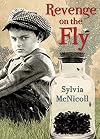
Will sees a chance to better his circumstances when he enters a fly-catching contest. The question is, how far is he willing to go to win?
I enjoyed this book tremendously. The story moves quickly, and Will is a immensely appealing narrator. Will is intelligent but also crafty; honest, but not above bending the rules to his own interests. The idea of the fly-collecting contest — as disgusting as it might seem to us today — was inspired by real events and real historical figures. This show more inspiration offers a unique and unexpected way to explore Will's larger story.
Read my complete review in RESOURCE LINKS 19.5 (June 2014). show less
I enjoyed this book tremendously. The story moves quickly, and Will is a immensely appealing narrator. Will is intelligent but also crafty; honest, but not above bending the rules to his own interests. The idea of the fly-collecting contest — as disgusting as it might seem to us today — was inspired by real events and real historical figures. This show more inspiration offers a unique and unexpected way to explore Will's larger story.
Read my complete review in RESOURCE LINKS 19.5 (June 2014). show less
Lists
Awards


You May Also Like


Associated Authors
Statistics
- Works
- 35
- Also by
- 1
- Members
- 316
- Popularity
- #74,770
- Rating
- 3.8
- Reviews
- 24
- ISBNs
- 84
- Languages
- 4
