
Nikolai Bukharin (1888–1938)
Author of Imperialism and World Economy
About the Author
Image credit: From Wikipedia
Works by Nikolai Bukharin
L' accumulazione socialista 4 copies
Le vie della rivoluzione 1925-1936 3 copies
The great purge trial 3 copies
Nikolai Bucharin, Abram Deborin : Kontroversen über dialektischen und mechanistischen Materialismus (1974) 3 copies
The ABC of communism 3 copies
Building Up Socialism 2 copies
Das ABC des Kommunismus : populäre Erl. d. Programms d. Kommunist. Partei Russlands (Bolschewiki) 2 copies
The ABC's of Communism: with newly transcribed Chapters 12-19 and Appendix from Equals Publishing & Rhiza (2022) 2 copies
Lenin as a Marxist 1 copy
Kommunismens ABCD 1 copy
Политическая экономия рантье Теория ценности и прибыли австр. шк. : Репринт. воспроизведение изд.… 1 copy
Os Economistas: Bukharin 1 copy
Culture in two worlds 1 copy
Lenin 1 copy
Komünizmin ABECESİ;Rusya Bolşevik Komünist Partisi Programının Herkesçe Anlaşılır Bir Açıklaması (2023) 1 copy
Associated Works
The German Revolution and the Debate on Soviet Power: Documents, 1918-1919; Preparing the Founding Congress (1986) — Contributor — 31 copies
A Documentary History of Communism and the World: From Revolution to Collapse (1960) — Contributor — 14 copies
Illustrated history of the Russian revolution — Contributor — 1 copy
Tagged
Common Knowledge
- Legal name
- Bukharin, Nikolai Ivanovich
- Other names
- Бухарин, Николай Иванович
BUKHARIN, Nikolai Ivanovich
BUCHARIN, Nikolaj Ivanovič, - Birthdate
- 1888-10-09
- Date of death
- 1938-03-15
- Gender
- male
- Occupations
- revolutionary
intellectual
politician
General Secretary of the Executive Committee of the Communist International (1926-1929)
Member of the Politburo of the Central Committee of the Communist Party of the Soviet Union (1924-1929) - Organizations
- Communist Party of the Soviet Union
- Relationships
- Larina, Anna (wife|widow)
- Cause of death
- giustiziato dall'NKVD
- Nationality
- USSR
- Birthplace
- Moscow, Russian Empire
- Place of death
- Moscow, Russia, USSR
- Map Location
- Russia
Members
Reviews
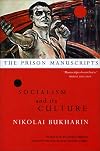
It is odd to give a rating to a work like this, for who am I to rate it? This book is the first publication in English of Old Bolshevik leader N.I. Bukharin's manuscripts. These manuscripts were written over the year 1937, when Bukharin was imprisoned in the Lubyanka, awaiting a forced confession, show trial, and eventual execution on Stalin's orders. Despite these depressing circumstances and the certainty of impending doom, Bukharin managed to write a sizable amount: part of it show more autobiographical, recently published as well, and part of it political, which can be found in this volume.
The book itself deals with a description of what meaning socialism has for Bukharin, and in particular with the problematic relating to the issue of culture in a socialist society. His tone is generally dogmatic and jargon-laden in the typical USSR style, and what makes it even more grating at first is that Bukharin under the circumstances has to blithely pretend that the USSR was in his time the socialist society as he had envisioned how it should be. The contrast between the lofty and idealistic descriptions of how the ideal USSR would have been and the real USSR he was awaiting execution in makes this work an important historical document and an intriguing read, even if Bukharin's actual discussion is often vague and doctrinaire. He was clearly a very intelligent man, well-read and with knowledge of German and English, and there are certainly parts of this work that are insightful even today, especially if one takes into account that Bukharin did not have the opportunity to do any kind of editing or revision (the editors of this volume have decided to keep it that way to honor its tragic nature).
Bukharin's discussion often takes the form of a kind of question-answer format, where he takes a popular criticism of the idea of socialism and then goes on to refute it. In so doing, he tackles a lot of issues that are not often or at all mentioned in most tracts defending socialism, including the status of the individual in socialist society, the possibility of (artistic) genius, the nature of science, the 'nationalities question', as well as the for his time burning question of fascism. (This volume was probably originally a second volume, preceded by a discussion of fascism in particular, but the latter seems not to have been preserved by Stalin.) Still, Bukharin is no more able to give concrete and useful answers to many of these questions than anyone else, and his jargon gets tiresome after a while. It doesn't help much either that the translator, George Shriver, occasionally interrupts to give commentary on things Bukharin wrote, which I would have left out.
Probably mostly interesting to those interested in Soviet history. For more on Bukharin, see Stephen Cohen's biography: "Bukharin and the Bolshevik Revolution: A Political Biography, 1888-1938". show less
The book itself deals with a description of what meaning socialism has for Bukharin, and in particular with the problematic relating to the issue of culture in a socialist society. His tone is generally dogmatic and jargon-laden in the typical USSR style, and what makes it even more grating at first is that Bukharin under the circumstances has to blithely pretend that the USSR was in his time the socialist society as he had envisioned how it should be. The contrast between the lofty and idealistic descriptions of how the ideal USSR would have been and the real USSR he was awaiting execution in makes this work an important historical document and an intriguing read, even if Bukharin's actual discussion is often vague and doctrinaire. He was clearly a very intelligent man, well-read and with knowledge of German and English, and there are certainly parts of this work that are insightful even today, especially if one takes into account that Bukharin did not have the opportunity to do any kind of editing or revision (the editors of this volume have decided to keep it that way to honor its tragic nature).
Bukharin's discussion often takes the form of a kind of question-answer format, where he takes a popular criticism of the idea of socialism and then goes on to refute it. In so doing, he tackles a lot of issues that are not often or at all mentioned in most tracts defending socialism, including the status of the individual in socialist society, the possibility of (artistic) genius, the nature of science, the 'nationalities question', as well as the for his time burning question of fascism. (This volume was probably originally a second volume, preceded by a discussion of fascism in particular, but the latter seems not to have been preserved by Stalin.) Still, Bukharin is no more able to give concrete and useful answers to many of these questions than anyone else, and his jargon gets tiresome after a while. It doesn't help much either that the translator, George Shriver, occasionally interrupts to give commentary on things Bukharin wrote, which I would have left out.
Probably mostly interesting to those interested in Soviet history. For more on Bukharin, see Stephen Cohen's biography: "Bukharin and the Bolshevik Revolution: A Political Biography, 1888-1938". show less

"Authorized translation of the third Russian edition."
Lists
Writers at Risk (1)
You May Also Like


Associated Authors
Statistics
- Works
- 62
- Also by
- 4
- Members
- 465
- Popularity
- #52,882
- Rating
- 3.7
- Reviews
- 2
- ISBNs
- 73
- Languages
- 8
- Favorited
- 4


