
Arwen Dayton
Author of Seeker
About the Author
Series
Works by Arwen Dayton
A Viajante 1 copy
Tagged
Common Knowledge
- Canonical name
- Dayton, Arwen
- Birthdate
- 1974
- Gender
- female
- Nationality
- USA
- Associated Place (for map)
- USA
Members
Discussions
Found: YA(?) Fantasy: Tools weave portals in Name that Book (January 2024)
Reviews
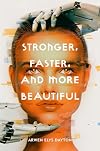
We have all seen movies set in the future, where humans have complete control over DNA and can create “perfect” children for a “perfect” society. I suspect that when one hears talk of genetic modifications, the thoughts that come to mind are curing diseases, customizing hair, skin, and eyes, correcting imperfections like poor vision or allergies, and a slew of other fairly benign changes that bring humans closer to society’s idea of perfection. Arwen Elys Dayton shares her view of show more the future in Stronger, Faster, and More Beautiful, and it is anything but this somewhat simplified picture of superficial changes. It is not that Ms. Dayton means to scare people into making ethical decisions regarding genetic modifications. It is that Ms. Dayton recognizes how the best intentions of humans never really turn out the way we expect them. What starts as a little change to the retina’s DNA to provide someone with 20/20 vision quickly morphs into giving someone the sight of an eagle or the olfactory senses of a dog. Her vision involves some grotesque changes that may or may not change the idea of what makes someone a human.
Therein lies Ms. Dayton’s point. What does make us human? Is it our mind or our body? What happens when we change ourselves to the point of being more animal or robot than human? What happens when we fill ourselves with someone else’s organs? Do we become the other person? Am I still me? These are classic conundrums regarding genetic modification, except with the advent of CRISPR, these questions are more important than ever. For now, the scientific community is drawing a hard line at using CRISPR for the humane genome, but that doesn’t mean that this hard line will remain forever.
Stronger, Faster, and More Beautiful means to shock and horrify you. There is a deliberate progression in each story as the main character shares his or her life in a world of extreme modification. Ms. Dayton makes no judgments, presenting each story in her vision of our future as matter-of-factly as possible. The reader provides the sentiment, whatever that may be, making it a novel ripe for discussion.
Stronger, Faster, and More Beautiful is disturbing. You would like to think that humans would never go to such extremes to change our bodies, but there is nothing in the novel which should surprise you. Humans have always been willing and eager to do extreme things to their bodies in an attempt to be different, make a statement, or achieve arbitrary beauty standards. It is not a stretch of the imagination to understand that should we gain the ability to make changes at the genetic level, those extreme changes take on a whole other meaning. As such, its characters will haunt you for a long time, and that is another point. The next time someone talks to you about CRISPR or genetic modification as the next scientific breakthrough, you will remember the six characters in Ms. Dayton’s story. We all should remember these characters. Our future may depend on it. show less
Therein lies Ms. Dayton’s point. What does make us human? Is it our mind or our body? What happens when we change ourselves to the point of being more animal or robot than human? What happens when we fill ourselves with someone else’s organs? Do we become the other person? Am I still me? These are classic conundrums regarding genetic modification, except with the advent of CRISPR, these questions are more important than ever. For now, the scientific community is drawing a hard line at using CRISPR for the humane genome, but that doesn’t mean that this hard line will remain forever.
Stronger, Faster, and More Beautiful means to shock and horrify you. There is a deliberate progression in each story as the main character shares his or her life in a world of extreme modification. Ms. Dayton makes no judgments, presenting each story in her vision of our future as matter-of-factly as possible. The reader provides the sentiment, whatever that may be, making it a novel ripe for discussion.
Stronger, Faster, and More Beautiful is disturbing. You would like to think that humans would never go to such extremes to change our bodies, but there is nothing in the novel which should surprise you. Humans have always been willing and eager to do extreme things to their bodies in an attempt to be different, make a statement, or achieve arbitrary beauty standards. It is not a stretch of the imagination to understand that should we gain the ability to make changes at the genetic level, those extreme changes take on a whole other meaning. As such, its characters will haunt you for a long time, and that is another point. The next time someone talks to you about CRISPR or genetic modification as the next scientific breakthrough, you will remember the six characters in Ms. Dayton’s story. We all should remember these characters. Our future may depend on it. show less
“It’s like death and toffee.”
(Full disclosure: I received a free e-ARC for review through NetGalley. Trigger warning for rape and homophobic violence.)
"Russia is starting to mine the solar system, and Americans are going to be getting their unicorn horns polished and designing children with claws and rainbow auras.”
***
He is passing from his own world into another, where humans and gravity hold sway. Up there, he isn’t Snake. He is only Chimera624, property of the Blessed Cures show more Consortium. If I were to examine the Consortium’s books, would I find myself listed as property too?
***
When you’d read Dickens, and Dickinson, and you’d read selections of Greek mythology and stories by a woman called Brontë and even a few by a man called Vonnegut—or at least, when you’d read the parts of those books that made it through the Proto Authority’s redaction process—you sometimes thought about a different sort of life.
***
This was, in a way, the beginning of a fairy tale.
***
This book began as a thought that one might variously describe as cynical or realistic (personally, my vote is on "all of the above"). While researching medical and technological advances on the horizon, Dayton's initial reaction was the obvious: amazaballs! (Yes, it is 2019 and I am still using that word. Sue me.) This was rapidly supplanted by the more pessimistic: “We will definitely find some way of messing this up in spectacular fashion.” The six stories in Stronger, Faster, and More Beautiful exist in the liminal space between the two, as helpfully illustrated by this chart in the Author's Note:
http://www.easyvegan.info/img/stronger-faster-and-more-beautiful-01.jpg
(Not gonna lie, I loled.)
The stories take place in the vague and unspecified future: both not-so-distant, and many generations down the line (in the twilight of humanity, you might even say). While the tech is indeed amazing - from drive-ins that combine on-screen images with pictures on each car's windshield to create a 3D experience, to the eradication of inherited diseases and body mods ranging from moving tattoos to wings and horns and gills and flippers - it kind of takes a backseat to how society chooses to interpret, respond to, and utilize these gifts. Unsurprisingly, theological and geopolitical rifts form. While many people welcome life-saving medical advances (cross-species organ harvesting; the merging of organic and robotic parts; gene manipulation to eliminate disease), the more frivolous cosmetic procedures (see: wings and horns and gills and flippers) prove controversial. Sometimes the distinction isn't so clear-cut.
In Part 1: Matched Pair ("A few years from now..."), we meet Evan Weary on the eve of his sister Julia's death, and his resurrection (of sorts). The semi-identical twins were born with the same genetic disease, which caused stunted growth and gradual organ failure in their too-short lives. Julia lies in a coma, while Evan prepares to accept (or "cannibalize," depending on your POV) a myriad of her organs so that he might have a chance.
Part 2: St. Ludmilla ("A few more years from now...") introduces us to Milla (so named for the titular saint), whose broken body was pieced together with a "meshline" after a devastating car accident. Because bigotry against "anyone who'd been severely damaged and then put back together" is on the rise, Milla downplays the fallout. But when Gabriel, the guy she'd been crushing on for years, discovers her secret, the consequences are ... let's just say deliciously felicitous. (Is it terrible that I wanted her to push him?)
In Part 3: The Reverend Mr. Tad Tadd's Love Story ("Let's leap ahead a little more..."), we learn a little more about Tad Tadd (never trust a guy with two first names!). Along with the tech, Tadd is the one character who remains a constant thread in all six stories. Tadd is an evangelical preacher who's a hybrid of Jim Jones and Fred Phelps (of the Westboro Baptist Church fame). As a young man, he railed against altering our bodies in any way that would make them less "human" - even upon penalty of death. But when his wife and young son are killed at one of his protests (and, let's face it, it's hard not to root for the Ethiopian "mob"), Tad does a 180...but in a way that still manages to be self-serving and does absolutely nothing to help his "loved" ones. Fast-forward decades, maybe even a century, and the man has several pairs of multi-colored (think: tentacles) and extra eyes on the sides of his head. Jump ahead even more, and the man is God. But even gods can fall. And I'd getting ahead of myself.
Part 4: Eight Waded ("A lot of time has passed...") mostly takes place underwater, where our anti-hero Alexios lives. Created to his parents' specs by Genetic Radiance and deemed a failure, young Alexios was given "employment" as a chimera wrangler at the lab's sister facility, The Blessed Cures Consortium. Here he defends the company's property - with the help of a dolphin pod, no less - and lures unsuspecting manatees to their repeated torture:
***
Chimera. It means a living thing that contains tissue from two or more distinct organisms. Humans have used pigs and sheep and even rats to grow human organs cheaply and safely. But manatees are so much larger, and their lumbering ways and gentle attitudes so ideal to peacefully cultivating alien tissue, that my employer, the Blessed Cures Consortium, chose them as far more perfect chimeras than lowly pigs. Also, they can hide manatees underwater and leave their competitors guessing. [...]
Chimera.
Or, switched around:
Ah, crime.
***
A perfect job for an eleven-year-old with a big brain and no empathy. (Though, let's face it, the kid's as much as slave as the sea creatures.) I especially love that Dayton chose manatees to be the "living organ tanks"; unlike pigs and sheeps, manatees - with their chubby bodies and docile demeanor - are universally beloved. They are cute and cuddly and worthy of consideration and compassion; certain to arouse outrage when mistreated. Yet they're no different from pigs in the ways that matter: both are sentient, capable of feeling pain (and joy and love and grief, etc.) and suffering.
Anyway, the whole chapter reads like something out of Margaret Atwood's Oryx and Crake. So yes, I loved it.
Part 5: California ("We are definitely in the future now...") takes us to Russia, where teenagers Jake and Kostya are on the run, having just escaped from a slave camp on an asteroid where they were being forced to mine platinum. Russia and America now (or will soon) sit on opposite sides of the "Genetic Curtain": whereas Russia and its colonies prohibit the joining of human and nonhuman, America has yoyoed to the other extreme, allowing pretty much any and every mod devised by science, medically necessary or merely cosmetic. Yet Russia makes some exceptions, most notably for its prisoners and those deemed "deviant."
And so it is that a cryogenically frozen California boy from a world long dead, and a Russian boy who just so happens to like kissing other boys, find their half-robot selves on a train barreling toward Siberia. Stop me if you've heard this one.
Part 6: Curiosities ("They have left us far behind...") brings it all home on a reservation for "proto" humans located just outside of Denver. Teens Luck and Starlock are star-crossed lovers: with their contrasting white and black skins, there's no chance these crazy kids are going to be Paired by the humans in charge. Not when genetic purity is the goal (ironic, coming from the people sporting antennae and wings!). But when the sentries fall - literally, their wings fall off and they wither to nothing - the Protos venture out beyond the confines of their electrified fence to see if there's anything left in the big wide world. You know what they say about the meek inheriting the earth.
While I liked each story well enough, my enjoyment grew with each new chapter. It was really fascinating to watch Dayton's world expand and grow, and to see how the pieces fit together. Whereas I'd give Part 1 a 3/5 - it's rather short, and thus short on details - after that it was smooth sailing. Each chapter is a little longer than the one before it, so that they range from short stories (Part 1) to novellas (Part 5 and 6 each occupy about 25% of the book). The larger the 'verse, the more captivated I became. I couldn't stop reading, and yet I never wanted it to end.
http://www.easyvegan.info/2019/01/25/stronger-faster-and-more-beautiful-by-arwen... show less
(Full disclosure: I received a free e-ARC for review through NetGalley. Trigger warning for rape and homophobic violence.)
"Russia is starting to mine the solar system, and Americans are going to be getting their unicorn horns polished and designing children with claws and rainbow auras.”
***
He is passing from his own world into another, where humans and gravity hold sway. Up there, he isn’t Snake. He is only Chimera624, property of the Blessed Cures show more Consortium. If I were to examine the Consortium’s books, would I find myself listed as property too?
***
When you’d read Dickens, and Dickinson, and you’d read selections of Greek mythology and stories by a woman called Brontë and even a few by a man called Vonnegut—or at least, when you’d read the parts of those books that made it through the Proto Authority’s redaction process—you sometimes thought about a different sort of life.
***
This was, in a way, the beginning of a fairy tale.
***
This book began as a thought that one might variously describe as cynical or realistic (personally, my vote is on "all of the above"). While researching medical and technological advances on the horizon, Dayton's initial reaction was the obvious: amazaballs! (Yes, it is 2019 and I am still using that word. Sue me.) This was rapidly supplanted by the more pessimistic: “We will definitely find some way of messing this up in spectacular fashion.” The six stories in Stronger, Faster, and More Beautiful exist in the liminal space between the two, as helpfully illustrated by this chart in the Author's Note:
http://www.easyvegan.info/img/stronger-faster-and-more-beautiful-01.jpg
(Not gonna lie, I loled.)
The stories take place in the vague and unspecified future: both not-so-distant, and many generations down the line (in the twilight of humanity, you might even say). While the tech is indeed amazing - from drive-ins that combine on-screen images with pictures on each car's windshield to create a 3D experience, to the eradication of inherited diseases and body mods ranging from moving tattoos to wings and horns and gills and flippers - it kind of takes a backseat to how society chooses to interpret, respond to, and utilize these gifts. Unsurprisingly, theological and geopolitical rifts form. While many people welcome life-saving medical advances (cross-species organ harvesting; the merging of organic and robotic parts; gene manipulation to eliminate disease), the more frivolous cosmetic procedures (see: wings and horns and gills and flippers) prove controversial. Sometimes the distinction isn't so clear-cut.
In Part 1: Matched Pair ("A few years from now..."), we meet Evan Weary on the eve of his sister Julia's death, and his resurrection (of sorts). The semi-identical twins were born with the same genetic disease, which caused stunted growth and gradual organ failure in their too-short lives. Julia lies in a coma, while Evan prepares to accept (or "cannibalize," depending on your POV) a myriad of her organs so that he might have a chance.
Part 2: St. Ludmilla ("A few more years from now...") introduces us to Milla (so named for the titular saint), whose broken body was pieced together with a "meshline" after a devastating car accident. Because bigotry against "anyone who'd been severely damaged and then put back together" is on the rise, Milla downplays the fallout. But when Gabriel, the guy she'd been crushing on for years, discovers her secret, the consequences are ... let's just say deliciously felicitous. (Is it terrible that I wanted her to push him?)
In Part 3: The Reverend Mr. Tad Tadd's Love Story ("Let's leap ahead a little more..."), we learn a little more about Tad Tadd (never trust a guy with two first names!). Along with the tech, Tadd is the one character who remains a constant thread in all six stories. Tadd is an evangelical preacher who's a hybrid of Jim Jones and Fred Phelps (of the Westboro Baptist Church fame). As a young man, he railed against altering our bodies in any way that would make them less "human" - even upon penalty of death. But when his wife and young son are killed at one of his protests (and, let's face it, it's hard not to root for the Ethiopian "mob"), Tad does a 180...but in a way that still manages to be self-serving and does absolutely nothing to help his "loved" ones. Fast-forward decades, maybe even a century, and the man has several pairs of multi-colored (think: tentacles) and extra eyes on the sides of his head. Jump ahead even more, and the man is God. But even gods can fall. And I'd getting ahead of myself.
Part 4: Eight Waded ("A lot of time has passed...") mostly takes place underwater, where our anti-hero Alexios lives. Created to his parents' specs by Genetic Radiance and deemed a failure, young Alexios was given "employment" as a chimera wrangler at the lab's sister facility, The Blessed Cures Consortium. Here he defends the company's property - with the help of a dolphin pod, no less - and lures unsuspecting manatees to their repeated torture:
***
Chimera. It means a living thing that contains tissue from two or more distinct organisms. Humans have used pigs and sheep and even rats to grow human organs cheaply and safely. But manatees are so much larger, and their lumbering ways and gentle attitudes so ideal to peacefully cultivating alien tissue, that my employer, the Blessed Cures Consortium, chose them as far more perfect chimeras than lowly pigs. Also, they can hide manatees underwater and leave their competitors guessing. [...]
Chimera.
Or, switched around:
Ah, crime.
***
A perfect job for an eleven-year-old with a big brain and no empathy. (Though, let's face it, the kid's as much as slave as the sea creatures.) I especially love that Dayton chose manatees to be the "living organ tanks"; unlike pigs and sheeps, manatees - with their chubby bodies and docile demeanor - are universally beloved. They are cute and cuddly and worthy of consideration and compassion; certain to arouse outrage when mistreated. Yet they're no different from pigs in the ways that matter: both are sentient, capable of feeling pain (and joy and love and grief, etc.) and suffering.
Anyway, the whole chapter reads like something out of Margaret Atwood's Oryx and Crake. So yes, I loved it.
Part 5: California ("We are definitely in the future now...") takes us to Russia, where teenagers Jake and Kostya are on the run, having just escaped from a slave camp on an asteroid where they were being forced to mine platinum. Russia and America now (or will soon) sit on opposite sides of the "Genetic Curtain": whereas Russia and its colonies prohibit the joining of human and nonhuman, America has yoyoed to the other extreme, allowing pretty much any and every mod devised by science, medically necessary or merely cosmetic. Yet Russia makes some exceptions, most notably for its prisoners and those deemed "deviant."
And so it is that a cryogenically frozen California boy from a world long dead, and a Russian boy who just so happens to like kissing other boys, find their half-robot selves on a train barreling toward Siberia. Stop me if you've heard this one.
Part 6: Curiosities ("They have left us far behind...") brings it all home on a reservation for "proto" humans located just outside of Denver. Teens Luck and Starlock are star-crossed lovers: with their contrasting white and black skins, there's no chance these crazy kids are going to be Paired by the humans in charge. Not when genetic purity is the goal (ironic, coming from the people sporting antennae and wings!). But when the sentries fall - literally, their wings fall off and they wither to nothing - the Protos venture out beyond the confines of their electrified fence to see if there's anything left in the big wide world. You know what they say about the meek inheriting the earth.
While I liked each story well enough, my enjoyment grew with each new chapter. It was really fascinating to watch Dayton's world expand and grow, and to see how the pieces fit together. Whereas I'd give Part 1 a 3/5 - it's rather short, and thus short on details - after that it was smooth sailing. Each chapter is a little longer than the one before it, so that they range from short stories (Part 1) to novellas (Part 5 and 6 each occupy about 25% of the book). The larger the 'verse, the more captivated I became. I couldn't stop reading, and yet I never wanted it to end.
http://www.easyvegan.info/2019/01/25/stronger-faster-and-more-beautiful-by-arwen... show less
Wowza!! I couldn't get enough of this book. It's creepy, compelling, and akin to something off of a Black Mirror episode. This young adult sci-fi explores the possibilities of genetic engineering. What if we could get re-grow damaged lungs? Replace skin? Upgrade our vision? What if we could cure genetic deficiencies? It all starts innocent enough. A modification here to save a life. To prolong a life. Soon there is nothing left to cure, there are no accidents that can't be fixed. The future show more isn't about staying alive, it's about perfection. Want to breathe underwater? There is mod for that. Need extra limbs to make you more efficient at your job? There is a mod for that. Want to be cool and edgy and unique? There are moving tattoos, extra eyes, different colored skin and more to set you apart. Stronger, Faster, and More Beautiful tells the story of genetic modifications through teenagers. Each teenager is living in a different period of scientific discovery and as the future gets closer, the modifications get wilder and the story gets darker. Impossible to put down. A wildly unique book!! show less
Pros: realistic characters, interesting plot, interesting background, fast paced
Cons: don’t see the scene the entire book revolves around, Alastair’s accent comes and goes
For Parents: some non-graphic violence, minor sexual content, drug abuse
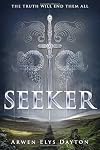
Fifteen year old Quin is nearing the day when she, her cousin (well, third cousin but one of their relatives remarried so they’re really only half third cousins), and John, the boy she loves, are initiated as Seekers. They’ve been training for show more this for years, learning how to fight to make the world a better place. But John knows that Quin’s father is more brutal than she understands. And the Seekers are no longer the noble warriors that she’s been taught they are.
The book is split into 3 parts. The first segment deals with the teens’ hopes before the initiation and the immediate aftermath of the ceremony. The second segment deals with events some time later, as the protagonists have tried to move on from what’s happened. The third brings the players together again to decide whether their futures will be determined by the choices of their past.
I loved the characters. As events unfold each protagonist makes decisions that deeply affects the rest of their lives. Subsequent decisions aren’t necessarily good ones, even though each does their best to move on. I especially liked learning more about Maud and the history of the Dreads. I hope more of this history will be revealed in future books.
Quin starts off fairly naive, but ended up going in directions I hadn’t expected. At first I thought she was wrong about John and how he would deal with the knowledge he was looking for, but as the book progressed I slowly realized that she was right and that his quest was destroying him. At the same time, I liked John, sympathizing with his plight, as a youth. But time and decisions make him less noble. Shinobu has the most startling transformation between the first and second sections of the book. Here too, his reasons for his actions are completely understandable, even if his decline is not pleasant to read.
This is brought up by a character in the book, but it seemed bizarre that both Quin’s mom and Shinobu’s dad try to warn them away from their initiation but refuse to explain why. It’s impossible to make an informed decision without information and these two know for a fact that their children don’t understand what they’re making an oath to do. Similarly, lightly warning the kids off only made the kids more determined to take their oaths.
Alastair, Shinobu’s father, is a big, red-headed, Scottish man. Sometimes he speaks with a Scottish accent (cannae, etc.), and sometimes he doesn’t. There doesn’t appear to be a reason why his accent comes and goes.
My main complaint with the book is that the pivotal moment of the book, the scene the entire book turns on, the scene where Quin and Shinobu go on their first mission to become Seekers, is never properly described. We’re given a few glimpses, enough to know it was horrible, but not enough to properly understand what Quin and Shinobu actually did on the mission. And this knowledge is essential to understand and sympathize with their following actions. Their despair, depression, Quin’s bout of OCD, their extreme hatred of her father (but not so much Sinobu’s) all come down to what happened in that scene. I think retaining this scene would have increased my emotional attachment to Quin and Shinobu as well as made John’s mission more sympathetic, but I also understand that the scene would have been dark and bloody and the author probably wanted to keep a younger rating for the book.
Ultimately I really enjoyed the book. It’s well written, fast paced and at times thought provoking. It’s got an interesting magic element underlying how the Seekers can do what they do. It’s got some characters who really go through the wringer. Can’t wait for the next book. show less
Cons: don’t see the scene the entire book revolves around, Alastair’s accent comes and goes
For Parents: some non-graphic violence, minor sexual content, drug abuse
Fifteen year old Quin is nearing the day when she, her cousin (well, third cousin but one of their relatives remarried so they’re really only half third cousins), and John, the boy she loves, are initiated as Seekers. They’ve been training for show more this for years, learning how to fight to make the world a better place. But John knows that Quin’s father is more brutal than she understands. And the Seekers are no longer the noble warriors that she’s been taught they are.
The book is split into 3 parts. The first segment deals with the teens’ hopes before the initiation and the immediate aftermath of the ceremony. The second segment deals with events some time later, as the protagonists have tried to move on from what’s happened. The third brings the players together again to decide whether their futures will be determined by the choices of their past.
I loved the characters. As events unfold each protagonist makes decisions that deeply affects the rest of their lives. Subsequent decisions aren’t necessarily good ones, even though each does their best to move on. I especially liked learning more about Maud and the history of the Dreads. I hope more of this history will be revealed in future books.
Quin starts off fairly naive, but ended up going in directions I hadn’t expected. At first I thought she was wrong about John and how he would deal with the knowledge he was looking for, but as the book progressed I slowly realized that she was right and that his quest was destroying him. At the same time, I liked John, sympathizing with his plight, as a youth. But time and decisions make him less noble. Shinobu has the most startling transformation between the first and second sections of the book. Here too, his reasons for his actions are completely understandable, even if his decline is not pleasant to read.
This is brought up by a character in the book, but it seemed bizarre that both Quin’s mom and Shinobu’s dad try to warn them away from their initiation but refuse to explain why. It’s impossible to make an informed decision without information and these two know for a fact that their children don’t understand what they’re making an oath to do. Similarly, lightly warning the kids off only made the kids more determined to take their oaths.
Alastair, Shinobu’s father, is a big, red-headed, Scottish man. Sometimes he speaks with a Scottish accent (cannae, etc.), and sometimes he doesn’t. There doesn’t appear to be a reason why his accent comes and goes.
My main complaint with the book is that the pivotal moment of the book, the scene the entire book turns on, the scene where Quin and Shinobu go on their first mission to become Seekers, is never properly described. We’re given a few glimpses, enough to know it was horrible, but not enough to properly understand what Quin and Shinobu actually did on the mission. And this knowledge is essential to understand and sympathize with their following actions. Their despair, depression, Quin’s bout of OCD, their extreme hatred of her father (but not so much Sinobu’s) all come down to what happened in that scene. I think retaining this scene would have increased my emotional attachment to Quin and Shinobu as well as made John’s mission more sympathetic, but I also understand that the scene would have been dark and bloody and the author probably wanted to keep a younger rating for the book.
Ultimately I really enjoyed the book. It’s well written, fast paced and at times thought provoking. It’s got an interesting magic element underlying how the Seekers can do what they do. It’s got some characters who really go through the wringer. Can’t wait for the next book. show less
Lists
Awards


You May Also Like


Statistics
- Works
- 11
- Members
- 1,563
- Popularity
- #16,503
- Rating
- 3.4
- Reviews
- 76
- ISBNs
- 87
- Languages
- 6