
Fran Hodgkins
Author of How People Learned to Fly
About the Author
Image credit: Fran Hodgkins
Series
Works by Fran Hodgkins
Thump Goes the Rabbit: How Animals Communicate (Let's-Read-and-Find-Out Science 1) (2020) 50 copies, 2 reviews
The terrible Horrible itch! 1 copy
Jake's helpful notebook 1 copy
Tagged
Common Knowledge
- Gender
- female
Members
Reviews

In the 1960s, before laws protecting wild animals, Harry Goodridge took a wild harbor seal pup to his home in Rockport, Maine and raised it. He taught it tricks, and eventually it spent the summers in a pen in the ocean in Rockport Harbor and winters at an aquarium in Boston or Mystic. The seal would even swim back to Rockport from the aquarium. Harry saved its life after it was injured in a fight with another seal at sea. It was made an honorary harbormaster and had a statue in its honor. show more
The story is a sweet account of human-animal interaction, but also leaves space for conversations about wild animals vs pets, the role of aquariums (and zoos), the ethics of training animals tricks, and how becoming used to humans can be dangerous for wild animals. show less
The story is a sweet account of human-animal interaction, but also leaves space for conversations about wild animals vs pets, the role of aquariums (and zoos), the ethics of training animals tricks, and how becoming used to humans can be dangerous for wild animals. show less
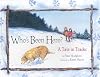
Three children, inside their cozy house on a snowy day, follow their dog, Willy, out for a romp. "Willy loves the winter. He loves to run around town and up into the woods." Willy gets a head start on the children, who follow him from one favorite spot to the next. In the freshly fallen snow, the children find the dog's tracks. "Who's been here? Willy has. But who else?" After examining the other tracks, the children are able to tell which animals have also been on the path. After a surprise show more encounter, it is the children who beat Willy back home.
The rhythmic, simple language of this story has a gentle charm to it that makes it a perfect read-aloud on a snowy afternoon, or at bedtime. The educative aspect of the story is subtly delivered, and one can imagine the satisfaction of a young listener as he or she "guesses" which animals have appeared on the path with Willy. The humorous ending is appropriate even for very young listeners, especially if they have basic knowledge of common woodland animals.
Illustrations by Karel Hayes are both delicate and realistic, with a variety of perspectives and a lovely palette of wintry shades for the snowy landscape. Neither Willy nor the animals he encounters are anthropomorphized, yet their "emotions" are easily read in their faces and their actions. A rabbit appears timid and nervous as Willy rounds the corner and unknowingly comes closer, a bear appears sleepy after his jaunt around town. Willy himself is all boundless energy and innocent enthusiasm as he explores the wonder of his whole world blanketed in snow. Twiggy frames around the illustrations contain the action, while the white space outside is printed with the tracks of the various animals Willy meets, whose identities are revealed on the next pages in double page spreads (used to nice effect here).
This work makes a lovely addition to elementary school collections, and in addition to a story-time read-aloud, would be a nice book for early elementary teachers looking to kick off a unit on woodland biomes, or animals in winter. Contrast it with Ezra Jack Keats' urban take on snowfall in the city, The Snowy Day. Highly recommended. show less
The rhythmic, simple language of this story has a gentle charm to it that makes it a perfect read-aloud on a snowy afternoon, or at bedtime. The educative aspect of the story is subtly delivered, and one can imagine the satisfaction of a young listener as he or she "guesses" which animals have appeared on the path with Willy. The humorous ending is appropriate even for very young listeners, especially if they have basic knowledge of common woodland animals.
Illustrations by Karel Hayes are both delicate and realistic, with a variety of perspectives and a lovely palette of wintry shades for the snowy landscape. Neither Willy nor the animals he encounters are anthropomorphized, yet their "emotions" are easily read in their faces and their actions. A rabbit appears timid and nervous as Willy rounds the corner and unknowingly comes closer, a bear appears sleepy after his jaunt around town. Willy himself is all boundless energy and innocent enthusiasm as he explores the wonder of his whole world blanketed in snow. Twiggy frames around the illustrations contain the action, while the white space outside is printed with the tracks of the various animals Willy meets, whose identities are revealed on the next pages in double page spreads (used to nice effect here).
This work makes a lovely addition to elementary school collections, and in addition to a story-time read-aloud, would be a nice book for early elementary teachers looking to kick off a unit on woodland biomes, or animals in winter. Contrast it with Ezra Jack Keats' urban take on snowfall in the city, The Snowy Day. Highly recommended. show less
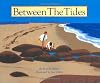
I learned new facts about seashore life from this nonfiction picture book. "Out of the water, the nudibranch looks like a ibt of unappetizing goo. Under water, this amazing little creature reveals its exotic looks, including two sense organs called rhinophores, and a tuft of gills." The language is rich and does not talk down to kids (or adults!). The repeating phrase - "If you lived where the sea was ... and then wasn't, you could ..." - emphasizes how the tides affect the marine creatures show more that live within its bounds. The author's sense of humor makes the learning fun. For example, with an illustration of a crab, she writes: "If you lived where the sea was and then wasn't, you could ... Run for it." Crabs are mobile enough "to catch up with the retreating tide." The "Story Behind the Story" at the end explains the tides in more detail. A wonderful book for budding marine biologists. show less
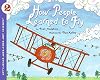
There are many reasons why I like this book! I think that it’s hard to find an interesting informational book. Since informational books state facts, sometimes they can be boring. This book did not just state boring facts! The book was very engaging for me, the reader. For example, the book pulled me in when the first page asked me a question. The introduction was “When you see a bird flying, do you dream about flying too? Do you run with your arms out, imagining that you’re souring show more among the clouds? Do you like kites? If you do, you aren’t alone. For thousands of years, people have dreams of being able to fly.” In my opinion, the introduction is very engaging and gets the reader’s attention quickly. I like how the introduction tries to relate to the reader. Another reason I liked this book was because of the language. The language was very explicit and descriptive when describing flying. The book was constantly giving definitions and explaining words that the reader is most likely confused about. For example, the book stated, “They learned about gravity. Gravity is the force that keeps everything on Earth’s surface. Because of gravity, things have weight. If there were no gravity, people, dogs, cats, and everything else would go floating off into space.” I loved how descriptive the author was with his language, he told me what gravity was, how it works, and gave an example. All of those techniques helped me fully understand. Another reason why I like this book is because the pictures are very colorful and engaging. The pictures take up the entire page and fit the written text. For example, on the page where the author is explaining gravity, there’s a picture of things floating in space. I think the picture is funny. On the page where they talk about wings, the picture shows a person trying to fly with his own handmade wings. On the page where it talks about different machines that people tried, it shows pictures of the different machines and people falling on the ground with their failed attempts. It was interesting to see the machines that people built compares to airplanes that we have today. Another reason why I liked this book was because it was very organized as the facts were told consecutively. The events were in order and made sense. For example, the text began with people watching birds. Then, people began designing machines, figuring out gravity and air, using kites, using wings, gliders and engines. People used all of their mistakes and eventually invented an airplane! I also like this book because there are interesting facts throughout the book. For example, on the page with the man trying to fly with his hand-made wings, there’s a fact in the corner that says, “In England, Monk Elimer broke his legs in A.D. 1010 after a 15-second flight.” There’s also a list of facts at the end of the book, one fact being “O Orville and Wilbur Wright were the first men to build and fly an airplane successfully. In 1903 their Wright Flyer rose into the air at Kitty Hawk, North Carolina.” The last reason why I liked this book was because the ending relates to real life and gives an activity for the reader. There’s a flight activity in the back of the book showing the reader how to make a paper airplane. The activity includes steps and pictures to guide the reader. This way, the reader has a hand on example on how flying works. The last page of the book says “Today, thousands and thousands of people travel in airplanes every day, people really have learned how to fly!” This page brings me to the overall message of the book. I think the overall message of the book was to inform readers about how we learned to fly- it’s a process and failing is good because you learn more from your mistakes. show less
Lists
Awards


You May Also Like


Associated Authors
Statistics
- Works
- 34
- Members
- 1,130
- Popularity
- #22,721
- Rating
- 4.0
- Reviews
- 36
- ISBNs
- 78