
Seyyed Hossein Nasr
Author of The Study Quran
About the Author
Born in Tehran, Seyyed Hossein Nasr, the son of an educator, received a Ph.D. from Harvard University in 1958, after which he returned to Iran to teach and eventually to become a university chancellor. He was compelled to leave his native country after the revolution of 1979 and since then has show more taught in universities in the United States. Deeply influenced by the mystical Sufi tradition, Nasr is less concerned with reconciling the faith with modernism and is more concerned with presenting a traditionalist, though mystical, interpretation of religion that offers a way out of the contradictions of modernity. Through authentic spiritual experience, Nasr holds, one can penetrate the superficiality of modern scientific and other knowledge to find eternal truth. He is associated with the neotraditionalist school of philosophy. Undoubtedly, Nasr has had more general influence in the Western philosophical world than any other contemporary philosopher in the Islamic tradition. (Bowker Author Biography) show less
Image credit: Seyyed Hossein Nasr. Photo courtesy of Festival of Faiths Louisville.
Works by Seyyed Hossein Nasr
Islamic Philosophy from its Origin to the Present: Philosophy in the Land of Prophecy (2006) 75 copies
Islam in the Modern World: Challenged by the West, Threatened by Fundamentalism, Keeping Faith with Tradition (2011) 61 copies, 1 review
An Anthology of Philosophy in Persia, Volume 2: Ismaili Thought in the Classical Age (2001) 24 copies
An Anthology of Philosophy in Persia, Volume 3: Philosophical Theology in the Middle Ages and Beyond (2010) 20 copies
In Search of the Sacred: A Conversation with Seyyed Hossein Nasr on His Life and Thought (2010) 15 copies
An Anthology of Philosophy in Persia, Volume 4: From the School of Illumination to Philosophical Mysticism (2012) 10 copies
An Anthology of Philosophy in Persia, Vol. 5: From the School of Shiraz to the Twentieth Century (2014) 9 copies
Religion of the Heart: Essays Presented to Frithjor Schuon on His Eightieth Birthday (2000) — Editor — 8 copies, 1 review
Islamic studies : essays on law and society, the sciences, and philosophy and Sufism (1967) 4 copies
İslâm ve İlim 1 copy
Batı Felsefeleri ve İslâm 1 copy
Molla Sadrâ ve İlâhi Hikmet 1 copy
Sufi Essays 1 copy
Tradition in the modern world Sacred Web Conference : September 23-24, 2006 [video recording] (2007) — Keynote Address — 1 copy
The Pen and the Tablet - Works by and about Seyyed Hossein Nasr through His 85th Birthday (2019) 1 copy
Encyclopaedia of Islamic Spirituality (Complete 2 Volume Set: Vol 1-Foundations. Vol 2-Manifestations) (2005) 1 copy
Sufism and the integration of the inner and outer life of man: The L M Singhvi Interfaith Lecture for the year 1999 (2004) 1 copy
Al-As'Ilah Wa'L-Ajwibah/Questions and Answers: Including the Further Answers of Al-Biruni and Al-Ma'Sumi's Defense of Ibn Sina (1997) 1 copy
İslam'da Bilim ve Medeniyet 1 copy
Antara Tuhan, Manusia, dan Alam; Jembatan Spiritual dan Filosofis Menuju Puncak Kebijaksanaan 1 copy
Islam, Sains, dan Muslim 1 copy
Scienza e cività nell'Islam 1 copy
İslam ve Bilim 1 copy
Associated Works
The Life of Meaning: Reflections on Faith, Doubt, and Repairing the World (2007) — Contributor — 132 copies, 5 reviews
St. John of the Cross (San Juan De LA Cruz): Alchemist of the Soul : His Life, His Poetry (Bilngual), His Prose (1989) — Foreword — 67 copies
Islam, Fundamentalism, and the Betrayal of Tradition: Essays by Western Muslim Scholars (Perennial Philosophy) (2004) — Foreword, some editions — 59 copies
The Animals' Lawsuit Against Humanity: An Illustrated 10th Century Iraqi Ecological Fable (1978) — Introduction, some editions — 57 copies, 2 reviews
Cosmology and Architecture in Premodern Islam: An Architectural Reading of Mystical Ideas (2005) — Adapter — 28 copies
Classification of Knowledge in Islam: A Study in Islamic Philosophies of Science (Islamic Texts Society) (1992) — Foreword — 27 copies, 1 review
The Sacred Foundations of Justice in Islam: The Teachings of 'Ali ibn Abi Talib (Perennial Philosophy) (2006) — Introduction — 23 copies
Every Man an Artist: Readings in the Traditional Philosophy of Art (Library of Perennial Philosophy) (2005) — Foreword, some editions — 15 copies
Enchanting Powers: Music in the Worlds Religions (Religions of the World) (1997) — Contributor — 12 copies
Parabola: Myth, Tradition, and the Search for Meaning, Vol. 24, No. 4: Evil (1999) — Contributor — 8 copies
Ibn al-Arabi: The Mysteries of Bearing Witness to the Oneness of God and Prophethood of Muhammad (2001) — Series Editior, some editions — 4 copies, 1 review
Avicenna Canon of Medicine Volume 3: Special Pathologies (The Canon of Medicine) (2014) — Foreword — 4 copies
The Unanimous tradition : essays on the essential unity of all religions (1991) — Contributor — 3 copies
Avicenna Canon of Medicine Volume 5: Pharmacopia and Index of the Complete Five Volumes (2015) — Foreword — 3 copies
Avicenna Canon of Medicine Volume 4: Systemic Diseases, Orthopedics and Cosmetics (2015) — Foreword — 3 copies
Tagged
Common Knowledge
- Canonical name
- Nasr, Seyyed Hossein
- Birthdate
- 1933-04-07
- Gender
- male
- Education
- Massachusetts Institute of Technology (BS)
Harvard University (PhD) - Occupations
- University Professor of Islamic Studies (Geo Wash Univ)
- Organizations
- Tehran University
Arya Mehr University
George Washington University
Perennialist School - Relationships
- Nasr, Vali (son)
- Short biography
- See: http://www.worldwisdom.com/public/aut...
- Nationality
- Iran
- Birthplace
- Tehran, Iran
- Associated Place (for map)
- Tehran, Iran
Members
Reviews
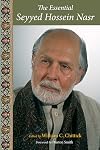
Thought provoking perspectives on traditional wisdom, what Aldous Huxley called the "perennial philosophy," the metaphysics of the Platonists, Sufis, and Hindus, amongst others. The book explains the spiritual basis of Islam and its similarities with other religions. It suggests that these various systems are manifestations of a common core that stands at odds with contemporary post-Renaissance Western culture. There are chapters on topics such as traditional art, the differences between show more "Pontifical" and "Promethean" humanity, the primacy of the soul in medicine, and the nature of time and eternity. In the final essay, Nasr claims that the central disparity between the traditional and scientific view is that science is grounded in matter while spiritualism is grounded in consciousness. There were things I found unconvincing, for example the facile disparagement of evolution, but he makes a fair case for the importance of traditional thought and the negative impact of a purely materialistic approach to being. show less
I can't say I read the whole thing, but have read many of the Suras and the notes. I'm not Muslim but have Muslim friends and think it's important to understand their religion directly through their texts, rather than through hearsay. It's a beautiful and fair translation. I have a Christian background and find that many translations seems to purposely try to make Islam seem alien by, for example, not translating the word "allah" to God. This translation does it so well there are many places show more where it reads like parts of the Bible. Interestingly, the Quran contains a fuller account of the nativity story than the Bible and one that is familiar to us today, which can be explained by the fact that Muslims lived peacefully in Europe among Christians for a few hundred years. show less
Islam in the Modern World: Challenged by the West, Threatened by Fundamentalism, Keeping Faith with Tradition by Seyyed Hossein Nasr
(I received the book for free through Goodreads First Reads)
In a time when so many people seem so ill informed, yet so quick to speak, on the religion that is Islam, it is important for there to be reliable, informative resources out there so that those who do wish to properly educate themselves can. Nasr’s Islam in the Modern World is such a resource.
Highly informative, this book touches on the idea of traditional Islam, not only as we see it in the world today, but throughout history. He show more makes the important distinction between what is traditional Islam from the other, many, branches we see today. Drawing comparisons between the idea of modernism and the different versions of fundamentalism, he shows how they differ from the traditional stance. This is his primary concern, Traditional Islam in confrontation with modernism and fundamentalism.
The author also touches on how the term “Islam” is used for national, ethical, politico-economic (etc) reasons, and not just religious ones (the manipulation of Islam for non-Islamic ends), as well as the idea of Jihad being the effort exerted in life to ensure an equilibrium of life, both inwardly and outwardly, as opposed to the vision so many have of it meaning religious violence, which is something that I think needs to be understood here in the US, were there are so many who so often fail to understand the differences.
This book does seem to require a previous understanding of Islam and some of its concepts and terms, but not the point that one completely unfamiliar would be totally lost trying to read it. I would recommend it to anyone wishing to familiarize themselves with the religion of Islam, and to understand the current condition of the religion, as well as its relation with the world around it. show less
In a time when so many people seem so ill informed, yet so quick to speak, on the religion that is Islam, it is important for there to be reliable, informative resources out there so that those who do wish to properly educate themselves can. Nasr’s Islam in the Modern World is such a resource.
Highly informative, this book touches on the idea of traditional Islam, not only as we see it in the world today, but throughout history. He show more makes the important distinction between what is traditional Islam from the other, many, branches we see today. Drawing comparisons between the idea of modernism and the different versions of fundamentalism, he shows how they differ from the traditional stance. This is his primary concern, Traditional Islam in confrontation with modernism and fundamentalism.
The author also touches on how the term “Islam” is used for national, ethical, politico-economic (etc) reasons, and not just religious ones (the manipulation of Islam for non-Islamic ends), as well as the idea of Jihad being the effort exerted in life to ensure an equilibrium of life, both inwardly and outwardly, as opposed to the vision so many have of it meaning religious violence, which is something that I think needs to be understood here in the US, were there are so many who so often fail to understand the differences.
This book does seem to require a previous understanding of Islam and some of its concepts and terms, but not the point that one completely unfamiliar would be totally lost trying to read it. I would recommend it to anyone wishing to familiarize themselves with the religion of Islam, and to understand the current condition of the religion, as well as its relation with the world around it. show less
Among the best I've ever read; Nasr has a genius for interweaving Shi`ism with the rest of Islam (instead of relegating it to footnotes or a separate chapter) without getting defensive about it.
Awards

You May Also Like


Associated Authors
Statistics
- Works
- 119
- Also by
- 35
- Members
- 2,925
- Popularity
- #8,756
- Rating
- 4.0
- Reviews
- 24
- ISBNs
- 238
- Languages
- 13
- Favorited
- 3
