
Annemarie Schimmel (1922–2003)
Author of Mystical Dimensions of Islam
About the Author
Annemarie Schimmel was born in Erfurt, Germany on April 7, 1922 and attended the University of Berlin and the University of Marburg. Schimmel has taught at the University of Ankara in Turkey, Harvard University, and Bonn University. Along with writing more than eighty books and essays, Schimmel has show more translated literature from the Arabic, Persian, Turkish and Sindhi languages into German and English. She was honored on her 75th birthday by having the Annemarie Schimmel Chair for Indo-Muslim Culture established at Bonn University. (Bowker Author Biography) show less
Disambiguation Notice:
(yid) VIAF:64142401
Series
Works by Annemarie Schimmel
And Muhammad Is His Messenger: The Veneration of the Prophet in Islamic Piety (1981) 91 copies, 1 review
The Triumphal Sun (Persian Studies Series): A Study of the Works of Jalaloddin Rumi (1978) 42 copies
Islamic literatures of India (A History of Indian literature ; v. 7 : Modern Indo-Iranian literatures, pt. 1) (1973) 7 copies
Classical Urdu Literature: From Its Beginnings to Iqbal (History of Indian Literature) (1975) 4 copies
Der Koran 4 copies
TASAVVUFUN BOYUTLARI 2 copies
Ein Buch namens Freude: Gedichte von Frauen aus der islamischen Welt (Neue Orientalische Bibliothek) (2004) 2 copies
Die drei Versprechen des Sperlings. Die schönsten Tierlegenden aus der islamischen Welt (Neue Orientalische Bibliot (1997) 2 copies
A History of Indian Literarure Volume VIII Fasc 3: Classical Urdu Literature From the Beginning to Iqbal (2021) 2 copies
Der Mensch und sein Widersacher: Beiträge der Eranos Tagung in Ascona-Moscia 2001/2002 (2003) 1 copy
Sayıların Esrarı 1 copy
Sufi literature 1 copy
روحي أنثى 1 copy
Islamic Names 1 copy
Islam: An Introduction 1 copy
The Mystery of Numbers 1 copy
SAYILARIN ESRARI 1 copy
Mystical Dimensions of Islam 1 copy
Cavidname 1 copy
مولانا جلال الدين الرومي 1 copy
Associated Works
All the King's Falcons: Rumi on Prophets and Revelation (1994) — Foreword, some editions — 15 copies
Der Koran (Reclams Universal-Bibliothek) — Introduction, some editions — 4 copies
Tagged
Common Knowledge
- Legal name
- Schimmel, Annemarie Brigitte
- Birthdate
- 1922-04-07
- Date of death
- 2003-01-26
- Gender
- female
- Education
- University of Marburg (Ph.D. Islamic Mysticism 1951)
University of Berlin (Ph.D. Arabic, Turkish and Islamic History 1941)
University of Berlin (Habilitationsschrift Mamluk History 1945) - Occupations
- professor
translator - Organizations
- University of Marburg
University of Ankara
Harvard University
Auswärtiges Amt (German Foreign Office)
Bonn University
President of the International Society for the Study of Religions (show all 8)
American Academy of Arts and Sciences
Royal Netherlands Academy of Arts and Sciences - Awards and honors
- Friedenspreis des Deutschen Buchhandels (1995)
Grosses Bundesverdientskreuz (Grand Order of Merit of the Federal Republic of Germany) (1989)
Sitara-i-Imtiaz
Hilat-i-Imtiaz
Egyptian Order of Merit for Art and Science, First Class (1996)
Golden Owl award of the German Socratic Society (1990) (show all 8)
Lucas Prize, University of Turbingen (1992)
Do'stlik Order of the Republic of Uzbekistan (2002) - Relationships
- Anwari-Alhosseyni, Shems (friend, calligrapher for her works)
- Nationality
- Germany
USA - Birthplace
- Erfurt, Germany
- Places of residence
- Germany
Turkey
USA - Place of death
- Bonn, Germany
- Disambiguation notice
- VIAF:64142401
- Associated Place (for map)
- Germany
Members
Reviews
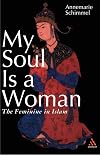
This scholarly but extremely readable book documents the historical and textual role of the feminine in Islamic spirituality. Schimmel does a great job of handling Quranic texts as well as folk poetry and literature. She is careful to say whether local culture conforms to Quranic mandates on women & women's behavior or whether these are societal norms with no scriptural basis.
The book primarily focuses on Turkish and Indo-Pak spiritual traditions. The last three chapters are dedicated to 3 show more Indo-Pak folk tales where the female heroine is a metaphor for the human soul and longing for God/the Beloved.
If you MUST have a discussion of gender & Islam, why not start here for a change? Of course, it would be far more interesting to start with Kinsey, but I doubt most Mulims could handle Kinsey, so at least start with something in the PAST because Muslims must so have something in their past for it to be real. Besides, a lot of those Sufis had some VERY interesting ideas about gender... show less
The book primarily focuses on Turkish and Indo-Pak spiritual traditions. The last three chapters are dedicated to 3 show more Indo-Pak folk tales where the female heroine is a metaphor for the human soul and longing for God/the Beloved.
If you MUST have a discussion of gender & Islam, why not start here for a change? Of course, it would be far more interesting to start with Kinsey, but I doubt most Mulims could handle Kinsey, so at least start with something in the PAST because Muslims must so have something in their past for it to be real. Besides, a lot of those Sufis had some VERY interesting ideas about gender... show less
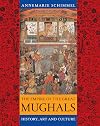
This is a fascinating subject and therefore it had to be a fascinating book. It helps that it is written by the extraordinarily knowledgeable Annemarie Schimmel. As a prodigy who finished her Doctorate at 19, and as a polyglot who could speak and lecture in Arabic, Persian, Urdu, Turkish etc…, Schimmel´s account had to be interesting. Unsurprisingly, she became the first Professor of Indo-Muslim Culture at Harvard. I have particularly liked her accounts of life at the courts and her show more broader approach to cultural life.
Things that could be better in this book: the translation (several ambiguous sentences), maps (only one with only the obvious places indicated), and a greater sensitivity to the neophyte reader. Schimmel is so comfortable in her command of the subject that she moves backwards and forwards through history assuming we can follow her with ease. show less
Things that could be better in this book: the translation (several ambiguous sentences), maps (only one with only the obvious places indicated), and a greater sensitivity to the neophyte reader. Schimmel is so comfortable in her command of the subject that she moves backwards and forwards through history assuming we can follow her with ease. show less

The Mystery of Numbers was developed by Annemarie Schimmel from an earlier text in German by Franz Carl Endres. Presumably, Schimmel's version (for publisher Ulf Diedrichs) was originally in German also. No translator is credited here, but Miriam Rosen was the editor, whether in English or German is unclear. Schimmel uses "components" (e.g. on page 14) to mean factors, which is a little confusing in US mathematical idiom, and possibly an artifact of translation from German. German folklore show more and poetry does loom a little large in a book that on the whole makes serious efforts to be a wide-ranging cross-cultural survey.
There are seven chapters of "Introduction" discussing the history of number systems and evolution of number symbolism. Generally, depth is sacrificed for breadth, in an effort to touch on systems throughout Western history, and also in Asia and pre-Columbian America. The historical essays are followed by "A Little Dictionary of Numbers," organized in numerical order starting at 1. The highest value to receive an entry is 10,000, but even below 50, many numbers significant to me are not represented with their own articles, such as 23, 31, 34, and 44.
On the whole, the book is a decent introduction to its topic, and it can be a useful supplement to other more specialized treatments. show less
There are seven chapters of "Introduction" discussing the history of number systems and evolution of number symbolism. Generally, depth is sacrificed for breadth, in an effort to touch on systems throughout Western history, and also in Asia and pre-Columbian America. The historical essays are followed by "A Little Dictionary of Numbers," organized in numerical order starting at 1. The highest value to receive an entry is 10,000, but even below 50, many numbers significant to me are not represented with their own articles, such as 23, 31, 34, and 44.
On the whole, the book is a decent introduction to its topic, and it can be a useful supplement to other more specialized treatments. show less
This book by Annemarie Schimmel gives an excellent outline on Culture of Mughals, Religion and ethos of Kings. I really enjoyed this book, because I learnt interesting details about the Mughals. I learnt more on the conflicts between various sects within Islam. It's a quick read.
It seems that the Mughals were extremely wealthy, And had rich literary history. I wonder why it has been brushed aside? I keep asking myself, how did they finance such wealth and people? It takes approx 300 rupees show more to maintain an elephant per month, 2 rupees for a soldier. You can imagine the opulence.
They seemed to enjoy hunting, poetry expanding their territory and loved artists. I do not see this legacy in the current ethos of Indian culture. However, we must learn from earlier generation to re-invent ourselves.
You will learn more about Indian culture, Muslim legacy. This book doesn't talk about administrative details, financial details. It doesn't talk about the core values of Mughal empire, but you can figure that out from learning the Quran.
But will help you get a broad outline by Mughal Empire. Keep reading, push forward, share your knowledge with like-minded people.
--Deus Vult
Gottfried show less
It seems that the Mughals were extremely wealthy, And had rich literary history. I wonder why it has been brushed aside? I keep asking myself, how did they finance such wealth and people? It takes approx 300 rupees show more to maintain an elephant per month, 2 rupees for a soldier. You can imagine the opulence.
They seemed to enjoy hunting, poetry expanding their territory and loved artists. I do not see this legacy in the current ethos of Indian culture. However, we must learn from earlier generation to re-invent ourselves.
You will learn more about Indian culture, Muslim legacy. This book doesn't talk about administrative details, financial details. It doesn't talk about the core values of Mughal empire, but you can figure that out from learning the Quran.
But will help you get a broad outline by Mughal Empire. Keep reading, push forward, share your knowledge with like-minded people.
--Deus Vult
Gottfried show less
Lists
Awards

You May Also Like


Associated Authors
Statistics
- Works
- 113
- Also by
- 11
- Members
- 1,690
- Popularity
- #15,204
- Rating
- 3.8
- Reviews
- 12
- ISBNs
- 202
- Languages
- 10
- Favorited
- 2


