
Tim Hornbaker
Author of Death of the Territories: Expansion, Betrayal and the War that Changed Pro Wrestling Forever
About the Author
Tim Hornbaker is a lifelong sports historian and enthusiast. His books Turning the Black Sox White: The Misunderstood Legacy of Charles A. Comiskey and War on the Basepaths: The Definitive Biography of Ty Cobb were received with critical acclaim.
Works by Tim Hornbaker
Death of the Territories: Expansion, Betrayal and the War that Changed Pro Wrestling Forever (2018) 60 copies, 4 reviews
National Wrestling Alliance: The Untold Story of the Monopoly that Strangled Pro Wrestling (2007) 57 copies
Turning the Black Sox White: The Misunderstood Legacy of Charles A. Comiskey (2014) 26 copies, 2 reviews
Tagged
Common Knowledge
Members
Reviews
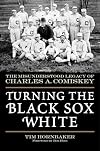
You may have heard of Charles Comiskey and may think, as did the Sox fan I met on a Door County, Wisconsin beach, that he was not a very nice guy. For a different perspective read “Turning The Black Sox White” is a biography of Charles Comiskey, founding owner of the Chicago White Sox and a prime mover in the early days of the American League. This is an excellent study of a life in baseball including Comiskey’s time with the St. Louis Browns, now the Cardinals, where owner Chris Von show more der Ahe became his mentor in the business of baseball.
The son of Irish immigrants and a Chicago politician, Charles, like many baseball personalities, bucked paternal guidance in the selection of a career. Entering baseball in the 1870s, Comiskey may have introduced the concept of the first baseman playing deep and relying on the pitcher to cover the bag. His life in baseball transitioned smoothly from player to manager to the only player to become a sole major league owner.
The early White Sox were a blend of triumph and tragedy. An American League powerhouse, winning pennants and World Series, including the only all-Chicago series in 1906, and fielding Jimmy Callahan who pitched the league’s first no-hitter, the Sox were the dominant team in Chicago and Comiskey a leader among owners. His new stadium was an innovation in 1910 that would host baseball for 80 years.
His accomplishments notwithstanding, Comiskey’s legacy would be forever linked to the Black Sox scandal in which eight White Sox players took gamblers’ money to throw the 1919 World Series. Other accounts have placed blame on Comiskey for being a cheap owner who drove his players to seek alternative sources of income. Author Tim Hornbaker is determined to present a different view. He points out that, contrary to legend, the White Sox had one of the highest payrolls in the major leagues and that their high attendance did not translate to commensurate income due to lower ticket prices than those charged by some teams. The Black Sox presented a dangerous dilemma for Comiskey. The much of the evidence of wrong doing was based on rumor and hearsay and in fact, the players were acquitted in a court of law while Comiskey was convicted in the court of public opinion. Despite being criticized for not suspending the accused immediately, to do so would have subjected Comiskey to possible liability to the players for slander. Ultimately the scandal led to the establishment of a powerful commissioner who resolved the issue by lifetime bans against the Eight Men Out.
This book will be a treat for anyone interested in the origins of the major leagues, the White Sox, the Black Sox or Comiskey himself. It even shows how the baseball world responded to American involvement in World War I, with some players entering the armed forces, others, including Shoeless Joe Jackson, taking crucial defense industry jobs for the draft deferments, the teams participating in military drills and the owners deciding how to continue to entertain Americans while adjusting to wartime conditions. Fortunately the Armistice limited the War’s effect to the 1918 season. The only drawback I see in this book is the detail of week by week pennant races and the performance of players known only to serious baseball historians. Despite this minor issue, I really enjoyed this book. I like the insights into the organization of the major leagues and Comiskey’s role in that process. Its explanation helped clear the story of the Black Sox scandal in my mind. We can be thankful to Tim Hornbaker for this fresh perspective on the early days of baseball.
I did receive a free copy of this book for review. show less
The son of Irish immigrants and a Chicago politician, Charles, like many baseball personalities, bucked paternal guidance in the selection of a career. Entering baseball in the 1870s, Comiskey may have introduced the concept of the first baseman playing deep and relying on the pitcher to cover the bag. His life in baseball transitioned smoothly from player to manager to the only player to become a sole major league owner.
The early White Sox were a blend of triumph and tragedy. An American League powerhouse, winning pennants and World Series, including the only all-Chicago series in 1906, and fielding Jimmy Callahan who pitched the league’s first no-hitter, the Sox were the dominant team in Chicago and Comiskey a leader among owners. His new stadium was an innovation in 1910 that would host baseball for 80 years.
His accomplishments notwithstanding, Comiskey’s legacy would be forever linked to the Black Sox scandal in which eight White Sox players took gamblers’ money to throw the 1919 World Series. Other accounts have placed blame on Comiskey for being a cheap owner who drove his players to seek alternative sources of income. Author Tim Hornbaker is determined to present a different view. He points out that, contrary to legend, the White Sox had one of the highest payrolls in the major leagues and that their high attendance did not translate to commensurate income due to lower ticket prices than those charged by some teams. The Black Sox presented a dangerous dilemma for Comiskey. The much of the evidence of wrong doing was based on rumor and hearsay and in fact, the players were acquitted in a court of law while Comiskey was convicted in the court of public opinion. Despite being criticized for not suspending the accused immediately, to do so would have subjected Comiskey to possible liability to the players for slander. Ultimately the scandal led to the establishment of a powerful commissioner who resolved the issue by lifetime bans against the Eight Men Out.
This book will be a treat for anyone interested in the origins of the major leagues, the White Sox, the Black Sox or Comiskey himself. It even shows how the baseball world responded to American involvement in World War I, with some players entering the armed forces, others, including Shoeless Joe Jackson, taking crucial defense industry jobs for the draft deferments, the teams participating in military drills and the owners deciding how to continue to entertain Americans while adjusting to wartime conditions. Fortunately the Armistice limited the War’s effect to the 1918 season. The only drawback I see in this book is the detail of week by week pennant races and the performance of players known only to serious baseball historians. Despite this minor issue, I really enjoyed this book. I like the insights into the organization of the major leagues and Comiskey’s role in that process. Its explanation helped clear the story of the Black Sox scandal in my mind. We can be thankful to Tim Hornbaker for this fresh perspective on the early days of baseball.
I did receive a free copy of this book for review. show less
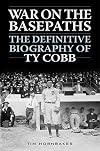
Ty Cobb may or may not be baseball's greatest player, but he's probably the most written about. Thus, any new biography has to pass a 'why' test, especially since Chas. Alexander's biography is justly regarded as one of the great baseball biographies. And so I was not reassured by the author's introductory statement that he was going to get back at all the Cobb haters who had been dominating the writing of his biography; I'm no Cobb hater, but I've read my share on him, and most of his show more biographers seem to me to be quite objective. And so I set into Hornbaker's account and found a well-planned account which boasts a lot of research, a happy reliance on contemporary sportswriters to help tell the story, and just the right amount of game narratives.
This book ultimately fails, though, because of the author's poor prose. It is poorly written, and if it was proofread at all, it was poorly proofread. The author's ramshackle syntax would do no credit to a seventh-grader, he makes crazy, primary-school-level grammatical errors (it even seems a struggle for him to get verb tenses right), he seems never to have learned the value of the word 'of', and his adverb- and adjective-heavy meanderings are spiced by a pretentious vocabulary with which, like a kid with a new thesaurus, he usually manages to toss off a five-dollar word and get the shading of meaning exactly wrong for the point he is trying to make. Read aloud, it truly sounds like the work of one of the old double-talk comedians like Al Kelly or Norm Crosby., and Pepe LePew comes to mind as well. As told here, Cobb's story is as fascinating as ever, but, though it has its occasional merits, it's difficult to recommend this book when there are many superior biographies of Cobb. show less
This book ultimately fails, though, because of the author's poor prose. It is poorly written, and if it was proofread at all, it was poorly proofread. The author's ramshackle syntax would do no credit to a seventh-grader, he makes crazy, primary-school-level grammatical errors (it even seems a struggle for him to get verb tenses right), he seems never to have learned the value of the word 'of', and his adverb- and adjective-heavy meanderings are spiced by a pretentious vocabulary with which, like a kid with a new thesaurus, he usually manages to toss off a five-dollar word and get the shading of meaning exactly wrong for the point he is trying to make. Read aloud, it truly sounds like the work of one of the old double-talk comedians like Al Kelly or Norm Crosby., and Pepe LePew comes to mind as well. As told here, Cobb's story is as fascinating as ever, but, though it has its occasional merits, it's difficult to recommend this book when there are many superior biographies of Cobb. show less
Death of the Territories: Expansion, Betrayal and the War that Changed Pro Wrestling Forever by Tim Hornbaker

DEATH OF THE TERRITORIES, by Tim Hornbaker, recounts the professional wrestling world starting with its geographically organized existence from the 1950's to the late 1970's as an alliance where each region knew how to work with and coexist amongst the group as a whole to the total upheaval of the wrestling community. A revolution started by Vince McMahon Jr and the WWF and ended in the late 1980's with a new dynamic; McMahon on top, and everyone else retired, gone, and/or wiped out. Any show more remaining other wrestling entities are so beneath McMahon's company financially and in popularity it's as if there are in a completely different avenue of the wrestling business.
Hornbaker really digs deep into the history of wrestling: the promoters, the organizations, and the wrestlers themselves. The layout of the book attempts to be chronological, but sometimes the tangents to explain a particular organization or person leaves the calendar and then circles back to the proper order later. The information and stories Hornbaker has gathered are great; there are things I've never known and stories that are one of a kind about many colorful personas, plentiful in the history of professional wrestling. Growing up in the 1980's in North Carolina, I watched first hand many of the shows and organizations that Hornbaker wrote about and having his gathered insights to look back on, it brings so many more layers and makes everything from that time so much more interesting. The book's layout is challenging at times with so many names and regions to keep track of, which while mirroring how many wrestling fans felt at the time, as a reader was tough to keep straight. As a reader, I wish Hornbaker could have formally had some breakout chapters to highlight certain people and/or groups so that there is a definitive break in the timeline of the book and then drop the reader back in when the spotlight is done.
Layered in facts and great tales of wrestling past, DEATH OF THE TERRITORIES is a must have for the wrestling enthusiast. I think wrestling touched most people in the 1980's and was a key component in the pop culture of the time. To that end, most people who read this novel will find some way to connect to it and take away new knowledge on the business of professional wrestling.
Thank you to ECW Press, Tim Hornbaker, and Netgalley for a copy of this book in exchange for an honest review! show less
Hornbaker really digs deep into the history of wrestling: the promoters, the organizations, and the wrestlers themselves. The layout of the book attempts to be chronological, but sometimes the tangents to explain a particular organization or person leaves the calendar and then circles back to the proper order later. The information and stories Hornbaker has gathered are great; there are things I've never known and stories that are one of a kind about many colorful personas, plentiful in the history of professional wrestling. Growing up in the 1980's in North Carolina, I watched first hand many of the shows and organizations that Hornbaker wrote about and having his gathered insights to look back on, it brings so many more layers and makes everything from that time so much more interesting. The book's layout is challenging at times with so many names and regions to keep track of, which while mirroring how many wrestling fans felt at the time, as a reader was tough to keep straight. As a reader, I wish Hornbaker could have formally had some breakout chapters to highlight certain people and/or groups so that there is a definitive break in the timeline of the book and then drop the reader back in when the spotlight is done.
Layered in facts and great tales of wrestling past, DEATH OF THE TERRITORIES is a must have for the wrestling enthusiast. I think wrestling touched most people in the 1980's and was a key component in the pop culture of the time. To that end, most people who read this novel will find some way to connect to it and take away new knowledge on the business of professional wrestling.
Thank you to ECW Press, Tim Hornbaker, and Netgalley for a copy of this book in exchange for an honest review! show less
If you're thinking about reading this book solely based on the title, you should just read the forward. Within three pages, Bob Hoie blows the whole story of the 1919 Chicago White Sox to hell and proves beyond a shadow of a doubt that Charles Comiskey wasn't quite the miserly figure he seems to be in Eight Men Out.
The rest is a straightforward biography, and to be honest, there isn't much to it. The writing is very similar to that in Warren Brown's [b:The Chicago White Sox|758359|The show more Chicago White Sox|Warren Brown|https://d.gr-assets.com/books/1348948952s/758359.jpg|744470], and the subject matter is hardly different either. Hundreds of players come and go, streaks of wins and losses stress out Comiskey, and eventually everybody dies. What a narrative.
While I'm glad the book exists, I'm struggling to appreciate it fully. The fact is that anyone interested enough in the subject matter of the book to read the entire thing will probably already know most of the details within. If you already know about Chris von der Ahe, Frank Isbell, Harry Grabiner, and both Tip O'Neill's, you don't need to read much of this, but if you don't know who they are, good luck keeping up.
It's all important information, but it's just not as compelling as it should be. show less
The rest is a straightforward biography, and to be honest, there isn't much to it. The writing is very similar to that in Warren Brown's [b:The Chicago White Sox|758359|The show more Chicago White Sox|Warren Brown|https://d.gr-assets.com/books/1348948952s/758359.jpg|744470], and the subject matter is hardly different either. Hundreds of players come and go, streaks of wins and losses stress out Comiskey, and eventually everybody dies. What a narrative.
While I'm glad the book exists, I'm struggling to appreciate it fully. The fact is that anyone interested enough in the subject matter of the book to read the entire thing will probably already know most of the details within. If you already know about Chris von der Ahe, Frank Isbell, Harry Grabiner, and both Tip O'Neill's, you don't need to read much of this, but if you don't know who they are, good luck keeping up.
It's all important information, but it's just not as compelling as it should be. show less
Lists
Awards

You May Also Like


Associated Authors
Statistics
- Works
- 9
- Members
- 271
- Popularity
- #85,375
- Rating
- 3.6
- Reviews
- 9
- ISBNs
- 34