
About the Author
Tom Clavin was born in the Bronx, New York. He is a bestselling author and has worked as a newspaper and web site editor, magazine writer, TV and radio commentator, and a reporter for The New York Times. Two of his books have been New York Times best sellers, The Heart of Everything That Is and show more Halsey's Typhoon. Other books that have received popular and critical acclaim include The DiMaggios, Last Men Out, Gil Hodges, Roger Maris, The Last Stand of Fox Company, and his most recent book, Reckless: The Racehorse Who Became a Marine Corps Hero.Two of his books were nominated for the Pulitzer Prize. (Bowker Author Biography) show less
Image credit: Tom Clavin
Works by Tom Clavin
The Heart of Everything That Is: The Untold Story of Red Cloud, An American Legend (2013) 827 copies, 16 reviews
Dodge City: Wyatt Earp, Bat Masterson, and the Wickedest Town in the American West (2017) 515 copies, 17 reviews
Blood and Treasure: Daniel Boone and the Fight for America's First Frontier (2021) — Author — 445 copies, 16 reviews
Halsey’s typhoon : the true story of a fighting admiral, an epic storm, and an untold rescue (2007) — Author — 444 copies, 14 reviews
The Last Stand of Fox Company: A True Story of U.S. Marines in Combat (2009) — Author — 379 copies, 7 reviews
Tombstone: The Earp Brothers, Doc Holliday, and the Vendetta Ride from Hell (2020) 351 copies, 18 reviews
Follow Me to Hell: McNelly's Texas Rangers and the Rise of Frontier Justice (2023) 181 copies, 2 reviews
All Blood Runs Red: The Legendary Life of Eugene Bullard-Boxer, Pilot, Soldier, Spy (2019) — Author — 134 copies, 5 reviews
Bandit Heaven: The Hole-in-the-Wall Gangs and the Final Chapter of the Wild West (2024) 90 copies, 6 reviews
Throne of Grace: A Mountain Man, an Epic Adventure, and the Bloody Conquest of the American West (2024) 78 copies, 1 review
The DiMaggios: Three Brothers, Their Passion for Baseball, Their Pursuit of the American Dream (2013) 61 copies, 2 reviews
Running Deep: Bravery, Survival, and the True Story of the Deadliest Submarine in World War II (2025) 59 copies
Gil Hodges: The Brooklyn Bums, the Miracle Mets, and the Extraordinary Life of a Baseball Legend (2012) 27 copies, 3 reviews
That Old Black Magic: Louis Prima, Keely Smith, and the Golden Age of Las Vegas (2010) 22 copies, 1 review
The First to Go West: American Ambition, Bloody Conquest, and the Fateful Journey of Jedediah Smith (2026) 4 copies
Valley Forge 1 copy
Associated Works
Tagged
Common Knowledge
- Canonical name
- Clavin, Tom
- Legal name
- Clavin, Thomas Joseph
- Birthdate
- 1954-07-25
- Gender
- male
- Education
- Suffolk County Community College
University of Southern California
State University of New York, Albany
State University of New York, Stony Brook - Occupations
- journalist
author - Organizations
- The New York Times
The East Hampton Star - Awards and honors
- Six-time winner of the award for best magazine article from the Society of Professional Journalists.
- Nationality
- USA
- Birthplace
- Bronx, New York, USA
- Places of residence
- Sag Harbor, New York, USA
East Hampton, New York, USA - Associated Place (for map)
- New York, USA
Members
Reviews
Halsey's Typhoon: The True Story of a Fighting Admiral, an Epic Storm, and an Untold Rescue by Robert Drury

Dramatic true story of a maritime military operation interrupted by an enormous typhoon. Admiral Halsey’s fleet was preparing to support MacArthur’s invasion of Luzon in the Philippines in 1944, when they steered directly into the course of Typhoon Cobra with its 90-foot waves and over 100 knot gusting winds. This book tells an inspiring story of sailors confronting life-or-death situations. Though much of the story is tragic, the highlight is a valiant rescue effort by a relatively show more inexperienced captain and crew of a small Destroyer Escort.
The first part of the book sets up the military objectives and participants. The second part tells of the gathering storm, leadership decisions, and the ships’ maneuvers. The rescue effort is riveting, and it is worth reading the book just for this portion. The travails of the sailors contending with the elements, wounds, sharks, madness induced from drinking saltwater, and numerous miseries are heart-wrenching. Though the authors do not dwell on the carnage, the graphic descriptions are not for the faint-hearted.
The authors are journalists, trying to determine if the sinking of ships and loss of life was preventable. The transcripts of the U.S. Naval Court of Inquiry had been recently declassified and formed much of the basis of their analysis, along with survivors’ stories and in-depth research. These stories jump around a bit, and it is sometimes difficult to keep track of which ship is being referenced. The personal anecdotes are particularly effective in showing what the sailors encountered as their ships were battered by the storm.
Two examples of these personal accounts include:
“Clinging to the top of the Cape Esperance’s center mast with every muscle in his body, Paul Schlener was not sure what to do as the storm increased in intensity. His watch was technically over, but whether through oversight or intention, no crewmate had relieved him and no officer had signaled for him to climb down. In fact, the scud was so thick that he could barely make out the deck sixty feet below. He was petrified.”
and
“Kosco sat upright in his bunk. He was overwhelmed “with a feeling of great, leaden weights pressing on [my] shoulders.” He threw on his heavy weather gear and scrambled up the iron skipper’s ladder to the navigation deck. Leaning into the wind and listening to the pounding surf, he surveyed the otherworldly tableau; giant, mottled whitecaps stretched endless in every direction under a black, starless dome. If the dark side of the moon were covered by sea, he thought, this is what it would look like.”
I am very glad that meteorology has progressed since WWII, and it is unlikely that a fleet would be unaware of the location of such a large storm today. There are definitely lessons in leadership to be gleaned from this book, primarily related crisis management. It definitely creates food for thought on how the reader would react in a similar situation. Part military analysis, part man vs. nature, part survival story, this book is filled with peril, catastrophe, and heroism. I read it in observance of Veterans’ Day and found it a powerful tribute to the Brotherhood of the Sea. show less
The first part of the book sets up the military objectives and participants. The second part tells of the gathering storm, leadership decisions, and the ships’ maneuvers. The rescue effort is riveting, and it is worth reading the book just for this portion. The travails of the sailors contending with the elements, wounds, sharks, madness induced from drinking saltwater, and numerous miseries are heart-wrenching. Though the authors do not dwell on the carnage, the graphic descriptions are not for the faint-hearted.
The authors are journalists, trying to determine if the sinking of ships and loss of life was preventable. The transcripts of the U.S. Naval Court of Inquiry had been recently declassified and formed much of the basis of their analysis, along with survivors’ stories and in-depth research. These stories jump around a bit, and it is sometimes difficult to keep track of which ship is being referenced. The personal anecdotes are particularly effective in showing what the sailors encountered as their ships were battered by the storm.
Two examples of these personal accounts include:
“Clinging to the top of the Cape Esperance’s center mast with every muscle in his body, Paul Schlener was not sure what to do as the storm increased in intensity. His watch was technically over, but whether through oversight or intention, no crewmate had relieved him and no officer had signaled for him to climb down. In fact, the scud was so thick that he could barely make out the deck sixty feet below. He was petrified.”
and
“Kosco sat upright in his bunk. He was overwhelmed “with a feeling of great, leaden weights pressing on [my] shoulders.” He threw on his heavy weather gear and scrambled up the iron skipper’s ladder to the navigation deck. Leaning into the wind and listening to the pounding surf, he surveyed the otherworldly tableau; giant, mottled whitecaps stretched endless in every direction under a black, starless dome. If the dark side of the moon were covered by sea, he thought, this is what it would look like.”
I am very glad that meteorology has progressed since WWII, and it is unlikely that a fleet would be unaware of the location of such a large storm today. There are definitely lessons in leadership to be gleaned from this book, primarily related crisis management. It definitely creates food for thought on how the reader would react in a similar situation. Part military analysis, part man vs. nature, part survival story, this book is filled with peril, catastrophe, and heroism. I read it in observance of Veterans’ Day and found it a powerful tribute to the Brotherhood of the Sea. show less
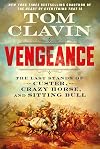
Rating: 4* of five
The Publisher Says: A dramatic new look at Custer's last stand in time for the 150th anniversary of the Battle of the Little Big Horn, by the #1 New York Times bestselling coauthor of The Heart of Everything That Is.
On June 25–26, 1876, the Battle of the Little Bighorn, commonly referred to as Custer's Last Stand, was fought between combined forces of the Lakota Sioux, Northern Cheyenne, and Arapaho tribes and the 7th Cavalry Regiment of the United States Army. Along the show more Little Bighorn River in Montana Territory, the battle resulted in the devastating defeat of U.S. forces and was the most significant action of the Great Sioux War of 1876.
Now, for the 150th anniversary of this famous engagement, #1 New York Times bestseller and coauthor of the biography of Sioux warrior Red Cloud, The Heart of Everything That Is, Tom Clavin takes a fresh look at Custer's Last Stand.
This dramatic look at the Little Bighorn battle has to not only include the Native American point of view―with two dynamic Native figures, Sitting Bull and Crazy Horse, on prominent display―but also the impact it had on the Plains Indians. It turned out to be their last stand too because a vengeful nation quashed any remaining resistance, with a conclusive massacre at Wounded Knee in 1890, almost simultaneous with the murder of Sitting Bull.
In addition, Custer’s character by June 1876 is at the heart of this world-famous disaster. For all his celebrated bravery, especially at Gettysburg 13 years earlier, Custer became a devout media hound, desperate to gain fame. Even, some say, his own demise was a misguided attempt at grabbing national headlines: He envisioned a massacre – just not his own. As both the camera and the tabloid came of age, George Armstrong Custer became America’s first bona fide celebrity.
Vengeance is a thrilling read, filled with action, legendary characters, and poignance for the impact this had on Native Americans and the shape of the American West.
I RECEIVED A DRC FROM THE PUBLISHER VIA NETGALLEY. THANK YOU.
My Review: I wondered what the hell there could be left to say about this military engagement that could illuminate the events in a light, through a lens and filter, that could deepen the focus and increase the contrast. "Hold my beer" said Author Clavin.
I know there are full biographies of all the men at the center of the story being told, excellent ones that delve into psychology, racism, nationalistic myth-making and resistance to it. The short chapters and broad focus of this historical analysis of causes and effects can't offer that depth or completeness. It can, and does, offer more accessible takes on the dramatis personae and thus that much more context for the pyrrhic victory won at the Little Bighorn River.
It's not a story where breaking news is likely to occur...the souces cited in the notes tell you we're not hot on the trail of some newly discovered textual evidence breaking open some of the enduring mysteries of Custer's uncharacteristically stupid actions. It's not that book; it's very much a useful primer, broadening its intended white, history-buff audience's awareness of how the battle looked from its different combatants' eyes. I enjoyed the quick-hit chapters because I'm only very slightly interested in the battle bits, more in the people bits. The carnage is not stinted herein. But we're not *immersed* in it because no piece of the story as retold here lasts long enough to make the reader feel he's going to need to scrub blood off his footgear after the read.
It's a popularization of more scholarly, and a contextualization of more white-triumphalist, works that have come before it. As I do not care to subject myself to the dizzying heights/depths of historiographic work done on Manifest Destiny and its concomitant Native American genocide, it's a work that suited my reading needs. show less
The Publisher Says: A dramatic new look at Custer's last stand in time for the 150th anniversary of the Battle of the Little Big Horn, by the #1 New York Times bestselling coauthor of The Heart of Everything That Is.
On June 25–26, 1876, the Battle of the Little Bighorn, commonly referred to as Custer's Last Stand, was fought between combined forces of the Lakota Sioux, Northern Cheyenne, and Arapaho tribes and the 7th Cavalry Regiment of the United States Army. Along the show more Little Bighorn River in Montana Territory, the battle resulted in the devastating defeat of U.S. forces and was the most significant action of the Great Sioux War of 1876.
Now, for the 150th anniversary of this famous engagement, #1 New York Times bestseller and coauthor of the biography of Sioux warrior Red Cloud, The Heart of Everything That Is, Tom Clavin takes a fresh look at Custer's Last Stand.
This dramatic look at the Little Bighorn battle has to not only include the Native American point of view―with two dynamic Native figures, Sitting Bull and Crazy Horse, on prominent display―but also the impact it had on the Plains Indians. It turned out to be their last stand too because a vengeful nation quashed any remaining resistance, with a conclusive massacre at Wounded Knee in 1890, almost simultaneous with the murder of Sitting Bull.
In addition, Custer’s character by June 1876 is at the heart of this world-famous disaster. For all his celebrated bravery, especially at Gettysburg 13 years earlier, Custer became a devout media hound, desperate to gain fame. Even, some say, his own demise was a misguided attempt at grabbing national headlines: He envisioned a massacre – just not his own. As both the camera and the tabloid came of age, George Armstrong Custer became America’s first bona fide celebrity.
Vengeance is a thrilling read, filled with action, legendary characters, and poignance for the impact this had on Native Americans and the shape of the American West.
I RECEIVED A DRC FROM THE PUBLISHER VIA NETGALLEY. THANK YOU.
My Review: I wondered what the hell there could be left to say about this military engagement that could illuminate the events in a light, through a lens and filter, that could deepen the focus and increase the contrast. "Hold my beer" said Author Clavin.
I know there are full biographies of all the men at the center of the story being told, excellent ones that delve into psychology, racism, nationalistic myth-making and resistance to it. The short chapters and broad focus of this historical analysis of causes and effects can't offer that depth or completeness. It can, and does, offer more accessible takes on the dramatis personae and thus that much more context for the pyrrhic victory won at the Little Bighorn River.
It's not a story where breaking news is likely to occur...the souces cited in the notes tell you we're not hot on the trail of some newly discovered textual evidence breaking open some of the enduring mysteries of Custer's uncharacteristically stupid actions. It's not that book; it's very much a useful primer, broadening its intended white, history-buff audience's awareness of how the battle looked from its different combatants' eyes. I enjoyed the quick-hit chapters because I'm only very slightly interested in the battle bits, more in the people bits. The carnage is not stinted herein. But we're not *immersed* in it because no piece of the story as retold here lasts long enough to make the reader feel he's going to need to scrub blood off his footgear after the read.
It's a popularization of more scholarly, and a contextualization of more white-triumphalist, works that have come before it. As I do not care to subject myself to the dizzying heights/depths of historiographic work done on Manifest Destiny and its concomitant Native American genocide, it's a work that suited my reading needs. show less
Halsey's typhoon : The True Story of a Fighting Admiral, an Epic Storm, and an Untold Rescue by Robert Drury
My feelings about the book overall would rate it a four out of five stars, however there were so many characters that it was work keeping people straight. I felt that the author could have made changes that would have the characters easier to follow.
It is a very gripping story of the typhoon that destroyed three destroyers in the Third Fleet during WWII - the USS Hull, Monagham and Spence. Admiral Halsey was aboard his flagship the New Jersey. The typhoon Cobra, the first typhoon to be show more named, was a horrendous storm. When the ships were lost almost 800 men went into the ocean. Four days later the last survivor, the 93rd, was lifted out of the water.
A heroic rescue operation was carried out, almost on its own, by the destroyer escort Tabberer, affectionately known by its crew as "Tabby", who rescued 55 of the 93 survivors.
The description of the storm and the efforts of the men in the water to survive was spell-binding. However, my anger at Halsey grew to such bounds that I wanted to scream. Military minds call him a 'fighting admiral' and today people are inclined to feel that in the circumstances at the time, with the weather forecasting abilities that they had Halsey was not accountable. To me, the book showed that his incredible ego played a very large part in his decision making process and his directing the fleet directly into the path of the typhoon.
Some justice comes at the end of the book, as the heroic, battered, little destroyer escort "Tabby" came to berth in Ulithi. She received a blinker message from the battleship New Jersey saying, "What type of ship are you?" With no hesitation the Tabby blinked back "Destroyer escort. What type are you? show less
It is a very gripping story of the typhoon that destroyed three destroyers in the Third Fleet during WWII - the USS Hull, Monagham and Spence. Admiral Halsey was aboard his flagship the New Jersey. The typhoon Cobra, the first typhoon to be show more named, was a horrendous storm. When the ships were lost almost 800 men went into the ocean. Four days later the last survivor, the 93rd, was lifted out of the water.
A heroic rescue operation was carried out, almost on its own, by the destroyer escort Tabberer, affectionately known by its crew as "Tabby", who rescued 55 of the 93 survivors.
The description of the storm and the efforts of the men in the water to survive was spell-binding. However, my anger at Halsey grew to such bounds that I wanted to scream. Military minds call him a 'fighting admiral' and today people are inclined to feel that in the circumstances at the time, with the weather forecasting abilities that they had Halsey was not accountable. To me, the book showed that his incredible ego played a very large part in his decision making process and his directing the fleet directly into the path of the typhoon.
Some justice comes at the end of the book, as the heroic, battered, little destroyer escort "Tabby" came to berth in Ulithi. She received a blinker message from the battleship New Jersey saying, "What type of ship are you?" With no hesitation the Tabby blinked back "Destroyer escort. What type are you? show less
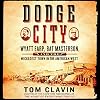
This started off very well, and I thoroughly enjoyed the first half or so. Tom Clavin tells the stories of the early years and careers of Wyatt Earp, Bat Masterson, Charlie Bassett, Bill Tilghman, Doc Holliday and others, and their part in the “civilizing” of the west, in a style reminiscent of classic western novels (and read by John Bedford Lloyd with an endearingly corny western drawl). My ideas about the settling of the American West before starting in on this were rather vague show more (though Clavin cites Laura Ingalls Wilder a time or two, which made me feel right at home), but Clavin provides just the right amount of background information on conflicts between the U.S. government and Indian tribes, Manifest Destiny, the growth of railroads, and so on.
Focusing mainly on events in the 1870's, Clavin focuses on but certainly does not limit himself to the founding, growth, and taming of Dodge City. Clashes with various Indian tribes, settlers, and cowboys alternate with tales of our several protagonists' efforts to make livings in saloon keeping, law enforcement, and gambling. The family bonds and romantic entanglements of the Wyatts, the Mastersons, and Doc Holliday with various women add another element of interest. Sticking more faithfully to his characters than to Dodge, Clavin follows Bat, Wyatt, and other sometime law enforcers all around the West, to Montana, California, New Mexico, etc. He tells many fine tales, but after a while his episodic narration, switching frequently from one to another of his large cast (and I did have trouble keeping track of who was who among the secondary characters), becomes a little repetitive. Apparently, “settling” the West involved a whole lot of chasing down cattle rustlers, dragging drunken cowboys into the calaboose (a useful synonym for “jail” which is surely due for a revival), and dealing with corrupt politicians. Again and again and again. Who'd have thought? Okay, actually that's just what you would have thought, but after a while the routine feels tiresome.
Things pick up nicely again towards the end, though, when Clavin wraps up the lives of his major characters. Bat Masterson, who has the last word, has a delightfully surprising second career. He winds up as a popular journalist in New York City, friends with Theodore Roosevelt, reporting on boxing, mentoring young writers (including Dorothy Day, which is a pairing I'd never have imagined). His later years and death, in 1921, provided an unexpected and intriguing transition from the Wild West in which he originally made his reputation to the 20th century. show less
Focusing mainly on events in the 1870's, Clavin focuses on but certainly does not limit himself to the founding, growth, and taming of Dodge City. Clashes with various Indian tribes, settlers, and cowboys alternate with tales of our several protagonists' efforts to make livings in saloon keeping, law enforcement, and gambling. The family bonds and romantic entanglements of the Wyatts, the Mastersons, and Doc Holliday with various women add another element of interest. Sticking more faithfully to his characters than to Dodge, Clavin follows Bat, Wyatt, and other sometime law enforcers all around the West, to Montana, California, New Mexico, etc. He tells many fine tales, but after a while his episodic narration, switching frequently from one to another of his large cast (and I did have trouble keeping track of who was who among the secondary characters), becomes a little repetitive. Apparently, “settling” the West involved a whole lot of chasing down cattle rustlers, dragging drunken cowboys into the calaboose (a useful synonym for “jail” which is surely due for a revival), and dealing with corrupt politicians. Again and again and again. Who'd have thought? Okay, actually that's just what you would have thought, but after a while the routine feels tiresome.
Things pick up nicely again towards the end, though, when Clavin wraps up the lives of his major characters. Bat Masterson, who has the last word, has a delightfully surprising second career. He winds up as a popular journalist in New York City, friends with Theodore Roosevelt, reporting on boxing, mentoring young writers (including Dorothy Day, which is a pairing I'd never have imagined). His later years and death, in 1921, provided an unexpected and intriguing transition from the Wild West in which he originally made his reputation to the 20th century. show less
Lists
Awards


You May Also Like


Associated Authors
Statistics
- Works
- 27
- Also by
- 1
- Members
- 4,732
- Popularity
- #5,321
- Rating
- 4.0
- Reviews
- 144
- ISBNs
- 168
- Languages
- 4
- Favorited
- 1