
Andrew C. Isenberg
Author of The Destruction of the Bison: An Environmental History, 1750-1920
About the Author
Andrew C. Isenberg received his B.A. from St. Olaf College and his Ph.D. from Northwestern University. He teaches the history of the American West, borderlands history, and environmental history as Professor of History at Temple University. He is the author of Wyatt Earp: A Vigilante Life; Mining show more California: An Ecological History; and The Destruction of the Bison: An Environmental History, 1750-1920. He has also edited two volumes of collected essays: The Oxford Handbook of Environmental History and The Nature of Cities: Culture, Landscape, and Urban Space. show less
Works by Andrew C. Isenberg
Associated Works
Tagged
Common Knowledge
- Birthdate
- 1964-08-06
- Gender
- male
- Occupations
- professor of History, Temple University
Members
Reviews
The Age of the Borderlands: Indians, Slaves, and the Limits of Manifest Destiny, 1790–1850 (The David J. Weber Series in the New Borderlands History) by Andrew C. Isenberg
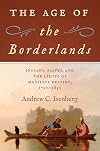
Rarely am I immediately convinced by the thesis of a book from its introduction. Yet such was my experience when reading Andrew Isenberg’s The Age of the Borderlands: Indians, Slaves, and the Limits of Manifest Destiny, 1790-1850 (galley received as part of an early review program).
The author began with an 1836 speech in the House of Representatives by former President John Quincy Adams, for the moment successfully arguing against annexation of Texas as part of the United States. By means show more of this speech the author casts aspersion on our tendency to read the premise of manifest destiny back into our history: we now imagine the United States was fated to fill and maintain all the territory it now possesses from the land of the original colonies to the Pacific Coast. As Adams’ speech well illustrated, during the first seventy-five years of the nation’s history, American authority and presence in its borderlands proved very tendentious, and by no means provided a guarantee of what would eventually take place.
The author spends the majority of the time considering various episodes demonstrating the limited presence of America at its borderlands. We hear of “maroon” settlements in Florida of the Seminole, and how America could not well project its strength into Florida throughout the early nineteenth century. We see the story of traders among the Osage in what was theoretically American territory in the Louisiana Purchase, but with the Osage very much remaining the real authorities in the land. The author chronicles the vaccination program Americans attempted to use in order to gain favor among the Indigenous people in the then peripheral areas of upper Michigan, Wisconsin, and Minnesota/the Dakotas, trying to gain influence at the expense of the British and others. The author spends not a little time on how Texas got populated, and the colonization schemes regarding former slaves which some attempted to establish in Texas or areas further south. His final portrayal involved some “missionaries” who really wanted to get far away from what they saw as debauched American society, learning Dakota and living among them in what is today Minnesota before it became more heavily populated with Europeans.
In all of these narratives one can perceive how the Americans were not the strongest group of people around, and how the Americans had to compete for influence among the Indigenous people as did the British and Spanish. Yes, the French would eventually cede their holdings in America to the United States; yes, the Spanish would take an opportunity to divest themselves of West and East Florida; yes, the Mexicans would overthrow the Spanish, the Texans would revolt, establish their own state, and then join the United States; yes, Polk would get elected and instigate war with Mexico, which was not overwhelmingly popular, and would seize the northern third of Mexico; and yes, eventually the British and the United States would come to terms and formalize the border between the United States and Canada as it is now maintained. But all of that was in process, or yet to be imagined, in most of the period from 1790 to 1850. Yes, it happened the way it happened. But it did not have to. It could have ended up at least somewhat differently. And our perspective on our own history would do well to keep that in mind. show less
The author began with an 1836 speech in the House of Representatives by former President John Quincy Adams, for the moment successfully arguing against annexation of Texas as part of the United States. By means show more of this speech the author casts aspersion on our tendency to read the premise of manifest destiny back into our history: we now imagine the United States was fated to fill and maintain all the territory it now possesses from the land of the original colonies to the Pacific Coast. As Adams’ speech well illustrated, during the first seventy-five years of the nation’s history, American authority and presence in its borderlands proved very tendentious, and by no means provided a guarantee of what would eventually take place.
The author spends the majority of the time considering various episodes demonstrating the limited presence of America at its borderlands. We hear of “maroon” settlements in Florida of the Seminole, and how America could not well project its strength into Florida throughout the early nineteenth century. We see the story of traders among the Osage in what was theoretically American territory in the Louisiana Purchase, but with the Osage very much remaining the real authorities in the land. The author chronicles the vaccination program Americans attempted to use in order to gain favor among the Indigenous people in the then peripheral areas of upper Michigan, Wisconsin, and Minnesota/the Dakotas, trying to gain influence at the expense of the British and others. The author spends not a little time on how Texas got populated, and the colonization schemes regarding former slaves which some attempted to establish in Texas or areas further south. His final portrayal involved some “missionaries” who really wanted to get far away from what they saw as debauched American society, learning Dakota and living among them in what is today Minnesota before it became more heavily populated with Europeans.
In all of these narratives one can perceive how the Americans were not the strongest group of people around, and how the Americans had to compete for influence among the Indigenous people as did the British and Spanish. Yes, the French would eventually cede their holdings in America to the United States; yes, the Spanish would take an opportunity to divest themselves of West and East Florida; yes, the Mexicans would overthrow the Spanish, the Texans would revolt, establish their own state, and then join the United States; yes, Polk would get elected and instigate war with Mexico, which was not overwhelmingly popular, and would seize the northern third of Mexico; and yes, eventually the British and the United States would come to terms and formalize the border between the United States and Canada as it is now maintained. But all of that was in process, or yet to be imagined, in most of the period from 1790 to 1850. Yes, it happened the way it happened. But it did not have to. It could have ended up at least somewhat differently. And our perspective on our own history would do well to keep that in mind. show less
The Age of the Borderlands: Indians, Slaves, and the Limits of Manifest Destiny, 1790–1850 (The David J. Weber Series in the New Borderlands History) by Andrew C. Isenberg
U.S. expansionism in the 19th c., although characterized by conquest, colonization and a self-serving sense of superiority, it was hardly a sweeping victory. Isenberg argues that to describe it as such is to erase the industry and defensive efforts of numerous native tribes, slave fugitives and freedmen that called the borderlands home.
First is Andrew Jackson's illegal and ineffectual campaign to remove entrenched Seminoles in Spanish Florida. Then in Missouri and Upper Louisiana, the U.S. show more failed to establish regulated trade with the Osage and other natives, disbanding the system after losing the War of 1812. Even the smallpox vaccination programs - referred to as "permissive acculturation," - was introduced by the Spanish and not an American original. Even then, most groups did not abandon their natural healers. Coahuila y Tejas, or Texas, was not an unpopulated territory; with a complex history that was much longer than slaveholder Stephen Austin or antislavery colonizer Benjamin Lundy perceived. Finally, missionaries in Minnesota were flabbergasted when their blindly idealistic faith would not penetrate the fierce Dakota.
As you can see, Isenberg provides a much sharper look at the supposed early "success" of 19th c. America; and rightfully so. However I couldn't give it a higher rating because Isenberg is rather long-winded. Their method of fixating on the misconceptions of one particular white individual and applying that to a vastly broader context doesn't always work. Each chapter is not necessarily in a chronological order, so that you don't see a progression of "manifest destiny" but rather separate, fixed moments in time. You're never sure where the narrative is going until the conclusionary paragraph. However, it is history you rarely learn about and I definitely took plenty of notes! show less
First is Andrew Jackson's illegal and ineffectual campaign to remove entrenched Seminoles in Spanish Florida. Then in Missouri and Upper Louisiana, the U.S. show more failed to establish regulated trade with the Osage and other natives, disbanding the system after losing the War of 1812. Even the smallpox vaccination programs - referred to as "permissive acculturation," - was introduced by the Spanish and not an American original. Even then, most groups did not abandon their natural healers. Coahuila y Tejas, or Texas, was not an unpopulated territory; with a complex history that was much longer than slaveholder Stephen Austin or antislavery colonizer Benjamin Lundy perceived. Finally, missionaries in Minnesota were flabbergasted when their blindly idealistic faith would not penetrate the fierce Dakota.
As you can see, Isenberg provides a much sharper look at the supposed early "success" of 19th c. America; and rightfully so. However I couldn't give it a higher rating because Isenberg is rather long-winded. Their method of fixating on the misconceptions of one particular white individual and applying that to a vastly broader context doesn't always work. Each chapter is not necessarily in a chronological order, so that you don't see a progression of "manifest destiny" but rather separate, fixed moments in time. You're never sure where the narrative is going until the conclusionary paragraph. However, it is history you rarely learn about and I definitely took plenty of notes! show less
The Destruction of the Bison: An Environmental History, 1750-1920 (Studies in Environment and History) by Andrew C. Isenberg
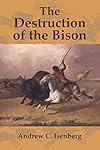
Full of lots of interesting and sometimes nonintuitive things – but perhaps lacks rigor. Author Andrew Isenberg is a history professor at Princeton; the book is more of a history than an ecological study.
Isenberg starts with a discussion of the shortgrass prairie environment. Bison could, and did, live in other environments but were more efficient than any of their competitors on shortgrass prairie. Isenberg sometimes refers to the extant Bison bison as “dwarf” bison; this appellation show more may seem incorrect if you’ve ever been up close to one, but his point is Bison bison is smaller, and thus better adapted to shortgrass prairie, than the extinct Bison priscus, Bison antiquus, and Bison latifrons. Isenberg also makes the point that Bison bison was the last survivor (with the minor exception of pronghorns) of a host of Pleistocene North American grazing animals. He may not go quite far enough here; Bison bison seems to have evolved from its ancestor Bison antiquus within the last 10ky or so and the shortgrass prairie is also a post-glacial ecosystem; thus there were people in North American before either The Great Plains or the modern bison.
Isenberg then discusses the genesis of the Plains Indians. The tribal groups later thought of as the “buffalo hunters” – Arapaho, Assiniboine, Atsina, Blackfoot, Cheyenne, Comanche, Crow, Kiowa, and Sioux – all originally lived somewhere else and were all originally at least semisedentary – growing maize and other crops in the river valleys and venturing on to the plains seasonally to hunt. Hunting was on foot, and the usual method was to stampede a bison herd off a cliff or into a dead-end canyon; this depended on finding a bison herd that was close enough to village that the hunters could reach it in a reasonable time, small enough to surround and force toward the trap, and having a trap available at all.
This all changed with the arrival of the horse. Mounted hunters could follow the bison, rather than waiting for bison to come to them, could enter a herd and kill animals with less danger to themselves, and could pack out much larger quantities of meat. The tribes acquired horses between about 1730 and 1830; for the Sioux, for example, the first record of horses in datable pictographs is from 1781. About the same time, European diseases began showing up in native populations, with smallpox as the big killer. The diseases devastated sedentary or semisedentary native populations, such as the Mandan, Pawnee, and Hidatsa; population decline is estimated at around 80% between 1780-1880. The nomadic groups were affected too, of course, but avoided some of the devastation by not being concentrated in villages. The Sioux, for example, only declined by about 9% in the same period.
The point of all this is the standard environmental litany is that the Native Americans had been “living in harmony with Nature” since time immemorial, until the whites showed up and ruined everything. In fact, the shortgrass prairie/bison ecosystem was geologically recent, and the nomadic bison hunters were more recent still, evolving within historic times; there’s no evidence bison or a bison-hunting lifestyle were “sustainable”. Isenberg does note that hunting for meat alone seems to have been sustainable; the Native American take was about 9%/year, while the natural rate of increase for bison was about 20%.
However, when Euro-American trade goods became available, the natives stopped hunting just for sustenance and began hunting for hides. While it’s a popular “given” that it was American “buffalo” hunters that drove the animal to near extinction, the natives started the process. Beginning around 1830 or so, Indians began bringing an average of 100000 buffalo robes per year to trading posts. This would have put the annual take right around 20% - or just about the maximum yield. Isenberg points out that the trade in robes had a dramatic effect on Native social structure. Preparing buffalo robes was “woman’s work” in all the tribes; thus a man who wanted wealth from the robe trade had to have many women. What anthropological evidence exists from before the robe trade took off suggests polygyny was relatively rare, but it increased dramatically afterward; as a result the pattern of intertribal warfare also changed, with raids made for women rather than horses.
That being said, it was clearly commercial hunting by American riflemen in the 1870s that doomed the bison. The Santa Fe Railroad shipped 1.3M hides between 1872 and 1874; that’s one railroad out of the many that crossed the plains. What’s more, it seems that one hide was spoiled for each one successfully removed. In 1889, a survey counted 25 bison in the Texas Panhandle; 20 in Colorado; 36 in Montana, and 200 in Yellowstone National Park.
Isenberg is less overtly critical of the “environmental litany” than I am, but he does discuss it in his concluding chapter, comparing it to Christian teleology: there was an Earthly paradise but humans were expelled from it by sin; we can regain it by repentance. In the environmental version, North American was the Earthly Paradise with Noble Savages living in perpetual harmony with Nature until 1492. Isenberg doesn’t hammer it in as hard as I would, but it’s pretty clear that there was no “harmony with Nature”.
This is a compact, scholarly work. As mentioned above, my main concern is where Isenberg’s numbers of coming from; most of what he cites are anecdotes (of course, it could easily be for the time under consideration, anecdotes are all the data available; “anecdotal evidence” is still evidence). Some things strike me as a little strange, though; for example, Isenberg’s data for aboriginal population in the 19th century come from a Smithsonian work published in 1928. Is that really the most current work on the topic? I gather from cursory reading that Native American population figures are highly political; maybe these are the most current numbers before it became such a charged issue. Illustrations are from various contemporary sources; there are a lot of footnotes but no bibliography; instead all references are given in the footnotes. show less
Isenberg starts with a discussion of the shortgrass prairie environment. Bison could, and did, live in other environments but were more efficient than any of their competitors on shortgrass prairie. Isenberg sometimes refers to the extant Bison bison as “dwarf” bison; this appellation show more may seem incorrect if you’ve ever been up close to one, but his point is Bison bison is smaller, and thus better adapted to shortgrass prairie, than the extinct Bison priscus, Bison antiquus, and Bison latifrons. Isenberg also makes the point that Bison bison was the last survivor (with the minor exception of pronghorns) of a host of Pleistocene North American grazing animals. He may not go quite far enough here; Bison bison seems to have evolved from its ancestor Bison antiquus within the last 10ky or so and the shortgrass prairie is also a post-glacial ecosystem; thus there were people in North American before either The Great Plains or the modern bison.
Isenberg then discusses the genesis of the Plains Indians. The tribal groups later thought of as the “buffalo hunters” – Arapaho, Assiniboine, Atsina, Blackfoot, Cheyenne, Comanche, Crow, Kiowa, and Sioux – all originally lived somewhere else and were all originally at least semisedentary – growing maize and other crops in the river valleys and venturing on to the plains seasonally to hunt. Hunting was on foot, and the usual method was to stampede a bison herd off a cliff or into a dead-end canyon; this depended on finding a bison herd that was close enough to village that the hunters could reach it in a reasonable time, small enough to surround and force toward the trap, and having a trap available at all.
This all changed with the arrival of the horse. Mounted hunters could follow the bison, rather than waiting for bison to come to them, could enter a herd and kill animals with less danger to themselves, and could pack out much larger quantities of meat. The tribes acquired horses between about 1730 and 1830; for the Sioux, for example, the first record of horses in datable pictographs is from 1781. About the same time, European diseases began showing up in native populations, with smallpox as the big killer. The diseases devastated sedentary or semisedentary native populations, such as the Mandan, Pawnee, and Hidatsa; population decline is estimated at around 80% between 1780-1880. The nomadic groups were affected too, of course, but avoided some of the devastation by not being concentrated in villages. The Sioux, for example, only declined by about 9% in the same period.
The point of all this is the standard environmental litany is that the Native Americans had been “living in harmony with Nature” since time immemorial, until the whites showed up and ruined everything. In fact, the shortgrass prairie/bison ecosystem was geologically recent, and the nomadic bison hunters were more recent still, evolving within historic times; there’s no evidence bison or a bison-hunting lifestyle were “sustainable”. Isenberg does note that hunting for meat alone seems to have been sustainable; the Native American take was about 9%/year, while the natural rate of increase for bison was about 20%.
However, when Euro-American trade goods became available, the natives stopped hunting just for sustenance and began hunting for hides. While it’s a popular “given” that it was American “buffalo” hunters that drove the animal to near extinction, the natives started the process. Beginning around 1830 or so, Indians began bringing an average of 100000 buffalo robes per year to trading posts. This would have put the annual take right around 20% - or just about the maximum yield. Isenberg points out that the trade in robes had a dramatic effect on Native social structure. Preparing buffalo robes was “woman’s work” in all the tribes; thus a man who wanted wealth from the robe trade had to have many women. What anthropological evidence exists from before the robe trade took off suggests polygyny was relatively rare, but it increased dramatically afterward; as a result the pattern of intertribal warfare also changed, with raids made for women rather than horses.
That being said, it was clearly commercial hunting by American riflemen in the 1870s that doomed the bison. The Santa Fe Railroad shipped 1.3M hides between 1872 and 1874; that’s one railroad out of the many that crossed the plains. What’s more, it seems that one hide was spoiled for each one successfully removed. In 1889, a survey counted 25 bison in the Texas Panhandle; 20 in Colorado; 36 in Montana, and 200 in Yellowstone National Park.
Isenberg is less overtly critical of the “environmental litany” than I am, but he does discuss it in his concluding chapter, comparing it to Christian teleology: there was an Earthly paradise but humans were expelled from it by sin; we can regain it by repentance. In the environmental version, North American was the Earthly Paradise with Noble Savages living in perpetual harmony with Nature until 1492. Isenberg doesn’t hammer it in as hard as I would, but it’s pretty clear that there was no “harmony with Nature”.
This is a compact, scholarly work. As mentioned above, my main concern is where Isenberg’s numbers of coming from; most of what he cites are anecdotes (of course, it could easily be for the time under consideration, anecdotes are all the data available; “anecdotal evidence” is still evidence). Some things strike me as a little strange, though; for example, Isenberg’s data for aboriginal population in the 19th century come from a Smithsonian work published in 1928. Is that really the most current work on the topic? I gather from cursory reading that Native American population figures are highly political; maybe these are the most current numbers before it became such a charged issue. Illustrations are from various contemporary sources; there are a lot of footnotes but no bibliography; instead all references are given in the footnotes. show less

The virtue of this book is that it's wider ranging than the title suggests, as while the impact on California's resources by gold mining (particularly hydraulic mining) and associated industries is the foundation, how this related to farming and stock-raising, the rise of the city of Sacramento and even the Modoc War of the 1870s is also dealt with. The problem is this means that the treatment comes off as a little superficial; I feel that this book could easily be distilled down to an show more article in the "New York Review of Books." The theme would then be how the lack of capital and labor led to extensive development, and the exhaustion of the California landscape. show less
Lists
Awards

You May Also Like


Statistics
- Works
- 7
- Also by
- 1
- Members
- 302
- Popularity
- #77,841
- Rating
- 3.5
- Reviews
- 5
- ISBNs
- 23