
Kelly M. Kapic
Author of A Little Book for New Theologians: Why and How to Study Theology
About the Author
Kelly M. Kapic (PhD, King's College, University of London) is professor of theological studies at Covenant College in Lookout Mountain, Georgia. He is the author or editor of numerous books, including A Little Book for New Theologians and Mapping Modern Theology.
Image credit: Used by permission of Baker Publishing Group, copyright © 2008. All rights to this material are reserved. Materials are not to be distributed to other web locations for retrieval, published(see © info.)
Works by Kelly M. Kapic
You're Only Human: How Your Limits Reflect God's Design and Why That's Good News (2022) 294 copies, 2 reviews
Pocket Dictionary of the Reformed Tradition (The IVP Pocket Reference Series) (2013) 136 copies, 1 review
Mapping Modern Theology: A Thematic and Historical Introduction (2012) — Contributor — 130 copies, 1 review
The Ashgate Research Companion to John Owen's Theology (Ashgate Research Companions) (2012) — Editor; Contributor — 40 copies
You Were Never Meant to Do It All: A 40-Day Devotional on the Goodness of Being Human (Embrace Your Limits and Live Authentically ) (2025) 30 copies
Associated Works
Life in the Spirit: Spiritual Formation in Theological Perspective (2010) — Contributor — 104 copies
Christology, Hermeneutics, and Hebrews: Profiles from the History of Interpretation (2012) — Contributor — 25 copies
Tagged
Common Knowledge
Members
Reviews
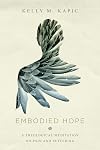
Too often the Christian attitude toward suffering is characterized by a detached academic appeal to God's sovereignty, as if suffering were a game or a math problem. Or maybe we expect that since God is good, everything will just work out all right somehow. But where then is honest lament? Aren't we shortchanging believers of the riches of the Christian teaching about suffering?
In Embodied Hope Kelly Kapic invites us to consider the example of our Lord Jesus. Only because Jesus has taken on show more our embodied existence, suffered alongside us, died, and been raised again can we find any hope from the depths of our own dark valleys of pain. As we look to Jesus, we are invited to participate not only in his sufferings, but also in the church, which calls us out of isolation and into the encouragement and consolation of the communal life of Christ.
Drawing on his own family's experience with prolonged physical pain, Kapic reshapes our understanding of suffering into the image of Jesus, and brings us to a renewed understanding of―and participation in―our embodied hope. show less
In Embodied Hope Kelly Kapic invites us to consider the example of our Lord Jesus. Only because Jesus has taken on show more our embodied existence, suffered alongside us, died, and been raised again can we find any hope from the depths of our own dark valleys of pain. As we look to Jesus, we are invited to participate not only in his sufferings, but also in the church, which calls us out of isolation and into the encouragement and consolation of the communal life of Christ.
Drawing on his own family's experience with prolonged physical pain, Kapic reshapes our understanding of suffering into the image of Jesus, and brings us to a renewed understanding of―and participation in―our embodied hope. show less
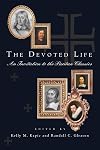
C. S. Lewis once wrote, “It is a good rule, after reading a new book, never to allow yourself another new one till you have read an old one in between. If that is too much for you, you should at least read one old one to every three new ones.” The editors (Kelly M. Kapic and Randall C. Gleason) of The Devoted Life: An Invitation to the Puritan Classics have put together a masterful introduction to some of the most important literature ever penned in the English language…all of it very show more old! It is not so much an introduction to the lives of the Puritans as it is an introduction to some of their key writings. However, readers will be delighted to know that the first chapter goes a long way to answer the question: “Who were the Puritans?” (pp.15-37) and the last chapter on “Puritan and Spiritual Renewal” (pp.298-309) is worth the price of the book. The Puritans were chiefly responsible for shaping social and religious thought in the post-Reformation era. They are greatly misunderstood and often falsely caricatured. This introduction will be a great encouragement to the believer who wants to go beyond the typical fluff of modern writing and dig in to Christian literature that lives and breathes. The editors will take the reader on a grand tour of Western Canon heavy-weights like Pilgrim’s Progress and Paradise Lost, setting them in both their proper literary and theological contexts. Of special interest to ministers will be the chapters on The Arte of Prophesying (William Perkins), The Reformed Pastor (Richard Baxter), and A Method of Prayer (Matthew Henry) among others. Biblical counselors will glean insight as well as appreciate the chapter on Richard Sibbes’ excellent treatise The Bruised Reed. In addition to the aforementioned chapters on Bunyan and Milton, students of English literature will profit from Mark Noll’s examination of “The Poetry of Anne Bradstreet (1612-1272) and Edward Taylor (1642-1729)”. The Devoted Life deserves a prominent place in the growing literature on Puritan lives and writings. The editors have furthered the discussion of Puritan writings in this readable and engaging edition. One hopes that it will encourage a first-hand reading of the Puritans and renew a present-day application of their humble theology. As an aside, if one is looking for an accessible introduction to the lives of the Puritans, this reviewer would recommend, Leland Ryken’s Worldly Saints: The Puritans as They Really Were (Zondervan, 1986). Though Ryken’s work is deemed less “scholarly” by some it is still a fair and accessible introduction to the puritans. show less
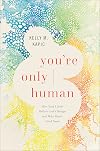
"Beloved, you and I are secure in the love of the Father, the grace of the Son, and the fellowship of the Spirit. May this security allow us to celebrate our limits as part of God’s good work. May this security drive us back to our God, to one another, and even to our right dependence on the rest of creation. May this security encourage our work, liberate our rest, and free us to love and serve others. God made us to be limited creatures, able to freely participate in his work, confident show more in his presence, and grateful for his promises and provision. Let us appreciate the goodness of our finitude as we rest in the love and provision of our infinitely good God. May it be so."
With this closing prayer, Kapic summarizes the essence of his message. It seems like we should know better, but we live our lives assuming we can do anything or everything—or at least we should. But, he argues effectively and pastorally, we are by God's design created with limitations. These limitations are not evil or sinful, but are built in to each human. Realizing our limits can free us rather than frustrate us.
Great book! show less
With this closing prayer, Kapic summarizes the essence of his message. It seems like we should know better, but we live our lives assuming we can do anything or everything—or at least we should. But, he argues effectively and pastorally, we are by God's design created with limitations. These limitations are not evil or sinful, but are built in to each human. Realizing our limits can free us rather than frustrate us.
Great book! show less
Overall, the book is good, however it is very, very dense in presentation of the material. I could only absorb limited amounts of it at a time. However, when you absorb what the author is presenting, it can help provide you with a good presentation of the incorrect view that many of us have about believing that we “have to do it all”. It will guide you through changing that approach to life.
Awards

You May Also Like


Associated Authors
Statistics
- Works
- 22
- Also by
- 5
- Members
- 2,149
- Popularity
- #11,968
- Rating
- 4.4
- Reviews
- 11
- ISBNs
- 41
- Favorited
- 1