
Barbara Kirshenblatt-Gimblett
Author of Destination Culture: Tourism, Museums, and Heritage
About the Author
Barbara Kirshenblatt-Gimblett is University Professor and Professor of Performance Studies at the Tisch School of the Arts, New York University.
Disambiguation Notice:
(yid) VIAF:29687525 (yivo)
Works by Barbara Kirshenblatt-Gimblett
Associated Works
Life Is with People: The Culture of the Shtetl (1952) — Introduction, some editions — 338 copies, 3 reviews
Remembered Lives: The Work of Ritual, Storytelling, and Growing Older (1992) — Foreword, some editions — 15 copies
Tagged
Common Knowledge
- Canonical name
- Kirshenblatt-Gimblett, Barbara
- Other names
- Kirshenblatt Gimblett, Barbara
- Birthdate
- 1942-09-30
- Gender
- female
- Education
- Indiana University (PhD|Folklore|1972)
University of California, Berkeley (MA|English Literature|1967)
University of California, Berkeley (BA|English Literature|1966) - Occupations
- university professor
folklorist - Organizations
- New York University
Polin Museum of the History of Polish Jews
American Academy of Arts and Sciences - Awards and honors
- Officer’s Cross of the Order of Merit of the Republic of Poland
American Academy of Arts and Sciences - Relationships
- Kirshenblatt, Mayer (father)
Gimblett, Max (husband) - Nationality
- USA
- Birthplace
- Toronto, Ontario, Canada
- Places of residence
- New York, New York, USA
Bloomington, Indiana, USA
Berkeley, California, USA - Disambiguation notice
- VIAF:29687525 (yivo)
- Associated Place (for map)
- USA
Members
Reviews
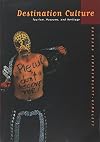
Barbara Kirshenblatt-Gimblett is such a remarkable scholar. She traverses easily across ideas, content, and theories all the while maintaining a lyrical prose style. Few can compete with Kirchenblatt-Gimblett's rigor, ingenuity, and ability to consolidate ideas.
Amazon.com: Posing the question, "What does it mean to show?" Barbara Kirshenblatt-Gimblett explores the agency of display in a variety of settings: museums, festivals, world's fairs, historical re-creations, memorials, and tourist attractions. She talks about how objects--and people--are made to "perform" their meaning for us by the very fact of being collected and exhibited, and about how specific techniques of display, not just the things shown, convey powerful messages.
Her engaging show more analysis shows how museums compete with tourism in the production of "heritage." To make themselves profitable, museums are marketing themselves as tourist attractions. To make locations into destinations, tourism is staging the world as a museum of itself. Both promise to deliver heritage. Although heritage is marketed as something old, she argues that heritage is actually a new mode of cultural production that gives a second life to dying ways of life, economies, and places. The book concludes with a lively commentary on the "good taste/bad taste" debate in the ephemeral "museum of the life world," where everyone is a curator of sorts and the process of converting life into heritage begins. show less
Her engaging show more analysis shows how museums compete with tourism in the production of "heritage." To make themselves profitable, museums are marketing themselves as tourist attractions. To make locations into destinations, tourism is staging the world as a museum of itself. Both promise to deliver heritage. Although heritage is marketed as something old, she argues that heritage is actually a new mode of cultural production that gives a second life to dying ways of life, economies, and places. The book concludes with a lively commentary on the "good taste/bad taste" debate in the ephemeral "museum of the life world," where everyone is a curator of sorts and the process of converting life into heritage begins. show less
Awards

You May Also Like


Associated Authors
Statistics
- Works
- 10
- Also by
- 4
- Members
- 204
- Popularity
- #108,206
- Rating
- 3.6
- Reviews
- 2
- ISBNs
- 18
- Languages
- 1
- Favorited
- 1