
Sofie Laguna
Author of Too Loud Lily
About the Author
Sofie Laguna was born in 1968 in Australia. She graduated from Victorian College of the Arts in 1992. She went on to earn her Diploma of Arts from RMIT University. Her book title's include My Yellow Blanky, Bill's Best Day, Too Loud Lily, and Big Ned's Bushwalk. She was shortlisted for the Stella show more Prize 2015 and the Voss Literary Prize with her title The Eye of the Sheep. This same title also won the Miles Franklin Literary Award 2015. She will be featured at the Ubud Writers and Readers Festival 2015 program. In 2018, she won the Indie Book Award for Fiction with her book, The Choke. (Bowker Author Biography) show less
Image credit: Brigid Arnott
Series
Works by Sofie Laguna
Tagged
Common Knowledge
- Canonical name
- Laguna, Sofie
- Birthdate
- 1968
- Gender
- female
- Education
- Victorian College of the Arts (1992)
Royal Melbourne Institute of Technology, RMIT University (diploma of arts) - Occupations
- novelist
children's book author
playwright
actor - Organizations
- Flying Bookworm Theatre Company
Salamanca Theatre Company - Awards and honors
- Australia Council residency grant (2004)
- Agent
- Booked Out Arts and Literature Agency
- Nationality
- Australia
- Birthplace
- Sydney, New South Wales, Australia
- Places of residence
- Melbourne, Victoria, Australia
- Map Location
- Australia
Members
Reviews

This was a tough book to read. Not because there was anything wrong with the writing - quite the opposite. It was a tough story told so well I couldn't help but engage with it. It's a story about toxic men ruling a world of poverty in an Australian rural community. There are a few good people, but we can see that it is inevitable that their good intentions are thwarted. Although the ending is somewhat hopeful, we know that protagonist Justine Lee (10 years old at the start of the novel) is show more destined to live a very hard and mostly miserable life. There seems little hope that she, and others like her, will ever break out of the cycle of desperation and perennially shattered dreams. A very depressing outlook, but one whose veracity is convincingly argued. show less
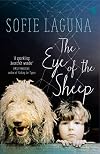
It's no surprise that, at a time when domestic violence is becoming a prominent social and political issue here, a novel set in a Melbourne household dominated by an abusive father wins the Miles Franklin Award. The Eye of the Sheep has a lot more going for it than mere topicality; it's a profoundly original and affecting book.
The story unfolds as observed by Jimmy Flick, a tearaway 11 year old who suffers from an unspecified disorder (seemeingly ADHD or something similar). He cannot control show more his behaviour and is not in touch with his emotions.
Jimmy narrates his family life in the inner suburb of Altona, living with his older brother Robby, their obese mother, and his father, who works at the nearby refinery. From the outset, it is clear that Jimmy's behavioural disorder exasperates his father, and only his mother is able to deal with him - barely. Jimmy's artless narration recounts how bottles of Cutty Sark disappear and the consequences, especially on a Friday night. When Jimmy's father is retrenched, things get worse and the tensions within the family erupt.
Laguna's narrative voice captures perfectly the sense of a child struggling to make sense of almost everything, but especially what is going on right in front of him. Situations that Robby sees clearly are incomprehensible to Jimmy, more so as things become ever worse.
I probably won't be the first to liken this book to The Curious Incident of the Dog in the Night-time but I think the similarities are limited. This book is more serious in intent than Haddon's, and Laguna carries it off. There are some points where she gives way to her instincts as a children's author, with things threatening to get a bit Tom Sawyerish towards the end, but she does not go in that direction, fortunately.
The Eye of the Sheep paints a very affecting picture of domestic violence, without being polemical. Laguna is sympathetic towards the abusive Gavin, and shows how he is also a victim. As the story unfolds we also see glimmers of how this behaviour persists through the generations.
I would give this book 5 stars, except that I though Laguna overdid it a little by giving her supposedly backward narrator a vocabulary and a degree of insight that I thought was pretty unrealistic at times, for an 11 year old boy with learning difficulties. That occasionally jarred, but otherwise this is a very fine novel. show less
The story unfolds as observed by Jimmy Flick, a tearaway 11 year old who suffers from an unspecified disorder (seemeingly ADHD or something similar). He cannot control show more his behaviour and is not in touch with his emotions.
Jimmy narrates his family life in the inner suburb of Altona, living with his older brother Robby, their obese mother, and his father, who works at the nearby refinery. From the outset, it is clear that Jimmy's behavioural disorder exasperates his father, and only his mother is able to deal with him - barely. Jimmy's artless narration recounts how bottles of Cutty Sark disappear and the consequences, especially on a Friday night. When Jimmy's father is retrenched, things get worse and the tensions within the family erupt.
Laguna's narrative voice captures perfectly the sense of a child struggling to make sense of almost everything, but especially what is going on right in front of him. Situations that Robby sees clearly are incomprehensible to Jimmy, more so as things become ever worse.
I probably won't be the first to liken this book to The Curious Incident of the Dog in the Night-time but I think the similarities are limited. This book is more serious in intent than Haddon's, and Laguna carries it off. There are some points where she gives way to her instincts as a children's author, with things threatening to get a bit Tom Sawyerish towards the end, but she does not go in that direction, fortunately.
The Eye of the Sheep paints a very affecting picture of domestic violence, without being polemical. Laguna is sympathetic towards the abusive Gavin, and shows how he is also a victim. As the story unfolds we also see glimmers of how this behaviour persists through the generations.
I would give this book 5 stars, except that I though Laguna overdid it a little by giving her supposedly backward narrator a vocabulary and a degree of insight that I thought was pretty unrealistic at times, for an 11 year old boy with learning difficulties. That occasionally jarred, but otherwise this is a very fine novel. show less
Justine Lee is a little girl surrounded by males. Justine's mother abandoned the family many years ago, and her father Ray is in and out of his children's lives, leaving the main responsibility for raising Justine and her brothers to their grandfather. When Ray is around his criminal involvement is something that Justine, in particular, struggles with. She retreats to her sanctuary in The Choke on the Murray River to hide from the world, and seeks solace in the company of her Pop's chooks. show more In both places there's no judgement, no demands and no brutality.
Set in two distinct blocks, THE CHOKE starts out around 1971, when Justine is a 10 year old girl, and school is a turbulent place, except when it comes to her best friend - a disabled boy whose parents are supportive of both kids, a friendship without demands, and mutually supportive. Moving three years into the future, still reeling from events triggered by her father, 13 year old Justine is a vulnerable kid, naive and struggling with too many bad things happening to one little girl.
THE CHOKE isn't easy reading. Laguna has created a magnificent character in Justine Lee. Her voice is clear and utterly convincing. So much so that the sense of dread and fear over her ultimate fate is difficult to deal with. She's also created a sympathetic and very understandable man in Pops - somebody struggling with PTSD and his own demons, trying to do his best by his young granddaughter. His desire to keep her close to family, to keep her out of care is beautifully contrasted with the external viewpoint, where the options might appear more clear-cut. Against these two ultimately sympathetic characters, there's father Ray, a thoroughly noxious creature, absent aunts, cousins and family connections.
Supporting all of these characters is a strong sense of place - many kids growing up in country areas will know too well the "special places" that we find. The hidey-holes, the sanctuaries carved out in quiet corners, away from the adult world, or even siblings, hidden, private and safe. The passage of seasons, time, the impact of weather patterns, the animals, birds, flowers and natural features of those areas are often our consolation and our teachers, and Laguna gets that pitch perfect in this novel.
There's much in this book that's confronting and discomforting, and it's not straight forward reading, but it's worthwhile reading, digging into 1970's Australian rural life, dysfunctional families, and adult behaviour that has lasting consequences.
https://www.austcrimefiction.org/review/choke-sofie-laguna show less
Set in two distinct blocks, THE CHOKE starts out around 1971, when Justine is a 10 year old girl, and school is a turbulent place, except when it comes to her best friend - a disabled boy whose parents are supportive of both kids, a friendship without demands, and mutually supportive. Moving three years into the future, still reeling from events triggered by her father, 13 year old Justine is a vulnerable kid, naive and struggling with too many bad things happening to one little girl.
THE CHOKE isn't easy reading. Laguna has created a magnificent character in Justine Lee. Her voice is clear and utterly convincing. So much so that the sense of dread and fear over her ultimate fate is difficult to deal with. She's also created a sympathetic and very understandable man in Pops - somebody struggling with PTSD and his own demons, trying to do his best by his young granddaughter. His desire to keep her close to family, to keep her out of care is beautifully contrasted with the external viewpoint, where the options might appear more clear-cut. Against these two ultimately sympathetic characters, there's father Ray, a thoroughly noxious creature, absent aunts, cousins and family connections.
Supporting all of these characters is a strong sense of place - many kids growing up in country areas will know too well the "special places" that we find. The hidey-holes, the sanctuaries carved out in quiet corners, away from the adult world, or even siblings, hidden, private and safe. The passage of seasons, time, the impact of weather patterns, the animals, birds, flowers and natural features of those areas are often our consolation and our teachers, and Laguna gets that pitch perfect in this novel.
There's much in this book that's confronting and discomforting, and it's not straight forward reading, but it's worthwhile reading, digging into 1970's Australian rural life, dysfunctional families, and adult behaviour that has lasting consequences.
https://www.austcrimefiction.org/review/choke-sofie-laguna show less
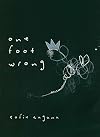
Deeply disturbing plot, but amazingly written and a compelling read. It's from the point of view of a young girl, Hester who obviously has serious mental issues (schizophrenia, at an educated guess) and who is abused by her parents who also have mental issues of their own. (Not to mention an unhealthy religiosity.) So, a very unhappy and disturbing topic. But the imagery was marvellous, as our protagonist seems stuck in this child-like state, talking to her friends tree, spoon, handle, etc; show more drawing the most amazingly described pictures; linked by invisible ropes to her friends, etc.
It also got me thinking about nature vs. nurture, an old quandary I'm very familiar with from my years as an undergraduate Psychology student. What about our behaviour and personality is biological and genetic, and what is learnt? (It is usually, of course, a bit of both. I used to lean on the side of learned behaviour, but after having kids and seeing their ingrained personalities from the start, I'm rather leaning towards genetics.) Hester is a complex case: is she mad because of her abusive upbringing, or is she mad regardless? (And, believe me, she is mad.)
In some ways, it reminded me of fellow Australian Nick Cave's And The Ass Saw the Angel, which I read many years ago. I remember disliking the book intensely at the time (I found out later it was supposed to be funny, but I missed the humour), but the crazy imagery and the dysfunctional family triggered my memories and feelings of similarity.
*** SPOILERS FOLLOW ***
Towards the end, I was worried about where the book was going: I could see no happy end in sight, without sacrificing some semblance of reality. I almost put the book down because I didn't want to go where I thought it was going, but took a deep breath and ploughed on regardless. And I'm glad I did. The ending did sacrifice some reality, but it was a good place to end, and I'll just ignore my niggling quibbles of "yeah, that's never going to happen". show less
It also got me thinking about nature vs. nurture, an old quandary I'm very familiar with from my years as an undergraduate Psychology student. What about our behaviour and personality is biological and genetic, and what is learnt? (It is usually, of course, a bit of both. I used to lean on the side of learned behaviour, but after having kids and seeing their ingrained personalities from the start, I'm rather leaning towards genetics.) Hester is a complex case: is she mad because of her abusive upbringing, or is she mad regardless? (And, believe me, she is mad.)
In some ways, it reminded me of fellow Australian Nick Cave's And The Ass Saw the Angel, which I read many years ago. I remember disliking the book intensely at the time (I found out later it was supposed to be funny, but I missed the humour), but the crazy imagery and the dysfunctional family triggered my memories and feelings of similarity.
*** SPOILERS FOLLOW ***
Towards the end, I was worried about where the book was going: I could see no happy end in sight, without sacrificing some semblance of reality. I almost put the book down because I didn't want to go where I thought it was going, but took a deep breath and ploughed on regardless. And I'm glad I did. The ending did sacrifice some reality, but it was a good place to end, and I'll just ignore my niggling quibbles of "yeah, that's never going to happen". show less
Lists
Awards


You May Also Like


Associated Authors
Statistics
- Works
- 31
- Members
- 1,828
- Popularity
- #14,075
- Rating
- 3.7
- Reviews
- 46
- ISBNs
- 138
- Languages
- 6