
Layamon
Author of Arthurian Chronicles
About the Author
Works by Layamon
Tagged
Common Knowledge
- Other names
- Lawamon (sometimes)
- Date of death
- 1200 c.
- Gender
- male
- Occupations
- poet
- Nationality
- England
- Map Location
- England, UK
Members
Reviews

A small irritant is the fact that these are not Chronicles, a year by year account, usually concerned with geographical areas, but verse romances. So, the title sucks. The prose style of the translator is not very lively, and his excuse might be that he's gone for accuracy as opposed to liveliness. the collector of Arthuriana should not be without this volume, but very little here has not been covered by other period writers.
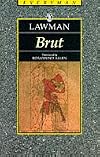
This is a different take on Arthurian legend, as the readers see a lot more of Arthur, and even Arthur fighting than in a lot of the tales about the Knights of the Round Table and King Arthur.
Another interesting thing is that there is the description of Merlin's birth as well as some of his prophecies.
Queen Guinevere is also depicted quite differently in this than in other stories I have read.
Another interesting thing is that there is the description of Merlin's birth as well as some of his prophecies.
Queen Guinevere is also depicted quite differently in this than in other stories I have read.

Read about half, but having read lots of Arthurian material before it wasn't all that exciting...
Jacket notes, from the introduction by Gwyn Jones: "The three most important Arthurian chroniclers as far as England is concerned were Geoffrey of Monmouth, Wace and Layamon. Geoffrey of Monmouth's History of the Kings of Britain had proved very popular, and Wace was one of the first to use the matter in verse form in octosyllable couplets.
Layamon followed Wace, but in him we see English verse in the very act of change, making Layamon the first important poet in Middle English. There is a show more continuous use of alliteration, syllabic strictness, rhyme and assonance. In his pages we meet Arthur for the first time in English, for he transformed Arthurian legend with the Saxon spirit, and divested it of courtly elegance, giving it greater force and simplicity... the legends he composed became a source of inspiration to later generations." show less
Layamon followed Wace, but in him we see English verse in the very act of change, making Layamon the first important poet in Middle English. There is a show more continuous use of alliteration, syllabic strictness, rhyme and assonance. In his pages we meet Arthur for the first time in English, for he transformed Arthurian legend with the Saxon spirit, and divested it of courtly elegance, giving it greater force and simplicity... the legends he composed became a source of inspiration to later generations." show less
You May Also Like


Associated Authors
Statistics
- Works
- 9
- Members
- 351
- Popularity
- #68,158
- Rating
- 4.0
- Reviews
- 9
- ISBNs
- 50
- Languages
- 1
- Favorited
- 1