

Florence Crannell Means (1891–1980)
Author of The Moved-Outers
About the Author
Image credit: unc.edu
Series
Works by Florence Crannell Means
That Girl Andy 4 copies
At the End of Nowhere 2 copies
Dusky Day: A College Story 1 copy
The Singing Wood 1 copy
Ranch and Ring 1 copy
Associated Works
Tagged
Common Knowledge
- Birthdate
- 1891-05-15
- Date of death
- 1980-11-19
- Gender
- female
- Nationality
- USA
- Birthplace
- Baldwin, New York, USA
- Places of residence
- Baldwin, New York, USA
Corning, New York, USA
Topeka, Kansas, USA
Denver, Colorado, USA
Kansas City, Missouri, USA - Place of death
- Boulder, Colorado, USA
- Associated Place (for map)
- USA
Members
Reviews
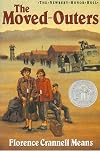
(Read for Newbery Club in Children's Books group.)
I just couldn't help reading this as historical fiction. After all, I did read [b:Farewell to Manzanar|29324951|Farewell to Manzanar|Jeanne Wakatsuki Houston|https://s.gr-assets.com/assets/nophoto/book/50x75-a91bf249278a81aabab721ef782c4a74.png|203747], too, and I've visited the camp myself. Twice, in fact, once when the desert had almost reclaimed it, and once later when it was developed as a park: https://www.nps.gov/manz/index.htm. Sue show more Ohara was lucky she wasn't there, but in a better camp.
But to think that it was current at the time it was written, and that it didn't win the Newbery Medal... *I* think it's the best and most important book of that year.
Consider the details, the subtleties. As group member Karol points out, consider the class & generational differences among the Japanese themselves, for example. To think that, for some, the barracks offered *more* physical comfort than their former homes. And Kim expresses frustration:
"If I scowl, they say, 'Look at the Jap, mad at being given a soft living, when his own country's freezing prisoners' feet off and starving them to death.' And if I smile, they say, "See the insolent, sneering Jap.' And if I try to hide my feelings, they say, 'There's no safety with folks that can hide their thoughts like that.'"
And the descriptions... I always knew Joshua trees were bizarre looking, but I was never before able to realize that they're "like rheumatic giants carrying petrified feather dusters."
Very good book. show less
I just couldn't help reading this as historical fiction. After all, I did read [b:Farewell to Manzanar|29324951|Farewell to Manzanar|Jeanne Wakatsuki Houston|https://s.gr-assets.com/assets/nophoto/book/50x75-a91bf249278a81aabab721ef782c4a74.png|203747], too, and I've visited the camp myself. Twice, in fact, once when the desert had almost reclaimed it, and once later when it was developed as a park: https://www.nps.gov/manz/index.htm. Sue show more Ohara was lucky she wasn't there, but in a better camp.
But to think that it was current at the time it was written, and that it didn't win the Newbery Medal... *I* think it's the best and most important book of that year.
Consider the details, the subtleties. As group member Karol points out, consider the class & generational differences among the Japanese themselves, for example. To think that, for some, the barracks offered *more* physical comfort than their former homes. And Kim expresses frustration:
"If I scowl, they say, 'Look at the Jap, mad at being given a soft living, when his own country's freezing prisoners' feet off and starving them to death.' And if I smile, they say, "See the insolent, sneering Jap.' And if I try to hide my feelings, they say, 'There's no safety with folks that can hide their thoughts like that.'"
And the descriptions... I always knew Joshua trees were bizarre looking, but I was never before able to realize that they're "like rheumatic giants carrying petrified feather dusters."
Very good book. show less

When Dr. Clarence Salsbury, his wife, and their son move to the Navajo reservation as medical missionaries, they are faced with seemingly insurmountable challenges. The Salsburys quickly discover that they must not only work to construct a hospital, provide irrigation, and train Navajo nurses, but also overcome other obstacles such as isolation and cultural differences. Before they know it, what was intended to be a two-year mission turns into the work of a lifetime. Faced with the daunting show more tasks ahead, the Salsbury family seeks the help of other missionaries, translators, and the Navajo People to realize their dream of bringing Christianity and modern medicine to the Navajo Nation. show less

This was one of my favourite books when I was younger... A position I'm afraid it can no longer hold. It was very obvious in this read-through that I enjoyed it for nostalgia's sake only, and would probably have found it somewhat boring without those rosy glasses.
Apart from Emmy, the characters all seem rather 2-dimensional, and even Emmy could be accused of having Mary Sue-like qualities. The plot is sweet and simple, but somewhat rushed and unrealistic in places.
It's always such a shame show more when childhood favourites don't pass the test of time. show less
Apart from Emmy, the characters all seem rather 2-dimensional, and even Emmy could be accused of having Mary Sue-like qualities. The plot is sweet and simple, but somewhat rushed and unrealistic in places.
It's always such a shame show more when childhood favourites don't pass the test of time. show less

A gripping tale of Japanese-Americans forced to leave their lives and their homes, sent to internment camps after Japan's attack on Pearl Harbor. While most are discouraged about their current situation, some exhibit perseverance and hope for the future.
The plot is handled skillfully, never becoming melodramatic, always keeping the characters fresh and real.
The plot is handled skillfully, never becoming melodramatic, always keeping the characters fresh and real.
Lists
Awards


You May Also Like


Associated Authors
Statistics
- Works
- 36
- Also by
- 2
- Members
- 508
- Popularity
- #48,805
- Rating
- 3.8
- Reviews
- 11
- ISBNs
- 15
- Languages
- 1