
Doris Grumbach (1918–2022)
Author of The Ladies
About the Author
Image credit: Photograph by Robert Giard & Copyright@Estate of Robert Giard.
Works by Doris Grumbach
The short throat, the tender mouth 3 copies
Lord, I have no courage 3 copies
At Seventy, a journal 1 copy
Associated Works
For the Love of Books: 115 Celebrated Writers on the Books They Love Most (1999) — Contributor — 479 copies, 4 reviews
Readers Quotation Book: A Literary Companion (1990) — Introduction, some editions — 96 copies, 1 review
Minutes of the Lead Pencil Club: Second Thoughts on the Electronic Revolution (1996) — Afterword — 89 copies, 1 review
Rediscoveries II: Important Writers Select Their Favorite Works of Neglected Fiction (1988) — Contributor — 31 copies, 1 review
Tagged
Common Knowledge
- Legal name
- Grumbach, Doris Isaac
- Birthdate
- 1918-07-12
- Date of death
- 2022-11-04
- Gender
- female
- Education
- Public School 9
Julia Richman High School
Washington Square College (A.B. | Philosophy)
Cornell University (M.A. | Medieval literature) - Occupations
- literary critic
novelist
memoirist
biographer
essayist - Organizations
- US Navy
College of Saint Rose, Albany, New York, USA
American University - Awards and honors
- Publishing Triangle (Bill Whitehead Award for Lifetime Achievement, 2000)
- Agent
- Strothman Agency
- Relationships
- Hook, Sidney (professor)
- Nationality
- USA
- Birthplace
- New York, New York, USA
- Places of residence
- New York, New York, USA
Washington, D.C., USA
Sargentville, Maine, USA
Kennett Square, Pennsylvania, USA
Saratoga Springs, New York, USA
Albany, New York, USA - Place of death
- Kennett Square, Pennsylvania, USA
- Associated Place (for map)
- USA
Members
Reviews
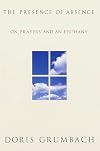
When she was twenty-seven years old, writer Doris Grumbach had an epiphany. It was as if God were right there beside her, and she had a “feeling of peace so intense that it seemed to expand into ineffable joy.” After this fleeting moment, Grumbach became determined to recapture what she had felt. The Presence of Absence is the story of her fifty-year search.
Grumbach is an open-minded and skilled seeker, and she writes candidly of the people she has met along the way. She details how she show more lost her path after decades of going to her Protestant church and writes of her turn to personal spirituality. In her quest to find God, she encounters a multitude of philosophies and gives all of them their due. She reads the works of Thomas Merton and Simone Weil, seeks the advice of her seminary-attending daughter, and studies the Psalms. Despite the setbacks of disease, injury, and ego, Grumbach perseveres in her pursuit of beauty and proof in the absence. show less
Grumbach is an open-minded and skilled seeker, and she writes candidly of the people she has met along the way. She details how she show more lost her path after decades of going to her Protestant church and writes of her turn to personal spirituality. In her quest to find God, she encounters a multitude of philosophies and gives all of them their due. She reads the works of Thomas Merton and Simone Weil, seeks the advice of her seminary-attending daughter, and studies the Psalms. Despite the setbacks of disease, injury, and ego, Grumbach perseveres in her pursuit of beauty and proof in the absence. show less
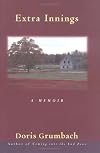
Extra Innings follows a year in the life of Doris Grumbach, beginning with the release of her previous memoir and journal, Coming into the End Zone, . . ..
Grumbach details each passing month and the trials and tribulations therein. Age and experience have tempered her anger, allowing her to view the world in a rosier light than she has before. In this eventful period that concludes with her move from Washington, DC, to Maine, Grumbach travels between signings and speeches, describes her home show more life in a new state, and deals not only with her own mortality, but with that of her daughter. Grumbach’s wisdom and wit endure as she looks back on her own memories, seeing the world as only Doris Grumbach can. show less
Grumbach details each passing month and the trials and tribulations therein. Age and experience have tempered her anger, allowing her to view the world in a rosier light than she has before. In this eventful period that concludes with her move from Washington, DC, to Maine, Grumbach travels between signings and speeches, describes her home show more life in a new state, and deals not only with her own mortality, but with that of her daughter. Grumbach’s wisdom and wit endure as she looks back on her own memories, seeing the world as only Doris Grumbach can. show less
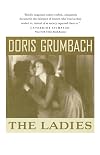
THE LADIES, by Doris Grumbach.
I've been reading Doris Grumbach's books for well over twenty years now, but up until now only her non-fiction - memoirs and essays - her thoughts on life, ageing and death are fascinating. Her two memoirs, COMING INTO THE END ZONE and EXTRA INNINGS, are particular favorites of mine.
And now there's this book, a novel based on real historical characters. Lady Eleanor Butler and the Honorable Sarah Ponsonby, two 'well-born' Irish gentlewomen who fall in love. So show more yes, it's that kind of a story, but it is, unquestionably, a love story. Butler is sixteen years older than Sarah, and definitely the 'strong' one of the couple. Grumbach, who has done her research on this rather famous couple, the "Ladies of Llangollen." Defying societal and religious mores, the couple 'elopes,' wandering for nearly a year, before settling down at their "New Place" farm in rural Wales where they became famous for their unusual and sequestered life, and came to entertain some of the important people of their time - William Wordsworth, Sir Walter Scott, the Duke of Wellington and others. They remained together for nearly fifty years, making their own rules and living their own quiet lives.
As Eleanor put it, "We'll live together as married persons do. We'll live and love as they do. Love has no sex, my dearest ... You belong to me. I am yours."
Book lovers, and collectors, a favorite novel for both was Rousseau's LA NOUVELLE HELOISE. Eleanor could relate, and explained it thusly -
"We must understand the story in two ways. First, that true love, like Julie's for Saint-Preur, like Wolmer's for Julie, and Claire's for Saint-Preur, like Heloise's for Abelard ... like ours, endures over all obstacles placed in its way by customs and rules. And then that society's views of true love are stiflingly narrow, and always in terms of marriage ..."
What the two of them had, Eleanor declared, was "natural love." Whatever the two women had, it was a devoted and lasting relationship and Grumbach breathes life back into this odd pair these hundreds of years later.
THE LADIES, first published in 1984, was considered, I believe, a kind of groundbreaking novel of lesbian literature. It is also a beautifully-written story - of two people who defied convention and made a life for themselves. I enjoyed it. Highly recommended. show less
I've been reading Doris Grumbach's books for well over twenty years now, but up until now only her non-fiction - memoirs and essays - her thoughts on life, ageing and death are fascinating. Her two memoirs, COMING INTO THE END ZONE and EXTRA INNINGS, are particular favorites of mine.
And now there's this book, a novel based on real historical characters. Lady Eleanor Butler and the Honorable Sarah Ponsonby, two 'well-born' Irish gentlewomen who fall in love. So show more yes, it's that kind of a story, but it is, unquestionably, a love story. Butler is sixteen years older than Sarah, and definitely the 'strong' one of the couple. Grumbach, who has done her research on this rather famous couple, the "Ladies of Llangollen." Defying societal and religious mores, the couple 'elopes,' wandering for nearly a year, before settling down at their "New Place" farm in rural Wales where they became famous for their unusual and sequestered life, and came to entertain some of the important people of their time - William Wordsworth, Sir Walter Scott, the Duke of Wellington and others. They remained together for nearly fifty years, making their own rules and living their own quiet lives.
As Eleanor put it, "We'll live together as married persons do. We'll live and love as they do. Love has no sex, my dearest ... You belong to me. I am yours."
Book lovers, and collectors, a favorite novel for both was Rousseau's LA NOUVELLE HELOISE. Eleanor could relate, and explained it thusly -
"We must understand the story in two ways. First, that true love, like Julie's for Saint-Preur, like Wolmer's for Julie, and Claire's for Saint-Preur, like Heloise's for Abelard ... like ours, endures over all obstacles placed in its way by customs and rules. And then that society's views of true love are stiflingly narrow, and always in terms of marriage ..."
What the two of them had, Eleanor declared, was "natural love." Whatever the two women had, it was a devoted and lasting relationship and Grumbach breathes life back into this odd pair these hundreds of years later.
THE LADIES, first published in 1984, was considered, I believe, a kind of groundbreaking novel of lesbian literature. It is also a beautifully-written story - of two people who defied convention and made a life for themselves. I enjoyed it. Highly recommended. show less
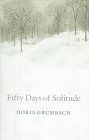
I experimented in February 2009 with the idea of reading a short novel a day -- after all, February is the shortest month of the year! Fifty Days of Solitude was one of my least favorites of the books I read during that month. Grumbach set herself up to experience fifty days alone, without contact with another human being, to see what she would learn. But there is something immensely false about her solitude, as she herself acknowledges several times: she knows it will come to an end, and show more she has the opportunity to end it at any time she chooses. In fact, she must deliberately avoid human contact (such as by attending church, but sneaking in late and sneaking out early, so as to avoid other parishioners). She is no hermit in the wilderness, but a woman who has chosen to close the doors on her cozy home and hole up with her opera recordings and her books. She seems to discover nothing, really, except that she got lonely. No surprise there. If you really want to know about the creativity that solitude can bring, or the depression and loneliness, read May Sarton: Plant Dreaming Deep for the former (it's an ecstatic book, absolutely a transcendent journal) or Journal of a Solitude for the latter. show less
Lists
music to my eyes (1)
Awards

You May Also Like


Associated Authors
Statistics
- Works
- 15
- Also by
- 8
- Members
- 1,063
- Popularity
- #24,216
- Rating
- 3.7
- Reviews
- 13
- ISBNs
- 68
- Languages
- 1
- Favorited
- 3