
Steve Rushin
Author of Sting-Ray Afternoons: A Memoir
About the Author
Steve Rushin is a writer for Sports Illustrated and was the 2006 National Sportswriter of the year. He is the author of four nonfiction books and a novel. His work has been collected in The Best American Sports Writing, The Best American Travel Writing, and The Best American Magazine Writing show more anthologies. He lives in Connecticut. steverushin.com show less
Image credit: Steve Rushin
Works by Steve Rushin
Associated Works
Sports Illustrated | September 9, 2019 | Millennial Man JuJu Smith-Schuster (2019) — Author — 1 copy
Sports Illustrated | August 29, 1994 (College Football Preview: Rock Solid Arizona is No. 1) (1994) — Contributor — 1 copy
Sports Illustrated | January 17, 1994 (Why Me? Nancy Kerrigan is attacked) (1994) — Contributor — 1 copy
Tagged
Common Knowledge
- Birthdate
- 1966-09-22
- Gender
- male
- Education
- Marquette University (1988)
- Relationships
- Lobo, Rebecca (wife)
- Nationality
- USA
- Associated Place (for map)
- USA
Members
Reviews
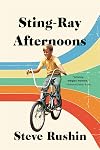
I was born in the early 1970s so I am about 5 years younger than Steve Rushin but I saw a lot of myself in his funny memoir about growing up in the 70s. I also had a father who traveled a lot for work. We watched Saturday morning cartoons before spending the rest of the day playing outside. I felt the disappointment when I was gifted off brand clothing my classmates would clock in a second. I remember many of the situations he discusses, the constant cigarette smoke, riding backward (and show more getting car sick) in the station wagon, tucking the blisteringly hot seatbelts down the crack between the seat and backrest, trying to hit play and record at the perfect moment to tape a song off the radio, the picture on the television screen shrinking and disappearing, using plastic bread bags to keep your socks dry in your snow boots, and so many more. Reading his memoir, Sting-Ray Afternoons, was without a doubt a nostalgic read for me.
Steve Rushin had a pretty idyllic childhood. Moving from Chicago to Bloomington, Minnesota when he was a toddler, he had a stereotypical Midwestern upbringing. His father was a salesman for 3M and traveled a lot, leaving Steve's mother to take care of the eventual family of five children. Steve was the third son in this chaotic bunch and while he was as sports obsessed as any of them, he also presents himself as a little more sensitive and bookish too. He took the expected beatings from his brothers and was afraid of a lot. His love of information and language, especially words and word play, shine through his account of his childhood. And he either has a prodigious memory or he's done a lot of research to refresh that memory because he has included just about every commercial jingle, tv show, toy, and cultural touchstone possible from the 70s. Often when he mentions one of these, he includes the history of the thing or its place in the era. These tangents, about things as varied as leaded gasoline, the Boeing 747, and the Sears Wish Book to name just a few, can overwhelm the narrative of his actual childhood. And in truth, there's little of a traditional narrative line here, with his own life just lightly woven in between lists of products and the Minnesota world around him. But perhaps that's the point: we are all formed as much by our own particular childhoods as by the outside influences we grow up immersed in. Rushin is humorous and still skilled with word play and I enjoyed this jaunt down memory lane even if I'm not certain how resonant it would be to people who did not share these experiences and this world. It's a memoir that probably works best for people who are within a decade either side of Rushin since the actual memoir piece of the writing is slight. show less
Steve Rushin had a pretty idyllic childhood. Moving from Chicago to Bloomington, Minnesota when he was a toddler, he had a stereotypical Midwestern upbringing. His father was a salesman for 3M and traveled a lot, leaving Steve's mother to take care of the eventual family of five children. Steve was the third son in this chaotic bunch and while he was as sports obsessed as any of them, he also presents himself as a little more sensitive and bookish too. He took the expected beatings from his brothers and was afraid of a lot. His love of information and language, especially words and word play, shine through his account of his childhood. And he either has a prodigious memory or he's done a lot of research to refresh that memory because he has included just about every commercial jingle, tv show, toy, and cultural touchstone possible from the 70s. Often when he mentions one of these, he includes the history of the thing or its place in the era. These tangents, about things as varied as leaded gasoline, the Boeing 747, and the Sears Wish Book to name just a few, can overwhelm the narrative of his actual childhood. And in truth, there's little of a traditional narrative line here, with his own life just lightly woven in between lists of products and the Minnesota world around him. But perhaps that's the point: we are all formed as much by our own particular childhoods as by the outside influences we grow up immersed in. Rushin is humorous and still skilled with word play and I enjoyed this jaunt down memory lane even if I'm not certain how resonant it would be to people who did not share these experiences and this world. It's a memoir that probably works best for people who are within a decade either side of Rushin since the actual memoir piece of the writing is slight. show less
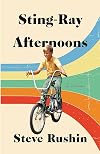
Steve Rushin's memoir of growing up in the 1970s Minnesota will pleasantly resonate with those who grew up at the same time no matter where you grew up. His memories brought back plenty of my own, such as:
- Getting up early on Saturday mornings to watch hours of cartoons ("until that terrible moment when American Bandstand begins");
- Hopefully thumbing catalogues at Christmas time ("The Sears Christmas Wish Book... was more than a catalogue of consumer goods. It was a glossy catalogue of show more children’s dreams");
- Sunburns in summer ("Life is a series of blistering sunburns, the skin bubbling up like the tar bubbles in the streets of South Brook.");
- Sledding in winter ("The thirty minutes spent getting dressed and ascending this hill is a pittance to pay for the breathtaking twenty seconds of descent.");
- The music ("The Hotel California itself scares the wits out of me, with its satanic guests stabbing beasts with their steely knives and its unreasonably inflexible checkout policy.");
- How much more common smoking was back then ("Dad doesn’t smoke, but... gives them to a grateful seatmate, who blows the smoke into his face for the duration of the flight. Nobody finds this arrangement the least bit disagreeable.");
- And of course, riding bikes around the neighborhood ("Six hi-rise bikes parked side by side turned any suburban cul-de-sac into the parking lot of a biker bar").
As a journalist he obviously has a way with words, but he's also laugh-out-loud funny and wise at the same time, as well as easy to relate to. And as much as I'd like to regale you with lots of quotes I enjoyed from the book, I'll leave you with just one more:
"There is no such thing as a carefree childhood, only a childhood that shifts the burden of care onto someone else. [Mom] is that someone else." show less
- Getting up early on Saturday mornings to watch hours of cartoons ("until that terrible moment when American Bandstand begins");
- Hopefully thumbing catalogues at Christmas time ("The Sears Christmas Wish Book... was more than a catalogue of consumer goods. It was a glossy catalogue of show more children’s dreams");
- Sunburns in summer ("Life is a series of blistering sunburns, the skin bubbling up like the tar bubbles in the streets of South Brook.");
- Sledding in winter ("The thirty minutes spent getting dressed and ascending this hill is a pittance to pay for the breathtaking twenty seconds of descent.");
- The music ("The Hotel California itself scares the wits out of me, with its satanic guests stabbing beasts with their steely knives and its unreasonably inflexible checkout policy.");
- How much more common smoking was back then ("Dad doesn’t smoke, but... gives them to a grateful seatmate, who blows the smoke into his face for the duration of the flight. Nobody finds this arrangement the least bit disagreeable.");
- And of course, riding bikes around the neighborhood ("Six hi-rise bikes parked side by side turned any suburban cul-de-sac into the parking lot of a biker bar").
As a journalist he obviously has a way with words, but he's also laugh-out-loud funny and wise at the same time, as well as easy to relate to. And as much as I'd like to regale you with lots of quotes I enjoyed from the book, I'll leave you with just one more:
"There is no such thing as a carefree childhood, only a childhood that shifts the burden of care onto someone else. [Mom] is that someone else." show less
Steven Rushin, who grew up to be the only thing he ever wanted, a sportswriter at Sports Illustrated magazine, recounts his childhood in 1970s Minnesota. With sharp wit and a knack for telling a ridiculous story (especially if it makes himself the object of ridicule), Rushin recounts growing up as the middle child of five (when his baby sister, Amy, is born after three boys, the obstetrician tells his father in the hospital waiting room, "Congratulations, you finally got one with indoor show more plumbing.")
The memoir is replete with so many of the touchstones of a '70s childhood in middle America, and as someone just a couple of years older than he, growing up a few hundred miles south, I found myself being walloped with nostalgia on every page. Someone who grew up in a different (that is to say, later) era might not have the same reaction to the specific pop-culture mentions, but much of the humor is universal, I think, and the ways that pre-pubescent boys think and act and play probably is, too. Probably the closest comparison I can make is to Bill Bryson's memoir, [The Life and Times of the Thunderbolt Kid], with its recollections of a 1950s kid. Rushin's humor isn't quite as mean-spirited as Bryson's can sometimes be, though.
One of the hallmarks of Rushin's sportswriting (and Twitter posts) is his love of wordplay and puns (just as I rate Bryson's writing by the number of giggle-snorts it induces, I gauge Rushin's by the number of involuntary groans), and I loved learning that his infatuation with the rhythms of words and language began early, a child in love with alliteration long before he ever learned the word itself.
This is not a harrowing tale of abuse and dysfunction, which I found refreshing but does leave the narrative feeling a bit slight. No one overcomes tragedy or addiction or anything like that and yet the tone is far from saccharine. It's the kind of childhood that often gets labeled "idyllic" even taking into account the never-ending casual violence that brothers perpetually inflict on each other, down the line from oldest to youngest. For myself, this is a solid 4-star read, but I downgraded it slightly because I'm not sure a reader who isn't familiar with Rushin's writing or who didn't grow up in the 1970s American Midwest would feel the same appreciation and connection that I did. show less
The memoir is replete with so many of the touchstones of a '70s childhood in middle America, and as someone just a couple of years older than he, growing up a few hundred miles south, I found myself being walloped with nostalgia on every page. Someone who grew up in a different (that is to say, later) era might not have the same reaction to the specific pop-culture mentions, but much of the humor is universal, I think, and the ways that pre-pubescent boys think and act and play probably is, too. Probably the closest comparison I can make is to Bill Bryson's memoir, [The Life and Times of the Thunderbolt Kid], with its recollections of a 1950s kid. Rushin's humor isn't quite as mean-spirited as Bryson's can sometimes be, though.
One of the hallmarks of Rushin's sportswriting (and Twitter posts) is his love of wordplay and puns (just as I rate Bryson's writing by the number of giggle-snorts it induces, I gauge Rushin's by the number of involuntary groans), and I loved learning that his infatuation with the rhythms of words and language began early, a child in love with alliteration long before he ever learned the word itself.
This is not a harrowing tale of abuse and dysfunction, which I found refreshing but does leave the narrative feeling a bit slight. No one overcomes tragedy or addiction or anything like that and yet the tone is far from saccharine. It's the kind of childhood that often gets labeled "idyllic" even taking into account the never-ending casual violence that brothers perpetually inflict on each other, down the line from oldest to youngest. For myself, this is a solid 4-star read, but I downgraded it slightly because I'm not sure a reader who isn't familiar with Rushin's writing or who didn't grow up in the 1970s American Midwest would feel the same appreciation and connection that I did. show less
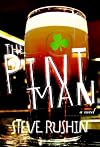
Rodney, a thirty-something year old man who has not yet fully grown up, is in a bit of a holding pattern at the moment. Six weeks ago, he lost his job in 'corporate communications' for Talbott's when he wrote a speech for the CEO of the company and missed what proved to be a very embarrassing typo, and his search for a new job can hardly be called serious. On the personal side, his best friend Keith is moving to Chicago to get married and start a new job. But happily, there is still one show more constant in his life, his favorite neighborhood bar, Boyle's.
"Rodney has read a book called The Great Good Place, by an urban sociologist named Ray Oldenburg, who coined the phrase "the third place" to describe informal public gathering spaces-bars- that are neither home nor job. Rodney had no work and home was a way station, where he kept his books and his bed. For him, bars were his first. Home was the second. There was no third."
Yes, Boyle's plays a very important role in his life and in this book, but it is not the only thing. He has all those books...
"He kept every book he has ever read. Until there were just too many, he had them all on shelves, their spines displayed as trophies, like the taxidermied heads of big game he had bagged."
And now he has met a smart, beautiful woman, Mairead, "rhymes with parade", who shared his love of wordy banter...oh yes, it may be love!
On the surface, this book is a glimpse into Rodney's life and the love triangle he is caught in, between his bar and this delightful woman he has just met. While that is a fine story, with some very amusing incidents, the real attraction for this reader is Rodney's love of words...palindromes and witty banter, puns and spoonerisms, and endless examples of amusing trivia.
"Some people have a mind like a steel trap. Rodney had a mind like a lint trap. It retained only useless fluff: batting averages, ancient jingles, a slogan glimpsed once, years ago, on the side of a panel van, for an exterminator ("We'll Make Your Ants Say Uncle") or a window treatment specialist ("A Couple of Blind Guys") or a septic tank specialist ("Doody Calls")."
A man who love crossword puzzles and puns, who actually reads books and, most of all, could write an essay on what makes a good pint of Guinness...he may just be the perfect man...lol
While this is Rushin's first novel, he is a very experienced writer. After graduating from college in 1988, he joined the staff of Sports Illustrated, where he was a senior writer until 2007. He has written three previous non-fiction books, including The Caddie Was a Reindeer, which was a semifinalist in 2004 for the Thurber Prize for American Humor. I suspect there is a bit of an autobiographical element to this book, at least in his love of Guinness and banter. I find Mr. Rushin a very amusing writer and I thoroughly enjoyed this wordy romp of a novel. show less
"Rodney has read a book called The Great Good Place, by an urban sociologist named Ray Oldenburg, who coined the phrase "the third place" to describe informal public gathering spaces-bars- that are neither home nor job. Rodney had no work and home was a way station, where he kept his books and his bed. For him, bars were his first. Home was the second. There was no third."
Yes, Boyle's plays a very important role in his life and in this book, but it is not the only thing. He has all those books...
"He kept every book he has ever read. Until there were just too many, he had them all on shelves, their spines displayed as trophies, like the taxidermied heads of big game he had bagged."
And now he has met a smart, beautiful woman, Mairead, "rhymes with parade", who shared his love of wordy banter...oh yes, it may be love!
On the surface, this book is a glimpse into Rodney's life and the love triangle he is caught in, between his bar and this delightful woman he has just met. While that is a fine story, with some very amusing incidents, the real attraction for this reader is Rodney's love of words...palindromes and witty banter, puns and spoonerisms, and endless examples of amusing trivia.
"Some people have a mind like a steel trap. Rodney had a mind like a lint trap. It retained only useless fluff: batting averages, ancient jingles, a slogan glimpsed once, years ago, on the side of a panel van, for an exterminator ("We'll Make Your Ants Say Uncle") or a window treatment specialist ("A Couple of Blind Guys") or a septic tank specialist ("Doody Calls")."
A man who love crossword puzzles and puns, who actually reads books and, most of all, could write an essay on what makes a good pint of Guinness...he may just be the perfect man...lol
While this is Rushin's first novel, he is a very experienced writer. After graduating from college in 1988, he joined the staff of Sports Illustrated, where he was a senior writer until 2007. He has written three previous non-fiction books, including The Caddie Was a Reindeer, which was a semifinalist in 2004 for the Thurber Prize for American Humor. I suspect there is a bit of an autobiographical element to this book, at least in his love of Guinness and banter. I find Mr. Rushin a very amusing writer and I thoroughly enjoyed this wordy romp of a novel. show less
Lists
Awards


You May Also Like


Associated Authors
Statistics
- Works
- 14
- Also by
- 6
- Members
- 396
- Popularity
- #61,230
- Rating
- 3.8
- Reviews
- 22
- ISBNs
- 28