
Jamie Metzl
Author of Hacking Darwin: Genetic Engineering and the Future of Humanity
About the Author
Image credit: Metzl at the Dubai Future Forum in 2024
Works by Jamie Metzl
Superconvergence: How the Genetics, Biotech, and AI Revolutions Will Transform our Lives, Work, and World (2024) 29 copies, 1 review
Tagged
Common Knowledge
There is no Common Knowledge data for this author yet. You can help.
Members
Reviews
Rating: 3.5* of five
The Publisher Says: A few dead bodies are a small price to pay in the quest for immortality.
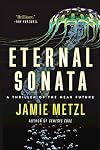
In 2025 America, it’s hardly news when a renowned octogenarian scientist dying of cancer disappears from a local hospice, but when Kansas City Star reporter Rich Azadian begins to dig, he discovers that other elderly scientists around the world have also vanished recently—all terminally ill and receiving the same experimental treatment from a global health company. His show more investigation leads him to the reclusive Noam Heller, a brilliant researcher exploring new technologies to reverse-age cancer and other cells. Using revolutionary stem cell treatments and snippets of DNA from rare, immortal Arctic jellyfish, his breakthrough promises the genetic equivalent of the fountain of youth.
But when Heller is murdered and his lab destroyed, Rich and his girlfriend Antonia become targets themselves. With the local police and federal authorities failing to see the big picture, he realizes he must take matters into his own hands to survive and stop the killing. His only hope is to mobilize his network of brilliant misfits and infiltrate the vast and lethal race—among cutthroat corporations, national intelligence services, rogue scientists, and a mysterious international organization—to control the new technologies and perhaps the secret of life itself.
I RECEIVED A DRC FROM THE PUBLISHER VIA EDELWEISS+. THANK YOU.
My Review: Plausible-enough technothriller set in 2025, only ten years after it was written. Events have, um, overtaken the planned shocking stuff...I've had multiple mRNA vaccines developed in a matter of months to help me fight off a lethal plague, so this posited accelerated medical-research stuff isn't as impressive as it would've been just a short time ago.
The thriller parts, featuring intrepid reporter Rich Azadian and his gal-pal Antonia Hewitt, are solidly paced. Alzheimer's research shading into immortality research worked well as a spine for the thrillery bits. Fast paced, Pattersonesque chapters plus dialogue and descriptions that are very focused and taut lead me to wonder why y'all haven't bought millions of 'em. The author's voice works, the plot speeds, and the stakes are convincing. Don't wait, thriller readers. show less
The Publisher Says: A few dead bodies are a small price to pay in the quest for immortality.
In 2025 America, it’s hardly news when a renowned octogenarian scientist dying of cancer disappears from a local hospice, but when Kansas City Star reporter Rich Azadian begins to dig, he discovers that other elderly scientists around the world have also vanished recently—all terminally ill and receiving the same experimental treatment from a global health company. His show more investigation leads him to the reclusive Noam Heller, a brilliant researcher exploring new technologies to reverse-age cancer and other cells. Using revolutionary stem cell treatments and snippets of DNA from rare, immortal Arctic jellyfish, his breakthrough promises the genetic equivalent of the fountain of youth.
But when Heller is murdered and his lab destroyed, Rich and his girlfriend Antonia become targets themselves. With the local police and federal authorities failing to see the big picture, he realizes he must take matters into his own hands to survive and stop the killing. His only hope is to mobilize his network of brilliant misfits and infiltrate the vast and lethal race—among cutthroat corporations, national intelligence services, rogue scientists, and a mysterious international organization—to control the new technologies and perhaps the secret of life itself.
I RECEIVED A DRC FROM THE PUBLISHER VIA EDELWEISS+. THANK YOU.
My Review: Plausible-enough technothriller set in 2025, only ten years after it was written. Events have, um, overtaken the planned shocking stuff...I've had multiple mRNA vaccines developed in a matter of months to help me fight off a lethal plague, so this posited accelerated medical-research stuff isn't as impressive as it would've been just a short time ago.
The thriller parts, featuring intrepid reporter Rich Azadian and his gal-pal Antonia Hewitt, are solidly paced. Alzheimer's research shading into immortality research worked well as a spine for the thrillery bits. Fast paced, Pattersonesque chapters plus dialogue and descriptions that are very focused and taut lead me to wonder why y'all haven't bought millions of 'em. The author's voice works, the plot speeds, and the stakes are convincing. Don't wait, thriller readers. show less
Superconvergence : how the genetics, biotech, and AI revolutions will transform our lives, work, and world by Jamie Metzl
***.5
As the subtitle boldly proclaims, the book covers an ambitious scope encompasses the cutting edge of biology and computers, and how the latter is being used to make changes to the former.
Metzl struggles valiantly to strike the right balance between getting caught in the technical weeds and not getting deep enough into the details to justify his conclusions. Depending on the reader's previous knowledge of the subject matter, YMMV with reactions ranging from overwhelmed to bored stiff, show more or both depending on the chapter.
But after tackling an array of related issues involving Healthcare and Agriculture such as GMO foods, vat-grown meat, designer babies, etc. he goes on to rant and whine about a bunch of other stuff like Climate Change, Covid, nuclear weapons, etc. The problem isn't that he's wrong (I agree with most of his conclusions), it's that he's all over the place, and by touching on so many different topics he's not really able to do any of them justice. He tries to sum everything up at the end with a lecture on governance and policy, but it's too high level to provide the reader with a clear idea of where to go or what to from here. show less
As the subtitle boldly proclaims, the book covers an ambitious scope encompasses the cutting edge of biology and computers, and how the latter is being used to make changes to the former.
Metzl struggles valiantly to strike the right balance between getting caught in the technical weeds and not getting deep enough into the details to justify his conclusions. Depending on the reader's previous knowledge of the subject matter, YMMV with reactions ranging from overwhelmed to bored stiff, show more or both depending on the chapter.
But after tackling an array of related issues involving Healthcare and Agriculture such as GMO foods, vat-grown meat, designer babies, etc. he goes on to rant and whine about a bunch of other stuff like Climate Change, Covid, nuclear weapons, etc. The problem isn't that he's wrong (I agree with most of his conclusions), it's that he's all over the place, and by touching on so many different topics he's not really able to do any of them justice. He tries to sum everything up at the end with a lecture on governance and policy, but it's too high level to provide the reader with a clear idea of where to go or what to from here. show less
The book outlines the latest technologies we've developed that allow us to genetically modify organisms. It gives both real accounts of where it has already been used and creates fictional scenarios of how it can potentially be found in the future. There is just the right amount of science inserted into it to keep it being a science book, but it's not heavily scientific since that's not the point behind the book.
The underlying theme is a philosophical and geopolitical one. This part of the show more book does not have answers, but it's merely trying to ask the right questions. They are not uncommon and I believe most westerners share Metzl's beliefs and fears. While I find it useful to have these works out there in the wild to act as references for framing the discussion, I think we need to hear more viewpoints on the topic, especially not-western ones.
There's a bit of repetition going on and some personal anecdotes that I would've preferred left out of the book to make the message more cohesive, which I'm reflecting in the score I give it.
In a world of increasing inequality I find this topic to be highly sensitive and had we not had a climate emergency around the corner, this would've been my biggest concern for the future of humanity (in the shape we currently know it). show less
The underlying theme is a philosophical and geopolitical one. This part of the show more book does not have answers, but it's merely trying to ask the right questions. They are not uncommon and I believe most westerners share Metzl's beliefs and fears. While I find it useful to have these works out there in the wild to act as references for framing the discussion, I think we need to hear more viewpoints on the topic, especially not-western ones.
There's a bit of repetition going on and some personal anecdotes that I would've preferred left out of the book to make the message more cohesive, which I'm reflecting in the score I give it.
In a world of increasing inequality I find this topic to be highly sensitive and had we not had a climate emergency around the corner, this would've been my biggest concern for the future of humanity (in the shape we currently know it). show less
Metzl describes the current state of human genetic engineering, and predicts what will soon be possible and affordable. He discusses the ethical dilemmas surrounding human genetic engineering, and arguments for and against using it. He points out that no matter what arguments are against it, people are going to do it anyway, and argues that we need an international treaty such as the nuclear non-proliferation agreement to prevent nations from weaponizing genetic engineering.
I wasn't quite show more interested enough in the topic to spend a lot of time on it, so I skimmed the book, but it is organized well enough to be easily skimmable. The information is fascinating and a little terrifying, and I am glad that I will not be making any decisions about having children in the next 15-20 years. show less
I wasn't quite show more interested enough in the topic to spend a lot of time on it, so I skimmed the book, but it is organized well enough to be easily skimmable. The information is fascinating and a little terrifying, and I am glad that I will not be making any decisions about having children in the next 15-20 years. show less
Awards


You May Also Like


Statistics
- Works
- 5
- Members
- 357
- Popularity
- #67,135
- Rating
- 3.7
- Reviews
- 11
- ISBNs
- 25
- Languages
- 5