
Nicholas A. Christakis
Author of Connected: The Surprising Power of Our Social Networks and How They Shape Our Lives
About the Author
Nicholas A. Christakis is a physician and sociologist who explores the ancient origins and modern implications of human nature. He directs the Human Nature Lab at Yale University, where he is the Sterling Professor of Social and Natural Science in the departments of Sociology, Medicine, Ecology and show more Evolutionary Biology, Statistics and Data Science, and Biomedical Engineering. He is the co-director of the Yale Institute for Network Science and the coauthor of Connected. show less
Works by Nicholas A. Christakis
Connected: The Surprising Power of Our Social Networks and How They Shape Our Lives (2009) 808 copies, 20 reviews
Apollo's Arrow: The Profound and Enduring Impact of Coronavirus on the Way We Live (2020) 291 copies, 11 reviews
Associated Works
This Will Make You Smarter: New Scientific Concepts to Improve Your Thinking (Edge Question Series) (2012) — Contributor — 905 copies, 17 reviews
Tagged
Common Knowledge
- Canonical name
- Christakis, Nicholas A.
- Birthdate
- 1962
- Gender
- male
- Nationality
- USA
- Associated Place (for map)
- USA
Members
Reviews
Apollo's Arrow: The Profound and Enduring Impact of Coronavirus on the Way We Live by Nicholas A. Christakis MD PhD

The COVID-19 pandemic came on so suddenly and with such relative ferocity that one can be forgiven for being confused by all the misinformation floating around in the first few months after March 2020. However, epidemiologists did know how to predict and prepare for what was happening, but unfortunately this was also at a time when public trust in experts and institutions was down. Warnings from scientists and top officials weren't granted any special consideration in the minds of the show more populace. Also, people were scared and scared people love to turn to pseudoscience for answers.
Nicholas Christakis' Apollo's Arrow is an informed review of what happened before, during, and after the worst global pandemic in 100 years. It's also a forecast of what to expect for the next pandemic, which surprisingly would be different if it happened in 20 or 30 years (our collective memory of 2020 remains intact) versus in 100 years (no collective memory).
The biggest revelation for me was how much epidemiologists DO know about viruses and how they move about a population. What looks like an impossible web of contract tracing is a much tighter science than would otherwise seem. However, little of this matters if the public doesn't believe the evidence presented. Humans survived this 'dress rehearsal' COVID-19 pandemic but barely and at great cost. How are we going to respond to the next one? show less
Nicholas Christakis' Apollo's Arrow is an informed review of what happened before, during, and after the worst global pandemic in 100 years. It's also a forecast of what to expect for the next pandemic, which surprisingly would be different if it happened in 20 or 30 years (our collective memory of 2020 remains intact) versus in 100 years (no collective memory).
The biggest revelation for me was how much epidemiologists DO know about viruses and how they move about a population. What looks like an impossible web of contract tracing is a much tighter science than would otherwise seem. However, little of this matters if the public doesn't believe the evidence presented. Humans survived this 'dress rehearsal' COVID-19 pandemic but barely and at great cost. How are we going to respond to the next one? show less
Apollo's Arrow: The Profound and Enduring Impact of Coronavirus on the Way We Live by Nicholas A. Christakis MD PhD
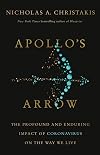
The COVID-19 pandemic is arguably the most important and disruptive global event—in terms of impact on health, the political economy, and culture—of the twenty-first century. Understanding the details and full complexity of the pandemic, therefore, is a necessity for understanding the current state of the US and the world.
Achieving this nuanced perspective is not easy, however, considering the amount of misinformation, disinformation, and superficial black-and-white thinking circulating show more the web. That’s why it’s beneficial to be able to get the full picture on the pandemic from a source that is actually qualified to discuss it.
In Apollo’s Arrow, Nicholas Christaskis, a physician and sociologist from Yale University that has been tracking the virus from the beginning, covers the pandemic from all angles, including the epidemiological characteristics of the virus, the history of pandemics, mitigation and treatment options, psychological impact and reactions (both positive and negative), sources of misinformation, political negligence and mishandling, the development of treatments and vaccines, and possible outcomes over the next few years.
Christakis is uniquely qualified to write this book; as a physician and sociologist, he is able to explain both the epidemiological characteristics of the virus (including containment and treatment protocols) as well as the psychological and social aspects of our various responses to the virus. While the pandemic has undoubtedly deepened political polarization and summoned our inner demons, it has also brought out our better angels as demonstrated through countless acts of altruism and charity.
The COVID-19 pandemic is therefore complex both biologically and socially; not only are we learning about this new virus on the fly, we are simultaneously dealing with its psychological, social, and economic ramifications, forcing us to confront difficult tradeoffs and ambiguities on a daily basis, which Christakis effectively communicates in a deep yet clearly written way.
You will learn, for example, that while the virus is not as deadly as we first assumed, it is significantly deadlier than the seasonal flu, in terms of its higher rates of mortality and community transmission and its more dangerous physiological effects on the respiratory system, captured in the greater number of deaths, in absolute terms, compared to the flu (30,000–60,000 flu-related deaths per year in the US versus 243,000 COVID-19 deaths as of 11/13/2020).
COVID-19 has proven difficult to contain because, in addition to its high rate of transmission, infected individuals can transmit COVID-19 asymptomatically (unlike SARS). This makes contact tracing nearly impossible and makes quarantining the infected far less effective (they’ve already spread the disease in an asymptomatic state). This is why non-pharmaceutical interventions (NPIs) such as mask wearing, social distancing, and prohibiting large gatherings are necessary to slow the spread of the virus. (Christakis notes how mask wearing has been politicized, but, epidemiologically speaking, is a very uncontroversial and effective method of reducing community transmission rates.)
The reader may wonder what the point of reducing the transmission rate (“flattening the curve”) is if the virus will not stop spreading until we hit herd immunity, which occurs when a high enough percentage of the community is immune to the virus, making the spread of COVID-19 from person to person unlikely. As Christakis explains, adopting measures to flatten the curve prevents unnecessary or excess deaths by (1) preventing a large number of deaths from occurring over a short period of time and thus avoiding overwhelming our healthcare system, (2) buying time so that vaccines or better treatment options can be developed, and (3) allowing time for the virus to potentially mutate into a less lethal form. All three factors can potentially lower the total number of deaths.
An effective and safe vaccine is our best bet because it allows us to achieve herd immunity without hundreds of thousands of excess deaths, although, as Christakis points out, there is no guarantee that a vaccine will become available anytime soon, as the fastest vaccine to ever be developed was the mumps vaccine—and that took four years (although some promising vaccines are currently in trials).
There is of course the question of whether or not closing down the economy is worth the lives it will save, but the evidence seems to suggest that even if a country chooses to remain open, as Sweden did, the economy will still suffer as people refuse to go out—leaving you with a depressed economy AND a higher death count. Even Sweden—the only Nordic country not to implement widespread lockdown—has since reversed its course after experiencing higher infection rates and deaths, as Christakis points out.
The reader of course can decide for themselves how to evaluate the tradeoffs, and must confront difficult questions such as whether or not a mass lockdown is justified, whether a vaccine will actually become available in time, how much personal risk they are willing to bear, and how their own personal and political biases might be affecting their own judgment. But if you take anything away from the book, it should be (1) the pandemic is complex and these are not easy questions, (2) trust the science and credible sources and argue with facts, not conspiracy theories, and (3) our ability to bind together to fight the virus as a common enemy—and stop fighting each other—is the key to keeping the virus in check and preventing excess deaths (by following long established NPIs, not as a political badge of honor, but as scientifically-grounded measures of containment). show less
Achieving this nuanced perspective is not easy, however, considering the amount of misinformation, disinformation, and superficial black-and-white thinking circulating show more the web. That’s why it’s beneficial to be able to get the full picture on the pandemic from a source that is actually qualified to discuss it.
In Apollo’s Arrow, Nicholas Christaskis, a physician and sociologist from Yale University that has been tracking the virus from the beginning, covers the pandemic from all angles, including the epidemiological characteristics of the virus, the history of pandemics, mitigation and treatment options, psychological impact and reactions (both positive and negative), sources of misinformation, political negligence and mishandling, the development of treatments and vaccines, and possible outcomes over the next few years.
Christakis is uniquely qualified to write this book; as a physician and sociologist, he is able to explain both the epidemiological characteristics of the virus (including containment and treatment protocols) as well as the psychological and social aspects of our various responses to the virus. While the pandemic has undoubtedly deepened political polarization and summoned our inner demons, it has also brought out our better angels as demonstrated through countless acts of altruism and charity.
The COVID-19 pandemic is therefore complex both biologically and socially; not only are we learning about this new virus on the fly, we are simultaneously dealing with its psychological, social, and economic ramifications, forcing us to confront difficult tradeoffs and ambiguities on a daily basis, which Christakis effectively communicates in a deep yet clearly written way.
You will learn, for example, that while the virus is not as deadly as we first assumed, it is significantly deadlier than the seasonal flu, in terms of its higher rates of mortality and community transmission and its more dangerous physiological effects on the respiratory system, captured in the greater number of deaths, in absolute terms, compared to the flu (30,000–60,000 flu-related deaths per year in the US versus 243,000 COVID-19 deaths as of 11/13/2020).
COVID-19 has proven difficult to contain because, in addition to its high rate of transmission, infected individuals can transmit COVID-19 asymptomatically (unlike SARS). This makes contact tracing nearly impossible and makes quarantining the infected far less effective (they’ve already spread the disease in an asymptomatic state). This is why non-pharmaceutical interventions (NPIs) such as mask wearing, social distancing, and prohibiting large gatherings are necessary to slow the spread of the virus. (Christakis notes how mask wearing has been politicized, but, epidemiologically speaking, is a very uncontroversial and effective method of reducing community transmission rates.)
The reader may wonder what the point of reducing the transmission rate (“flattening the curve”) is if the virus will not stop spreading until we hit herd immunity, which occurs when a high enough percentage of the community is immune to the virus, making the spread of COVID-19 from person to person unlikely. As Christakis explains, adopting measures to flatten the curve prevents unnecessary or excess deaths by (1) preventing a large number of deaths from occurring over a short period of time and thus avoiding overwhelming our healthcare system, (2) buying time so that vaccines or better treatment options can be developed, and (3) allowing time for the virus to potentially mutate into a less lethal form. All three factors can potentially lower the total number of deaths.
An effective and safe vaccine is our best bet because it allows us to achieve herd immunity without hundreds of thousands of excess deaths, although, as Christakis points out, there is no guarantee that a vaccine will become available anytime soon, as the fastest vaccine to ever be developed was the mumps vaccine—and that took four years (although some promising vaccines are currently in trials).
There is of course the question of whether or not closing down the economy is worth the lives it will save, but the evidence seems to suggest that even if a country chooses to remain open, as Sweden did, the economy will still suffer as people refuse to go out—leaving you with a depressed economy AND a higher death count. Even Sweden—the only Nordic country not to implement widespread lockdown—has since reversed its course after experiencing higher infection rates and deaths, as Christakis points out.
The reader of course can decide for themselves how to evaluate the tradeoffs, and must confront difficult questions such as whether or not a mass lockdown is justified, whether a vaccine will actually become available in time, how much personal risk they are willing to bear, and how their own personal and political biases might be affecting their own judgment. But if you take anything away from the book, it should be (1) the pandemic is complex and these are not easy questions, (2) trust the science and credible sources and argue with facts, not conspiracy theories, and (3) our ability to bind together to fight the virus as a common enemy—and stop fighting each other—is the key to keeping the virus in check and preventing excess deaths (by following long established NPIs, not as a political badge of honor, but as scientifically-grounded measures of containment). show less
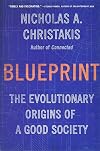
Social scientists can approach the study of human culture, broadly, by either focusing on differences or similarities. All too often, they choose to accentuate the differences, elaborating on what divides us and on our more aggressive and sinister behaviors. Since cultural differences are so obvious, the countless cross-cultural variations in human behavior would seem to dispel the possibility of cultural universals.
In Blueprint, Nicholas Christakis makes the opposite case: that our genes show more code for universal traits—the social suite—that underlie all superficial variation in human behavior and provide the foundation by which we form social networks. Christakis uses the metaphor of viewing two mountains from a 10,000 foot plateau, noting that one mountain appears three times the size of the other, until you descend from the plateau. Then, you realize the two mountains are 10,300 and 10,900 feet tall, and are not so dissimilar from this enlarged perspective.
This enlarged perspective is the focus of the book. It extends the concept of genetic influence beyond its physical manifestations (without the strict determinism, as we’ll see). To begin with, it is a noncontroversial fact that genes code for proteins, which aggregate into cells. The cells, in turn, form bodies, brains, and ultimately the emergence of mind and behavior. But it is not clear where this genetic influence should stop, and Christakis is suggesting that genes also have an influence on the formation of societies, just as they have an influence on bodies.
The concept of the extended phenotype—popularized by Richard Dawkins—describes the effects of genes on the environment outside of the body. Whereas a phenotype is a physical manifestation of genetic information, as in the genes that code for blue eyes, an extended phenotype is an expression of the genotype that impacts the environment, such as a spider’s web, a bird’s nest, or a beaver’s dam. Experiments have been conducted that show, for example, that birds can build nests without the benefit of social learning, demonstrating that the behavior is innate.
Considering that we know that genes code for physical manifestations and environmental behaviors, there is no logical reason to terminate the point of influence at arbitrary levels; genes, in addition to coding for body shape and size and the instinct to build nests, can also encode for social network formation as an extended phenotype for social animals, including humans.
For a host of historical, philosophical, and religious reasons, we tend to view humans as somehow separate from and superior to nature and other animals, but the distinction breaks down after careful analysis. For example, years of research in animal behavior shows that chimpanzees, elephants, and whales form friendships, engage in pair-bonding, practice altruism, participate in social learning, mourn for the dead, develop a sense of self identity (dolphins, apes, and elephants can pass the mirror test), and develop culture. Since these animals share an evolutionary history with humans, it’s more than likely that these animal behaviors correlate with similar internal states and emotions found in humans, all coded by genetics. And, as Christakis explains, recognizing our similarities with animals makes it harder to deny our common humanity. If we share traits with other species, we must share certain universals among ourselves. As Christakis points out:
Our genes cannot account for differences; cultural variation accounts for that. What our genes can account for are all the similarities that are present underneath all of the cultural variation. Those similarities represent the social suite and the foundation for our societies. The social suite includes eight elements:
1. The capacity to have and recognize individual identity
2. Love for partners and offspring
3. Friendship
4. Social networks
5. Cooperation
6. In-group bias
7. Mild hierarchy (relative egalitarianism)
8. Social learning and teaching
These elements are found across cultures (including to some degree in apes, elephants, and whales), and within unintentional communities (shipwrecked communities), intentional communities (communes), and artificial communities (online communities). Further, successful communities embrace the elements of the social suite whereas failed communities try to repress certain elements (think communist suppression of individuality or totalitarian suppression of the importance of love and family).
It’s important to note that Christakis is not a hard determinist, in the sense that genes determine all behavior or that everything is predetermined and cannot be otherwise. Our genes greatly influence our thoughts and emotions, and therefore influence our beliefs and behaviors. But they are not rigidly determined as in the beaver’s encoded behavior to build specific types of dams. Our genes code for minds that are adaptable, that create societies and solve problems in response to environmental variation, but that the specific products of that activity are variable. But again, at the foundation of that variation is the social suite that is found in all cultures.
Despite cultural variation, you won’t find a culture of isolated humans fending for themselves, a culture devoid of love and friendship, a culture devoid of social learning and cooperation, or a culture composed of humans without individual identity. These are the universals upon which all else is built, and upon which we can continue to build.
And this is good news, because the social suite mostly enhances cooperation—the only real advantage humans have over other animals. We form bonds, friendships, and networks for the purpose of cooperation and social learning that gives us an advantage over our environment—whatever that environment happens to be. Cultural variation is an adaptation to environmental variation that humans have been exposed to throughout our evolutionary history.
A key point to remember is that these evolved traits of cooperation predate written history—and any religious texts—by hundreds of thousands of years. That means, if we didn’t have the innate capacity for cooperation and morality, we would have never survived for the hundreds of thousands of years before the invention of religion and moral philosophy. Our morality is a product of natural selection and is expressed in our best religious and philosophical texts, it is not caused by them. We weren't all killing and stealing from each other indiscriminately for 197,000 years before the Bible was written. The world’s religions and philosophies were written and embraced, and have ultimately survived in one form or another precisely because they harmonize with the social suite.
So if the deepest aspects of our humanity are mostly positive, why is history replete with violence and oppression? The answer is that humans also have parallel aggressive and violent tendencies, which were also necessary for survival (a species too cooperative sets itself up for exploitation). Additionally, cultural variation can be significant and at times at odds with our well-being, and in-group bias can accentuate small differences and obstruct the recognition of our common humanity. But our best chance of transcending these differences and building a better society is not by surrendering to any single belief system, but by recognizing and promoting the cultural universals—the social suite—that optimize human cooperation, expanding the circle of who we consider to be part of the human in-group. show less
In Blueprint, Nicholas Christakis makes the opposite case: that our genes show more code for universal traits—the social suite—that underlie all superficial variation in human behavior and provide the foundation by which we form social networks. Christakis uses the metaphor of viewing two mountains from a 10,000 foot plateau, noting that one mountain appears three times the size of the other, until you descend from the plateau. Then, you realize the two mountains are 10,300 and 10,900 feet tall, and are not so dissimilar from this enlarged perspective.
This enlarged perspective is the focus of the book. It extends the concept of genetic influence beyond its physical manifestations (without the strict determinism, as we’ll see). To begin with, it is a noncontroversial fact that genes code for proteins, which aggregate into cells. The cells, in turn, form bodies, brains, and ultimately the emergence of mind and behavior. But it is not clear where this genetic influence should stop, and Christakis is suggesting that genes also have an influence on the formation of societies, just as they have an influence on bodies.
The concept of the extended phenotype—popularized by Richard Dawkins—describes the effects of genes on the environment outside of the body. Whereas a phenotype is a physical manifestation of genetic information, as in the genes that code for blue eyes, an extended phenotype is an expression of the genotype that impacts the environment, such as a spider’s web, a bird’s nest, or a beaver’s dam. Experiments have been conducted that show, for example, that birds can build nests without the benefit of social learning, demonstrating that the behavior is innate.
Considering that we know that genes code for physical manifestations and environmental behaviors, there is no logical reason to terminate the point of influence at arbitrary levels; genes, in addition to coding for body shape and size and the instinct to build nests, can also encode for social network formation as an extended phenotype for social animals, including humans.
For a host of historical, philosophical, and religious reasons, we tend to view humans as somehow separate from and superior to nature and other animals, but the distinction breaks down after careful analysis. For example, years of research in animal behavior shows that chimpanzees, elephants, and whales form friendships, engage in pair-bonding, practice altruism, participate in social learning, mourn for the dead, develop a sense of self identity (dolphins, apes, and elephants can pass the mirror test), and develop culture. Since these animals share an evolutionary history with humans, it’s more than likely that these animal behaviors correlate with similar internal states and emotions found in humans, all coded by genetics. And, as Christakis explains, recognizing our similarities with animals makes it harder to deny our common humanity. If we share traits with other species, we must share certain universals among ourselves. As Christakis points out:
“The thing about genes is this: we all have them. And at least 99 percent of the DNA in all humans is exactly the same. A scientific understanding of human beings actually fosters the cause of justice by identifying the deep sources of our common humanity. The underpinnings of society that we have come to understand—the social suite that is our blueprint—have to do with our genetic similarities, not our differences.”
Our genes cannot account for differences; cultural variation accounts for that. What our genes can account for are all the similarities that are present underneath all of the cultural variation. Those similarities represent the social suite and the foundation for our societies. The social suite includes eight elements:
1. The capacity to have and recognize individual identity
2. Love for partners and offspring
3. Friendship
4. Social networks
5. Cooperation
6. In-group bias
7. Mild hierarchy (relative egalitarianism)
8. Social learning and teaching
These elements are found across cultures (including to some degree in apes, elephants, and whales), and within unintentional communities (shipwrecked communities), intentional communities (communes), and artificial communities (online communities). Further, successful communities embrace the elements of the social suite whereas failed communities try to repress certain elements (think communist suppression of individuality or totalitarian suppression of the importance of love and family).
It’s important to note that Christakis is not a hard determinist, in the sense that genes determine all behavior or that everything is predetermined and cannot be otherwise. Our genes greatly influence our thoughts and emotions, and therefore influence our beliefs and behaviors. But they are not rigidly determined as in the beaver’s encoded behavior to build specific types of dams. Our genes code for minds that are adaptable, that create societies and solve problems in response to environmental variation, but that the specific products of that activity are variable. But again, at the foundation of that variation is the social suite that is found in all cultures.
Despite cultural variation, you won’t find a culture of isolated humans fending for themselves, a culture devoid of love and friendship, a culture devoid of social learning and cooperation, or a culture composed of humans without individual identity. These are the universals upon which all else is built, and upon which we can continue to build.
And this is good news, because the social suite mostly enhances cooperation—the only real advantage humans have over other animals. We form bonds, friendships, and networks for the purpose of cooperation and social learning that gives us an advantage over our environment—whatever that environment happens to be. Cultural variation is an adaptation to environmental variation that humans have been exposed to throughout our evolutionary history.
A key point to remember is that these evolved traits of cooperation predate written history—and any religious texts—by hundreds of thousands of years. That means, if we didn’t have the innate capacity for cooperation and morality, we would have never survived for the hundreds of thousands of years before the invention of religion and moral philosophy. Our morality is a product of natural selection and is expressed in our best religious and philosophical texts, it is not caused by them. We weren't all killing and stealing from each other indiscriminately for 197,000 years before the Bible was written. The world’s religions and philosophies were written and embraced, and have ultimately survived in one form or another precisely because they harmonize with the social suite.
So if the deepest aspects of our humanity are mostly positive, why is history replete with violence and oppression? The answer is that humans also have parallel aggressive and violent tendencies, which were also necessary for survival (a species too cooperative sets itself up for exploitation). Additionally, cultural variation can be significant and at times at odds with our well-being, and in-group bias can accentuate small differences and obstruct the recognition of our common humanity. But our best chance of transcending these differences and building a better society is not by surrendering to any single belief system, but by recognizing and promoting the cultural universals—the social suite—that optimize human cooperation, expanding the circle of who we consider to be part of the human in-group. show less
I've had a lot of love and interest in the social sciences over the years. I thought I was really into psychology until I fell in love with sociology. This led me to be a huge lover of SF in general, but concurrently, I read all about utopias, planned communities, shipwrecked sailors building their own natural communities, and all the kinds of political, social, and even biological foundations that any of these could arise from.
And then I read this book.
Christakis, a man with titles galore, show more has done a very thorough and interesting job in breaking down the fundamental similarities between all societies, starting from the same place that I began my research and taking it further... like communities in online gaming. But he doesn't stop there. He goes into the inherently social nature of animals, focusing on the features that are similar across the board.
Anyone who has ever had a cat or a dog will recognize the intelligence, altruism, cooperative natures of other social creatures. The same is true for dolphins and whales, elephants and the whole simian hoard. Just watch Animal Planet!
It's easy to see we're all more alike than different. And that's the main point. We're all biologically, genetically set-up, to want certain things. Some of those things conflict with each other. Culture and social structures put a modifier on the worst aspects of those conflicts and reinforce cooperation... but cooperative structures can be gamed. Members within it can cheat and steal and reap the benefits of the cooperation without giving anything back. And then the reaction comes. Punishment, more self-modifiers, and a flip-flop between aggression and cooperation. Richard Dawkins explains this very well in the Selfish Gene, and in a lot more convincing detail, but Christakis is quite good for all that.
We create societies based on our biological "social suite". These are features that cross all boundaries of culture because they're hard-wired in us. I'll steal the list from Bill Gate's review on this book:
1. Individual identity
2. Love for partners and children
3. Friendship
4. Social networks
5. Cooperation
6. Preference for your own group
7. Some form of hierarchy
8. Social learning and teaching
The final takeaway from this book DOES give us hope, oddly enough. These are all positive features of not just humanity but of a lot of the animal kingdom.
But here's the trick: Any time a culture or a social structure tries to break this social suite by denying even a single aspect to it, things tend to fall apart. Social learning rather implies that. And some, like preference for your own group, can be conflated into a major us vs them that can lead to aggressive war parties our world wars.
BUT... when social divisions are crossed, or given aspect in an umbrella from that captures commonalities across the divides, cooperation CAN be reestablished. People have seen this countless times. Giving aid to enemy soldiers on the battlefield, or the Red Cross. Charitable organizations. Doctors Without Borders. Or perhaps we ought to remember that countless unrelated people flocked to the twin towers to help those in need. We DO have a lot of evidence of altruism in our social lives, but this is mitigated against our perception that there are thieves among us.
I personally see a failure of cooperation going on all around us. It seems more glaringly obvious to me every day. And for good reason. The rich are getting richer and the poor are getting poorer. The grand majority in the middle are getting pushed down to the poorer side. Mistrust is everywhere because of the thieves.
I suppose the big question is this: can we learn to cooperate once more to root out the real thieves and reestablish the fundamental social suite that we need to thrive? show less
And then I read this book.
Christakis, a man with titles galore, show more has done a very thorough and interesting job in breaking down the fundamental similarities between all societies, starting from the same place that I began my research and taking it further... like communities in online gaming. But he doesn't stop there. He goes into the inherently social nature of animals, focusing on the features that are similar across the board.
Anyone who has ever had a cat or a dog will recognize the intelligence, altruism, cooperative natures of other social creatures. The same is true for dolphins and whales, elephants and the whole simian hoard. Just watch Animal Planet!
It's easy to see we're all more alike than different. And that's the main point. We're all biologically, genetically set-up, to want certain things. Some of those things conflict with each other. Culture and social structures put a modifier on the worst aspects of those conflicts and reinforce cooperation... but cooperative structures can be gamed. Members within it can cheat and steal and reap the benefits of the cooperation without giving anything back. And then the reaction comes. Punishment, more self-modifiers, and a flip-flop between aggression and cooperation. Richard Dawkins explains this very well in the Selfish Gene, and in a lot more convincing detail, but Christakis is quite good for all that.
We create societies based on our biological "social suite". These are features that cross all boundaries of culture because they're hard-wired in us. I'll steal the list from Bill Gate's review on this book:
1. Individual identity
2. Love for partners and children
3. Friendship
4. Social networks
5. Cooperation
6. Preference for your own group
7. Some form of hierarchy
8. Social learning and teaching
The final takeaway from this book DOES give us hope, oddly enough. These are all positive features of not just humanity but of a lot of the animal kingdom.
But here's the trick: Any time a culture or a social structure tries to break this social suite by denying even a single aspect to it, things tend to fall apart. Social learning rather implies that. And some, like preference for your own group, can be conflated into a major us vs them that can lead to aggressive war parties our world wars.
BUT... when social divisions are crossed, or given aspect in an umbrella from that captures commonalities across the divides, cooperation CAN be reestablished. People have seen this countless times. Giving aid to enemy soldiers on the battlefield, or the Red Cross. Charitable organizations. Doctors Without Borders. Or perhaps we ought to remember that countless unrelated people flocked to the twin towers to help those in need. We DO have a lot of evidence of altruism in our social lives, but this is mitigated against our perception that there are thieves among us.
I personally see a failure of cooperation going on all around us. It seems more glaringly obvious to me every day. And for good reason. The rich are getting richer and the poor are getting poorer. The grand majority in the middle are getting pushed down to the poorer side. Mistrust is everywhere because of the thieves.
I suppose the big question is this: can we learn to cooperate once more to root out the real thieves and reestablish the fundamental social suite that we need to thrive? show less
Lists
Awards


You May Also Like


Associated Authors
Statistics
- Works
- 5
- Also by
- 1
- Members
- 1,562
- Popularity
- #16,507
- Rating
- 3.6
- Reviews
- 45
- ISBNs
- 45
- Languages
- 8