

William F. Temple (1914–1989)
Author of Shoot at the Moon
About the Author
Series
Works by William F. Temple
Forget-me-not 2 copies
Better Than We Know [short story] 2 copies
The Two Shadows 2 copies
Counter-transference 2 copies
Galaxy Science Fiction: A Complete & Unabridged Science Fiction Novel. Four Sided Triangle By William F. Temple (1952) 1 copy
Collected Short Fiction 1 copy
I nostri dissimili 1 copy
Le lune perdute 1 copy
Wisher Takes All 1 copy
Associated Works
Moonrise: The Golden Age of Lunar Adventures (British Library Science Fiction Classics) (2018) — Contributor — 68 copies, 3 reviews
Science-Fiction Classics: The Stories That Morphed Into Movies (1999) — Contributor — 24 copies, 1 review
Androids, Time Machines and Blue Giraffes: A Panorama of Science Fiction (1973) — Contributor — 13 copies, 1 review
Weird Tales Volume 49 Number 2, Winter 1985 — Contributor — 1 copy
Tagged
Common Knowledge
- Legal name
- Temple, William Frederick
- Other names
- Temple, W. F.
Temple, W.
Temple, William - Birthdate
- 1914-03-09
- Date of death
- 1989-07-15
- Gender
- male
- Nationality
- UK
- Birthplace
- Woolwich, London, England, UK
- Place of death
- Folkestone, Kent, England, UK
- Associated Place (for map)
- England, UK
Members
Reviews
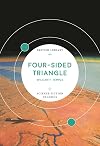
I had this science fiction novel on my 1951 to read list, but it was actually published in book form in 1949, no matter it proved to be an entertaining read. This was Temple's first novel worked up from his short story, which appeared some ten years earlier. Terence Fisher directed a film version for Hammer Film Productions some two years later.
The story is told in the first person by Dr. Harvey who takes care of an extremely intelligent boy (Bill Leggat) who comes from an abusive family. show more Bill becomes something of a scientific prodigy and after meeting Robin Grant at University the two men work together to produce a successful duplicating machine. Along the way they have employed the beautiful free spirited Barbara and the team form the three sides of the triangle. Both men fall in love with Barbara, but she chooses Robin as her partner, but there is the duplicating machine standing by and it is pressed into action.
This novels strengths are not so much the science fiction, but some very good characterisation and a plot that kept me reading until the denouement. William F Temple captures small town England well and the class system that pervades everything. Robin comes from a rich family and is the natural winner in the contest for the love of Barbara, but his adherence to the culture in which he was raised always threatens to blow the relationships apart:
"They were so certain of their ideas of right and wrong, these people. They could be coldly logical in practical things, yet hopelessly illogical in things that touched their emotional springs. They would be aghast at the moral wrongness of using poison gas in warfare, but if the enemy used it just once they would with a burning sense of righteousness, drench him and his family with it, with interest......"
It is the moral issues that dominate this book, they to a large extent drive the plot. The science and the choices made by the protagonists are in the realms of fiction, but the moral issues that they face are not and this is where I think the novel succeeds. It does show signs of being padded out from a short story. Temple includes some scientific theory, along with some literary references and I wondered how much of this was featured in the original short story. This is a good, well written science fiction yarn and so 4 stars show less
The story is told in the first person by Dr. Harvey who takes care of an extremely intelligent boy (Bill Leggat) who comes from an abusive family. show more Bill becomes something of a scientific prodigy and after meeting Robin Grant at University the two men work together to produce a successful duplicating machine. Along the way they have employed the beautiful free spirited Barbara and the team form the three sides of the triangle. Both men fall in love with Barbara, but she chooses Robin as her partner, but there is the duplicating machine standing by and it is pressed into action.
This novels strengths are not so much the science fiction, but some very good characterisation and a plot that kept me reading until the denouement. William F Temple captures small town England well and the class system that pervades everything. Robin comes from a rich family and is the natural winner in the contest for the love of Barbara, but his adherence to the culture in which he was raised always threatens to blow the relationships apart:
"They were so certain of their ideas of right and wrong, these people. They could be coldly logical in practical things, yet hopelessly illogical in things that touched their emotional springs. They would be aghast at the moral wrongness of using poison gas in warfare, but if the enemy used it just once they would with a burning sense of righteousness, drench him and his family with it, with interest......"
It is the moral issues that dominate this book, they to a large extent drive the plot. The science and the choices made by the protagonists are in the realms of fiction, but the moral issues that they face are not and this is where I think the novel succeeds. It does show signs of being padded out from a short story. Temple includes some scientific theory, along with some literary references and I wondered how much of this was featured in the original short story. This is a good, well written science fiction yarn and so 4 stars show less

Il filo conduttore è lo stesso di Frankenstein, la creazione della vita, e il rapporto tra il creatore e la creatura, solo che in questo caso l'ingrediente fondamentale non è l'istintivo orrore che Frankenstein prova per la sua creatura bastarda, ma l'amore non ricambiato per una bella fanciulla, che viene così duplicata.
Il retroscena è fantascientifico, e così ci sarà un finale col botto, da quale non si sa chi sopravviverà tra l'originale e il duplicato. Ma in fin dei conti che show more importa, quando c'è l'amore?
Un bel libro di piacevole lettura, deturpato da orrori di traduzione show less
Il retroscena è fantascientifico, e così ci sarà un finale col botto, da quale non si sa chi sopravviverà tra l'originale e il duplicato. Ma in fin dei conti che show more importa, quando c'è l'amore?
Un bel libro di piacevole lettura, deturpato da orrori di traduzione show less
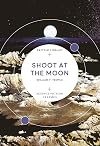
1966 novel, the author avoided technicalities by stating these were already covered in a (fictional) book - Burton's Conquest of the Moon, about the first atomic-powered space-ship (The Endeavour). The book instead concentrates on the relationships of the unlikely crew, the Captain, a politician and his daughter, and two other men. Secret plans to recover a strange new element on the moon's surface located at the Tycho crater. The mysterious deaths of the crew, and a dead cat (and reference show more to Jules Verne's dead dog floating alongside the spaceship). Fun read, but a little far-fetched. show less

This is my first book by Temple. He was a British SF author from the "Golden Age" of SF. Like many British authors he had more success getting his works published in the flood of American pulp magazines then the few publications available in England. He had short stories in a dozen of the American SF magazines in the 1940s through the 1950s. Like many authors he moved to novels in the 1960s. There are few indications in his stories that clue the reader to his country of origin.
This story show more started a little slow but I enjoyed the second half. It is just above the average 3 star SF book of the era. Murder in space makes an interesting story. show less
This story show more started a little slow but I enjoyed the second half. It is just above the average 3 star SF book of the era. Murder in space makes an interesting story. show less
You May Also Like


Associated Authors
Statistics
- Works
- 37
- Also by
- 27
- Members
- 395
- Popularity
- #61,386
- Rating
- 3.5
- Reviews
- 16
- ISBNs
- 17
- Languages
- 2
- Favorited
- 3