
Gretchen Woelfle
Author of Answering the Cry for Freedom: Stories of African Americans and the American Revolution
About the Author
Image credit: amazon.com
Works by Gretchen Woelfle
Answering the Cry for Freedom: Stories of African Americans and the American Revolution (2016) — Author — 464 copies, 3 reviews
A Take-Charge Girl Blazes a Trail to Congress: The Story of Jeannette Rankin (2023) 22 copies, 3 reviews
Tagged
Common Knowledge
Members
Reviews

Pickpocket Kit Buckles is caught plying his trade at the Theatre playhouse, where the Lord Chamberlain's Men perform the plays of William Shakespeare. To avoid being sent to prison or the workhouse, Kit agrees to work for the players, sweeping the stage and running errands. Trouble is brewing for the Chamberlain's Men, who own the building but not the ground it sits on, and are in disputes with their landlord. While he is out of London for the holidays, they hire carpenters and carters to show more dismantle the building and take it away, to be reassembled into the playhouse that would become the Globe. Kit is drawn into the life of the playhouse, but could he ever become one of the company? Or is there another trade out there for him?
I was in grad school when I learned of this real-life heist performed by the Lord Chamberlain's Men, when they disassembled the Theatre playhouse, moved it to the other side of the river, and reopened it as the Globe. I thought at the time that it would make a great children's book, and I'm glad to see that that's been done. I enjoyed this story, especially the child's perspective. Kit has a hair-trigger temper and his own reasonable angst about what's to become of him, but those details help make him into a fully rounded character. I didn't care much for the illustrations, which don't serve the story particularly well, but the text is strong and the real-life history behind it interesting. This book has been languishing on my to-be-read shelf, but I'll find a home for it in my permanent collection because of the Shakespeare connection. show less
I was in grad school when I learned of this real-life heist performed by the Lord Chamberlain's Men, when they disassembled the Theatre playhouse, moved it to the other side of the river, and reopened it as the Globe. I thought at the time that it would make a great children's book, and I'm glad to see that that's been done. I enjoyed this story, especially the child's perspective. Kit has a hair-trigger temper and his own reasonable angst about what's to become of him, but those details help make him into a fully rounded character. I didn't care much for the illustrations, which don't serve the story particularly well, but the text is strong and the real-life history behind it interesting. This book has been languishing on my to-be-read shelf, but I'll find a home for it in my permanent collection because of the Shakespeare connection. show less

Using a historical legend from the Netherlands, about a cat and human infant who survived the terrible fifteenth-century St. Elizabeth's Day flood together, as her starting point, Gretchen Woelfle weaves a heartwarming tale of family change and adjustment in Katje, the Windmill Cat, one in which the feline of the family finally finds her place. Devoted to her human, Nico the Miller, Katje was a much-indulged only cat, until the day Nico came home from the village with his new wife, Lena. A show more tidy soul who liked to clean, Lena had little patience for Katje (or anyone else) tracking flour into her house. When Nico and Lena's baby was born, the new mother, constantly worried about this and that (would Anneke's cradle tip over? would the cat make her sneeze?), drove Katje away from the infant. Retreating to the mill, Katje lived for a time in 'exile,' until a catastrophic flood, and Katje's balancing act, in saving little Anneke, convinced Lena that this was one cat she wanted around.
Unlike some of the friends who recommended this one to me, I was not unduly put off by Lena's initial resistance to having Katje around, nor did I find her conspicuously cruel. If anything, I thought this was probably a fairly realistic depiction of how a new housewife, one determined to keep her new domain clean (and boy, what an incredible amount of work that involved, before the advent of modern conveniences like electricity and heated water!), would react to an animal companion being allowed free reign in the house. Lena's actions, in separating Katje from her newborn baby, Anneke, also didn't strike me as maliciously intended, but rather as the result of a first-time mother's almost paranoid worry - would Katje make the baby sneeze? would she tip over the cradle? Of course, Katje's sadness, in being parted from her long-time human companion, Nico, was very poignant, and I felt that the integration of a new member (Lena) into the family could have been handled better, but I was very cognizant, while reading, of how recent an attitude that is, and how reliant on the contemporary idea of animals as part of the family.
In any case, the sad set-up pays off in the end, because Katje's balancing act, on Anneke's water-borne cradle, saves the day, and all is happily resolved. This too, while disturbing to some, seemed realistic to me. Sometimes, people need something extraordinary to happen, in order to be jolted out of their previous ideas, and ways of looking at things. In short, the narrative of Katje, the Windmill Cat really worked for me, and in combination with the artwork, which was simply gorgeous, made for a lovely reading experience. Nicola Bayley, who also illustrated The Mousehole Cat, knows her kitties, and that really comes through in the artwork here! I also liked some of the little details in the paintings, and the delft-looking tiles that form a vertical border, on the page. Highly recommended, to all young cat lovers, and to readers who enjoy fairy-tale style stories, where things change for the heroine because of momentous events. show less
Unlike some of the friends who recommended this one to me, I was not unduly put off by Lena's initial resistance to having Katje around, nor did I find her conspicuously cruel. If anything, I thought this was probably a fairly realistic depiction of how a new housewife, one determined to keep her new domain clean (and boy, what an incredible amount of work that involved, before the advent of modern conveniences like electricity and heated water!), would react to an animal companion being allowed free reign in the house. Lena's actions, in separating Katje from her newborn baby, Anneke, also didn't strike me as maliciously intended, but rather as the result of a first-time mother's almost paranoid worry - would Katje make the baby sneeze? would she tip over the cradle? Of course, Katje's sadness, in being parted from her long-time human companion, Nico, was very poignant, and I felt that the integration of a new member (Lena) into the family could have been handled better, but I was very cognizant, while reading, of how recent an attitude that is, and how reliant on the contemporary idea of animals as part of the family.
In any case, the sad set-up pays off in the end, because Katje's balancing act, on Anneke's water-borne cradle, saves the day, and all is happily resolved. This too, while disturbing to some, seemed realistic to me. Sometimes, people need something extraordinary to happen, in order to be jolted out of their previous ideas, and ways of looking at things. In short, the narrative of Katje, the Windmill Cat really worked for me, and in combination with the artwork, which was simply gorgeous, made for a lovely reading experience. Nicola Bayley, who also illustrated The Mousehole Cat, knows her kitties, and that really comes through in the artwork here! I also liked some of the little details in the paintings, and the delft-looking tiles that form a vertical border, on the page. Highly recommended, to all young cat lovers, and to readers who enjoy fairy-tale style stories, where things change for the heroine because of momentous events. show less
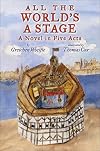
Read for Children's Books discussion: https://www.goodreads.com/topic/show/21739190-november-and-december-2020-shakesp... It's probably a four-star book for interested readers, but it's not my field of interest.
It resembled too much some of the others I read for that discussion, notably all the educational bits about what it was like to be a child and/or a member of a company back then, as in King of Shadows and The True Prince. There are details here that make it, I think, my favorite.
For show more example I liked the font in the hardcover; it looks like that old-timey font we see in images of Shakespeare's folios. I also liked that Kit doesn't finish growing up and becoming a hero by the end... he still has a temper, and he's still too ready to take offense. But as he told WS after seeing the new play Julius Caesar, the characters are more real when they're not clearly good or wicked.
I also liked some of the lines. Kit is wallowing in self-pity, and is told, "Do not frown. 'Tis your pityhound barking again." show less
It resembled too much some of the others I read for that discussion, notably all the educational bits about what it was like to be a child and/or a member of a company back then, as in King of Shadows and The True Prince. There are details here that make it, I think, my favorite.
For show more example I liked the font in the hardcover; it looks like that old-timey font we see in images of Shakespeare's folios. I also liked that Kit doesn't finish growing up and becoming a hero by the end... he still has a temper, and he's still too ready to take offense. But as he told WS after seeing the new play Julius Caesar, the characters are more real when they're not clearly good or wicked.
I also liked some of the lines. Kit is wallowing in self-pity, and is told, "Do not frown. 'Tis your pityhound barking again." show less
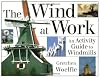
I like this book because it is full of diagrams, blue prints, photographs and even directions on how to make your own windmill. I would use this in a 2nd grade to fifth grade class, I would read some of the chapters out loud showing the children the pictures. I would also have this book in the Science Conner so that students can look at it by themselves and get Ideas. I like the fact that it has a chapter in the back of the book of addresses where famous windmills are so that maybe if there show more is one near where I live I can take the children on a field trip to go see it. I rated it a 3 out 5 because it is a little hard for children to read it without an adult’s help. show less
Lists
Awards


You May Also Like


Associated Authors
Statistics
- Works
- 10
- Members
- 1,023
- Popularity
- #25,180
- Rating
- 3.9
- Reviews
- 21
- ISBNs
- 39
- Languages
- 1