

Gary Blackwood
Author of The Shakespeare Stealer
About the Author
Series
Works by Gary Blackwood
Associated Works
Tagged
Common Knowledge
- Birthdate
- 1945-10-23
- Gender
- male
- Education
- Grove City College
- Short biography
- Gary L. Blackwood sold his first story when he was nineteen, and has been writing and publishing stories, articles, plays, novels, and nonfiction books regularly ever since. His stage plays have won awards and been produced in university and regional theatre. Nonfiction subjects he's covered include biography, history, and paranormal phenomena. His juvenile novels are set in a wide range of times and places, from Elizabethan England to a parallel universe. Several have received special recognition and been translated into other languages. He lives near Tatamagouche, Nova Scotia. [adapted from Amazon.com Author Page, 6/26/2014]
- Nationality
- USA
- Places of residence
- Cochranton, Pennsylvania, USA
Meadville, Pennsylvania, USA - Associated Place (for map)
- Pennsylvania, USA
Members
Reviews
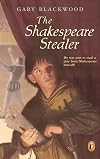
When I saw that this book was going to be my daughter's 6th grade summer reading book, I was pleased as punch. As an English major dork, I adore Shakespeare. I have been known to read the plays for pleasure. And I thought that exposing kids to Shakespeare in a roundabout way was sheer genius. All this before I even read the book. So it was delightful to discover that the book was fun and entertaining too.
The premise of the book is that Widge is a lowly apprentice who has been taught a show more version of shorthand by one of his masters. He has never known family or caring, just having been a means to an end in the indentured servitude that has comprised his entire young life so far. His latest master, a genial seeming man, has ordered Widge to steal Shakespeare's Hamlet by attending the play and transcribing it as it occurs. And to make certain that Widge does as he's bidden, he sends the rather scary Falconer with Widge as a sort of enforcer. But Widge doesn't manage to write down the play because he is too engrossed in the pageantry and wonder of the world of imagination. In failing to steal Hamlet, Widge somehow ends up as an apprentice in the Globe theater, falling further and further under the spell of acting, becoming a valued part of the theater family, and escaping the menacing Falconer. But he can't escape his task forever.
Blackwood has created a credible cast of characters and set them in a nicely rendered London in the time of Shakespeare. He has provided an intriguing and easy entry into a world that helps to define the literary world today and has done it without condescending to kids or under-estimating their intelligence. The tension that Widge feels about whether or not Falconer will come to claim him and punish him for his master is conveyed nicely to the middle grade reader. Blackwood's real triumph here though, is in weaving the underlying threads of right versus wrong (embodied here by the idea of intellectual property) and the importance of family (natural or found) in with such a meticulously drawn historical world. He imparts little asides about the times in almost every scene of the book but these instructive bits are so well integrated into the story that they never seem forced or out of place. Really, this is the sort of book I would have loved as a middle grade reader.
When I asked R. what she thought about the book, she gave me a long plot summary and then said, "I liked that he [the author] made them talk like they would and that there were secrets that some people didn't tell." She says she recommends it and so do I. show less
The premise of the book is that Widge is a lowly apprentice who has been taught a show more version of shorthand by one of his masters. He has never known family or caring, just having been a means to an end in the indentured servitude that has comprised his entire young life so far. His latest master, a genial seeming man, has ordered Widge to steal Shakespeare's Hamlet by attending the play and transcribing it as it occurs. And to make certain that Widge does as he's bidden, he sends the rather scary Falconer with Widge as a sort of enforcer. But Widge doesn't manage to write down the play because he is too engrossed in the pageantry and wonder of the world of imagination. In failing to steal Hamlet, Widge somehow ends up as an apprentice in the Globe theater, falling further and further under the spell of acting, becoming a valued part of the theater family, and escaping the menacing Falconer. But he can't escape his task forever.
Blackwood has created a credible cast of characters and set them in a nicely rendered London in the time of Shakespeare. He has provided an intriguing and easy entry into a world that helps to define the literary world today and has done it without condescending to kids or under-estimating their intelligence. The tension that Widge feels about whether or not Falconer will come to claim him and punish him for his master is conveyed nicely to the middle grade reader. Blackwood's real triumph here though, is in weaving the underlying threads of right versus wrong (embodied here by the idea of intellectual property) and the importance of family (natural or found) in with such a meticulously drawn historical world. He imparts little asides about the times in almost every scene of the book but these instructive bits are so well integrated into the story that they never seem forced or out of place. Really, this is the sort of book I would have loved as a middle grade reader.
When I asked R. what she thought about the book, she gave me a long plot summary and then said, "I liked that he [the author] made them talk like they would and that there were secrets that some people didn't tell." She says she recommends it and so do I. show less
This is an exciting and twisty story about a scrappy orphan boy called "Widge" who gets the job of stealing Mr. Shakespeare's newest play.
There are so many surprising twists about characters that it's hard to write about the book without giving things away! Lots of action in this tale of fencing, boats shooting the bridge, and crossing country by night. Costume props like sheep's bladders full of blood take care of the special effects and a secret kind of writing makes the theft of a play show more possible.
The famous Globe theater comes to life in this winning story. Widge learns all kinds of new skills and puts them to use, while making new friends, even when he has to keep some big secrets. Enjoyable read! show less
There are so many surprising twists about characters that it's hard to write about the book without giving things away! Lots of action in this tale of fencing, boats shooting the bridge, and crossing country by night. Costume props like sheep's bladders full of blood take care of the special effects and a secret kind of writing makes the theft of a play show more possible.
The famous Globe theater comes to life in this winning story. Widge learns all kinds of new skills and puts them to use, while making new friends, even when he has to keep some big secrets. Enjoyable read! show less
A historical novel set at the Golden Theatre during Shakespeare’s reign there!
The Story.
I’ve never had a proper name – never known me mum or dad, neither. The only name I’ve had in this life was called me at the orphanage – Widge. It’s the name I’ve been known by for all me fourteen years, and it tells a truthsome tale – that there are none who know and love me.
Dr. Bright took me in when I was a puny lad of seven. He seemed favorably disposed towards me and even taught me to show more read and write a special code of shorthand. I soon kenned for what purpose he had taught me this skill – it was only that I might aid him in stealing the works of others. But what cared I for the right or wrong of it? If I did not copy, I was not fed. So I copied.
Then, in my fourteenth year, a man came. He was altogether fierce, but he offered my master ten pounds for me and he – having no special affection for me – gladly relinquished me for so large a sum. I soon learned that my new master, Simon Black, wanted me for a particular purpose. He ran an acting company and he wanted me to attend the premieres of William Shakespeare’s new plays and take them down word for word, that way his troupe of players might stay abreast of the hottest London plays. I saw no reason to refuse, and thus it was that I was conducted to London and set in the performance of Hamlet…
But as I meet the players and Mister Shakespeare himself, I begin to wonder – is what I’m doing right?
Discussion.
I picked this book up in 2012, recognizing it from its popularity on Goodreads. I decided I would read it while snobbishly agreeing with myself that I probably wouldn’t like it because, after all, it was liked by the masses! And my tastes were obviously far superior to that of the masses! I ended up loving it. What a good lesson for my snobbish little nose.
In The Shakespeare Stealer, Gary Blackwood has created an utterly unique story. I’ve read lots of books in which some young character has a fleeting and highly forced encounter with a historical figure. But none of them have been so riveting, so real as The Shakespeare Stealer. TSS fully immerses its readers into not only Shakespeare’s historical and geographical setting, but also the breadth and majesty of Shakespeare’s play Hamlet. Because through a course of events, Widge joins Shakespeare’s troupe of actors and begins to act in the play himself!
And then there’s another thing – Widge’s progression as a character. When we first meet Widge, he has been tossed from an orphanage into the hands of an unscrupulous master. He has known no love or familial connection and has never been taught even the most basic concepts of right and wrong. He does what is profitable for himself and cares little as to whether his actions are good or bad. It is at this juncture that he is sent to London to steal Hamlet.
First, Widge is entranced with the majesty of the play – the beauty of the words, and the breathtaking excitement of the duels. After he loses his notebook in the theatre, his only choice is to join the company while he tries to recover it. The other players swarm around him, offering him their friendship and a sense of belonging. At first, Widge doesn’t know how to respond to the goodwill being offered him – he is accustomed to being treated only with slurs and kicks. But he grows into not only his role as an extra, but also his role as a friend. At this point, as he witnesses all of the hard work that goes on to make a play successful and the fierce loyalties amongst the players, he begins to question himself. Is it right to take another man’s work without paying for it? Am I justified in stealing a play just because I am afraid of what might happen to me if I don’t? These people have offered me there friendship – what do I owe to them based on the relationships we have established?
I don’t want to give away the story, but I’ll just say that I was pleased with the moral progression that Widge demonstrated. : )
In Shakespeare’s time, it was considered shameful for a woman to play on the stage, so boys played the part of women, wearing dresses and wigs and speaking in a high voice. Towards the end of the story we learn that one of the boys who plays women’s parts is actually a girl who disguised herself as a boy to get into the troupe so that she could pretend to be a woman! #confusing
Widge says on page 46 that he’s heard of a sport called “bear-baiting”. He briefly describes it and concludes that “it did not sound very sporting to me.” [pg. 46] In one of the last chapters, two men duel and one of them is killed.
In one brief conversation, the apprentices puzzle over why Shakespeare is so pensive. One boy suggests that he is brooding over a thwarted love affair, to which another of the boys indignantly responds that Shakespeare is already married.
Conclusion. Fine – superb. I loved this story and I think that lovers of classic literature will enjoy it as well.
Visit The Blithering Bookster to read more reviews!
www.blitheringbookster.com show less
The Story.
I’ve never had a proper name – never known me mum or dad, neither. The only name I’ve had in this life was called me at the orphanage – Widge. It’s the name I’ve been known by for all me fourteen years, and it tells a truthsome tale – that there are none who know and love me.
Dr. Bright took me in when I was a puny lad of seven. He seemed favorably disposed towards me and even taught me to show more read and write a special code of shorthand. I soon kenned for what purpose he had taught me this skill – it was only that I might aid him in stealing the works of others. But what cared I for the right or wrong of it? If I did not copy, I was not fed. So I copied.
Then, in my fourteenth year, a man came. He was altogether fierce, but he offered my master ten pounds for me and he – having no special affection for me – gladly relinquished me for so large a sum. I soon learned that my new master, Simon Black, wanted me for a particular purpose. He ran an acting company and he wanted me to attend the premieres of William Shakespeare’s new plays and take them down word for word, that way his troupe of players might stay abreast of the hottest London plays. I saw no reason to refuse, and thus it was that I was conducted to London and set in the performance of Hamlet…
But as I meet the players and Mister Shakespeare himself, I begin to wonder – is what I’m doing right?
Discussion.
I picked this book up in 2012, recognizing it from its popularity on Goodreads. I decided I would read it while snobbishly agreeing with myself that I probably wouldn’t like it because, after all, it was liked by the masses! And my tastes were obviously far superior to that of the masses! I ended up loving it. What a good lesson for my snobbish little nose.
In The Shakespeare Stealer, Gary Blackwood has created an utterly unique story. I’ve read lots of books in which some young character has a fleeting and highly forced encounter with a historical figure. But none of them have been so riveting, so real as The Shakespeare Stealer. TSS fully immerses its readers into not only Shakespeare’s historical and geographical setting, but also the breadth and majesty of Shakespeare’s play Hamlet. Because through a course of events, Widge joins Shakespeare’s troupe of actors and begins to act in the play himself!
And then there’s another thing – Widge’s progression as a character. When we first meet Widge, he has been tossed from an orphanage into the hands of an unscrupulous master. He has known no love or familial connection and has never been taught even the most basic concepts of right and wrong. He does what is profitable for himself and cares little as to whether his actions are good or bad. It is at this juncture that he is sent to London to steal Hamlet.
First, Widge is entranced with the majesty of the play – the beauty of the words, and the breathtaking excitement of the duels. After he loses his notebook in the theatre, his only choice is to join the company while he tries to recover it. The other players swarm around him, offering him their friendship and a sense of belonging. At first, Widge doesn’t know how to respond to the goodwill being offered him – he is accustomed to being treated only with slurs and kicks. But he grows into not only his role as an extra, but also his role as a friend. At this point, as he witnesses all of the hard work that goes on to make a play successful and the fierce loyalties amongst the players, he begins to question himself. Is it right to take another man’s work without paying for it? Am I justified in stealing a play just because I am afraid of what might happen to me if I don’t? These people have offered me there friendship – what do I owe to them based on the relationships we have established?
I don’t want to give away the story, but I’ll just say that I was pleased with the moral progression that Widge demonstrated. : )
In Shakespeare’s time, it was considered shameful for a woman to play on the stage, so boys played the part of women, wearing dresses and wigs and speaking in a high voice. Towards the end of the story we learn that one of the boys who plays women’s parts is actually a girl who disguised herself as a boy to get into the troupe so that she could pretend to be a woman! #confusing
Widge says on page 46 that he’s heard of a sport called “bear-baiting”. He briefly describes it and concludes that “it did not sound very sporting to me.” [pg. 46] In one of the last chapters, two men duel and one of them is killed.
In one brief conversation, the apprentices puzzle over why Shakespeare is so pensive. One boy suggests that he is brooding over a thwarted love affair, to which another of the boys indignantly responds that Shakespeare is already married.
Conclusion. Fine – superb. I loved this story and I think that lovers of classic literature will enjoy it as well.
Visit The Blithering Bookster to read more reviews!
www.blitheringbookster.com show less
Pros:
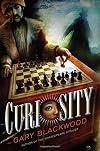
Curiosity’s main draw is its exceptionally empathetic hero Rufus. His good-heartedness makes him extremely easy to root for, but his development as a character is what makes him truly unique. He goes from being a gentle but spoiled boy living a privileged life to a tough, intelligent one whose perseverance helps him transcend his terrible circumstances. Jacque, the French carpenter who suffers from PTSD, is also an interesting character. His defense of Rufus on a couple of occasions show more and his sporadic remembrances of his life make him especially three-dimensional. Other characters like the unprincipled Maelzel and the weak though kind Mulhouse are also well-realized.
The writing here, which reads like a less humorous and sophisticated version of Dickens, is well-done and compelling. Its lack of condescension and realism are also big pulls.
The book’s main theme, the concept of fighting to better your situation versus “taking things with good grace”, is rendered subtly and poignantly. The well-researched setting is another attraction, and adds interest to this simple tale.
Cons:
There’s a real lack of action during the first half of the novel that’s only partially allayed during the second half, and the dark tone and complex writing are also unlikely to appeal to children. There is one significant incident in which Rufus is plainly used as a pawn of plot. The bittersweet ending, moreover, is unsatisfying, especially considering how much Rufus had suffered throughout the novel.
Verdict: Though likely to bore or depress its target demographic, Curiosity is a thoughtful, relatively interesting look at a Philadelphia boy who rises above his abysmal circumstances and the 19th century automaton that he operates. show less
Curiosity’s main draw is its exceptionally empathetic hero Rufus. His good-heartedness makes him extremely easy to root for, but his development as a character is what makes him truly unique. He goes from being a gentle but spoiled boy living a privileged life to a tough, intelligent one whose perseverance helps him transcend his terrible circumstances. Jacque, the French carpenter who suffers from PTSD, is also an interesting character. His defense of Rufus on a couple of occasions show more and his sporadic remembrances of his life make him especially three-dimensional. Other characters like the unprincipled Maelzel and the weak though kind Mulhouse are also well-realized.
The writing here, which reads like a less humorous and sophisticated version of Dickens, is well-done and compelling. Its lack of condescension and realism are also big pulls.
The book’s main theme, the concept of fighting to better your situation versus “taking things with good grace”, is rendered subtly and poignantly. The well-researched setting is another attraction, and adds interest to this simple tale.
Cons:
There’s a real lack of action during the first half of the novel that’s only partially allayed during the second half, and the dark tone and complex writing are also unlikely to appeal to children. There is one significant incident in which Rufus is plainly used as a pawn of plot. The bittersweet ending, moreover, is unsatisfying, especially considering how much Rufus had suffered throughout the novel.
Verdict: Though likely to bore or depress its target demographic, Curiosity is a thoughtful, relatively interesting look at a Philadelphia boy who rises above his abysmal circumstances and the 19th century automaton that he operates. show less
Lists
Sonlight Books (1)
Books About Boys (1)
Awards


You May Also Like


Associated Authors
Statistics
- Works
- 40
- Also by
- 1
- Members
- 5,889
- Popularity
- #4,190
- Rating
- 3.7
- Reviews
- 73
- ISBNs
- 137
- Languages
- 4
- Favorited
- 4
