
Rodney Clapp
Author of A Peculiar People: The Church as Culture in a Post-Christian Society
About the Author
Rodney Clapp is an editor for Cascade Books. Formerly a columnist for The Christian Century, his award-winning books include A Peculiar People: The Church as Culture in a Post-Christian Society and Tortured Wonders: Christian Spirituality for People, Not Angels. His most recent book is the novel show more The Second Baptism of Albert Simmel. show less
Image credit: Used by permission of Baker Publishing Group, copyright © 2008. All rights to this material are reserved. Materials are not to be distributed to other web locations for retrieval, published(see © info.)
Works by Rodney Clapp
Border Crossings: Christian Trespasses on Popular Culture and Public Affairs (2000) 115 copies, 1 review
People of the Truth: The Power of the Worshiping Community in the Modern World (1988) — Author — 64 copies
Johnny Cash and the Great American Contradiction: Christianity and the Battle for the Soul of a Nation (2008) 58 copies
Wrong Numbers 1 copy
Earle Fitz's Bible Blitz 1 copy
Bull Market for Religion 1 copy
Marriage's Tender Mercies 1 copy
Sexual Mistake 1 copy
The Blame Game 1 copy
Associated Works
The Nature of Confession: Evangelicals & Postliberals in Conversation (1996) — Contributor — 100 copies
Virtues and Practices in the Christian Tradition: Christian Ethics after MacIntyre (1997) — Contributor — 61 copies
Tagged
Common Knowledge
- Gender
- male
Members
Reviews
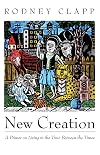
Summary: An exploration of how the end of the Christian story, or eschatology, ought shape the life of the church in this time between the comings of Christ.
"We are storied creatures, and everything happens because we lean toward endings. These endings are the goals, the pursuits, the destinies, the termination points that mark and animate our lives. Without endings we could never begin anything. We would lack plots and our lives would be without purpose, devoid of meaning" (p. 1).
This show more statement from the Introduction captured my attention. I've long felt that the Christian faith is not merely beliefs to embrace, or precepts to practice, but a story in which we find ourselves. It has seemed to me that one of the great needs of the church, and individuals within her, to understand is the story within which we live. Often, I believe that we are living in other stories, perhaps familial, or cultural, rather than the story of the kingdom.
Rodney Clapp begins this work with a summary of our story of creation, fall, the mission of Israel, the coming of the kingdom in the person of Jesus, and the kingdom yet to come. He crucially observes that the idea of kingdom implies a politics for the church--not that we so much have a politics, but that we are a politics as the people of God.
Clapp then explores a number of topics in light of "the end of the story." He begins with a discussion of heaven, and the Christian teaching of our ultimate destiny as resurrected people caring for the new creation with heaven as a way station. He discusses our identity as a royal priesthood, that are also the temple of the living God. Every other allegiance is secondary, and releases us to identify with the powerless, those on the margins. The day will come when the lion will lay down with the lamb when the rule of the Prince of Peace is established. For now we follow Jesus by turning from violence to bear the cross of peace, even while we engage in warfare, not with people, but with the Principalities and Powers, the structures of life that oppress. We name them and refuse them our allegiance.
He moves on to prayer, reflecting on the Lord's prayer, how prayer is the watchful waiting of the pilgrim, and how the lament and theodicies of scripture give us language to face the disjunct between our broken world and the new creation we await. He considers what our hope for the new creation means for our care for the present creation, one whose creatures God knows and provides for. He even includes a poem on "Lessons in Prayer, from a Dog," inspired by his own dog, Merle. For many, the most interesting will be his discussion of sex in the eschaton. He proposes, in the language of the Song of Solomon, that love is indeed stronger than death, and that although the scriptures are not definitive on this, there is reason to hope for sex in the new creation, even if there is no marriage or giving in marriage. If we are resurrected bodies, he proposes that our genitalia will not be mere ornamentation!
Finally, Clapp explores the question of the last judgment, offering an interesting discussion in which he argues against eternal conscious torment as inconsistent with God's reconciling work through the cross of Christ. He explores both the idea of conditional mortality, that the unrepentant simply cease to exist, fading to "nothingness," and hopeful universalism, in which, after suffering judgment that purifies and redeems, all will be saved. Clapp does not commit to either of these positions, which he shows have been embraced by various parts of the church, and argues that ours is not to judge but to proclaim the good news of the kingdom. He concludes that our view of eschatology enables us to deal with the tragedies and ironies of our current existence and to live with both calmness and joy in the present time.
The book includes appendices in reading the Bible for the first time, and also some suggestions for reading Karl Barth, whose influences are evident through the book. What is so good about this book is how it deals with the misapprehensions so many have about the last things. For many, a destiny of only being ethereal spirits strumming harps is far less attractive than embodied, and perhaps sexual, creatures working in the new creation. He speaks of an end of the story that answers to our deepest longings for peace and healing the rifts within humanity and the rest of creation. His account gives us hope to face the hardships of life, and a call to a higher allegiance that transcends all earthly political engagements. Twice during the book, he makes this assertion:
"If the Republicans are the last ones caring for the unborn, the Christian will be among them. If the Greens are the last fighting for a caring stewardship of creation, the Christian will be among them. If the Democratic Socialists are the last ones fighting for the poor and the working class, the Christian will be among them. If Black Lives Matter are the last ones believing that black lives do matter, the Christians will be among them. If the relief agencies are the last ones caring for refugees, the Christian will be among them. If the pacifist anarchists are the last ones standing for peaceable alternatives to war, the Christian will be among them" (pp 45, 113).
If nothing else, Clapp is an equal opportunity offender! Readers will doubtless find something to take issue with in this brief and forthright account. Some might disagree with Clapp's take on the last judgement. But if he provokes us to think about what the end of our story is as the people of the kingdom, in all its glory, and challenges us to shape our lives, in these tumultuous times, by this story rather than other cultural stories, then this book will have accomplished its purpose.
_____________________________________
Disclosure of Material Connection: I received this book free from the publisher. I was not required to write a positive review. The opinions I have expressed are my own. show less
"We are storied creatures, and everything happens because we lean toward endings. These endings are the goals, the pursuits, the destinies, the termination points that mark and animate our lives. Without endings we could never begin anything. We would lack plots and our lives would be without purpose, devoid of meaning" (p. 1).
This show more statement from the Introduction captured my attention. I've long felt that the Christian faith is not merely beliefs to embrace, or precepts to practice, but a story in which we find ourselves. It has seemed to me that one of the great needs of the church, and individuals within her, to understand is the story within which we live. Often, I believe that we are living in other stories, perhaps familial, or cultural, rather than the story of the kingdom.
Rodney Clapp begins this work with a summary of our story of creation, fall, the mission of Israel, the coming of the kingdom in the person of Jesus, and the kingdom yet to come. He crucially observes that the idea of kingdom implies a politics for the church--not that we so much have a politics, but that we are a politics as the people of God.
Clapp then explores a number of topics in light of "the end of the story." He begins with a discussion of heaven, and the Christian teaching of our ultimate destiny as resurrected people caring for the new creation with heaven as a way station. He discusses our identity as a royal priesthood, that are also the temple of the living God. Every other allegiance is secondary, and releases us to identify with the powerless, those on the margins. The day will come when the lion will lay down with the lamb when the rule of the Prince of Peace is established. For now we follow Jesus by turning from violence to bear the cross of peace, even while we engage in warfare, not with people, but with the Principalities and Powers, the structures of life that oppress. We name them and refuse them our allegiance.
He moves on to prayer, reflecting on the Lord's prayer, how prayer is the watchful waiting of the pilgrim, and how the lament and theodicies of scripture give us language to face the disjunct between our broken world and the new creation we await. He considers what our hope for the new creation means for our care for the present creation, one whose creatures God knows and provides for. He even includes a poem on "Lessons in Prayer, from a Dog," inspired by his own dog, Merle. For many, the most interesting will be his discussion of sex in the eschaton. He proposes, in the language of the Song of Solomon, that love is indeed stronger than death, and that although the scriptures are not definitive on this, there is reason to hope for sex in the new creation, even if there is no marriage or giving in marriage. If we are resurrected bodies, he proposes that our genitalia will not be mere ornamentation!
Finally, Clapp explores the question of the last judgment, offering an interesting discussion in which he argues against eternal conscious torment as inconsistent with God's reconciling work through the cross of Christ. He explores both the idea of conditional mortality, that the unrepentant simply cease to exist, fading to "nothingness," and hopeful universalism, in which, after suffering judgment that purifies and redeems, all will be saved. Clapp does not commit to either of these positions, which he shows have been embraced by various parts of the church, and argues that ours is not to judge but to proclaim the good news of the kingdom. He concludes that our view of eschatology enables us to deal with the tragedies and ironies of our current existence and to live with both calmness and joy in the present time.
The book includes appendices in reading the Bible for the first time, and also some suggestions for reading Karl Barth, whose influences are evident through the book. What is so good about this book is how it deals with the misapprehensions so many have about the last things. For many, a destiny of only being ethereal spirits strumming harps is far less attractive than embodied, and perhaps sexual, creatures working in the new creation. He speaks of an end of the story that answers to our deepest longings for peace and healing the rifts within humanity and the rest of creation. His account gives us hope to face the hardships of life, and a call to a higher allegiance that transcends all earthly political engagements. Twice during the book, he makes this assertion:
"If the Republicans are the last ones caring for the unborn, the Christian will be among them. If the Greens are the last fighting for a caring stewardship of creation, the Christian will be among them. If the Democratic Socialists are the last ones fighting for the poor and the working class, the Christian will be among them. If Black Lives Matter are the last ones believing that black lives do matter, the Christians will be among them. If the relief agencies are the last ones caring for refugees, the Christian will be among them. If the pacifist anarchists are the last ones standing for peaceable alternatives to war, the Christian will be among them" (pp 45, 113).
If nothing else, Clapp is an equal opportunity offender! Readers will doubtless find something to take issue with in this brief and forthright account. Some might disagree with Clapp's take on the last judgement. But if he provokes us to think about what the end of our story is as the people of the kingdom, in all its glory, and challenges us to shape our lives, in these tumultuous times, by this story rather than other cultural stories, then this book will have accomplished its purpose.
_____________________________________
Disclosure of Material Connection: I received this book free from the publisher. I was not required to write a positive review. The opinions I have expressed are my own. show less
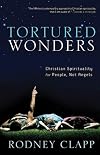
I loved this book and am sad that I ended up disagreeing with so much of it. The subtitle of this book "Christian Spirituality for People, not Angels" is what grabbed me and Clapp wonderfully develops this theme in warm, humorous, and humane ways. And that helped me. I liked the questions he raised and was impressed by his frequent grounding of his thinking in historic Christian orthodoxy (quoting from St Augustine more than anyone else). I liked how he grounded his initial thinking on our show more physicality in the doctrines of creation, incarnation, and resurrection, and how he disabuses his readers of ways of thinking about spirituality that are more in line with Gnosticism than Christianity. But I was disappointed with how he delt with some of his own questions and the direction of his answers (on such issues, for example, as homosexuality, the exclusivity of Christ, and eternal punishment). His wrong-headedness on these issues push his book off of my recommended reading list on to my "watch out - this could be dangerous!" list. Too bad. One more comment: Clapp is a wonderfully engaging writer - reminded me a lot of J. I. Packer with maybe a dash of Eugene Peterson thrown in show less
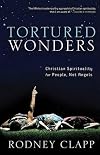
I hate Spirit 105.3 (my local Christian radio station). If you like that radio station and I hurt your feelings, I apologize. In all honesty, I really do not want you to have hurt feelings, but I find Spirit 105.3 less wholesome and family friendly (as they advertise) and more vomit-inducing otherworldly fakery. Of course I am painting this station in broad strokes and I have no special insight regarding the spiritual lives of its disc jockeys, but every bit of spiritual advice I hear on air show more sounds like it came from the front porch of a wooden house in a Thomas Kinkade painting.
Enter Rodney Clapp and his book Tortured Wonders. In a way, Clapp’s premise in this book is a rebuttal against a “Spirit 105.3” spirituality. While our local Christian radio station seeks to disconnect the soul from the body promoting a Christian spirituality fit for people playing harps in heaven, Clapp reminds us that God created the human body and said that it was good.
Clapp splits Tortured Wonders in half. The first section, titled “Classical Christian Spirituality,” details Orthodox Christianity and the themes that pushed it towards an angelic spirituality. Part two, “Christianity in the Light (and Darkness) of the 21st Century,” depicts the ways in which an Orthodox spirituality could translate to our modern culture.
Clapp writes:
“As human beings, as tortured wonders, we are each of us ‘in between.’ We think, we speak, we dream, we pray, so we set ourselves apart from animals and the rest of creation. And yet we are also animals – like them, we are embodied; like them, we are born, we eat and live for a spell, and we die. We humans, then, are luminal creatures, teetering on the threshold between the divine and the bestial” (177).
It follows from this quote that Christian spirituality demands a more holistic approach. Too often, Christians define Orthodoxy as a religion of the mind. Through apologetics and prayer, classical and modern Christians actively participate in mental workouts. Clapp counters in arguing that Orthodox Christianity contains a spirituality of body and mind.
Our bodies are constant reminders that we own a one-way ticket to death. While some cover up sneezes with a handkerchief and others defy aging through Botox, human beings are incapable of outrunning death. Simply put, every day we wake up, we are one day closer to death. Understanding this concept, Clapp contends that a spirituality of the body ought to be a Christian practice.
Personally, Tortured Wonders has influenced me to pay close attention to the treatment of my body. I admit that I have fallen prey to an exclusive spirituality of the mind. This book has encouraged me to begin running, not for the sake of obtaining a good appearance, but for the purpose of submitting my body to something that I’d rather not do. Similarly, I am more aware of the food nourishing me. Eating is a spiritual act. It is done in community and the source of nourishment ought to be considered. If I eat processed foods, then I am consuming a food that is not only unhealthy, but also loaded with sugars and salts added for the purpose of tricking my anatomy to enjoy it the most. Thus, eating natural foods bring the benefits of health and moderation.
Tortured Wonders succeeds in expanding the breadth of what we consider spirituality. Although it is not a page turner, the themes present in the book provide a unique perspective. I recommend Tortured Wonders to anyone who is interested in a holistic approach to spirituality.
Originally posted at http://wherepenmeetspaper.blogspot.com/ show less
Enter Rodney Clapp and his book Tortured Wonders. In a way, Clapp’s premise in this book is a rebuttal against a “Spirit 105.3” spirituality. While our local Christian radio station seeks to disconnect the soul from the body promoting a Christian spirituality fit for people playing harps in heaven, Clapp reminds us that God created the human body and said that it was good.
Clapp splits Tortured Wonders in half. The first section, titled “Classical Christian Spirituality,” details Orthodox Christianity and the themes that pushed it towards an angelic spirituality. Part two, “Christianity in the Light (and Darkness) of the 21st Century,” depicts the ways in which an Orthodox spirituality could translate to our modern culture.
Clapp writes:
“As human beings, as tortured wonders, we are each of us ‘in between.’ We think, we speak, we dream, we pray, so we set ourselves apart from animals and the rest of creation. And yet we are also animals – like them, we are embodied; like them, we are born, we eat and live for a spell, and we die. We humans, then, are luminal creatures, teetering on the threshold between the divine and the bestial” (177).
It follows from this quote that Christian spirituality demands a more holistic approach. Too often, Christians define Orthodoxy as a religion of the mind. Through apologetics and prayer, classical and modern Christians actively participate in mental workouts. Clapp counters in arguing that Orthodox Christianity contains a spirituality of body and mind.
Our bodies are constant reminders that we own a one-way ticket to death. While some cover up sneezes with a handkerchief and others defy aging through Botox, human beings are incapable of outrunning death. Simply put, every day we wake up, we are one day closer to death. Understanding this concept, Clapp contends that a spirituality of the body ought to be a Christian practice.
Personally, Tortured Wonders has influenced me to pay close attention to the treatment of my body. I admit that I have fallen prey to an exclusive spirituality of the mind. This book has encouraged me to begin running, not for the sake of obtaining a good appearance, but for the purpose of submitting my body to something that I’d rather not do. Similarly, I am more aware of the food nourishing me. Eating is a spiritual act. It is done in community and the source of nourishment ought to be considered. If I eat processed foods, then I am consuming a food that is not only unhealthy, but also loaded with sugars and salts added for the purpose of tricking my anatomy to enjoy it the most. Thus, eating natural foods bring the benefits of health and moderation.
Tortured Wonders succeeds in expanding the breadth of what we consider spirituality. Although it is not a page turner, the themes present in the book provide a unique perspective. I recommend Tortured Wonders to anyone who is interested in a holistic approach to spirituality.
Originally posted at http://wherepenmeetspaper.blogspot.com/ show less
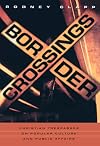
Solid Christian writing and thinking. What a blessing it is to know we're not alone in the church in terms of our perception of the world around us, and in terms of our mission to that world. Rodney makes me feel like there's a legitimate reason for me to carry on with those things I feel God's called me to in the life of His church. Let's cross the border!
Awards

You May Also Like


Associated Authors
Statistics
- Works
- 47
- Also by
- 2
- Members
- 933
- Popularity
- #27,526
- Rating
- 3.6
- Reviews
- 29
- ISBNs
- 20
- Languages
- 2