
George Abbott (1887–1995)
Author of All Quiet on the Western Front [1930 film]
About the Author
Image credit: wikimedia.org
Works by George Abbott
Associated Works
The Marx Brothers Collection (A Night at the Opera / A Day at the Races/ A Night In Casablanca / Room Service / At the Circus / Go West / The Big Store) (2004) — Author — 59 copies
25 best plays of the Modern American Theatre : Early Series : 1916-1929 (1949) — Contributor — 32 copies
Famous Plays of Crime and Detection, from Sherlock Holmes to Angel Street (1977) — Contributor — 17 copies, 1 review
Tagged
Common Knowledge
- Canonical name
- Abbott, George
- Legal name
- Abbott, George Francis
- Birthdate
- 1887-06-25
- Date of death
- 1995-01-31
- Gender
- male
- Occupations
- theatre producer
film director - Awards and honors
- George Abbott Theatre
- Nationality
- USA
- Birthplace
- Forestville, New York, USA
- Place of death
- Miami Beach, Florida, USA
- Associated Place (for map)
- USA
Members
Reviews
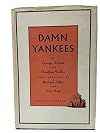
An entertaining musical play about Joe Boyd, an inveterate 40-ish fan of the Washington Senators, who would just once love to see his beloved baseball team beat the Damn Yankees. He is so obsessed with this thought that he blurts out a wish to sell his soul to achieve it, and immediately a smooth-talking dapper dresser shows up to make his wish come true. He offers to transform Joe into the greatest young baseball phenom that ever played, and use him to help the Senators win the Pennant... show more for the customary fee, of course. Joe agrees, but the shrewd real estate salesman in him negotiates an escape clause, to be exercised at his choice on the last day of the regular season. This is a well-crafted, intriguing play that makes me want to see it performed (does it exist as a movie?), although the final denouement is a little confusing. show less

I believe that this is one of those books that many of us read when we were in high school. I say many of us because I don't remember actually reading this book myself, but a part of that is because I really didn't like reading the books that we were forced to read at high school. It wasn't until I returned to high school when I was 21, and then when I went on to university, that I started to take an interest in literature, and more so after I finish university and started working. Hey, even show more in my final years of my law degree I was still reading rubbish Piers Anthony books, but along side that I was also reading Kurt Vonnegut and Noam Chomskey, as well as devouring as many of the ancient Greek and Roman books that I could get my hands on. These days though, if you have a look at my reading lists, you will discover that my tastes have changed dramatically.
As the cover of my version of this book says, this is probably the most popular of the war books that has ever been written, and one of the reasons is quite possibly because you are made to read it in high school. Where I went to high school, they had a library where all of the set reading materials were stored, however I have come to discover that this was a peculiarity with South Australia because apparently all the other states you have to buy the books, which turns out to be a big bonus for the author because it means that the author is making all this money because students are being forced to buy this book to read (though I suspect that Remargue is probably dead, which means that all of the money goes to his estate).
This is a very deep book and there is quite a lot that one can discuss. I can actually picture students sitting in English class reading a chapter at a time and stopping when the teacher wants to discuss something (that happened with me). For instance there is the scene in the hospital in which people go into the 'Dead Room' and do not come out, or the doctors that perform experiments on the patients because they can. There are also the numerous scenes in which the protagonists are sitting in the trenches starving because there is simply not enough food. The other two scenes that stick in my mind is when Paul is training and his camp is next to the POW camp where the Russians are kept, and there is also the scene where he is stuck in the crater with the dying French soldier and he struggles with the nightmares that he is going to face because he the soldier has ceased to be a soldier and suddenly has become a human being.
This is what I wish to discuss about this book, and that is the dehumanisation of warfare. I was going to say modern warfare, but in a way all warfare demhumanises you. The key point is when they are in the trenches they talk about how the fight is not actually between them and the French, but rather being the German and French rulers (with the British thrown in). Basically it is a school yard punch up on a grand scale. In the school yard, if you get into a fight, it is personal, however what happens in war is that the fight is not between the nations, but the rulers of the nations, and that is where it because disastrous. The reason I say this is because the ordinary person is then given a uniform and told to go out and fight the people of the other nation simply because the leaders of the other nations have upset the leaders of your nation.
Mind you, things are different in wars these days, and this has been the case since Vietnam. These are not wars in the traditional sense because while the American soldier is sent out to fight the President's war, the people that they are fighting against have taken it personally. In Iraq there was not football matches at Christmas time as was the case in World War I, there were simply bombs going off and suicide bombers blowing themselves up. The same was with Vietnam – the Viet Cong did not let off during the traditional holidays either, and in fact, one of the largest offensives during the war occurred during the Vietnamese New Year (that being the Tet offensive).
The other aspect of the dehumanisation of the war is the fact that Paul has pretty much lost his identity, or more so never had an opportunity to actually obtain an identity. When he came of age he was given a gun and sent to the front. He never had the opportunity to fall in love, and he never had the opportunity to actually use his skills. As is said in the book, when the mathematician dies, his mathematical ability suddenly has come to naught (and in fact some very capable scientists found themselves dead on the front line). We have even seen this with Vietnam, with the Vietnam Vets returning home and wondering around, disconnecting themselves from their former families and friends, lost and confused, literally without an identity except for the fact that they fought in a war. I remember discussing a Hemmingway novel with some friends, who have described the World War I vets on the allies side being described as a lost generation (and spending their time in Paris getting drunk – which is something I would like to do).
In a way I find this is still reflected today in our modern world. Even while we may not be at work, the bosses simply do not see one's skills and abilities. They only see a need and a desire to fill that need. In my workplace we have people dropping out of University so that they can earn a living, and finding themselves becoming disconnected from their own personalities simply to answer phones all day and to process. There are many companies that do not recognise or utilise one's skill sets simply because they have a need that they want filled, and will fill it with anybody, whether you have skills that could be used elsewhere or not. As such, our identity is slowly being destroyed. show less
As the cover of my version of this book says, this is probably the most popular of the war books that has ever been written, and one of the reasons is quite possibly because you are made to read it in high school. Where I went to high school, they had a library where all of the set reading materials were stored, however I have come to discover that this was a peculiarity with South Australia because apparently all the other states you have to buy the books, which turns out to be a big bonus for the author because it means that the author is making all this money because students are being forced to buy this book to read (though I suspect that Remargue is probably dead, which means that all of the money goes to his estate).
This is a very deep book and there is quite a lot that one can discuss. I can actually picture students sitting in English class reading a chapter at a time and stopping when the teacher wants to discuss something (that happened with me). For instance there is the scene in the hospital in which people go into the 'Dead Room' and do not come out, or the doctors that perform experiments on the patients because they can. There are also the numerous scenes in which the protagonists are sitting in the trenches starving because there is simply not enough food. The other two scenes that stick in my mind is when Paul is training and his camp is next to the POW camp where the Russians are kept, and there is also the scene where he is stuck in the crater with the dying French soldier and he struggles with the nightmares that he is going to face because he the soldier has ceased to be a soldier and suddenly has become a human being.
This is what I wish to discuss about this book, and that is the dehumanisation of warfare. I was going to say modern warfare, but in a way all warfare demhumanises you. The key point is when they are in the trenches they talk about how the fight is not actually between them and the French, but rather being the German and French rulers (with the British thrown in). Basically it is a school yard punch up on a grand scale. In the school yard, if you get into a fight, it is personal, however what happens in war is that the fight is not between the nations, but the rulers of the nations, and that is where it because disastrous. The reason I say this is because the ordinary person is then given a uniform and told to go out and fight the people of the other nation simply because the leaders of the other nations have upset the leaders of your nation.
Mind you, things are different in wars these days, and this has been the case since Vietnam. These are not wars in the traditional sense because while the American soldier is sent out to fight the President's war, the people that they are fighting against have taken it personally. In Iraq there was not football matches at Christmas time as was the case in World War I, there were simply bombs going off and suicide bombers blowing themselves up. The same was with Vietnam – the Viet Cong did not let off during the traditional holidays either, and in fact, one of the largest offensives during the war occurred during the Vietnamese New Year (that being the Tet offensive).
The other aspect of the dehumanisation of the war is the fact that Paul has pretty much lost his identity, or more so never had an opportunity to actually obtain an identity. When he came of age he was given a gun and sent to the front. He never had the opportunity to fall in love, and he never had the opportunity to actually use his skills. As is said in the book, when the mathematician dies, his mathematical ability suddenly has come to naught (and in fact some very capable scientists found themselves dead on the front line). We have even seen this with Vietnam, with the Vietnam Vets returning home and wondering around, disconnecting themselves from their former families and friends, lost and confused, literally without an identity except for the fact that they fought in a war. I remember discussing a Hemmingway novel with some friends, who have described the World War I vets on the allies side being described as a lost generation (and spending their time in Paris getting drunk – which is something I would like to do).
In a way I find this is still reflected today in our modern world. Even while we may not be at work, the bosses simply do not see one's skills and abilities. They only see a need and a desire to fill that need. In my workplace we have people dropping out of University so that they can earn a living, and finding themselves becoming disconnected from their own personalities simply to answer phones all day and to process. There are many companies that do not recognise or utilise one's skill sets simply because they have a need that they want filled, and will fill it with anybody, whether you have skills that could be used elsewhere or not. As such, our identity is slowly being destroyed. show less
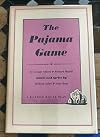
A comedic musical (based on the book 7 1/2 cents) about a 1950s factory labor dispute and the relationship on opposite ends of it.
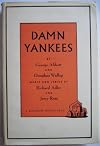
A musical comedy that follows a man who sells his soul to the Devil so his favorite baseball team can win.
Lists
Awards


You May Also Like


Associated Authors
Statistics
- Works
- 36
- Also by
- 5
- Members
- 691
- Popularity
- #36,610
- Rating
- 3.6
- Reviews
- 11
- ISBNs
- 31
- Languages
- 2