

Stacey Abbott
Author of Reading Angel: The TV Spin-off With a Soul
About the Author
Stacey Abbott is a film and television scholar at the University of Roehampton. Her research focuses on the horror genre and the gothic in film and television, with a particular specialism in both vampires and zombies.
Works by Stacey Abbott
The Cult TV Book: From Star Trek to Dexter, New Approaches to TV Outside the Box (2010) 36 copies, 2 reviews
Associated Works
Tagged
Common Knowledge
- Birthdate
- 20th c.
- Gender
- female
- Education
- Concordia University (BFA, Film Studies)
University of East Anglia (MA, Film Studies and Film Archiving)
Birbkeck College, University of London (PhD, Film Studies) - Occupations
- professor (film and television)
- Organizations
- University of Roehampton
British Film Institute
Media, Communication and Cultural Studies Association
British Association of Film, Television and Screen Studies
Northumbria University - Short biography
- [excerpt from University of Roehampton website]
I am Professor of Film and Television. I teach a wide range of subjects on the film programme, including animation, documentary and experimental film, a module on Cinema in the Digital Ages, and a horror module Screening the Undead. My research focuses upon gothic and horror genres in film and television, with a particular interest in the vampire and zombie. - Nationality
- UK
- Places of residence
- London, Middlesex, England, UK
- Associated Place (for map)
- England, UK
Members
Reviews
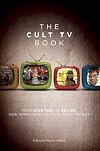
This is a collection of essays (mostly more-or-less academic essays) on the subject of cult TV shows. Which is kind of a slippery subject to pin down, really. Quite a few of the authors wrestle a bit with the definition of the term "cult TV," but the general consensus is that a cult TV show is defined not by any inherent property of the show itself, but by the unusually attentive and dedicated audience it attracts. Which sounds about right to me.
The book covers a variety of subjects in show more addition to the question of what cult TV even is. There are essays about how fans interact with the shows, about production aspects of such shows, and so on. One of the most interesting is a piece by Jane Espenson, a writer who knows a great deal about creating cult-worthy television stories, outlining what she sees as the rules for keeping viewers engaged. There are also short commentaries on various shows from various time periods, with approximately equal representation for US and UK shows.
In general, the essays are kind of a mixed bag. I don't think any one of them really goes into entirely satisfying depth on the subject. Some of them are pretty dry, or slightly more obscure in their language than they really need to be, and there were one or two of them I wanted to argue with, or spotted factual errors in. (To the person who couldn't spell Captain Sisko's name properly: shame on you! Shame!) It's also somewhat dated, as it was published in 2010, and the landscape of television and how people watch it has changed significantly in the last few years. It's rather telling that the word "Netflix" appears nowhere in the entire book.
But, despite all that, I was quite fascinated by this volume, mostly because a lot of the authors in it are addressing something that I myself have really been trying to get to grips with in recent years: the "mainstreaming of the cult." I grew up as what the authors of this book would call a "cult TV fan" in an era when that was something misunderstood and often seen as mock-worthy -- see William Shatner's infamous SNL "Get a Life!" sketch -- and when shows that stood out in any way or demanded too much of their audiences struggled to stay on the air if they ever made it there at all, while facing great pressure to appeal to a more mass audience. And now, shows -- often the most successful shows -- are designed to work only for people who pay very close attention episode to episode. Rabid fan audiences are carefully cultivated and encouraged (and seen as a useful cash stream). Terminology -- "shipping," "cosplay", "fanfic" -- that was once obscure subcultural lingo gets tossed around casually on my actual TV, and activities that were once marginalized subculutral practices -- like cosplay and fanfic -- are now much more widely recognized and accepted. I'll be honest, I'm having a hard time adjusting to it. It constantly boggles me. So it was extremely relevant and interesting to me to read others' attempts to explore or explain some of these changes in terms of how the business of making television has evolved since the days when I was laughed at for wearing a Star Trek t-shirt.
Rating: Objectively, I think this mixed bag of essays is worth about a 3.5/4, so that's what I'm giving it. But, being extremely relevant to my interests, it felt rather better than that to me. show less
The book covers a variety of subjects in show more addition to the question of what cult TV even is. There are essays about how fans interact with the shows, about production aspects of such shows, and so on. One of the most interesting is a piece by Jane Espenson, a writer who knows a great deal about creating cult-worthy television stories, outlining what she sees as the rules for keeping viewers engaged. There are also short commentaries on various shows from various time periods, with approximately equal representation for US and UK shows.
In general, the essays are kind of a mixed bag. I don't think any one of them really goes into entirely satisfying depth on the subject. Some of them are pretty dry, or slightly more obscure in their language than they really need to be, and there were one or two of them I wanted to argue with, or spotted factual errors in. (To the person who couldn't spell Captain Sisko's name properly: shame on you! Shame!) It's also somewhat dated, as it was published in 2010, and the landscape of television and how people watch it has changed significantly in the last few years. It's rather telling that the word "Netflix" appears nowhere in the entire book.
But, despite all that, I was quite fascinated by this volume, mostly because a lot of the authors in it are addressing something that I myself have really been trying to get to grips with in recent years: the "mainstreaming of the cult." I grew up as what the authors of this book would call a "cult TV fan" in an era when that was something misunderstood and often seen as mock-worthy -- see William Shatner's infamous SNL "Get a Life!" sketch -- and when shows that stood out in any way or demanded too much of their audiences struggled to stay on the air if they ever made it there at all, while facing great pressure to appeal to a more mass audience. And now, shows -- often the most successful shows -- are designed to work only for people who pay very close attention episode to episode. Rabid fan audiences are carefully cultivated and encouraged (and seen as a useful cash stream). Terminology -- "shipping," "cosplay", "fanfic" -- that was once obscure subcultural lingo gets tossed around casually on my actual TV, and activities that were once marginalized subculutral practices -- like cosplay and fanfic -- are now much more widely recognized and accepted. I'll be honest, I'm having a hard time adjusting to it. It constantly boggles me. So it was extremely relevant and interesting to me to read others' attempts to explore or explain some of these changes in terms of how the business of making television has evolved since the days when I was laughed at for wearing a Star Trek t-shirt.
Rating: Objectively, I think this mixed bag of essays is worth about a 3.5/4, so that's what I'm giving it. But, being extremely relevant to my interests, it felt rather better than that to me. show less
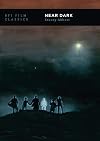
Near Dark (BFI Film Classics) by Stacey Abbott is a thorough and enlightening look at this cult classic that just seems to get better with age.
While Near Dark was not the first genre hybrid film, Kathryn Bigelow definitely created one of the most compelling examples both before and since. Abbott brings to light the clear nods and subversion of horror, film noir, and western genres as well as the more subtle nuances that a viewer might have missed even after repeated viewings.
I was show more particularly interested in her take on the conclusion of the film. Without denying that a lot of what previous critics have said are valid readings, she goes on to offer a finely argued assertion that it is not nearly so clear cut an ending. The discussion of the very final image is especially powerful.
I would recommend this to both fans of the film as well as students (official or not) of film. Looking at the subtle elements and what they convey will not only inform future viewings of Near Dark but cue us into what to look for in other films.
Reviewed from a copy made available by the publisher via NetGalley. show less
While Near Dark was not the first genre hybrid film, Kathryn Bigelow definitely created one of the most compelling examples both before and since. Abbott brings to light the clear nods and subversion of horror, film noir, and western genres as well as the more subtle nuances that a viewer might have missed even after repeated viewings.
I was show more particularly interested in her take on the conclusion of the film. Without denying that a lot of what previous critics have said are valid readings, she goes on to offer a finely argued assertion that it is not nearly so clear cut an ending. The discussion of the very final image is especially powerful.
I would recommend this to both fans of the film as well as students (official or not) of film. Looking at the subtle elements and what they convey will not only inform future viewings of Near Dark but cue us into what to look for in other films.
Reviewed from a copy made available by the publisher via NetGalley. show less
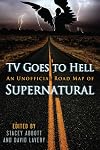
65.) [TV Goes to Hell: An Unofficial Road Map to Supernatural], eds. [[ Stacey Abbott]] and [[David Lavery]] ****
This anthology of critical essays about Supernatural was wildly hit or miss for me. A few of the pieces were some of the worst examples of the ways academic-facing critical writing sometimes wallows in obscuring language and privileges critical lenses over illuminating discussion of the primary text in question. BUT some of the essays were written in clear and concise language and show more succeeded in making compelling arguments about the show (without sacrificing rigor *gasp*), and those I enjoyed. All of the essays were written before season six, but the book came out after six had aired, so some of the supplementary material includes season six: there's a great episode guide which would be helpful for reference.
The essays I found particularly good/useful/illuminating were:
"Televisual Folklore: Rescuing Supernatural from the Fakelore Realm"
"Crossing Over: Network Transition, Critical Reception, and Supernatural Longevity"
"Plagiarism or Props?: Homage to Neil Gaiman in Eric Kripke's Supernatural" show less
This anthology of critical essays about Supernatural was wildly hit or miss for me. A few of the pieces were some of the worst examples of the ways academic-facing critical writing sometimes wallows in obscuring language and privileges critical lenses over illuminating discussion of the primary text in question. BUT some of the essays were written in clear and concise language and show more succeeded in making compelling arguments about the show (without sacrificing rigor *gasp*), and those I enjoyed. All of the essays were written before season six, but the book came out after six had aired, so some of the supplementary material includes season six: there's a great episode guide which would be helpful for reference.
The essays I found particularly good/useful/illuminating were:
"Televisual Folklore: Rescuing Supernatural from the Fakelore Realm"
"Crossing Over: Network Transition, Critical Reception, and Supernatural Longevity"
"Plagiarism or Props?: Homage to Neil Gaiman in Eric Kripke's Supernatural" show less
Bringing together elements of the road movie and the horror genre, Supernatural follows brothers Dean and Sam Winchester as they crisscross America, struggling to protect humanity from what lurks in the dark by battling monsters, witches, demons, angels, the Devil, and sometimes even each other.
First things first, I am a BIG fan of this show! I thought it would be nice to relive the highlights from past seasons but wasn't quite sure what to expect of this television tie-in. It turned out to show more be so much more than a simple episode recap (though it had that too!). The essays were really thoughtful and gave me a lot to chew on. A quality collection overall.
The book's contents are grouped into six main sections:
- "Bon Jovi rocks...on occasion": Comedy and Music
- Skin Mags and Shaving Cream: Sam and Dean on the Fringes of Time and Place
- "Jerk...bitch": Representations of Gender and Sexuality
- The Gospel According to Chuck: Narrative Storytelling in Supernatural
- "What's the lore say?": Exploring Folklore & Religion*
- Cruel Capricious Gods: Auteurs, Fans, Critics
It was obvious early on that this would not be a light read. As a fan of Supernatural, I'm all for the myriad ways the essayists turned a critical eye toward the show. It made for some tasty tasty brain food. I also found it impossible to resist the urge to revisit earlier episodes of the show after reading through the book. Not a bad side effect, me thinks.
*A topic I find of particular interest. show less
First things first, I am a BIG fan of this show! I thought it would be nice to relive the highlights from past seasons but wasn't quite sure what to expect of this television tie-in. It turned out to show more be so much more than a simple episode recap (though it had that too!). The essays were really thoughtful and gave me a lot to chew on. A quality collection overall.
The book's contents are grouped into six main sections:
- "Bon Jovi rocks...on occasion": Comedy and Music
- Skin Mags and Shaving Cream: Sam and Dean on the Fringes of Time and Place
- "Jerk...bitch": Representations of Gender and Sexuality
- The Gospel According to Chuck: Narrative Storytelling in Supernatural
- "What's the lore say?": Exploring Folklore & Religion*
- Cruel Capricious Gods: Auteurs, Fans, Critics
It was obvious early on that this would not be a light read. As a fan of Supernatural, I'm all for the myriad ways the essayists turned a critical eye toward the show. It made for some tasty tasty brain food. I also found it impossible to resist the urge to revisit earlier episodes of the show after reading through the book. Not a bad side effect, me thinks.
*A topic I find of particular interest. show less
You May Also Like


Associated Authors
Statistics
- Works
- 10
- Also by
- 2
- Members
- 231
- Popularity
- #97,642
- Rating
- 3.9
- Reviews
- 8
- ISBNs
- 40
