
Roz Kaveney
Author of Reading the Vampire Slayer
About the Author
Roz Kaveney is a British Writer, critic, and Poet, born on July 9, 1949. She attended Pembroke College, Oxford. Her focus was on Martian poetry and belonged to a poetry group. For a time she worked as a sex worker, transgender rights activist, a writer (articles printed in The Independent and The show more Guardian), and editor (META magazine). She made multiple appearances on Television show After Dark. She is the author of Dialectic of the Flesh, and Rituals-Rhapsody of Blood. Her book Tiny Pieces of Skull won the 2016 Lambda Literary Award for Best Transgender Fiction. (Bowker Author Biography) show less
Series
Works by Roz Kaveney
Teen Dreams: Reading Teen Film and Television from 'Heathers' to 'Veronica Mars' (2006) 49 copies, 2 reviews
Battlestar Galactica: Investigating Flesh, Spirit, and Steel (Investigating Cult TV) (2010) 14 copies
A Lonely Impulse 2 copies
Ignorance Of Perfect Reason 2 copies
A Wolf To Man 2 copies
Totally Trashed 1 copy
The Lacing 1 copy
Bellringer's Overtime 1 copy
Some Moments Of Pleasure 1 copy
A Trump Christmas Carol 1 copy
Brandy For The Damned 1 copy
Instructions 1 copy
Missing The Subtitles 1 copy
The Abigail Sonnets 1 copy
Associated Works
Queer: A Collection of LGBTQ Writing from Ancient Times to Yesterday (2021) — Contributor, some editions — 66 copies
The Mammoth Book of Zombie Apocalypse! Fightback (Mammoth Books) (2012) — Contributor — 65 copies, 1 review
Tagged
Common Knowledge
- Other names
- Kaveney, Andrew (birth)
- Birthdate
- 1949-07-09
- Gender
- female
- Education
- Pembroke College
- Organizations
- Interzone (cofounder)
- Nationality
- England
UK - Birthplace
- London, England, UK
- Associated Place (for map)
- England, UK
Members
Reviews
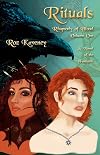
Are you looking for queer, unconventional fantasy centered around female characters? Than Rituals by Roz Kaveney is for you.
Before I get into a plot synopsis, I think it’s necessary to explain the unusual structure of Rituals. It’s almost more like a collection of novellas or novelettes than a standard book. There’s not really a plot arc for the book as a whole; instead, each chapter has it’s own plot line, arc, climax, and conclusion. Usually, they take place at different times as show more well. What unites them is the characters and the world.
Rituals has two protagonists: Mara the Huntress and Emma Jones, an ordinary English woman who becomes involved in the world of the supernatural. Emma’s chapters take place in the 80’s and 90’s, roughly a ten year span from 1985 to 1995. Mara’s ranged from the ancient Middle East to the fall of Tenochtitlan, which make sense considering that she’s a goddess. In the world of Rituals, there’s many ways to become a god, but one is the ritual of blood – committing mass murder to gain immortality and divinity. Mara has sworn to be a protector of the weak, and she hunts anyone who dares attempt the ritual of blood.
Between Emma and Mara, I preferred Emma’s sections. In the start of the book, Emma is a fairly ordinary student, but when she goes to a party and sees her roommate eaten by an ogre, she’s suddenly thrown into the world of the supernatural. Especially when her roommate shows back up as a ghost, becomes Emma’s girlfriend, and starts working with her to solve supernatural problems. My favorite of Emma’s chapters involved one where she was called upon to witness a vampire/elf wedding and business affair. She knows there’s something sketchy going on and starts to investigate. One of my favorite supporting characters was the vampire princess, who was self conscious about her small fangs!
Emma was easily my favorite character in Rituals. I like how her superpower is basically being sensible and talking things through. She doesn’t have any sort of fighting skills, and her eventual career as a psychic is more due to her natural bent for diplomacy. While I liked Emma, I was not as into Mara or really any of the other characters. I did appreciate how the major protagonists tended to be queer women. Emma, her girlfriend Caroline, and Mara are all lesbians. There’s also a bi woman as a major supporting character, and the word bi is actually used! I really loved how Rituals wasn’t afraid to use words like “bi,” “lesbian,” and “queer” and how it was trans inclusive.
As a forewarning, if you’re particularly religious, I don’t know how you’d feel about this one. Both God and Satan appear as major supporting characters, and I can easily see devout members of the Abrahamic religions being upset by God’s portrayal here. Otherwise, Rituals would probably appeal to you if you liked American Gods but thought that it could be a lot gayer.
Rituals is a book that marches to the beat of its own drum. Unfortunately, I don’t think the structure worked well for me. I had trouble getting through Mara’s chapters, and my reactions to Emma’s were variable enough that I’m probably not going to head into the next book in the series. I can see other people liking this book more than I did, and trust me when I say that the book is a whole lot better than the cover.
Originally posted on The Illustrated Page. show less
Before I get into a plot synopsis, I think it’s necessary to explain the unusual structure of Rituals. It’s almost more like a collection of novellas or novelettes than a standard book. There’s not really a plot arc for the book as a whole; instead, each chapter has it’s own plot line, arc, climax, and conclusion. Usually, they take place at different times as show more well. What unites them is the characters and the world.
Rituals has two protagonists: Mara the Huntress and Emma Jones, an ordinary English woman who becomes involved in the world of the supernatural. Emma’s chapters take place in the 80’s and 90’s, roughly a ten year span from 1985 to 1995. Mara’s ranged from the ancient Middle East to the fall of Tenochtitlan, which make sense considering that she’s a goddess. In the world of Rituals, there’s many ways to become a god, but one is the ritual of blood – committing mass murder to gain immortality and divinity. Mara has sworn to be a protector of the weak, and she hunts anyone who dares attempt the ritual of blood.
Between Emma and Mara, I preferred Emma’s sections. In the start of the book, Emma is a fairly ordinary student, but when she goes to a party and sees her roommate eaten by an ogre, she’s suddenly thrown into the world of the supernatural. Especially when her roommate shows back up as a ghost, becomes Emma’s girlfriend, and starts working with her to solve supernatural problems. My favorite of Emma’s chapters involved one where she was called upon to witness a vampire/elf wedding and business affair. She knows there’s something sketchy going on and starts to investigate. One of my favorite supporting characters was the vampire princess, who was self conscious about her small fangs!
Emma was easily my favorite character in Rituals. I like how her superpower is basically being sensible and talking things through. She doesn’t have any sort of fighting skills, and her eventual career as a psychic is more due to her natural bent for diplomacy. While I liked Emma, I was not as into Mara or really any of the other characters. I did appreciate how the major protagonists tended to be queer women. Emma, her girlfriend Caroline, and Mara are all lesbians. There’s also a bi woman as a major supporting character, and the word bi is actually used! I really loved how Rituals wasn’t afraid to use words like “bi,” “lesbian,” and “queer” and how it was trans inclusive.
As a forewarning, if you’re particularly religious, I don’t know how you’d feel about this one. Both God and Satan appear as major supporting characters, and I can easily see devout members of the Abrahamic religions being upset by God’s portrayal here. Otherwise, Rituals would probably appeal to you if you liked American Gods but thought that it could be a lot gayer.
Rituals is a book that marches to the beat of its own drum. Unfortunately, I don’t think the structure worked well for me. I had trouble getting through Mara’s chapters, and my reactions to Emma’s were variable enough that I’m probably not going to head into the next book in the series. I can see other people liking this book more than I did, and trust me when I say that the book is a whole lot better than the cover.
Originally posted on The Illustrated Page. show less
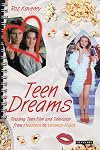
As the title suggests, this is a critical analysis of the "teen movie" and its television heirs, starting with the seminal John Hughes films from the '80s and going all the way up through the first season of Veronica Mars. I've read several of these kinds of books before and have always had mixed reactions, since in an anthology of essays the level of quality can vary quite a bit. ([book:Finding Serenity], in particular, was a bewildering mixture of brilliant insight and pure crap.) By show more contrast, this book is by one author - and holy hell is she one of the good ones! Reading analysis of this depth by someone this intelligent is incredibly exciting and completely satisfying, and I absolutely want to pick up her other books now. I've already read [book:Reading the Vampire Slayer] - it was an essay anthology, but she was the chief contributor and editor - and other critical books by her are [book:From Alien to the Matrix: Reading Science Fiction] and an upcoming volume on superheroes. Highly, highly enjoyable. show less
While aspects of this book interested me, I found myself frustrated by flaws in its presentation: an erratically anachronic order, dual storylines that never end up tying together, and an anticlimactic ending.
Full review (with spoilers) on my blog.
Full review (with spoilers) on my blog.
Well written, and I enjoyed seeing lesbians as part of the story, but it didn't work for me overall. Parts of the plot just didn't make much sense - maybe I missed something, but the whole vampire/elf wedding seemed to have no real purpose and I really don't believe that making one group of vampires and elves break their own rules meant an end to all vampires and elves everywhere. (and I felt that the reader had no way of guessing what those rules were beforehand - I'm familiar with show more changeling myths, but I've never read that the one left by the elves had to be the son of a leader, nor that he HAD to die, just that it was a sickly creature and likely to die.) show less
Lists
Awards


You May Also Like


Associated Authors
Statistics
- Works
- 41
- Also by
- 15
- Members
- 1,012
- Popularity
- #25,473
- Rating
- 3.9
- Reviews
- 12
- ISBNs
- 42