
Sterling Seagrave (1937–2017)
Author of The Soong Dynasty
About the Author
Sterling Seagrave was a reporter for The Washington Post before becoming a freelance investigative journalist contributing to Time, Life, Atlantic Monthly, and the Far Eastern Economic Review
Image credit: Sterling Seagrave circa 1992
Works by Sterling Seagrave
Associated Works
Desperate Journeys, Abandoned Souls: True Stories of Castaways and Other Survivors (1988) — Foreword, some editions — 200 copies, 6 reviews
Tagged
Common Knowledge
- Birthdate
- 1937-04-15
- Date of death
- 2017-05-01
- Gender
- male
- Education
- educated at a boarding school in India, then later in North and South America
- Occupations
- journalist
writer - Relationships
- Seagrave, Gordon S. (father)
- Nationality
- USA (birth)
France (naturalized) - Birthplace
- Columbus, Ohio, USA
- Places of residence
- Burma
France - Associated Place (for map)
- Columbus, Ohio, USA
Members
Reviews

Thoroughly researched, a real page-turner on a topic of great importance. Top notch!
The Soong family is a wonderful key hole through which to observe US-China relations from 1880 to 1950 or so. One Soong sister married Sun Yat-sen, one married Chiang Kai-shek. It's definitely a case of truth being stranger than fiction. Sun Yat-sen was a bumbler, Chiang Kai-shek was a schemer. Between the unplanned catastrophes and the planned catastrophes, how anybody survives seems almost a miracle.
The show more truly frightening part is how the behavior patterns in this book resemble our times these days. Politics and corruption are pretty much the same in all times and places. The gruesome details uncovered in this book would have been known by very few people on the actual scene. Ach, though I remember in the early 1980s when repression was alive and well in Taiwan. I remember a Taiwanese professor getting thrown off a balcony in Pittsburgh - the long arm of the KMT secret police. But how vast money flows into vast propaganda.... what goes on now, with the internet and social media.... this insanity is not just a thing of the past! show less
The Soong family is a wonderful key hole through which to observe US-China relations from 1880 to 1950 or so. One Soong sister married Sun Yat-sen, one married Chiang Kai-shek. It's definitely a case of truth being stranger than fiction. Sun Yat-sen was a bumbler, Chiang Kai-shek was a schemer. Between the unplanned catastrophes and the planned catastrophes, how anybody survives seems almost a miracle.
The show more truly frightening part is how the behavior patterns in this book resemble our times these days. Politics and corruption are pretty much the same in all times and places. The gruesome details uncovered in this book would have been known by very few people on the actual scene. Ach, though I remember in the early 1980s when repression was alive and well in Taiwan. I remember a Taiwanese professor getting thrown off a balcony in Pittsburgh - the long arm of the KMT secret police. But how vast money flows into vast propaganda.... what goes on now, with the internet and social media.... this insanity is not just a thing of the past! show less
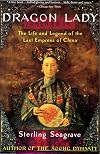
Author Sterling Seagrave was an “investigative journalist” who grew up in Burma (before it was Myanmar). “Investigative journalist” puts my back up, as they always seem to be selling a story rather than actually investigating anything. In Dragon Lady, Seagrave is in fact selling a story, but the documentation he provides suggests the story is one I will buy.
Although the ostensible subject is Tzu Hsi, known in the West as the “Dowager Empress”, Seagrave’s story actually concerns show more the history of relations between China and the West in the 19th and early 20th century, mythbusting as he goes. His basic theme is the Western powers treated China with profound injustice; but the Chinese themselves (including the last rulers, the Qing Dynasty, who were Manchu and not ethnic Chinese) contributed by being hopelessly corrupt. The injustice theme gets off to a rousing start with Seagrave’s explication of the Opium Wars; I think everybody agrees these were one of the more sordid acts in Western history so no further “mythbusting” is necessary. Now that he’s got his stride, Seagrave continues with the Taiping Rebellion. Here my own myths get busted; my previous impression was the Taiping Rebellion was stopped by “Chinese” Gordon and his “Ever-Victorious Army”; however Seagrave argues that the “Ever-Victorious Army” was ineffectual and the rebellion was broken by the Chinese themselves.
Interspersed with these accounts, Seagrave follows the career of Tzu Hsi. Since actual documentation of her life is so scanty, Seagrave discusses general aspects of court life. This was extremely constrained and ritualized, with the imperial diet, activities, and sex life all subject to precise protocol. Tzu Hsi eventually becomes the “Dowager Empress” to her son, the Emperor Kuang Hsu. Keeping track of what’s going on gets very complicated; there are multiple factions – both Manchu and ethnic Chinese – in the Qing government; the most prominent was the “Ironhats”; conservative Manchu who wanted foreigners expelled. Eventually a popular anti-Christian and anti-foreign movement, the “Boxers”, arises, leading to the “Boxer Rebellion”.
Seagrave jumps on conventional wisdom about the Boxer rebellion with both feet. That story is generally that the Dowager Empress was an evil woman who controlled the Chinese government; that the Boxers were controlled by the Empress and sent to attack foreigners; that the various legations held out bravely against the Boxers and organized Chinese troops until help arrived. Seagrave sorts through what documentation is available and presents the following:
• Very few of the Western diplomats and news reporters in China spoke Chinese; therefore they were dependent on various informants, Western or Chinese, who did.
• The informants had interests of their own; ethnic Chinese wanted to overthrow the Manchu dynasty and Manchu wanted to strengthen their own positions and adjusted the information they gave westerners accordingly.
• One of the Chinese-speaking westerners, Edmund Backhouse, perpetrated fraud on a high level, claiming to have access to various Chinese sources, including the diary of a high Qing official. Backhouse also claimed to have had sexual affairs with many prominent men and women, both western and Chinese, and documented these in his memoirs; he was instrumental in convincing various contacts that the Empress was sort of an evil eminence; these contacts passed that appreciation on to their governments and newspapers.
• The events leading to the “Boxer Rebellion” were largely fomented by westerners. The rumor that a “rebellion” was in the offing reached the embassies long before anything actually happened; embassy personal were involved in some unprovoked shootings of Chinese under the pretext that they were “Boxers”. The actual siege of the legation quarter was undramatic; embassy personnel were never in any danger, the Chinese never made an organized attack, casualties were caused by stray bullets or ricochets, and the relief expedition was poorly managed.
• The Chinese military had the capability to take the legations, but the Chinese commanders involved were hedging their bets, trying to preserve relations with the west and preserve their military units for possible internecine conflict later.
• The Dowager Empress was never in control of anything; she was essentially a prisoner in the palace, under control of various ministerial factions in the Chinese government. Edicts and instructions supposedly issued by her actually came from her ministers.
• The western powers took advantage of the event (just as they had in the aftermath of the Opium Wars) to engage in large scale looting.
• Although most of the events that would qualify as “atrocities” were perpetrated on Chinese by the west, there was a wholesale slaughter of missionaries – including wives and children – in one Chinese province.
One of the results of the “rebellion” was western insistence on more access to the imperial government; as a result some western women – diplomat’s wives and daughters – met with the Dowager Empress and Emperor. They generally reported she was amiable and pleasant. They were denounced as “stupid” and “deceived” by those who had an interest in defaming the Empress Dowager.
Seagrave presents his case in a convincing fashion; he has access to a lot of documentation, both western and Chinese, backing his arguments. However, I’m always a little suspect of journalists writing histories, and there’s one little comment – in an endnote – that makes me uneasy. In discussing an abortive attempt to reform the Chinese government from the top down – the “Hundred Days”- Seagrave says the following:
“…after the assassination of President John F. Kennedy, Lyndon Johnson immediately rescinded most of Kennedy’s radical foreign policy initiatives, including moves to reach détente with Russia and Cuba and to withdraw all U.S. troops from Vietnam. There are many interesting parallels between the two palace coups.”
The apparent assertion that the Kennedy assassination was a “palace coup” calls into question all of Seagrave’s case. If he’s fallen off the edge into conspiracy theory in this case, there’s no reason to believe any of the rest is reliable, no matter how logically it’s presented.
That being said, this is worthwhile as an alternative to the “conventional wisdom” on Chinese history of the period. Extensive references and bibliography; endnotes, useful maps. show less
Although the ostensible subject is Tzu Hsi, known in the West as the “Dowager Empress”, Seagrave’s story actually concerns show more the history of relations between China and the West in the 19th and early 20th century, mythbusting as he goes. His basic theme is the Western powers treated China with profound injustice; but the Chinese themselves (including the last rulers, the Qing Dynasty, who were Manchu and not ethnic Chinese) contributed by being hopelessly corrupt. The injustice theme gets off to a rousing start with Seagrave’s explication of the Opium Wars; I think everybody agrees these were one of the more sordid acts in Western history so no further “mythbusting” is necessary. Now that he’s got his stride, Seagrave continues with the Taiping Rebellion. Here my own myths get busted; my previous impression was the Taiping Rebellion was stopped by “Chinese” Gordon and his “Ever-Victorious Army”; however Seagrave argues that the “Ever-Victorious Army” was ineffectual and the rebellion was broken by the Chinese themselves.
Interspersed with these accounts, Seagrave follows the career of Tzu Hsi. Since actual documentation of her life is so scanty, Seagrave discusses general aspects of court life. This was extremely constrained and ritualized, with the imperial diet, activities, and sex life all subject to precise protocol. Tzu Hsi eventually becomes the “Dowager Empress” to her son, the Emperor Kuang Hsu. Keeping track of what’s going on gets very complicated; there are multiple factions – both Manchu and ethnic Chinese – in the Qing government; the most prominent was the “Ironhats”; conservative Manchu who wanted foreigners expelled. Eventually a popular anti-Christian and anti-foreign movement, the “Boxers”, arises, leading to the “Boxer Rebellion”.
Seagrave jumps on conventional wisdom about the Boxer rebellion with both feet. That story is generally that the Dowager Empress was an evil woman who controlled the Chinese government; that the Boxers were controlled by the Empress and sent to attack foreigners; that the various legations held out bravely against the Boxers and organized Chinese troops until help arrived. Seagrave sorts through what documentation is available and presents the following:
• Very few of the Western diplomats and news reporters in China spoke Chinese; therefore they were dependent on various informants, Western or Chinese, who did.
• The informants had interests of their own; ethnic Chinese wanted to overthrow the Manchu dynasty and Manchu wanted to strengthen their own positions and adjusted the information they gave westerners accordingly.
• One of the Chinese-speaking westerners, Edmund Backhouse, perpetrated fraud on a high level, claiming to have access to various Chinese sources, including the diary of a high Qing official. Backhouse also claimed to have had sexual affairs with many prominent men and women, both western and Chinese, and documented these in his memoirs; he was instrumental in convincing various contacts that the Empress was sort of an evil eminence; these contacts passed that appreciation on to their governments and newspapers.
• The events leading to the “Boxer Rebellion” were largely fomented by westerners. The rumor that a “rebellion” was in the offing reached the embassies long before anything actually happened; embassy personal were involved in some unprovoked shootings of Chinese under the pretext that they were “Boxers”. The actual siege of the legation quarter was undramatic; embassy personnel were never in any danger, the Chinese never made an organized attack, casualties were caused by stray bullets or ricochets, and the relief expedition was poorly managed.
• The Chinese military had the capability to take the legations, but the Chinese commanders involved were hedging their bets, trying to preserve relations with the west and preserve their military units for possible internecine conflict later.
• The Dowager Empress was never in control of anything; she was essentially a prisoner in the palace, under control of various ministerial factions in the Chinese government. Edicts and instructions supposedly issued by her actually came from her ministers.
• The western powers took advantage of the event (just as they had in the aftermath of the Opium Wars) to engage in large scale looting.
• Although most of the events that would qualify as “atrocities” were perpetrated on Chinese by the west, there was a wholesale slaughter of missionaries – including wives and children – in one Chinese province.
One of the results of the “rebellion” was western insistence on more access to the imperial government; as a result some western women – diplomat’s wives and daughters – met with the Dowager Empress and Emperor. They generally reported she was amiable and pleasant. They were denounced as “stupid” and “deceived” by those who had an interest in defaming the Empress Dowager.
Seagrave presents his case in a convincing fashion; he has access to a lot of documentation, both western and Chinese, backing his arguments. However, I’m always a little suspect of journalists writing histories, and there’s one little comment – in an endnote – that makes me uneasy. In discussing an abortive attempt to reform the Chinese government from the top down – the “Hundred Days”- Seagrave says the following:
“…after the assassination of President John F. Kennedy, Lyndon Johnson immediately rescinded most of Kennedy’s radical foreign policy initiatives, including moves to reach détente with Russia and Cuba and to withdraw all U.S. troops from Vietnam. There are many interesting parallels between the two palace coups.”
The apparent assertion that the Kennedy assassination was a “palace coup” calls into question all of Seagrave’s case. If he’s fallen off the edge into conspiracy theory in this case, there’s no reason to believe any of the rest is reliable, no matter how logically it’s presented.
That being said, this is worthwhile as an alternative to the “conventional wisdom” on Chinese history of the period. Extensive references and bibliography; endnotes, useful maps. show less
Very well written. Disturbing piece of history to read. The level of corruption is astonishing, and shameful.
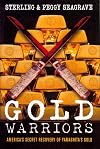
Note to self: If I should ever happen upon a fortune of gold, best to just sell it at the local "Cash for Gold" joint than risk putting in the bank. It's not that the bank might go under leaving you with nothing -- that would be an acceptable risk. No, the problem is their tendency to say, "gold? What gold? when you try to retrieve it. Then kick you in the stones by having you arrested for trying to negotiate "counterfeit" certificates that they themselves issued!
This is the theme woven show more throughout Gold Warriors: America's Secret Recovery of Yamashita's Gold. Yamashita was a Japanese general who worked alongside several crown princes to hide enormous caches of gold throughout the Philippines. The gold itself was looted from all of the nations occupied by Japan during WWII as well as the preceding Sino-Japanese War and their occupation of Korea. While movement of this gold has created something of a global shell game, occasionally a marble does appear, such as the appearance of a Ferdinand Marcos.
The movers of this gold are CIA spooks by and large, but are intricately controlled by the banks themselves. It could not work without government involvement, and indeed various governments have placed people strategically in this game. However, it a game where most of the players lose, no matter what side you are on. Those who become public liabilities on all sides have a tendency to become dead quite readily. Virtually all attempts to compensate rightful owners, or even subsequent investors in these fortunes, are at best stonewalled until the aggrieved parties are no more, by natural causes or not.
Every American president since Truman are implicated. Japan, the original thief, continues to be so involved that they've been all but excused from paying war reparations for the millions of lives they have ruined. Some of the money is used to find clandestine operations, and when they go amiss, scandals like the Iran-Contra Affair crop up. Countries and banks involved span the globe, and involve not just developing nations such as the Philippines (which are kept in a persistent state of poverty while their national wealth is siphoned away), but first-world financial giants, particularly the Swiss who have become experts at stealing other people's money.
Gold Warriors is well documented, and the Seagraves do a great job connecting the dots. They have interviewed some of the principles who can no longer speak for themselves (dead men don't talk), and have made use of recently declassified documents. The game is still being played out today -- billions and billions are in the names of people living a life of poverty, unable to even broach the subject without being threatened by imprisonment or death. The story also covers unfortunate champions who, in the process of trying to uncover the truth, have found themselves imprisoned by a network of corruption permeating law enforcement, the judicial system, and even the executive branch of the government. Our presidents are even portrayed as mere pawns of the ultra powerful: the Rockefellers, Rothschilds, and others of their ilk who created the banking system of today.
If you're into conspiracy theories, this book is a must-read for you. If you're not, well, read this and you might be. In of itself, it might seem a little over-the-top; but other books that I've read recently corroborate some of this (The Rape of Nanking by Iris Chang and The Imperial Cruise by James Bradley dovetails seamlessly into what the Seagraves cover in detail). I like the ending quote by Henry Ford: "It is well enough that the people of the nation do not understand our banking and monetary system for, if they did, I believe there would be a revolution before tomorrow morning." Indeed. show less
This is the theme woven show more throughout Gold Warriors: America's Secret Recovery of Yamashita's Gold. Yamashita was a Japanese general who worked alongside several crown princes to hide enormous caches of gold throughout the Philippines. The gold itself was looted from all of the nations occupied by Japan during WWII as well as the preceding Sino-Japanese War and their occupation of Korea. While movement of this gold has created something of a global shell game, occasionally a marble does appear, such as the appearance of a Ferdinand Marcos.
The movers of this gold are CIA spooks by and large, but are intricately controlled by the banks themselves. It could not work without government involvement, and indeed various governments have placed people strategically in this game. However, it a game where most of the players lose, no matter what side you are on. Those who become public liabilities on all sides have a tendency to become dead quite readily. Virtually all attempts to compensate rightful owners, or even subsequent investors in these fortunes, are at best stonewalled until the aggrieved parties are no more, by natural causes or not.
Every American president since Truman are implicated. Japan, the original thief, continues to be so involved that they've been all but excused from paying war reparations for the millions of lives they have ruined. Some of the money is used to find clandestine operations, and when they go amiss, scandals like the Iran-Contra Affair crop up. Countries and banks involved span the globe, and involve not just developing nations such as the Philippines (which are kept in a persistent state of poverty while their national wealth is siphoned away), but first-world financial giants, particularly the Swiss who have become experts at stealing other people's money.
Gold Warriors is well documented, and the Seagraves do a great job connecting the dots. They have interviewed some of the principles who can no longer speak for themselves (dead men don't talk), and have made use of recently declassified documents. The game is still being played out today -- billions and billions are in the names of people living a life of poverty, unable to even broach the subject without being threatened by imprisonment or death. The story also covers unfortunate champions who, in the process of trying to uncover the truth, have found themselves imprisoned by a network of corruption permeating law enforcement, the judicial system, and even the executive branch of the government. Our presidents are even portrayed as mere pawns of the ultra powerful: the Rockefellers, Rothschilds, and others of their ilk who created the banking system of today.
If you're into conspiracy theories, this book is a must-read for you. If you're not, well, read this and you might be. In of itself, it might seem a little over-the-top; but other books that I've read recently corroborate some of this (The Rape of Nanking by Iris Chang and The Imperial Cruise by James Bradley dovetails seamlessly into what the Seagraves cover in detail). I like the ending quote by Henry Ford: "It is well enough that the people of the nation do not understand our banking and monetary system for, if they did, I believe there would be a revolution before tomorrow morning." Indeed. show less
Awards


You May Also Like


Associated Authors
Statistics
- Works
- 13
- Also by
- 1
- Members
- 1,836
- Popularity
- #14,020
- Rating
- 3.8
- Reviews
- 20
- ISBNs
- 64
- Languages
- 6
- Favorited
- 2

