
Apollonius of Rhodes
Author of The Argonautica
About the Author
Works by Apollonius of Rhodes
Associated Works
Women in Power: Classical Myths and Stories, from the Amazons to Cleopatra (2024) — Contributor — 34 copies
The Delphian Course : Part Three : Greek Drama, Philiosopy and Literature, the Story of Rome (1913) — Contributor — 8 copies
Tagged
Common Knowledge
- Birthdate
- 3rd Century BCE
- Date of death
- after 246 BCE
- Gender
- male
- Occupations
- poet
librarian (Library of Alexandria) - Organizations
- Library of Alexandria (director)
- Relationships
- Callimachus (teacher)
- Short biography
- Apollonius of Rhodes was a librarian at the Library of Alexandria, and is best known for his epic poem the "Argonautica", which tells the mythological story of Jason and the Argonauts' quest for the Golden Fleece.
- Nationality
- Egypt
- Birthplace
- Alexandria, Egypt
Naucratis, Egypt - Places of residence
- Rhodes, Greece
Alexandria, Egypt - Place of death
- Rhodes, Greece
Alexandria, Egypt - Associated Place (for map)
- Egypt
Members
Discussions
argonautica in Challenge: Loeb Classical Library (December 2014)
Reviews
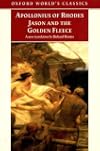
Okay, this was surprisingly good! I haven't really liked much of the ancient greek the class I'm reading these for has assigned, but this one caught me off guard!
I was a little hesitant going in since Hunter literally says in the preface "no one... is more conscious than I am of the failings of my translation"... Umm, cmon dude have a little confidence? It's a prose translation, so it's not accurate to the original metered verse, but as a non-scholar I didn't really mind that. Obviously show more when changing the form of a work this drastically you need to take some liberties, but I felt it was entirely adequate and much easier to read than the other epic poems that my professor has assigned. On top of that, I actually enjoyed it instead of slogging along-- this was a story I was unfamiliar with, and I found myself actively avoiding spoilers, for a work written thousands of years ago! I hesitate to use the word "riveting" but this was the closest classical literature to a page-turner I've ever read. This edition also has maps in the front, and it's really funny to watch how bad these guys are at navigation, but the overall effect is sort of like reading a high-fantasy novel that's set in a familiar location, so that's cool too.
A lot of people seemed to not like Jason's character but I found him a lot more interesting than Heracles for example. He's a lot more human, and this makes for a more realistic story. I wouldn't say he's relatable but the emotional journey was a lot more believable than some of the older Greek works (and I understand that this is a sort of aggregation of things written centuries before so that plays a role in its sophistication). Medea was obviously my favorite character, I found myself sympathizing with her the most throughout, and her speech on Drepane was quite powerful. I felt really bad for her, she deserved so much better!
So yeah that gets me to the failings of this poem, which are pretty common to the Greek I've read, which is listing people and misogyny lol. There's quite a bit of just listing names that contemporary readers would be familiar with, and it got frustrating to the point that I would just skip over those sections and figure out who's who later. This was made worse by the fact that the footnotes were all at the end instead of the bottom of each page, and I just didn't feel motivated to read them all, so I'm sure I missed important context. Also, I won't excuse misogyny just because it's old; after having read ancient literature that actually treats women as people (like the Homeric Hymn to Demeter) Apollonius honestly has no excuse :))) show less
I was a little hesitant going in since Hunter literally says in the preface "no one... is more conscious than I am of the failings of my translation"... Umm, cmon dude have a little confidence? It's a prose translation, so it's not accurate to the original metered verse, but as a non-scholar I didn't really mind that. Obviously show more when changing the form of a work this drastically you need to take some liberties, but I felt it was entirely adequate and much easier to read than the other epic poems that my professor has assigned. On top of that, I actually enjoyed it instead of slogging along-- this was a story I was unfamiliar with, and I found myself actively avoiding spoilers, for a work written thousands of years ago! I hesitate to use the word "riveting" but this was the closest classical literature to a page-turner I've ever read. This edition also has maps in the front, and it's really funny to watch how bad these guys are at navigation, but the overall effect is sort of like reading a high-fantasy novel that's set in a familiar location, so that's cool too.
A lot of people seemed to not like Jason's character but I found him a lot more interesting than Heracles for example. He's a lot more human, and this makes for a more realistic story. I wouldn't say he's relatable but the emotional journey was a lot more believable than some of the older Greek works (and I understand that this is a sort of aggregation of things written centuries before so that plays a role in its sophistication). Medea was obviously my favorite character, I found myself sympathizing with her the most throughout, and her speech on Drepane was quite powerful. I felt really bad for her, she deserved so much better!
So yeah that gets me to the failings of this poem, which are pretty common to the Greek I've read, which is listing people and misogyny lol. There's quite a bit of just listing names that contemporary readers would be familiar with, and it got frustrating to the point that I would just skip over those sections and figure out who's who later. This was made worse by the fact that the footnotes were all at the end instead of the bottom of each page, and I just didn't feel motivated to read them all, so I'm sure I missed important context. Also, I won't excuse misogyny just because it's old; after having read ancient literature that actually treats women as people (like the Homeric Hymn to Demeter) Apollonius honestly has no excuse :))) show less
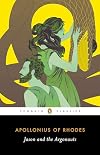
I think I enjoyed this more than the Iliad! Jason is very much a different hero than Achilles is that epic, and while Jason is a bit of a jerk (especially after the events of the epic), I found his story much more interesting to read.
But really, this epic isn't just about Jason, it spends a lot of time with the other Argonauts. Many of them have great heroic or tragic moments in the play that are as fun to read as Jason's.
Then there's Medea. She basically just steals the show in the second show more half, and her plight is even more devastating to read knowing what eventually happens to her in her own tragedy. The most interesting thing to me about her story is that the gods barely intervene directly in this epic (compared to Homer) Medea getting hit with Eros' (Cupid) arrow eventually leads to her betraying and killing her family, Jason's future bridesmaid, and her own children. Would she have had a better life without the intervention of the gods?
I liked this translation (although I can't say I can compare it to anything else). It was understandable, had good notes, and I always like a good alliteration which the translator likes to use. show less
But really, this epic isn't just about Jason, it spends a lot of time with the other Argonauts. Many of them have great heroic or tragic moments in the play that are as fun to read as Jason's.
Then there's Medea. She basically just steals the show in the second show more half, and her plight is even more devastating to read knowing what eventually happens to her in her own tragedy. The most interesting thing to me about her story is that the gods barely intervene directly in this epic (compared to Homer) Medea getting hit with Eros' (Cupid) arrow eventually leads to her betraying and killing her family, Jason's future bridesmaid, and her own children. Would she have had a better life without the intervention of the gods?
I liked this translation (although I can't say I can compare it to anything else). It was understandable, had good notes, and I always like a good alliteration which the translator likes to use. show less
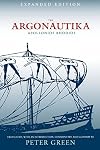
Best parts:
1. The metaphors. Lots of excellent ones here, much akin to the Iliad.
2. Medea shows up halfway in and steals the show. She might be the only interesting character, but she's interesting enough on her own to make up for the perfunctoriness of the rest. The gender relationships between men and women are a source of conflict throughout the text, and that is never more apparent than through the tensions inherent to Medea's character, simultaneously magically powerful and societally show more disempowered. Certainly a recipe for tragedy, though tragedy is not very present here.
3. Detailed nautical descriptions, if you're into that. I certainly am. show less
1. The metaphors. Lots of excellent ones here, much akin to the Iliad.
2. Medea shows up halfway in and steals the show. She might be the only interesting character, but she's interesting enough on her own to make up for the perfunctoriness of the rest. The gender relationships between men and women are a source of conflict throughout the text, and that is never more apparent than through the tensions inherent to Medea's character, simultaneously magically powerful and societally show more disempowered. Certainly a recipe for tragedy, though tragedy is not very present here.
3. Detailed nautical descriptions, if you're into that. I certainly am. show less
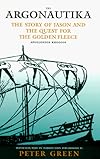
First, a note as to the version I read: I was very satisfied with the Peter Green translation of The Argonautika, it’s clear from his introduction that he has a passion for this story, and the extensive glossary, maps, and analysis of the text demonstrates that he has the expertise for the job of translation as well. Green keeps the text in the form of an epic poem, and there are segments of beautiful and evocative imagery. I’d highly recommend the Green translation.
That being said, the show more subject of Green’s efforts is less impressive. You can’t help but compare The Argonautika to the other epic poems of antiquity like The Iliad, The Odyssey, and The Aeneid, and when such a comparison is made it’s hard not to find The Argonautika wanting. Compared to the other epics, with their interesting and complex main characters, Jason is rather boring. His sole characterization is “hero on a quest,” and there’s oh so little to differentiate him from any generic hero in any generic tale. When one of his shipmates suggests that Jason intentionally left behind Herakles so that he would not be outshined by that superior hero I wished that it was true, as it would at least imbue Jason with some individuality. Sadly, this was not the case.
Jason’s dullness is made more serious by the fact that he is surrounded by more interesting characters. As I mentioned, Herakles is one of his original shipmates, and while they are quickly separated, the crew of the Argo more than once stumbles across some place that was or would become part of Herakles’ journey. Orpheus is also a shipmate of Jason, and his musical ability saves the crew more than once. Even Achilles is referenced, though still a baby. All these characters are more interesting than Jason, and the tales that concern them are all more engaging than Jason’s quest for the golden fleece (which is perhaps the first ever MacGuffin). Medeia (Medea) gets her fair share of the spotlight in The Argonautika as well, and while she’s interesting, she oscillates between hyper-competent potion master and a helpless crying and begging damsel a few times too many for the story. Furthermore, The Argonautika ends before it gets to Medea’s most interesting actions. For those you’ll have to read Euripides.
Not only does the abrupt end of The Argonautika do a disservice to Medea, but it also makes the final book of the epic very anticlimactic, and doesn’t make much sense. Apollonius ends the story with a line about Jason and his crew reaching home “with no further adventures,” leaving completely unresolved the fact that Jason would there have to confront Pelias once again, the one who sent Jason on the quest in the first place. Compare this to the homecoming depicted in The Odyssey and it becomes very clear why Homer and his works so vastly outshine Apollonius and The Argonautika today. The story of Jason’s quest isn’t a bad one, it just pales in comparison to the other ancient epic poems, which still feel fresh today in a way that The Argonautika does not. show less
That being said, the show more subject of Green’s efforts is less impressive. You can’t help but compare The Argonautika to the other epic poems of antiquity like The Iliad, The Odyssey, and The Aeneid, and when such a comparison is made it’s hard not to find The Argonautika wanting. Compared to the other epics, with their interesting and complex main characters, Jason is rather boring. His sole characterization is “hero on a quest,” and there’s oh so little to differentiate him from any generic hero in any generic tale. When one of his shipmates suggests that Jason intentionally left behind Herakles so that he would not be outshined by that superior hero I wished that it was true, as it would at least imbue Jason with some individuality. Sadly, this was not the case.
Jason’s dullness is made more serious by the fact that he is surrounded by more interesting characters. As I mentioned, Herakles is one of his original shipmates, and while they are quickly separated, the crew of the Argo more than once stumbles across some place that was or would become part of Herakles’ journey. Orpheus is also a shipmate of Jason, and his musical ability saves the crew more than once. Even Achilles is referenced, though still a baby. All these characters are more interesting than Jason, and the tales that concern them are all more engaging than Jason’s quest for the golden fleece (which is perhaps the first ever MacGuffin). Medeia (Medea) gets her fair share of the spotlight in The Argonautika as well, and while she’s interesting, she oscillates between hyper-competent potion master and a helpless crying and begging damsel a few times too many for the story. Furthermore, The Argonautika ends before it gets to Medea’s most interesting actions. For those you’ll have to read Euripides.
Not only does the abrupt end of The Argonautika do a disservice to Medea, but it also makes the final book of the epic very anticlimactic, and doesn’t make much sense. Apollonius ends the story with a line about Jason and his crew reaching home “with no further adventures,” leaving completely unresolved the fact that Jason would there have to confront Pelias once again, the one who sent Jason on the quest in the first place. Compare this to the homecoming depicted in The Odyssey and it becomes very clear why Homer and his works so vastly outshine Apollonius and The Argonautika today. The story of Jason’s quest isn’t a bad one, it just pales in comparison to the other ancient epic poems, which still feel fresh today in a way that The Argonautika does not. show less
Lists
euripides ranked (1)
Western Canon (1)
Awards


You May Also Like


Associated Authors
Statistics
- Works
- 29
- Also by
- 8
- Members
- 3,500
- Popularity
- #7,266
- Rating
- 3.8
- Reviews
- 36
- ISBNs
- 154
- Languages
- 11
- Favorited
- 9