
Teddy Kristiansen
Author of It's a Bird
About the Author
Works by Teddy Kristiansen
Superman in Europa 1 copy
Associated Works
Femme Magnifique: 50 Magnificent Women who Changed the World (2018) — Contributor — 62 copies, 2 reviews
House of Mystery Vol. 2 # 42 — Illustrator — 1 copy
Tagged
Common Knowledge
- Birthdate
- 1964-07-29
- Gender
- male
- Nationality
- Denmark
- Places of residence
- Denmark
- Associated Place (for map)
- Denmark
Members
Reviews

From 1996 to 1999, DC revived the House of Secrets for 25 issues. I tried to get the House of Secrets Omnibus, but ILL couldn't procure it, so I had to settle for this, which collects just the first five issues. It's a very different House of Secrets than we've seen before (and since); the House is located in Seattle, and it attracts to it those who possess "secrets," who are tried by a group of ancient ghosts. Into all this enters Rain, a damaged, defensive young woman who ends up serving show more as the court's "witness." What could easily be a cliche character is really quite interesting-- her hard edges feel real, not like stock traits, as she's genuinely hurtful sometimes. The prose and dialogue are great, and this is probably the best artwork of Teddy Kristiansen's (considerable) career. There's something of a self-contained story here, but I'm disappointed I'll never know what happens to these guys next.
The Houses of Mystery and Secrets: « Previous in sequence | Next in sequence » show less
The Houses of Mystery and Secrets: « Previous in sequence | Next in sequence » show less
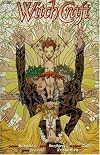
This isn't the first Sandman spin-off-- it's predated by the launch of Sandman Mystery Theatre and the first Death miniseries-- but it's kinda the first standalone one. (I say "kinda" because it did garner a sequel, but said sequel was never collected in trade paperback.) Its subject is a little odd, though; I refused to believe that any Sandman fans were clamoring for a return of the Three Fates or the Three Witches or the Three Goddesses or whatever they were. (I mean, they don't even have show more clear names.) They would just pop up sporadically and be cryptic; I think they had a role in the finale, but maybe the Three Furies were something separate? I don't know and I don't really care.
The story opens with a Pict barbarian coming to Londinium and raping a Roman woman. She's a priestess of the Triple Goddess, though, and lets off a prayer as she dies. Too late to save herself, but the Triple Goddess decide that she will get her revenge: when she and her killer are next reincarnated in the London area, her killer will die. This takes over a millennium, but finally a young maiden is due to marry a guy who turns out to be a rapist. She's secretly a witch, and so is he, and though the Triple Goddess try their best, it doesn't quite come together, everyone dies, and no revenge is had. At this point, I wasn't really into the story either way-- didn't hate it, didn't love it. Did kinda wonder what the point was. (Except that the introduction had told me, but I'll come back to that later.)
So they're left to try again in 1842, where for some reason the priestess has been reincarnated as a man-- and not just any man, but Sir Richard F. Burton (though he's no "sir" yet). What? This just seemed bizarre to me. The killer is actually his mother's lover, and willingly so. Richard Burton is chastised by her for not allowing her her sexual freedom. But he chases the lover anyway and, whoops, the lover rapes Burton. I guess because he's just so evil? Then Burton meets up with gypsies, who teach him sex magic or something (you know gypsies) and then he finds the lover, but doesn't kill him, and goes on to be imperialist bastard we all know and love. And who wrote awful, dull travelogues.
The last bit brings us to the 1990s, when the priestess is now an old lady, and the barbarian is her baby-raping, wife-mind-controlling, priest-killing warlock son-in-law. Because he just wasn't evil enough? It's starting to get over the top at this point. Anyway, the grandma wins, and the Triple Goddess sentences him to be reincarnated throughout the past as the victim of every sex crime ever. Leaving aside the fact that "sex crime" sounds a bit too 20th-century in the mouth of a pagan goddess, it's just what!? I don't even understand what this is supposed to mean. Does it make rape into an empowering act for women? Or is it poetic justice (because raping men is funny maybe)? Or something? God, how bizarre. The book tries to pull back from it by having one of the Goddesses say "I actually started wondering if the matter deserved all the fuss we'd given it," but you know, that ending still exists!
Like Black Orchid (it must be a Vertigo thing), this collection contains a fawning introduction from someone I've never heard of, but I think is supposed to be famous maybe, Penelope Spheeris. Spheeris describes the book as creating "a comic-book world for those who are evolved enough to know that ultimately there is justice in the world." There's nothing evolved about this book! It depicts men as eternal rapists and women as eternal victims, whose best outcome for "justice" is that the men can secretly be the victims of the rapes they commit. She also claims that it shows the power of women as "immeasurably strong and immeasurably subtle," though I feel like being victimized through the millennia is pretty much neither. And lastly, she's quick to claim that men will like this book too even if it is all about female power (really?) because the stories "are sexually titillating without being sexist. They are sometimes erotic, but in an artful, beautiful way... and in a way that allows the WitchCraft women to keep their power and their moral strength." WHAT!? Did we read the same book? Because in the book I read, every sex act bar two is coerced. This book is not remotely titillating-- sex is nasty, brutish, and short, a means to an end for one or both parties in every case. None of the participants are ever drawn attractively. And let's not even talk about the assumption that "boys and men alike" need sex on display to enjoy a story about women anyway...
I freely admit that Penelope Spheeris's introduction is not James Robinson's fault. But it does show the same warped, unpleasant set of values that seems to underly this entire book. Ugh.
Neil Gaiman's The Sandman Spin-Offs: « Previous in sequence | Next in sequence » show less
The story opens with a Pict barbarian coming to Londinium and raping a Roman woman. She's a priestess of the Triple Goddess, though, and lets off a prayer as she dies. Too late to save herself, but the Triple Goddess decide that she will get her revenge: when she and her killer are next reincarnated in the London area, her killer will die. This takes over a millennium, but finally a young maiden is due to marry a guy who turns out to be a rapist. She's secretly a witch, and so is he, and though the Triple Goddess try their best, it doesn't quite come together, everyone dies, and no revenge is had. At this point, I wasn't really into the story either way-- didn't hate it, didn't love it. Did kinda wonder what the point was. (Except that the introduction had told me, but I'll come back to that later.)
So they're left to try again in 1842, where for some reason the priestess has been reincarnated as a man-- and not just any man, but Sir Richard F. Burton (though he's no "sir" yet). What? This just seemed bizarre to me. The killer is actually his mother's lover, and willingly so. Richard Burton is chastised by her for not allowing her her sexual freedom. But he chases the lover anyway and, whoops, the lover rapes Burton. I guess because he's just so evil? Then Burton meets up with gypsies, who teach him sex magic or something (you know gypsies) and then he finds the lover, but doesn't kill him, and goes on to be imperialist bastard we all know and love. And who wrote awful, dull travelogues.
The last bit brings us to the 1990s, when the priestess is now an old lady, and the barbarian is her baby-raping, wife-mind-controlling, priest-killing warlock son-in-law. Because he just wasn't evil enough? It's starting to get over the top at this point. Anyway, the grandma wins, and the Triple Goddess sentences him to be reincarnated throughout the past as the victim of every sex crime ever. Leaving aside the fact that "sex crime" sounds a bit too 20th-century in the mouth of a pagan goddess, it's just what!? I don't even understand what this is supposed to mean. Does it make rape into an empowering act for women? Or is it poetic justice (because raping men is funny maybe)? Or something? God, how bizarre. The book tries to pull back from it by having one of the Goddesses say "I actually started wondering if the matter deserved all the fuss we'd given it," but you know, that ending still exists!
Like Black Orchid (it must be a Vertigo thing), this collection contains a fawning introduction from someone I've never heard of, but I think is supposed to be famous maybe, Penelope Spheeris. Spheeris describes the book as creating "a comic-book world for those who are evolved enough to know that ultimately there is justice in the world." There's nothing evolved about this book! It depicts men as eternal rapists and women as eternal victims, whose best outcome for "justice" is that the men can secretly be the victims of the rapes they commit. She also claims that it shows the power of women as "immeasurably strong and immeasurably subtle," though I feel like being victimized through the millennia is pretty much neither. And lastly, she's quick to claim that men will like this book too even if it is all about female power (really?) because the stories "are sexually titillating without being sexist. They are sometimes erotic, but in an artful, beautiful way... and in a way that allows the WitchCraft women to keep their power and their moral strength." WHAT!? Did we read the same book? Because in the book I read, every sex act bar two is coerced. This book is not remotely titillating-- sex is nasty, brutish, and short, a means to an end for one or both parties in every case. None of the participants are ever drawn attractively. And let's not even talk about the assumption that "boys and men alike" need sex on display to enjoy a story about women anyway...
I freely admit that Penelope Spheeris's introduction is not James Robinson's fault. But it does show the same warped, unpleasant set of values that seems to underly this entire book. Ugh.
Neil Gaiman's The Sandman Spin-Offs: « Previous in sequence | Next in sequence » show less
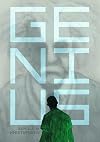
You have to see the big picture to build a sand castle... But you have to appreciate the small picture to understand the sand.'
Genius is a graphic novel masterwork when the proper lenses are worn. I read it years ago and again last week. Both times, my heart hurt afterward, but the first time, my head space was not the same. It was a 'good not great' offering which I enjoyed but had no need to discuss. My life was less complicated and I was closer to my Big idea years.
Now I have children show more and global fears that live in the spaces of my heart where I once held invincibility and cast iron resolve. I understand the narrative of Genius so much better than I really want to.
I never wrote a review before because I was only seeing the sand castle, not the components that allow the castle to exist.. Hats off to Steven Seagle and Teddy Kristiansen for this amazing graphic novel.
Details matter, so here are a few.
Ted was always 'Smart'. The terms brilliant and genius were tossed around and his parents skipped him grades to ensure he would not get bored. When school was over and he was adequately debased by his older peers, his genius presented itself as unique ideas and perspectives. He landed in a think tank to take on concepts which would advance humanity through the evolution and revolution of our culture states.
Quantum Physics... Big ideas, Big sand castles, Big impact.
As Ted watches his career falter, he watches his worth be replaced by younger fresher minds. He learns something which will change his world and provide laser focus on the small picture, the sand itself.
His ailing father in law tells him he knows a secret. Francis, was a body guard for Albert Einstein, and over the years they would chat to pass the time. Albert shared with hime a secret that he could no longer bottle up, sharing it instead with a man who could never understand it and would never disclose it.
Over the years, Ted himself has evolved. He evolved from single to married, childless to fatherhood. As he ages and his life becomes more complex, the creative faucet turns off and Ted's Big ideas become fragile. They crumble and fall apart, or never arrive at all.
Perhaps this secret could change everything.
--
Disclosure: This Graphic Novel was provided to me by the publisher for review purposes. Recieved in 2013 but didn't write a review till 2017.. Sorry about that, but resonance matters and no resonance existed. Had it continued to 'not click', the missing review would continue to exist rather than the non missing review which replaced the nothingness. So kudos, this review is unofficially metaphysical. show less
Genius is a graphic novel masterwork when the proper lenses are worn. I read it years ago and again last week. Both times, my heart hurt afterward, but the first time, my head space was not the same. It was a 'good not great' offering which I enjoyed but had no need to discuss. My life was less complicated and I was closer to my Big idea years.
Now I have children show more and global fears that live in the spaces of my heart where I once held invincibility and cast iron resolve. I understand the narrative of Genius so much better than I really want to.
I never wrote a review before because I was only seeing the sand castle, not the components that allow the castle to exist.. Hats off to Steven Seagle and Teddy Kristiansen for this amazing graphic novel.
Details matter, so here are a few.
Ted was always 'Smart'. The terms brilliant and genius were tossed around and his parents skipped him grades to ensure he would not get bored. When school was over and he was adequately debased by his older peers, his genius presented itself as unique ideas and perspectives. He landed in a think tank to take on concepts which would advance humanity through the evolution and revolution of our culture states.
Quantum Physics... Big ideas, Big sand castles, Big impact.
As Ted watches his career falter, he watches his worth be replaced by younger fresher minds. He learns something which will change his world and provide laser focus on the small picture, the sand itself.
His ailing father in law tells him he knows a secret. Francis, was a body guard for Albert Einstein, and over the years they would chat to pass the time. Albert shared with hime a secret that he could no longer bottle up, sharing it instead with a man who could never understand it and would never disclose it.
Over the years, Ted himself has evolved. He evolved from single to married, childless to fatherhood. As he ages and his life becomes more complex, the creative faucet turns off and Ted's Big ideas become fragile. They crumble and fall apart, or never arrive at all.
Perhaps this secret could change everything.
--
Disclosure: This Graphic Novel was provided to me by the publisher for review purposes. Recieved in 2013 but didn't write a review till 2017.. Sorry about that, but resonance matters and no resonance existed. Had it continued to 'not click', the missing review would continue to exist rather than the non missing review which replaced the nothingness. So kudos, this review is unofficially metaphysical. show less
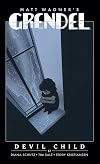
Painful and disturbing (while beautifully drawn), this volume makes explicit something often tacit in Matt Wagner's Grendel cycle, the multiple connections between aggression and gender, and the way it plays out within families. Filling in a bit of the Grendel story only alluded to in Wagner's work, Devil Child explores the tragic experience of Stacy Palumbo, Hunter Rose's adopted daughter and the mother of Christine Spar, the second Grendel.
Lists
Awards


You May Also Like


Associated Authors
Statistics
- Works
- 17
- Also by
- 16
- Members
- 939
- Popularity
- #27,356
- Rating
- 4.2
- Reviews
- 25
- ISBNs
- 29
- Languages
- 7
- Favorited
- 1