
Charles Harrington Elster
Author of The Big Book of Beastly Mispronunciations: The Complete Opinionated Guide for the Careful Speaker
About the Author
Charles Harrington Elster is a nationally recognized authority on language. He is the orthoepist for Wordnik.com and the author of Verbal Advantage and many other books. His articles have appeared in The New York Times Magazine, The Boston Globe, and The Wall Street Journal. He lives in San Diego, show more California. Find out more at http://members.authorsguild.net/chelster. show less
Works by Charles Harrington Elster
The Big Book of Beastly Mispronunciations: The Complete Opinionated Guide for the Careful Speaker (1999) 244 copies, 3 reviews
Is There a Cow in Moscow?: More Beastly Mispronunciations and Sound Advice : Another Opinionated Guide for the Well-Spoken (1990) 70 copies, 2 reviews
What in the Word? Wordplay, Word Lore, and Answers to Your Peskiest Questions about Language (Harvest Original) (2005) 55 copies, 1 review
Verbal Advantage Vocabulary Program Complete Edition - 24 CD's (Success Edition AND Success Edition Advanced), c2005 Edi (2005) 5 copies
There is no Zoo in Zoology 1 copy
There is no zoo in zoology 1 copy
Associated Works
Harry Potter's World: Multidisciplinary Critical Perspectives (2002) — Contributor — 98 copies, 1 review
Tagged
Common Knowledge
- Birthdate
- 1957
- Gender
- male
- Nationality
- USA
- Places of residence
- San Diego, California, USA
- Associated Place (for map)
- California, USA
Members
Reviews
The Big Book of Beastly Mispronunciations: The Complete Opinionated Guide for the Careful Speaker by Charles Harrington Elster
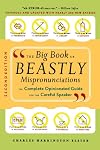
My sister gave me this book because I am what Mr. Elster refers to as a "spelling pronouncer" - I come across unfamiliar words in print and never bother to look up the correct pronunciation. I've used this book to check on words when someone calls me out on a mispronunciation, and it's been very useful. However, it wasn't until I started reading this book straight through, for my Dewey Decimal Challenge, that I got really hooked on it. There were so many regular words that I never would have show more checked that I - and everyone I know - have been mispronouncing, it was fascinating. Examples? Okay!
Grocery: apparently it is groh-suh-ree, with an S, not grohsh-ree, with an SH. I've probably said and heard this word a million times in my life, and never once with an S sound.
New: the proper way to say it is NYOO, like in newt. Surprised the pants off me!
Any word with "-alm": ahm, with no L sound. This one was a total shock because it meant that I've been saying balm, calm, palm, psalm, almond, etc. completely wrong. Except for salmon, that one I nailed (small consolation). Really, we are supposed to pronounce balm like bomb? Really?! Frankly, there's no way I'm going to starting saying these words without the L sound because it sounds awful to my ears.
My favorite passages are the ones that contain fun tidbits, like calling out famous people for saying something wrong, or describing a personal encounter with a mispronouncer. Also when the author gives information about a pronunciation that goes beyond what is in various dictionaries, such as how locals say a certain place name.
One very big thing I've taken away from this book is a sensitivity when it comes to the words pronounce and pronunciation. They came up a lot in this book (obviously), and I was saying "pronunciation" wrong (I think; it's sometimes hard to remember how you say a word in your natural speech). Now I'm very aware of it, for better or worse. show less
Grocery: apparently it is groh-suh-ree, with an S, not grohsh-ree, with an SH. I've probably said and heard this word a million times in my life, and never once with an S sound.
New: the proper way to say it is NYOO, like in newt. Surprised the pants off me!
Any word with "-alm": ahm, with no L sound. This one was a total shock because it meant that I've been saying balm, calm, palm, psalm, almond, etc. completely wrong. Except for salmon, that one I nailed (small consolation). Really, we are supposed to pronounce balm like bomb? Really?! Frankly, there's no way I'm going to starting saying these words without the L sound because it sounds awful to my ears.
My favorite passages are the ones that contain fun tidbits, like calling out famous people for saying something wrong, or describing a personal encounter with a mispronouncer. Also when the author gives information about a pronunciation that goes beyond what is in various dictionaries, such as how locals say a certain place name.
One very big thing I've taken away from this book is a sensitivity when it comes to the words pronounce and pronunciation. They came up a lot in this book (obviously), and I was saying "pronunciation" wrong (I think; it's sometimes hard to remember how you say a word in your natural speech). Now I'm very aware of it, for better or worse. show less
The big book of beastly mispronunciations : the complete opinionated guide for the careful speaker by Charles Harrington Elster
Bought this to bone up on words and stuff because this certain person kept on butting in and correcting how I pronounced words (the ass). This book is undeniably useful, but ultimately made me feel like a fool. So I gave it to my little brother, who's in a Nazi stage right now (grammar, among others) and might love to use this to lord his pedantry over his peers. Teens.
Odd note: this book insists "flaccid" can be pronounced "flak-sid". That's the only thing that stuck. Oh and I learned that show more Qatar is pronounced with the stress on the first syllable. Not that it matters, how you say it, as long as the money still gets to where it needs to be, amiright? lolz. show less
Odd note: this book insists "flaccid" can be pronounced "flak-sid". That's the only thing that stuck. Oh and I learned that show more Qatar is pronounced with the stress on the first syllable. Not that it matters, how you say it, as long as the money still gets to where it needs to be, amiright? lolz. show less
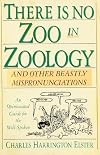
This is a very useful book, especially for family feuds. Almost every word we have argued about can be found in this book, such as "often" (pronounced AWF-en not AFW-ten) and "err" (pronounced as UR not AIR). (He writes, "AIR for err is right up there in the competition for the Great Beastly Mispronunciation of All Time.") In addition, the author's explanations make fun slams at people who mispronounce these words, such as "uneasy half-literates" and those who are "putting on the dog." His show more disquisition on the pronunciation of valet is particularly entertaining and informative. Yes, you can hear pronunciations now via the internet, but you won't get the commentary and history along with it. This book is quite fun for "wordies." show less
Is There a Cow in Moscow?: More Beastly Mispronunciations and Sound Advice : Another Opinionated Guide for the Well-Spok by Charles Harrington Elster

This book follows the author’s first on this subject, There Is No Zoo in Zoology. In this book, Elster again employs humor and erudition to set the record straight about disputed pronunciations. He also includes more proper nouns than in the first book, which I greatly appreciated. Of course, he did list the way I pronounce Appalachia as “not recognized by dictionaries,” and oh dear, I’ve been saying debridement wrong all along! But I appreciate being corrected, and the explanations show more he gives are quite entertaining. show less
You May Also Like


Associated Authors
Statistics
- Works
- 25
- Also by
- 1
- Members
- 1,096
- Popularity
- #23,435
- Rating
- 3.7
- Reviews
- 10
- ISBNs
- 37
- Languages
- 1
- Favorited
- 1