
Jason R. Koivu
Author of Beyond Barlow
About the Author
Image credit: A photo of me taken by my wife at the Horse Brass Pub in Portland, OR.
Series
Works by Jason R. Koivu
Tagged
Common Knowledge
There is no Common Knowledge data for this author yet. You can help.
Members
Reviews

Spritzerville,...Ohio? is a land unlike ours (or at least mine). Ruled by a malevolent Kaiser, oddly-shaped people live alongside talking animals. The episodic chapters center around Bernard "Beanie" Wimple, who informs us in the introduction that his stories have been stolen from his brain by the author who is actually a parasitic, thought-stealing type of insect. My favorite characters were the stoner mice (beach bums, hippies, and beatniks) that colonize the walls of Bernard's show more haberdashery.
The writing has an old-fashioned feel, but is peppered with pop-culture jokes, off-color humor, and word play. It's unlike anything I've read before, but I think fans of [a:Douglas Adams|4|Douglas Adams|https://d202m5krfqbpi5.cloudfront.net/authors/1189120061p2/4.jpg] and [a:Gideon Defoe|83082|Gideon Defoe|https://d202m5krfqbpi5.cloudfront.net/authors/1345407428p2/83082.jpg] might enjoy this. In fact, there's a distinctly British feel to it, despite the fact that it's set in Ohio (maybe) and the author is distinctly not British.
Full disclosure: I've been GR friends with the author for a few years. He sent me a free copy, with no review required, because I'd added it to my to-read list.
If I could do half stars, I would rate this book 3.5 stars. Since I see that another reviewer who wanted to give 3.5 stars rounded down, I'll round up. That half star deduction, by the way, is for the clowns...the g.d. freaky clowns. Not cool, Jason. Not cool. I'll send you my therapy bill. show less
The writing has an old-fashioned feel, but is peppered with pop-culture jokes, off-color humor, and word play. It's unlike anything I've read before, but I think fans of [a:Douglas Adams|4|Douglas Adams|https://d202m5krfqbpi5.cloudfront.net/authors/1189120061p2/4.jpg] and [a:Gideon Defoe|83082|Gideon Defoe|https://d202m5krfqbpi5.cloudfront.net/authors/1345407428p2/83082.jpg] might enjoy this. In fact, there's a distinctly British feel to it, despite the fact that it's set in Ohio (maybe) and the author is distinctly not British.
Full disclosure: I've been GR friends with the author for a few years. He sent me a free copy, with no review required, because I'd added it to my to-read list.
If I could do half stars, I would rate this book 3.5 stars. Since I see that another reviewer who wanted to give 3.5 stars rounded down, I'll round up. That half star deduction, by the way, is for the clowns...the g.d. freaky clowns. Not cool, Jason. Not cool. I'll send you my therapy bill. show less
I had so much fun with this little book. I found myself chuckling on nearly every page. Life can be too serious, I'm glad I was given the opportunity to escape to Spritzerville,...Ohio? for a couple of Sunday afternoon mini breaks. Books are to be shared, and I will happily pass this little gem along to friends needing an escape from the serious side of life. P.S. I have an aversion to Clowns as well, so Bernard Wimple and I are kindred spirits in that regard!
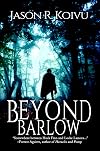
This book blurb attracted me to Jason R. Koivu's Beyond Barlow since I am a fan of Heraclix & Pomp. Turns out his summary is spot on.
"Somewhere between Huck Finn and Locke Lamora" -- Forrest Aguirre, author of Heraclix and Pomp
Beyond Barlow is Intellectual Grimdark: Readers typically differentiate stereotypical High Fantasy (elves, dwarves, wizards with pointy hats with a slant toward happy adventuring) vs Low Fantasy (more "realism" & "earthier" milieu, with a focus on humans defending show more trenches at the battlefront or crawling through crypts to save a maiden or rob a god). The latter encompasses sub-genres like Sword & Sorcery and the contemporary-named Grimdark.
Beyond Barlow has no explicit sorcery, and lies somewhere between medieval fiction and today's Grimdark. Yet it feels different, and this difference can be a plus or a detraction for readers. It all boils down to the conflict. Most adventures of Dark Fantasy tap into simple conflicts of Hero(ine) protagonists vs evil villains/creatures. Beyond Barlow works the more obtuse Hero vs. Self (or arguable Hero vs. Nature) conflict; this development can be slower to develop and more obtuse than the former.
The book follows Ford Barlow who is an impulsive, violent teenager who struggles to fit in with his family in a comfortable way. The story tracks his coming of age as he learns to kill in battle; he causes several brutal accidents leading to his departure from Barlow (his family's hamlet). He joins the Wayward Boys, and his teambuilding with the gang has all the hallmarks of Golding's Lord of the Flies.
Themes of "family matters" persist across every chapter; i.e., what does it means to belong to one? What is your role as a member? The opening chapter, for instance, has Ford going to battle with his dad, step-brother, and dog Stinky. At first, I thought this was a foundation for a Ford-vs-other-clan narrative, but subsequent chapters amplified Ford's feelings of mis-belonging.
Ford is continually haunted by visions of his father, a woodcutter. The following chapters focus on his bonding with a hand of thieves. Plenty of drama unfolds as the wanderlust boys survive by thieving food, braving cold winters, and looting crypts. The characters Runt and Ham echo Ford's relationship with his step-brother Leo; they were my favorite of the bunch.
Its uniqueness may also make this less accessible. Ford isn't really honorable (though he does mature a bit)... the situations he experiences are very grim, and without a clear villain, it leans toward intellectual fiction. The series continues with the sequel The Rue of Hope, which interestingly calls out magic. So we can speculate that the tone shifts towards dark Sword & Sorcery in the next installment.
Blurb for The Rue of Hope:
Murder in the streets. Murder in the houses of the holy. The violent deaths of prominent figures have the populous on edge. Now, amid fire and flood, the revolt is on. The castle is taken, the lord is on the run, and the city is crumbling. With society on the verge of collapse, impulsive street-fighter Ford Barlow finds himself in just as much turmoil. Not only is he juggling his own problems, but his slippery rogue friend is embroiled in a string of high-profile assassinations. Mercenary work for a mage meant to distance him from his troubles only highlights his selfish ways and drives him back into a crumbling world of scandal and betrayal. Magic, adventure and murder combine in this fantasy-mystery! show less
"Somewhere between Huck Finn and Locke Lamora" -- Forrest Aguirre, author of Heraclix and Pomp
Beyond Barlow is Intellectual Grimdark: Readers typically differentiate stereotypical High Fantasy (elves, dwarves, wizards with pointy hats with a slant toward happy adventuring) vs Low Fantasy (more "realism" & "earthier" milieu, with a focus on humans defending show more trenches at the battlefront or crawling through crypts to save a maiden or rob a god). The latter encompasses sub-genres like Sword & Sorcery and the contemporary-named Grimdark.
Beyond Barlow has no explicit sorcery, and lies somewhere between medieval fiction and today's Grimdark. Yet it feels different, and this difference can be a plus or a detraction for readers. It all boils down to the conflict. Most adventures of Dark Fantasy tap into simple conflicts of Hero(ine) protagonists vs evil villains/creatures. Beyond Barlow works the more obtuse Hero vs. Self (or arguable Hero vs. Nature) conflict; this development can be slower to develop and more obtuse than the former.
The book follows Ford Barlow who is an impulsive, violent teenager who struggles to fit in with his family in a comfortable way. The story tracks his coming of age as he learns to kill in battle; he causes several brutal accidents leading to his departure from Barlow (his family's hamlet). He joins the Wayward Boys, and his teambuilding with the gang has all the hallmarks of Golding's Lord of the Flies.
Themes of "family matters" persist across every chapter; i.e., what does it means to belong to one? What is your role as a member? The opening chapter, for instance, has Ford going to battle with his dad, step-brother, and dog Stinky. At first, I thought this was a foundation for a Ford-vs-other-clan narrative, but subsequent chapters amplified Ford's feelings of mis-belonging.
Ford is continually haunted by visions of his father, a woodcutter. The following chapters focus on his bonding with a hand of thieves. Plenty of drama unfolds as the wanderlust boys survive by thieving food, braving cold winters, and looting crypts. The characters Runt and Ham echo Ford's relationship with his step-brother Leo; they were my favorite of the bunch.
Its uniqueness may also make this less accessible. Ford isn't really honorable (though he does mature a bit)... the situations he experiences are very grim, and without a clear villain, it leans toward intellectual fiction. The series continues with the sequel The Rue of Hope, which interestingly calls out magic. So we can speculate that the tone shifts towards dark Sword & Sorcery in the next installment.
Blurb for The Rue of Hope:
Murder in the streets. Murder in the houses of the holy. The violent deaths of prominent figures have the populous on edge. Now, amid fire and flood, the revolt is on. The castle is taken, the lord is on the run, and the city is crumbling. With society on the verge of collapse, impulsive street-fighter Ford Barlow finds himself in just as much turmoil. Not only is he juggling his own problems, but his slippery rogue friend is embroiled in a string of high-profile assassinations. Mercenary work for a mage meant to distance him from his troubles only highlights his selfish ways and drives him back into a crumbling world of scandal and betrayal. Magic, adventure and murder combine in this fantasy-mystery! show less
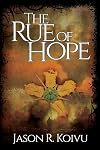
Poor. Just turgid writing that drags meanders and jumps about with very little actually happening. I usually like descriptive prose, and am a fan of many authors who have a slower writing style but this was a step too far. I believe it's second in a series, but I'm certainly not going to read the others, and it seemed quite understandable on it's own.
A day after finishing and it's made so little impression on me that I can't even remember our hero's name. He's a bit of an oaf anyway, and show more perhaps in the previous book he'd journeyed from some village in search of his mother and had an adventure with fairies. He's now in the big city, but out of work and out of luck. He's made a bit of living by fighting in taverns, but he's so inept he can't even throw a fight when it's in his own interest. Random friends and drinking acquaintances keep bailing him out of difficulty but it's very hard to understand how he knows these people who appear and then aren't seen again for vast swathes of the book. It takes more than half the book for the plot to progress beyond this, when he goes on an adventure with a newly met cousin. They're searching for a flower thought to embue the wearer with luck and prosperity. This quest makes little difference to oaf's prospects and he's eventually recruited into the guard only to mess that up too, and also casts away the only consistent characters we've had in his friend Evie. After that the city errupts into a coup and oaf finds out why some events occurred at the beginning of the book that he'd not observed.
There are all sorts of asides thrown into the writing, telling rather than showing the motivations of side characters, but oaf is oblivious to it all.
Just Avoid. show less
A day after finishing and it's made so little impression on me that I can't even remember our hero's name. He's a bit of an oaf anyway, and show more perhaps in the previous book he'd journeyed from some village in search of his mother and had an adventure with fairies. He's now in the big city, but out of work and out of luck. He's made a bit of living by fighting in taverns, but he's so inept he can't even throw a fight when it's in his own interest. Random friends and drinking acquaintances keep bailing him out of difficulty but it's very hard to understand how he knows these people who appear and then aren't seen again for vast swathes of the book. It takes more than half the book for the plot to progress beyond this, when he goes on an adventure with a newly met cousin. They're searching for a flower thought to embue the wearer with luck and prosperity. This quest makes little difference to oaf's prospects and he's eventually recruited into the guard only to mess that up too, and also casts away the only consistent characters we've had in his friend Evie. After that the city errupts into a coup and oaf finds out why some events occurred at the beginning of the book that he'd not observed.
There are all sorts of asides thrown into the writing, telling rather than showing the motivations of side characters, but oaf is oblivious to it all.
Just Avoid. show less
 This review was written for LibraryThing Early Reviewers.
Statistics
- Works
- 5
- Members
- 36
- Popularity
- #397,830
- Rating
- 3.5
- Reviews
- 6
- ISBNs
- 5

