
Oscar Cullmann (1902–1999)
Author of The Christology of the New Testament
About the Author
Oscar Cullmann, a prominent Lutheran theologian and New Testament scholar, was born in Strasbourg, France, and held membership in the Lutheran church of Alsace. He earned three academic degrees at the University of Strasbourg, including a doctorate in theology in 1930. He pursued further studies at show more the Sorbonne, University of Paris. Cullmann taught at the Universities of Strasbourg (1927-38) and Basel, Switzerland (1938-72), and also offered courses at the Sorbonne (1951-72). Quite active in Protestant-Roman Catholic dialogue, he was cofounder of the Ecumenical Institute at Jerusalem. For more than a generation, Cullmann took the lead in advocating a salvation-historical interpretation of the New Testament. Cullmann insisted that biblical texts be studied inductively. Thus, he argued that those postbiblical suppositions favored by nineteenth-century historicism and twentieth-century existentialism must be consciously set aside if the New Testament authors are to be heard on their own terms. In Cullmann's view, Heilsgeschichte (i.e., the story of God's self-revelation and saving action) is the unifying thematic center of the entire Bible. The midpoint and consummation of salvation history is discernible in the life, death, and resurrection of Jesus. This "Christ event" establishes meaning for all that comes before (the period of Israel) and all that follows (the period of the church). The coming "eschaton", says Cullmann, is the fulfillment of the decisive eschatological event in the death and resurrection of Christ. Cullmann's views are best known from his influential volume, Christ and Time (1950). Some scholars question Cullmann's identification of the Christ event as history's midpoint, because many early Christians understood Christ to be the end of history. Since the New Testament perceives the end in different ways, it appears that Cullmann has favored the way that is most congenial to his own theology. (Bowker Author Biography) show less
Image credit: via scriptoriumdaily.com
Works by Oscar Cullmann
Christ and Time: The Primitive Christian Conception of Time and History (1964) 307 copies, 2 reviews
Immortality of the Soul or Resurrection of the Dead?: The Witness of the New Testament (2000) 116 copies
Unity Through Diversity: Its Foundation, and a Contribution to the Discussion Concerning the Possibilities of Its Actualization (1988) 15 copies
Immortality and Resurrection: Death in the Western World; Two Conflicting Currents of Thought (1986) 11 copies
Neotestamentica et Patristica. Eine Freundesgabe, Herrn Professor Dr. Oscar Cullmann zu seinem 60. Geburtstag überreicht (2014) 7 copies
Unsterblichkeit der Seele oder Auferstehung der Toten?. Antwort des Neuen Testaments (1986) 3 copies
Christologie Nového zákona 3 copies
Das Gebet im Neuen Testament: zugleich Versuch einer vom Neuen Testament aus zu erteilenden Antwort auf heutige Fragen (1997) 3 copies
Neues Testament und Geschichte. Historisches Geschehen und Deutung im Neuen Testament (1972) 2 copies
Studi di teologia biblica 2 copies
Der johanneische Kreis : sein Platz im Spätjudentum, in d. Jüngerschaft Jesu u. im Urchristentum : zum Ursprung d. Johannesevangeliums (1975) 2 copies
Historia de la salvación 1 copy
Verdadero y falso ecumenismo 1 copy
early church (The)- 1 copy
Noul Testament 1 copy
Χριστός και χρόνος 1 copy
Cristo e política 1 copy
Oikonomia : Heilsgeschichte als Thema der Theologie : Oscar Cullmann zum 65. Geburtstag gewidmet 1 copy
Il Nuovo Testamento 1 copy
História da Salvação 1 copy
Associated Works
Tagged
Common Knowledge
- Canonical name
- Cullmann, Oscar
- Legal name
- Cullmann, Oscar
- Other names
- Cullman, Oscar
- Birthdate
- 1902-02-25
- Date of death
- 1999-01-16
- Gender
- male
- Occupations
- Christian theologian
- Short biography
- Théologien. - Membre de l'Institut, Académie des sciences morales et politiques (depuis 1972). - Professeur
- Birthplace
- Strasbourg, Alsace, France
- Places of residence
- Basle, Switzerland
- Place of death
- Chamonix, Haute-Savoie, France
- Map Location
- France
- Associated Place (for map)
- Strasbourg, Alsace, France
Members
Reviews

Forgive the conservatism, but not only do I think Cullmann was one of the most significant biblical theologians of the 20th century, I think he should still be on the compulsory reading lists for all in theological formation today. That said, Salvation in History is a little bit of a time warp to read in 2012, because ultimately the battles he was fighting against the Bultmann school are done and dusted. Sanity won the day, and while Bultmann had his moments (as Cullmann notes, tangentially, show more in a footnote to p. 331), Bultmanian existentialism is as much a dinosaur as Schweitzerian scepticism.
It is therefore strange at one level to be reading Cullmann's constant defences of 'salvation history' as a notion. It is as though we were constantly reading a defence of the Allies' opposition to Hitler: the issues are over. Not, I hasten to add, that Bultmann was Hitlerian, though I suspect a Bultmanian existentialist christology or biblical theology is more open to Hitlerian abuse than a significantly Christological and canonical approach such as that taken by Cullmann.
Which is to say that Cullmann allows the canonical texts authority over the reader, rather than the reverse. This in itself is unpopular in a hermeneutical age in which the notion of authorial intention or any authority external to the reader is as popular as a blue-arsed fly in a chalice, but that is precisely why we still need Cullmann. The Christ-event, as conveyed through time, despite all the rough edges and failings of the people of God, is the decisive event by which we must evaluate not only history but our own existence. Which does not bring us back to existentialism, except insofar as Cullmann acknowledges in his closing comments:
Salvation history as summed up in Christ becomes concentrated in ethical decision ... at one point in which the Christ event becomes visible in its total, temporal extension. At the moment when existence is integrated intio then saving event, the vertical and horizontal lines od slavation intersect.
Trust a biblical theologian to make that comment so obtuse: the moment in which the individual surrenders to the claims of Christ on his or her life is the intersection of existential and salvation historical histories.
But this work of Cullmann is a gem because Cullmann takes so seriously the agency of God in cosmic and human history, and so seriously the impact of surrender to the claims of God-in-Christ on believers' lives. It would be worth owning this work if only for the magnificent statement of Christocentric inclusivism on p. 307:
What differentiates the lordship of Christ over the world from his lordship over the church? The world does not know that it is ruled by Christ, for his lordship is, of course, invisible. It is visible only to faith. The Church is the fellowhip of those who by faith know that Christ is the Lord. They have no privilege with regard to salvation, since salvation, of course, encompasses the whole world. Their privilege consists uniquely and soley in the fact that they are aware of their status as members of the Kingdom of Christ, and are to witness that we are saved through Christ.
These conclusions are reached after a thorough - as one would expect from Cullmann - analysis of scripture and history. They are reached with deep respect for text and tradition, and an encyclopedic knowledge of the views being expressed by the Bultmann school and others in the 1950s and '60s. They matter now, even though Bultmann is a declined sidestream in exigetical history, because there are countless others whose relativisation of the scandal of particularity is denuding Christianity of its meaning. Time and again I wanted to email Cullmann with my gratitude for some statement or another, only to remember that he died in 1999. Nevertheless my life has often been made the richer for his passing by, and the times I have read Salvation in History in particular have been amongst the most rewarding theological journeys of my life. show less
It is therefore strange at one level to be reading Cullmann's constant defences of 'salvation history' as a notion. It is as though we were constantly reading a defence of the Allies' opposition to Hitler: the issues are over. Not, I hasten to add, that Bultmann was Hitlerian, though I suspect a Bultmanian existentialist christology or biblical theology is more open to Hitlerian abuse than a significantly Christological and canonical approach such as that taken by Cullmann.
Which is to say that Cullmann allows the canonical texts authority over the reader, rather than the reverse. This in itself is unpopular in a hermeneutical age in which the notion of authorial intention or any authority external to the reader is as popular as a blue-arsed fly in a chalice, but that is precisely why we still need Cullmann. The Christ-event, as conveyed through time, despite all the rough edges and failings of the people of God, is the decisive event by which we must evaluate not only history but our own existence. Which does not bring us back to existentialism, except insofar as Cullmann acknowledges in his closing comments:
Salvation history as summed up in Christ becomes concentrated in ethical decision ... at one point in which the Christ event becomes visible in its total, temporal extension. At the moment when existence is integrated intio then saving event, the vertical and horizontal lines od slavation intersect.
Trust a biblical theologian to make that comment so obtuse: the moment in which the individual surrenders to the claims of Christ on his or her life is the intersection of existential and salvation historical histories.
But this work of Cullmann is a gem because Cullmann takes so seriously the agency of God in cosmic and human history, and so seriously the impact of surrender to the claims of God-in-Christ on believers' lives. It would be worth owning this work if only for the magnificent statement of Christocentric inclusivism on p. 307:
What differentiates the lordship of Christ over the world from his lordship over the church? The world does not know that it is ruled by Christ, for his lordship is, of course, invisible. It is visible only to faith. The Church is the fellowhip of those who by faith know that Christ is the Lord. They have no privilege with regard to salvation, since salvation, of course, encompasses the whole world. Their privilege consists uniquely and soley in the fact that they are aware of their status as members of the Kingdom of Christ, and are to witness that we are saved through Christ.
These conclusions are reached after a thorough - as one would expect from Cullmann - analysis of scripture and history. They are reached with deep respect for text and tradition, and an encyclopedic knowledge of the views being expressed by the Bultmann school and others in the 1950s and '60s. They matter now, even though Bultmann is a declined sidestream in exigetical history, because there are countless others whose relativisation of the scandal of particularity is denuding Christianity of its meaning. Time and again I wanted to email Cullmann with my gratitude for some statement or another, only to remember that he died in 1999. Nevertheless my life has often been made the richer for his passing by, and the times I have read Salvation in History in particular have been amongst the most rewarding theological journeys of my life. show less
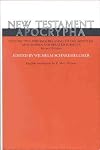
This is one half of the standard two-volume collection used by scholars of books that did not make it into the New Testament. This volume has a dense but illuminating history of how the New Testament was put together, fragments of Gospels, Gnostic works, Gospels, and works on the lives of (and legends about) Jesus and the Apostles, including stories about Christ's babyhood. Full of fascinating stories and unsuspected sayings and miracles: highly recommended for anyone with a curiosity about show more what isn't in the Bible.
(For those who fear the influence of heresy, many of these books were considered 'edifying but not canonical' by early Church Fathers.)
There are many older translations of Gnostic texts and non-canonical Christian texts available for free online: the translations in this book are far newer and no scholar would dispute their accuracy or quality. (This book also contains helpful lists of books for further reading.)
-Kushana show less
(For those who fear the influence of heresy, many of these books were considered 'edifying but not canonical' by early Church Fathers.)
There are many older translations of Gnostic texts and non-canonical Christian texts available for free online: the translations in this book are far newer and no scholar would dispute their accuracy or quality. (This book also contains helpful lists of books for further reading.)
-Kushana show less

The first volume exploring "Christian" apocryphal works, focusing primarily on Jesus.
The work is an English translation of a German work written in 1959. This volume provides a general introduction to the idea of the New Testament apocrypha, the history of the New Testament canon, origins of the idea of the apocrypha, and the history of study of the NT apocrypha. The rest of the work focuses on various apocryphal works about Jesus: fragments of "Gospels" or sayings preserved in patristic show more literature and/or from manuscript evidence, "Jewish-Christian Gospels," Gospel of Egyptians, the Gospel of Peter, Gnostic "Gospels" and similar documents, and then looking at other apocryphal Gospels by category: those assigned to Jesus in some way, those attributed to the Apostles or an Apostle, Gospels attributed to the names of women or arch-heretics, infancy Gospels, stories of Jesus' family, and stories of Jesus' work and life. An appendix features the Gospel of Thomas and parts of the Gospel of Truth.
Every fragment or work is discussed and the history of interpretation/understanding/provenance, etc. is analyzed and a bibliography given. Some texts are provided in translation; others are discussed without translations given.
The work is excellent but a victim of time; it was written not long after the discoveries at Nag Hammadi and while some reference is made to those discoveries much has come to light since 1959. Other documents have been (re)-discovered in the meantime as well.
A useful work to understand and dig into NT apocrypha but further reading in the Gnostic works would prove necessary. show less
The work is an English translation of a German work written in 1959. This volume provides a general introduction to the idea of the New Testament apocrypha, the history of the New Testament canon, origins of the idea of the apocrypha, and the history of study of the NT apocrypha. The rest of the work focuses on various apocryphal works about Jesus: fragments of "Gospels" or sayings preserved in patristic show more literature and/or from manuscript evidence, "Jewish-Christian Gospels," Gospel of Egyptians, the Gospel of Peter, Gnostic "Gospels" and similar documents, and then looking at other apocryphal Gospels by category: those assigned to Jesus in some way, those attributed to the Apostles or an Apostle, Gospels attributed to the names of women or arch-heretics, infancy Gospels, stories of Jesus' family, and stories of Jesus' work and life. An appendix features the Gospel of Thomas and parts of the Gospel of Truth.
Every fragment or work is discussed and the history of interpretation/understanding/provenance, etc. is analyzed and a bibliography given. Some texts are provided in translation; others are discussed without translations given.
The work is excellent but a victim of time; it was written not long after the discoveries at Nag Hammadi and while some reference is made to those discoveries much has come to light since 1959. Other documents have been (re)-discovered in the meantime as well.
A useful work to understand and dig into NT apocrypha but further reading in the Gnostic works would prove necessary. show less
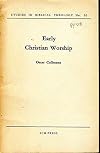
This book is No. 10 in a series of monographs designed to provide clergy and laymen the best works in Biblical scholarship both in this country and abroad. The volumes in this series are planned to further the study of Biblical theology within the Church. Based on historical and literary research, the primary aim of the series is to set out more clearly the nature of Biblical faith as a living phenomenon of vital significance for the contemporary Christian.
You May Also Like


Associated Authors
Statistics
- Works
- 84
- Also by
- 2
- Members
- 2,718
- Popularity
- #9,453
- Rating
- 4.2
- Reviews
- 15
- ISBNs
- 83
- Languages
- 8
- Favorited
- 1