
Paul McCusker
Author of Voyage with the Vikings
About the Author
Paul McCusker was born in 1958 in Uniontown, Pennsylvania, but grew up in Bowie, Maryland, outside of Washington D. C. He graduated college with a degree in Journalism; his first works were dramatic plays. McCusker's dramatic writing also extended to musicals. He was nominated for a Dove Award for show more A Time for Christmas, with music and lyrics by David Clydesdale, Steve Amerson & Lowell Alexander. His novels include The Mill House and Epiphany (nominated for a ECPA Gold Medallion Award) and You Say Tomato with best-selling British writer Adrian Plass. He has also authored The Mill House, and its sequel A Season of Shadows. His newest project is his medical thriller, TSI: The Gabon Virus, co-written with Dr. Walt Larimore. (Bowker Author Biography) show less
Series
Works by Paul McCusker
The Screwtape Letters: First Ever Full-cast Dramatization of the Diabolical Classic (Radio Theatre) (2009) 164 copies, 4 reviews
The Voyage of the Dawn Treader (Focus on the Family radio theatre) (2001) — Director — 154 copies, 2 reviews
Strange Journey Back: Strange Journey Back/High Flyer with a Flat Tire/The Secret Cave of Robinwood/Behind the Locked Door (Adventures in Odyssey Fiction Series 1-4) (2006) 148 copies, 1 review
Point of No Return: Point of No Return/Freedom's Run/Dark Passage/The Stranger's Message (Adventures in Odyssey Fiction Series 8-11) (2006) 85 copies
Amazing Grace: The Inspirational Stories of William Wilberforce, John Newton, and Olaudah Equiano (Radio Theatre) (2007) 28 copies, 2 reviews
The Life of Jesus: Dramatic Eyewitness Accounts from the Luke Reports (Radio Theatre) (2006) 17 copies
Imagination Station Books 3-Pack: Voyage with the Vikings / Attack at the Arena / Peril in the Palace (AIO Imagination Station Books) (2011) 12 copies
Imagination Station Books 3-Pack: Revenge of the Red Knight / Showdown with the Shepherd / Problems in Plymouth (AIO Imagination Station Books) (2013) 6 copies
Gebroken glas 4 copies
Playwriting: A Study in Choices and Challenges (Lillenas Drama Resource How to Book) (1995) 3 copies
Passages 2 copies
Passages Volume 2: The Marus Manuscripts: Glennall's Betrayal/Draven's Defiance/Fendar's Legacy (Focus on the Family Books) (2013) 2 copies
Virtue Chronicles Box Set (Includes The Saintly Outlaw, The Warrior Maiden, and The Hidden Heroes) (2021) 2 copies
A Work in Progress: A Full-Length Play about Christian Identity, Evangelism, and Refrigerator Magnets (1991) 1 copy
Passages Anniston's Risk 1 copy
Associated Works
Tagged
Common Knowledge
- Birthdate
- 1958-10-03
- Gender
- male
- Nationality
- USA
- Birthplace
- Uniontown, Pennsylvania, USA
- Map Location
- USA
Members
Reviews
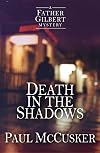
For fans of pure mystery, Paul McCusker’s latest Father Gilbert novel is a very satisfying read. I loved the British flavor, the complex characters and the thought-provoking themes that define Death in The Shadows. Father Gilbert is attending an ecumenical conference at a seaside resort town when he again is confronted with evil. Murder is the crime to be solved, but there is also the degrading and dehumanizing sin of human trafficking that is confronted. This novel struck a personal note show more with me. My daughter is employed by a non-profit that works to free women from the prison of sex trafficking. Death in The Shadows explores the very dark and ugly side of what many term victimless activity — timely subject matter.
Setting plays a big role in Death in The Shadows, with this novel having a very atmospheric feel to it. Father Gilbert is an intriguing character with a past that informs his present — he is former police detective who is now a Church of England priest. As in a previous novel featuring Father Gilbert, the supernatural is again a part of the story, which I found very apt. At one point Father Gilbert ponders the many realities that people confront, and the supernatural reality is one many dismiss or deny, yet is very real. The mystery unfolds slowly, yet this book is not one to be put down easily. You’ll want to keep turning those pages into the wee hours of the night.
A book to keep you puzzling and pondering along with Father Gilbert, Death in The Shadows is one I can recommend.
Recommended.
Audience: adults.
(Thanks to Kregel and Lion Hudson for a complimentary copy. All opinions expressed are mine alone.) show less
Setting plays a big role in Death in The Shadows, with this novel having a very atmospheric feel to it. Father Gilbert is an intriguing character with a past that informs his present — he is former police detective who is now a Church of England priest. As in a previous novel featuring Father Gilbert, the supernatural is again a part of the story, which I found very apt. At one point Father Gilbert ponders the many realities that people confront, and the supernatural reality is one many dismiss or deny, yet is very real. The mystery unfolds slowly, yet this book is not one to be put down easily. You’ll want to keep turning those pages into the wee hours of the night.
A book to keep you puzzling and pondering along with Father Gilbert, Death in The Shadows is one I can recommend.
Recommended.
Audience: adults.
(Thanks to Kregel and Lion Hudson for a complimentary copy. All opinions expressed are mine alone.) show less
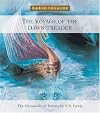
In the third story of the Chronicles of Narnia (third in publication order, that is), Lucy and Edmund get back to Narnia through a painting on the wall of their Aunt Alberta's house. But this time they accidentally bring along their cousin Eustace, who is a "record stinker." Focus on the Family Radio Theatre's adaptation starts with the classic line of the book: "There was once a boy named Eustace Clarence Scrubb, and he almost deserved it."
I think this is my favorite of the radio show more adaptations so far. The worst part of the first two — David Suchet's badly overplayed Aslan — is hardly present in this story. And actually Suchet is starting to grow on me a bit. To be sure, his loud, stronger lines are rather awful. But when he is more subdued, his purring growliness is actually quite good. He didn't have any really loud lines in this story, so there were no wincing moments for me.
I like the actor that they chose to play Eustace. His voice is higher than Edmund's, and he was quite convincing in his peevishness. His journal entries are some of my favorite parts in the book, and I'm glad they were kept in this adaptation. Reepicheep is back, and I'm really starting to like their choice for his voice. It definitely sounds different from the humans.
The sound effects and music are again excellent, and the faithfulness to the original story is wonderful. I don't think they put a foot wrong in this adaptation, and it has already become a favorite of mine. Highly recommended! show less
I think this is my favorite of the radio show more adaptations so far. The worst part of the first two — David Suchet's badly overplayed Aslan — is hardly present in this story. And actually Suchet is starting to grow on me a bit. To be sure, his loud, stronger lines are rather awful. But when he is more subdued, his purring growliness is actually quite good. He didn't have any really loud lines in this story, so there were no wincing moments for me.
I like the actor that they chose to play Eustace. His voice is higher than Edmund's, and he was quite convincing in his peevishness. His journal entries are some of my favorite parts in the book, and I'm glad they were kept in this adaptation. Reepicheep is back, and I'm really starting to like their choice for his voice. It definitely sounds different from the humans.
The sound effects and music are again excellent, and the faithfulness to the original story is wonderful. I don't think they put a foot wrong in this adaptation, and it has already become a favorite of mine. Highly recommended! show less
The Screwtape Letters: First Ever Full-Cast Dramatization of the Diabolical Classic (Radio Theatre) by Paul McCusker
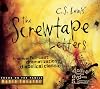
In this audio dramatization of C. S. Lewis' quirky classic, The Screwtape Letters, Andy Serkis — also known as Gollum — stars as the delightfully villainous Uncle Screwtape. In this story, Lewis sets up a whole world seen from the perspective of demons, fallen angels who go out into the world to tempt humans to eternal damnation. Apparently Hell is something of a bureaucracy. (Who would have thought?) The Screwtape Letters is a classic example of what Lewis called "teaching in reverse," show more that is, explaining a concept from the opposite side. It's a idea that is both brilliant in its simplicity and highly effective.
The book is full of sly humor. Part of the humor comes from the constant inversions; everything is upside-down. Satan is known as Our Father Below, God is "the Enemy," and the humans being tempted are "patients" — which, of course, is entirely backwards since the demons are trying to make the patient worse, not better. It's also quite funny to watch Screwtape rip into his nephew for his unceasing stupidity, and then to see Wormwood try to bring a heresy case against his uncle (for appearing to believe that the Enemy actually does love the human vermin). All the little nastinesses of politics and interdepartmental feuding and jealousies are explored in a demonic context, and the result is highly entertaining.
But the humor is just the spice on the meat. There's just so much here, so many ideas and observations that are alarmingly spot-on. I don't want to even attempt to outline all the insightful comments Lewis makes on the human condition; besides my inability to do so, such an attempt might even go against Lewis' intent in writing the book. Lewis' stepson Douglas Gresham talks about how Lewis politely refused the request of someone who wished to create an index of topics covered by The Screwtape Letters. Lewis' reasoning was that the whole game would be given away if the theology and philosophy in this story were codified and labeled as such. Placing these spiritual truths in such a fun fictional frame ensures that the book will always be read and enjoyed, simply because of its entertainment value. Lewis always finds a way to get past watchful dragons.
Of course, the construct of the story isn't a guide for sound theology. Hell is not a place where demons torture souls; it is a place originally created for the punishment of demons and they are hardly the ones going around making everyone miserable. Also implicit in the story is the idea that demons actually can cause a Christian to lose his salvation. This is false; a Christian can be tempted by demonic forces (look at Christ) but Christians are eternally secure in Christ and are kept by Him, not by their own efforts. Of course, Lewis wriggles out of these difficulties most amusingly by disclaiming, in his foreword, that demons can't be trusted and no doubt misrepresent a great many truths in the correspondence to follow.
I very much enjoyed hearing the story as a radio drama. Serkis carries the part brilliantly, from the opening scenes right to the (to me) heartstoppingly beautiful denouément describing what happens when a mortal dies and the veils of illusion and unreality are stripped from his eyes. Lewis' words in that section in particular resonate powerfully with me, not just because of his eloquence but because of the truths he is expressing.
Given all this wonderfulness, the "inspired by" (or should I say, "incited by") songs on the last disc — included as a bonus feature — are a big disappointment. A more artistically and theologically banal collection of music can hardly be imagined. The melodies are weak and boring, with nothing original or memorable about them. The lyrics, when not steeped in bad theology, are simply inane. In one song, the singer claims that the demon on his shoulder controls him, thereby removing all personal responsibility for his own sin. (Actually, the shoulder-demon control thing might be true, at least while he was writing the song.) I couldn't even listen to the songs all the way through and kept skipping to the next track, hoping it would be better than the last. Do yourself a favor and don't bother with any of the songs; they're dreadful. Another bonus feature included in this audiobook is a making-of DVD (which I have not viewed).
With the exception of the songs on the last disc, this is a very well-made production that I will certainly revisit. This fresh new twist on Lewis' diabolical classic is sure to entertain — and enlighten — many listeners, and I enjoyed it a great deal. I recommend it as an imaginative excursion into the landscape of temptation and the human heart. show less
The book is full of sly humor. Part of the humor comes from the constant inversions; everything is upside-down. Satan is known as Our Father Below, God is "the Enemy," and the humans being tempted are "patients" — which, of course, is entirely backwards since the demons are trying to make the patient worse, not better. It's also quite funny to watch Screwtape rip into his nephew for his unceasing stupidity, and then to see Wormwood try to bring a heresy case against his uncle (for appearing to believe that the Enemy actually does love the human vermin). All the little nastinesses of politics and interdepartmental feuding and jealousies are explored in a demonic context, and the result is highly entertaining.
But the humor is just the spice on the meat. There's just so much here, so many ideas and observations that are alarmingly spot-on. I don't want to even attempt to outline all the insightful comments Lewis makes on the human condition; besides my inability to do so, such an attempt might even go against Lewis' intent in writing the book. Lewis' stepson Douglas Gresham talks about how Lewis politely refused the request of someone who wished to create an index of topics covered by The Screwtape Letters. Lewis' reasoning was that the whole game would be given away if the theology and philosophy in this story were codified and labeled as such. Placing these spiritual truths in such a fun fictional frame ensures that the book will always be read and enjoyed, simply because of its entertainment value. Lewis always finds a way to get past watchful dragons.
Of course, the construct of the story isn't a guide for sound theology. Hell is not a place where demons torture souls; it is a place originally created for the punishment of demons and they are hardly the ones going around making everyone miserable. Also implicit in the story is the idea that demons actually can cause a Christian to lose his salvation. This is false; a Christian can be tempted by demonic forces (look at Christ) but Christians are eternally secure in Christ and are kept by Him, not by their own efforts. Of course, Lewis wriggles out of these difficulties most amusingly by disclaiming, in his foreword, that demons can't be trusted and no doubt misrepresent a great many truths in the correspondence to follow.
I very much enjoyed hearing the story as a radio drama. Serkis carries the part brilliantly, from the opening scenes right to the (to me) heartstoppingly beautiful denouément describing what happens when a mortal dies and the veils of illusion and unreality are stripped from his eyes. Lewis' words in that section in particular resonate powerfully with me, not just because of his eloquence but because of the truths he is expressing.
Given all this wonderfulness, the "inspired by" (or should I say, "incited by") songs on the last disc — included as a bonus feature — are a big disappointment. A more artistically and theologically banal collection of music can hardly be imagined. The melodies are weak and boring, with nothing original or memorable about them. The lyrics, when not steeped in bad theology, are simply inane. In one song, the singer claims that the demon on his shoulder controls him, thereby removing all personal responsibility for his own sin. (Actually, the shoulder-demon control thing might be true, at least while he was writing the song.) I couldn't even listen to the songs all the way through and kept skipping to the next track, hoping it would be better than the last. Do yourself a favor and don't bother with any of the songs; they're dreadful. Another bonus feature included in this audiobook is a making-of DVD (which I have not viewed).
With the exception of the songs on the last disc, this is a very well-made production that I will certainly revisit. This fresh new twist on Lewis' diabolical classic is sure to entertain — and enlighten — many listeners, and I enjoyed it a great deal. I recommend it as an imaginative excursion into the landscape of temptation and the human heart. show less
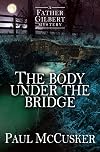
This mystery balances on the borderline between conventional mystery and occult thriller. The visions that Father Gilbert are convincingly prescient, yet could be explained away as an overactive imagination or the product of an unbalanced mind. In any case, the discovery of an ancient medallion on a body preserved in peat leads to a series of other murders and mysterious deaths, and possible black magic. Fast moving, but seems to have an agenda of convincing the reader of the existence of show more diabolic evil. It is rather odd that a writer on occult subjects would not know that the elements attributed to the points of the pentacle are earth, air, fire, water and spirit (or aether); not "air, light, wind, fire and water." This reads as either ignorance or as an attempt to protect the reader from the real occult. show less
 This review was written for LibraryThing Early Reviewers.
Lists
Awards


You May Also Like


Associated Authors
Statistics
- Works
- 116
- Also by
- 2
- Members
- 11,664
- Popularity
- #2,019
- Rating
- 4.0
- Reviews
- 90
- ISBNs
- 207
- Languages
- 3
- Favorited
- 2
