
George G. Hunter
Author of The Celtic Way of Evangelism
About the Author
He is Dean of the E. Stanley Jones School of World Mission and Evangelism and Professor Evangelism and Church Growth at Asbury Theological Seminary in Wilmore, Kentucky. A sought-after preacher and lecturer, he is the author of the best-selling Church for the Unchurched, How to Reach Secular show more People, and The Celtic Way of Evangelism, all published by Abingdon Press. 050 show less
Image credit: Photo courtesy of Dr. George G. Hunter, III
Works by George G. Hunter
Tagged
Common Knowledge
- Canonical name
- Hunter, George G.
- Other names
- Hunter, George G., III
- Birthdate
- 1938-06-25
- Gender
- male
- Education
- Kentucky, USA
- Occupations
- cleric
seminary professor - Organizations
- United Methodist Church
- Nationality
- USA
- Associated Place (for map)
- USA
Members
Reviews
The Celtic Way of Evangelism, Tenth Anniversary Edition: How Christianity Can Reach the West . . .Again by III George G. Hunter
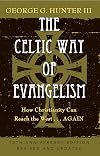
The Celtic Way of Evangelism by George Hunter III looks at the remarkably effective history of evangelism, discipleship and church planting in the time of St. Patrick in the late 4th and early 5th centuries A.D. It contrasts the Roman and Celtic forms of evangelism as they grew throughout northern Europe.
Under Patrick’s mission efforts, some 700 churches were planted , 1000 priests were ordained, 30-40 of Ireland’s 150 tribes became substantially Christian. Patrick was the first public show more man to speak against slavery, and within his lifetime, the Irish slave trade came to a halt. His communities modeled the Christian way of faithfulness, generosity, and peace. (p.23)
The book ends with two great quotes.
First is this ancient Chinese poem:
Go to the people.
Live among them.
Learn from them.
Love them.
Start with what they know.
Build on what they have.
The final paragraph of the book reads this way:
The supreme key to reaching the West again is the key that Patrick discovered – involuntarily but providentially. The gulf between church people and unchurched people is vast, but if we pay the price to understand them, we will usually know what to say and what to do; if they know and feel we understand them, by the tens of millions they will risk opening their hearts to the God who understands them.
The book begins with a look at Patrick’s conversation and call to return to Ireland.
The book is excellent, brief, readable, and a good mix of history and missiology. But the book is more effective to us than simply as a history of Celtic Christianity in teaching us how to be missionally-minded in the culture surrounding us show less
Under Patrick’s mission efforts, some 700 churches were planted , 1000 priests were ordained, 30-40 of Ireland’s 150 tribes became substantially Christian. Patrick was the first public show more man to speak against slavery, and within his lifetime, the Irish slave trade came to a halt. His communities modeled the Christian way of faithfulness, generosity, and peace. (p.23)
The book ends with two great quotes.
First is this ancient Chinese poem:
Go to the people.
Live among them.
Learn from them.
Love them.
Start with what they know.
Build on what they have.
The final paragraph of the book reads this way:
The supreme key to reaching the West again is the key that Patrick discovered – involuntarily but providentially. The gulf between church people and unchurched people is vast, but if we pay the price to understand them, we will usually know what to say and what to do; if they know and feel we understand them, by the tens of millions they will risk opening their hearts to the God who understands them.
The book begins with a look at Patrick’s conversation and call to return to Ireland.
The book is excellent, brief, readable, and a good mix of history and missiology. But the book is more effective to us than simply as a history of Celtic Christianity in teaching us how to be missionally-minded in the culture surrounding us show less
This book is a great resource on evangelism being a way of life. It talks about St. Patrick and how he lived amoung the celts and ultimately changed an entire people group.
Few books have challenged "programatic evangelism" as clearly as this one does. Yet it shoots right to the heart of what evangelism was always meant to be, bringing Christ into the surrounding culture rather than trying to civilize the "barbarians."
Hunter's work is quite valuable because our postmodern cultural landscape simply will not accept the ancient Roman model of religious engagement. The Celtic approach Hunter discusses is a hope-filled alternative. I'll definitely be referring back to this one in years to come...
You May Also Like


Statistics
- Works
- 21
- Members
- 1,695
- Popularity
- #15,146
- Rating
- 3.9
- Reviews
- 9
- ISBNs
- 26
- Languages
- 2