
Yusuke Kishi
Author of The Crimson Labyrinth
About the Author
Series
Works by Yusuke Kishi
黒い家 2 copies
新世界より 2 copies
狐火の家 2 copies
鍵のかかった部屋 2 copies
悪の教典 2 copies
ミステリークロック 2 copies
悪の教典』(上)(下) 2 copies
新世界より』(上)(下) 2 copies
硝子のハンマー 2 copies
Tagged
Common Knowledge
- Canonical name
- Kishi, Yusuke
- Legal name
- 貴志 祐介
- Other names
- Kishi, Yūsuke
Kishi, Yuusuke - Birthdate
- 1959-01-03
- Gender
- male
- Education
- Kyoto University (Economics)
- Awards and honors
- Japan Horror Association Award (twice)
- Nationality
- Japan
- Birthplace
- Osaka City, Osaka, Japan
- Associated Place (for map)
- Osaka, Japan
Members
Reviews
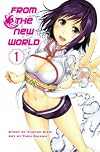
Let's get one thing out of the way quickly--anyone coming from the anime to this will probably be shocked by how much more explicit the love scenes are between Maria and Saki. And possibly how disturbing the "morph rats" (or "monster rats" in the localized subbed anime) violence is.
Worth noting is also several differences--Reiko's practice sessions in the manga, the romantic moment between Shun and Saki during the camping trip, how they meet Squealer. Also I found older Saki's narration to show more be more effective here as well as the disappearing kids angle.
Toru Oikawa's illustrations are wonderfully drawn, with an attention to detail that is surprising for a rookie (as the back cover claims). The level of female nudity is rather high all things considered however. The morph rats are downright disgusting looking.
Saki is a much more confident and outgoing girl here. Maria often leans on her when she is scared or upset. Shun is more outspoken and demonstrative of his feelings for Saki. Satoru seems more on the ball intelligence wise. Mamoru comes off as a stronger character, though still rather timid socially. show less
Worth noting is also several differences--Reiko's practice sessions in the manga, the romantic moment between Shun and Saki during the camping trip, how they meet Squealer. Also I found older Saki's narration to show more be more effective here as well as the disappearing kids angle.
Toru Oikawa's illustrations are wonderfully drawn, with an attention to detail that is surprising for a rookie (as the back cover claims). The level of female nudity is rather high all things considered however. The morph rats are downright disgusting looking.
Saki is a much more confident and outgoing girl here. Maria often leans on her when she is scared or upset. Shun is more outspoken and demonstrative of his feelings for Saki. Satoru seems more on the ball intelligence wise. Mamoru comes off as a stronger character, though still rather timid socially. show less
ALL THE CRYING IN THE WORLD.
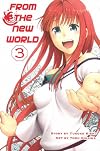
So let's get something straight - I haven't read the novel. I hope to one day, but I haven't as of yet. That said just comparing the Anime to the Manga is enough for me. There are a lot of differences that occur, but they bring the characters to the same place. Knowledge is found through different means (in here the kids didn't meet the "False Whitecape" at summer camp, but afterwards when they realize what has happened to their friends) and relationships are show more treated much differently (Maria and Saki's relationship in particular is more romantic and sexual then in the anime), but the end result is the same: Maria and Mamoru leave the town to live in the outside world, Saki and Satoru vow to make their town a place they can return to safely.
I really like Saki in the manga--she's not a pushover in the anime, not exactly, but she is very often dependent on others. In this, when they confront the "false whitecape" for information about their history and the world, Saki gives it her all. She's (mostly) oblivious to what its doing to everyone else--for her the knowledge they are gaining to create a better world is more important then the pain Maria is feeling. And this is important because in the anime its Shun who is the driving force to find out the truth and its Shun who is pushing the "false whitecape" more and more. And its Saki who is backing him up. In the manga its Saki pushing and Maria is backing her up.
The manga also makes it clear that Saki isn't just doing this because she lost Shun (though that's a large part of it), she's also upset over losing Reika and for all the other kids that have ever had to be "disposed of". The "false whitecape" also offers a clearer view of what happened to civilization and explicitly states that the world of the present is the closest humanity has come to eradicating murder/human violence. show less
So let's get something straight - I haven't read the novel. I hope to one day, but I haven't as of yet. That said just comparing the Anime to the Manga is enough for me. There are a lot of differences that occur, but they bring the characters to the same place. Knowledge is found through different means (in here the kids didn't meet the "False Whitecape" at summer camp, but afterwards when they realize what has happened to their friends) and relationships are show more treated much differently (Maria and Saki's relationship in particular is more romantic and sexual then in the anime), but the end result is the same: Maria and Mamoru leave the town to live in the outside world, Saki and Satoru vow to make their town a place they can return to safely.
I really like Saki in the manga--she's not a pushover in the anime, not exactly, but she is very often dependent on others. In this, when they confront the "false whitecape" for information about their history and the world, Saki gives it her all. She's (mostly) oblivious to what its doing to everyone else--for her the knowledge they are gaining to create a better world is more important then the pain Maria is feeling. And this is important because in the anime its Shun who is the driving force to find out the truth and its Shun who is pushing the "false whitecape" more and more. And its Saki who is backing him up. In the manga its Saki pushing and Maria is backing her up.
The manga also makes it clear that Saki isn't just doing this because she lost Shun (though that's a large part of it), she's also upset over losing Reika and for all the other kids that have ever had to be "disposed of". The "false whitecape" also offers a clearer view of what happened to civilization and explicitly states that the world of the present is the closest humanity has come to eradicating murder/human violence. show less
Lecture assez difficile à noter.
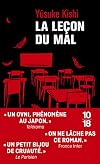
L'écriture est très fluide et je n'ai pas du tout vu les 200 premières pages passer. Après cela, on plonge toujours un peu plus dans l'horreur, le glauque et le difficilement soutenable. La seconde partie permet de s'immerger dans la psychologie de notre protagoniste principal et de mieux saisir les contours de sa personnalité en se basant sur des épisodes de son histoire.
Même si j'ai trouvé intéressant le quotidien de ce psychopathe, je pense qu'on show more aurait pu s'abstenir de certaines scènes de violence tant dans la description que dans la construction du personnage.
La fin m'a parue plus précipitée, on enchaîne l'actionet ce protagoniste qui avait une telle maîtrise de lui-même commence à véritablement lâcher la rampe et cumule les erreurs ce que j'ai trouvé moins en adéquation avec sa personnalité surtout avec ce tir aux pigeons.
Cela reste une lecture assez marquante surtout vu le contexte actuel et qui ne peut pas laisser indifférent. show less
L'écriture est très fluide et je n'ai pas du tout vu les 200 premières pages passer. Après cela, on plonge toujours un peu plus dans l'horreur, le glauque et le difficilement soutenable. La seconde partie permet de s'immerger dans la psychologie de notre protagoniste principal et de mieux saisir les contours de sa personnalité en se basant sur des épisodes de son histoire.
Même si j'ai trouvé intéressant le quotidien de ce psychopathe, je pense qu'on show more aurait pu s'abstenir de certaines scènes de violence tant dans la description que dans la construction du personnage.
La fin m'a parue plus précipitée, on enchaîne l'action
Cela reste une lecture assez marquante surtout vu le contexte actuel et qui ne peut pas laisser indifférent. show less
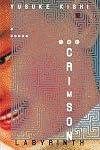
A small group of Japanese men and women find themselves in an unfamiliar place, a strange and vast reddish land formation that resembles a natural labyrinth. They are each provided with a handheld messaging device and assigned to split up on different routes. Which is the correct one? Who brought them there and why? And can there be only one winner?
This is a page-turning novel of adventure with some good moments of horror and suspense. On the downside, I found the conclusion a bit show more unsatisfying and the never-changing setting became monotonous. It's inspired by the Choose-Your-Own-Adventure books we loved as kids, and at times almost feels like one itself. It's a quick read and worth a look. show less
This is a page-turning novel of adventure with some good moments of horror and suspense. On the downside, I found the conclusion a bit show more unsatisfying and the never-changing setting became monotonous. It's inspired by the Choose-Your-Own-Adventure books we loved as kids, and at times almost feels like one itself. It's a quick read and worth a look. show less
Lists
Diverse Horror (1)
Awards


You May Also Like


Associated Authors
Statistics
- Works
- 47
- Members
- 502
- Popularity
- #49,319
- Rating
- 3.6
- Reviews
- 13
- ISBNs
- 59
- Languages
- 4
- Favorited
- 1