

Ahmet Hamdi Tanpınar (1901–1962)
Author of The Time Regulation Institute
About the Author
Series
Works by Ahmet Hamdi Tanpınar
Associated Works
Tablet & Pen: Literary Landscapes from the Modern Middle East (Words Without Borders) (2010) — Contributor — 223 copies, 2 reviews
Tagged
Common Knowledge
- Canonical name
- Tanpınar, Ahmet Hamdi
- Legal name
- Tanpınar, Ahmet Hamdi
- Birthdate
- 1901-06-23
- Date of death
- 1962-01-24
- Gender
- male
- Cause of death
- kalp krizi
- Nationality
- Ottoman Empire
- Birthplace
- Istanbul, Turkey
- Place of death
- Istanbul, Turkey
- Burial location
- Asiyan Cemetery, Istanbul, Turkey
- Map Location
- Turkey
Members
Reviews

A nostalgic satire on the cult of “progress” in Kemalist Turkey — the narrator, Hayri Irdal, spends his teens in Ottoman Istanbul as apprentice to the clock-repairer and amateur philosopher Nuri Effendi, but when he gets back from war service he faces a series of absurd disasters brought about, directly or indirectly, by the changes in Turkish society and his reluctance to embrace them. His life changes when he is taken up by the opportunistic businessman Halit Ayarcı, who picks up a show more chance remark of Hayri’s about the inconvenient way no two public clocks in Istanbul tell the same time and turns it into the foundation of a new public agency.
There’s a lot of comedy about the way bureaucracies become their own justifications for existing (you can’t have someone actually doing a job without managers to tell them how to do it, and support staff to run the phones and type the memos, and personnel and accounts and building services…), and about the way something that is built on a lie can keep going by distracting the world with more and more brazen lies about other things as soon as people start to expose the lie (which you may or may not find eerily timely…), but there is also a lot of colourful Istanbul background, with a vast range of eccentric characters Who interact in complicated ways.
Ultimately, Tanpınar, like other nostalgic conservatives, manages to persuade us that life might have been better for some people in the “good old days”, but doesn’t try to suggest how we could go back to that kind of culture without throwing away the good changes as well. Surely, it would be better to have a world without capitalist pressures where we could lounge about in coffee houses and discuss abstract questions, but not if that means doing away with universal suffrage and modern medical care… show less
There’s a lot of comedy about the way bureaucracies become their own justifications for existing (you can’t have someone actually doing a job without managers to tell them how to do it, and support staff to run the phones and type the memos, and personnel and accounts and building services…), and about the way something that is built on a lie can keep going by distracting the world with more and more brazen lies about other things as soon as people start to expose the lie (which you may or may not find eerily timely…), but there is also a lot of colourful Istanbul background, with a vast range of eccentric characters Who interact in complicated ways.
Ultimately, Tanpınar, like other nostalgic conservatives, manages to persuade us that life might have been better for some people in the “good old days”, but doesn’t try to suggest how we could go back to that kind of culture without throwing away the good changes as well. Surely, it would be better to have a world without capitalist pressures where we could lounge about in coffee houses and discuss abstract questions, but not if that means doing away with universal suffrage and modern medical care… show less
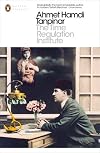
Great book that is absolutely overflowing with ideas about modernity, development, cultural history, East-West relations, bureaucracy and work, amongst many others. Most importantly, it is no dry examination of such concepts, but rather a free-wheeling and funny journey through time. "Here we all ride the carousel together", the main character comments. Must admit that I initially struggled to grasp it, but then it gelled together. Hayri Irdal is in many ways a passive and difficult man, so show more desperate to please as he let's more forceful characters overwhelm him. He rails against the tide when he is swept up by Halit Ayarci, the idiosyncratic embodiment of modern Turkey . Notions of freedom are central, from the personal to the political. "The political pursuit of freedom can lead to its eradication on a grand scale - or rather it opens the door to countless curtailments". I also found the absurdity of work particularly pertinent. And Ayarci's view that "Knowledge holds us back... The main thing is to do, to create... if they knew, they wouldn't be doing it. They would never achieve the same innovation, the same excitement of spontaneous discovery". As much as the book exposes how modernity is destroying the past, and ultimately shows how the stack of clocks is destined to collapse, it is not just a simple lament. It is as relevant today as ever. show less
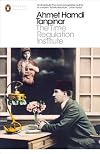
an absurdist, comic take on modernist society in general and the Turkish rush into modernism in particular. A group of Istanbul bourgeois citizens are anchored in their traditional society and are comfortable with its idiosyncrasies but when the anchor is forcibly hauled up and they are cast off into modernity, they can only drift helplessly, with no understanding of wind or current. I read this in the penguin modern classics version which comes with an introduction that is more a polemic show more against modernisation than an exploration of the novel. 22 May 2016 show less

This book is a satirical description of the Turkish society during the period of westernization following WW I. Some of the critical elements relate not only to that time and that country but are more than fitting do describe our present times. Twisting the facts or inventing "alternative truth" as a means to a certain end; being part of a nonsensical project or activity with self-enrichment being the only justification; desire to be innovative and entrepreneurial irrespective of whether an show more idea has value - are these not the characteristics of various Time Regulation Institutes we observe today?
These concepts as well as certain observations about human nature are what makes this book worthwhile. The difficult part for me was to get through the annoying melodrama involving a host of characters most of whom I found superfluous. Even the author's humor in describing various in-laws and their obsessions became tiring for me in the end. show less
These concepts as well as certain observations about human nature are what makes this book worthwhile. The difficult part for me was to get through the annoying melodrama involving a host of characters most of whom I found superfluous. Even the author's humor in describing various in-laws and their obsessions became tiring for me in the end. show less
Lists
Awards


You May Also Like


Associated Authors
Statistics
- Works
- 34
- Also by
- 1
- Members
- 1,064
- Popularity
- #24,196
- Rating
- 4.1
- Reviews
- 18
- ISBNs
- 93
- Languages
- 11
- Favorited
- 4