
Charlotte Roche
Author of Wetlands
About the Author
Image credit: http://de.wikipedia.org/wiki/Bild:Charlotte_Roche.jpg
Works by Charlotte Roche
Zone umide 2 copies
Eden (Amaray) 1 copy
Associated Works
Tagged
Common Knowledge
- Canonical name
- Roche, Charlotte
- Legal name
- Roche, Charlotte Elisabeth Grace
- Birthdate
- 1978-03-18
- Gender
- female
- Occupations
- author
musician
actor - Awards and honors
- Adolf-Grimme-Preis (2004)
Bayerischer Fernsehpreis (2002) - Nationality
- Germany
- Birthplace
- High Wycombe, Buckinghamshire, England, UK
- Places of residence
- Köln, Germany
- Map Location
- Germany
Members
Reviews

I expected to be a lot more repulsed by this book than I was, going by the reviews. Yes, at times it was a tad graphic (!) but at the same time we have this strong protagonist who revels in her body and its functions, perhaps to stop herself focusing on her world, which is falling apart despite her best efforts. I found it a repugnant and beautiful read!
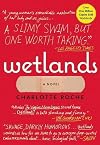
Reading "The Wetlands" made me think of a comment I once saw posted on a slightly seedy internet comment board in which some guy bemoaned the fact that French and German porn actresses tended to bore him because they were too comfortable with sex. Watching them go at it, he said, was sort of like watching them do aerobics, albeit using some unusual equipment. It got me thinking: maybe you can be too comfortable with sex! It might be lapsed Catholic in me talking, but maybe the idea that our show more naughty bits are indeed naughty adds something important to our sexual experiences. "The Wetlands" seems to confirm this hypothesis. Never have I read a novel so explicit and yet so dull.
The explicit elements of this book have probably been described by other reviewers at length, so I won't go them here, save to say that Helen Memmel, our protagonist, has such a blasé attitude towards her own body that it verges on disassociation. Forget a mind-body connection: Helen describes her body as if it's a piece of furniture and hasn't yet secreted a bodily fluid she isn't perfectly at home with. Perhaps the author's trying to desacrilize the body or normalize its functions, or maybe she's trying to tweak Americans' supposedly overly puritanical conceptions of their own bodies. Either way, it makes "The Wetlands" a pretty flat and unexciting read. This is especially true since Helen herself isn't that interesting: even for a teenage protagonist, who might be forgiven for not being especially reflective, she's glib and self-centered. Heck, I'm not too sure that "shallow" isn't the correct adjective here. We watch her irritate nurses, manipulate doctors, and recount a couple of bodily fluid-intensive experiences without gaining much insight into the life that she may or may not have. Helen's a dirty, dirty girl, but not in the exciting sense that that phrase usually implies. The novel could probably have been improved by periodic visits from the grinning, broad-shouldered bald guy on the Mr. Clean bottle.
And that, I guess, is my main problem with "The Wetlands." I'm just some American with a rather tense relationship with microbes, but I imagine that you'd have to go through some pretty significant trauma to get to where Helen is in this novel. And, yes, she talks about a couple of genuinely unpleasant incidents her past in her usual afectless tone. But there's little emotional resonance here. A lot of what passes for the emotional underpinnings to Helen's character is day-dreamy, by-the-numbers teenage sentimentality and doesn't seem to explain, never mind justify, the weird, messy place that she's ended up. Frankly, this kitschy stuff's a lot less forgivable than all of Helen's talk about her secretions and orifices. There are probably places here where the author could have made a larger point about modern society's relationship with impurity and our physical selves, but Helen's not really the right vessel for that: there's little in the way of social critique here.
So that's it. "The Wetlands" is recommended to fans of outré literature who have a high tolerance for discussions of all things proctological, people interested in literary depictions of the body -- of which I admit I'm one -- absolutely shameless perverts, and nobody else. Remember to wash your hands thoroughly after reading this one. show less
The explicit elements of this book have probably been described by other reviewers at length, so I won't go them here, save to say that Helen Memmel, our protagonist, has such a blasé attitude towards her own body that it verges on disassociation. Forget a mind-body connection: Helen describes her body as if it's a piece of furniture and hasn't yet secreted a bodily fluid she isn't perfectly at home with. Perhaps the author's trying to desacrilize the body or normalize its functions, or maybe she's trying to tweak Americans' supposedly overly puritanical conceptions of their own bodies. Either way, it makes "The Wetlands" a pretty flat and unexciting read. This is especially true since Helen herself isn't that interesting: even for a teenage protagonist, who might be forgiven for not being especially reflective, she's glib and self-centered. Heck, I'm not too sure that "shallow" isn't the correct adjective here. We watch her irritate nurses, manipulate doctors, and recount a couple of bodily fluid-intensive experiences without gaining much insight into the life that she may or may not have. Helen's a dirty, dirty girl, but not in the exciting sense that that phrase usually implies. The novel could probably have been improved by periodic visits from the grinning, broad-shouldered bald guy on the Mr. Clean bottle.
And that, I guess, is my main problem with "The Wetlands." I'm just some American with a rather tense relationship with microbes, but I imagine that you'd have to go through some pretty significant trauma to get to where Helen is in this novel. And, yes, she talks about a couple of genuinely unpleasant incidents her past in her usual afectless tone. But there's little emotional resonance here. A lot of what passes for the emotional underpinnings to Helen's character is day-dreamy, by-the-numbers teenage sentimentality and doesn't seem to explain, never mind justify, the weird, messy place that she's ended up. Frankly, this kitschy stuff's a lot less forgivable than all of Helen's talk about her secretions and orifices. There are probably places here where the author could have made a larger point about modern society's relationship with impurity and our physical selves, but Helen's not really the right vessel for that: there's little in the way of social critique here.
So that's it. "The Wetlands" is recommended to fans of outré literature who have a high tolerance for discussions of all things proctological, people interested in literary depictions of the body -- of which I admit I'm one -- absolutely shameless perverts, and nobody else. Remember to wash your hands thoroughly after reading this one. show less

Well, it was what it was and she either had her hand up her cunt or up her arse just about most of the time. I honestly don't know how she managed to type. Maybe she didn't type but instead just daubed on the walls. Whatever, but there sure was a lot of that stuff, more than anywhere else I have yet to read. I can remember reading one bit and starting to see where it was going and thinking to myself, "she couldn't", then, "she wouldn't", then "of course she did".
And somewhere along the way I show more kinda thought that the whole point of it was "of course she did".
I found none of it shocking or disgusting, I mean, who hasn't had their fingers in the their own, or someone else's, orifices at some point or another and revelled in it? Well, I have but never enough to write a whole book about.
I did like the subtext of the parents story and was a bit sorry there wasn't more substance to it, maybe I should have said I wished the parents had been more solid and not just another smear on the wall. show less
And somewhere along the way I show more kinda thought that the whole point of it was "of course she did".
I found none of it shocking or disgusting, I mean, who hasn't had their fingers in the their own, or someone else's, orifices at some point or another and revelled in it? Well, I have but never enough to write a whole book about.
I did like the subtext of the parents story and was a bit sorry there wasn't more substance to it, maybe I should have said I wished the parents had been more solid and not just another smear on the wall. show less
This truly is the most disgusting book I've ever read. Without a doubt.
I WILL be giving spoilers in this review, hopefully to spare you from having to gag your way through the book itself. DON'T READ THIS REVIEW IF YOU PLAN TO READ THE BOOK!! This is for those who couldn't finish it but who are curious about how it ended.
This was torturous to read (gross, stomach-turning and yet monotonous) but it bugs me not to finish a book once I've started it, just in case a seemingly bad or show more slow-starting book turns out to be great. FYI, this one did not magically change for the better.
This book takes place entirely in the hospital where 18-year-old Helen is recovering from surgery for an anal lesion. Which she goes into great detail about: how she got it, what it looks like, what it feels like, what it smells like, what it tastes like (shudder), ad infinitum. She goes into great detail about her hemorrhoids: how she got them, what they look like, what they feel like, what they...etc. etc. We also hear her reminisce about her varied, risky and hedonistic sex life (including anal, oral, receiving oral while menstruating, visiting brothels): how she gets into it, who goes where, what goes where, what it all looks like, what it all feels like, what it all smells like, what it all tastes like, etc., etc.
This may make it sound like the descriptions are erotic. Trust me. They are not. They are told in a blunt, bold, crass manner by an unlikable character with a nose-thumbing attitude that is obviously intended to shock those around her. Not to speak for everybody, but my guess is unless you have a fetish for the hard-core things Helen digs and never shuts up about, you WILL be disgusted.
She expounds on her drug use and how it has caused a loss of brain cells, which she finds humorous.She remembers a time when she and her friend got into a boyfriend's stash and ingested different drugs in copious amounts in one sitting while drinking red wine. Then they both got sick and vomited everything up into the same bucket. Of course, she had to describe in detail what that looked like, smelled like, oh, yes, and even tasted like. They saw some pills floating in that muck and thought it was a waste, so they both drank the bucket of mutual vomit until it was empty. Yes, I know. Do you understand why I felt nauseous at times reading this book?
Helen had exceptionally poor hygiene habits. Understatement. HUGE understatement. She hadn't washed her face in years. In fact she went to great pains to make sure her face never got wet. It wasn't a fear of water. She just didn't think it was necessary (probably a rebellion against her mother's aversion to germs).She described secretions that would accumulate on her body after not bathing certain areas for a period of time. She described how she and a friend would swap used tampons under the bathroom stall doors and re-insert them--that way they could be "blood" sisters. She would deliberately smear blood on handrails, on money, on elevator buttons. Of course she never washed her hands, are you kidding me? It didn't matter what she touched. She liked being dirty. The grosser the better. At one point she was looking at and touching the infected tissue (now medical waste) that she had requested to see after her surgical procedure. That's okay to be curious about those things. HOWEVER; she had just gotten done describing every detail of it (blood, pus, red/yellow tissue, etc.), then realized her hands were dirty/bloody. Oh, well. She can just lick it off. Oh, and then finish her pizza.
This whole book is relentless in its capacity for crudeness. Constant descriptions of blood, excrement, pus, scabs, mucous, you name it.And she loves eating it all, describing the most vile things as "delicacies".
After trying to come up with ways to stay in the hospital, hoping it will force her parents to visit at the same time and realize they want to get back together, Helen ends up opening up her surgical wound by inserting part of the brake on her bed into the wound, causing her to nearly bleed to death and need a second emergency surgery. This girl is cooked.
I had a glimmer of hope that there would be some redemption for Helen and for the book itself when she revealed flashback memories of the dysfunction of her childhood.It seems her mother's warped sense of, well, everything most likely caused the current repulsive behavior that Helen so childishly displays on a constant and unrelenting basis. Helen is obviously hurt and angry. Yes, I feel bad that her mother attempted suicide when she was younger and tried to take her little brother with her (leaving Helen to wonder why her mom didn't want to take her too). Yes, I feel bad she is still hurting about her parents' divorce and really wants them to get back together. I presume these understandable hurts transferred over to the obvious anger and disdain toward everyone else, to the degree that she blatantly tries to shock everyone around her, has no regard for others, and is basically, just...nasty. In every way.
In the end, she talks Robin, a male nurse who befriends her, into letting her live with him so she won't have to go back home to her mother. He agrees and is actually pretty kind to her. Seems like a good guy. But can Helen walk away with us thinking she might be growing up and possibly have a chance with this nice nurse guy? That maybe he'll be able to teach her some good hygiene? Well, maybe, but first she has to rip up her hospital room in order to leave a "goodbye message", an elaborate visual depicting her mother's suicide attempt years earlier. Drawing an oven on the wall, ripping the wallpaper down to look like the oven door, laying her mom's clothes out on the floor to make it look like how she found her unconscious mom and little brother. Just letting dear old mom know that she remembers. A last F.U. to her family. Gee, how unlike Helen's usual behavior.
P.S. One crazy thing is the author's photo is such a complete contrast to the story itself. She looks all coy and shy, kind of pixie-like. Shoot, she even has little daisies on her blouse. It's so weird that this type of work could come from the mind of someone who looks like her! I know, I know, don't judge a book by its cover. show less
I WILL be giving spoilers in this review, hopefully to spare you from having to gag your way through the book itself. DON'T READ THIS REVIEW IF YOU PLAN TO READ THE BOOK!! This is for those who couldn't finish it but who are curious about how it ended.
This was torturous to read (gross, stomach-turning and yet monotonous) but it bugs me not to finish a book once I've started it, just in case a seemingly bad or show more slow-starting book turns out to be great. FYI, this one did not magically change for the better.
This book takes place entirely in the hospital where 18-year-old Helen is recovering from surgery for an anal lesion. Which she goes into great detail about: how she got it, what it looks like, what it feels like, what it smells like, what it tastes like (shudder), ad infinitum. She goes into great detail about her hemorrhoids: how she got them, what they look like, what they feel like, what they...etc. etc. We also hear her reminisce about her varied, risky and hedonistic sex life (including anal, oral, receiving oral while menstruating, visiting brothels): how she gets into it, who goes where, what goes where, what it all looks like, what it all feels like, what it all smells like, what it all tastes like, etc., etc.
This may make it sound like the descriptions are erotic. Trust me. They are not. They are told in a blunt, bold, crass manner by an unlikable character with a nose-thumbing attitude that is obviously intended to shock those around her. Not to speak for everybody, but my guess is unless you have a fetish for the hard-core things Helen digs and never shuts up about, you WILL be disgusted.
She expounds on her drug use and how it has caused a loss of brain cells, which she finds humorous.
Helen had exceptionally poor hygiene habits. Understatement. HUGE understatement. She hadn't washed her face in years. In fact she went to great pains to make sure her face never got wet. It wasn't a fear of water. She just didn't think it was necessary (probably a rebellion against her mother's aversion to germs).
This whole book is relentless in its capacity for crudeness. Constant descriptions of blood, excrement, pus, scabs, mucous, you name it.
After trying to come up with ways to stay in the hospital, hoping it will force her parents to visit at the same time and realize they want to get back together, Helen ends up opening up her surgical wound by inserting part of the brake on her bed into the wound, causing her to nearly bleed to death and need a second emergency surgery. This girl is cooked.
I had a glimmer of hope that there would be some redemption for Helen and for the book itself when she revealed flashback memories of the dysfunction of her childhood.
In the end, she talks Robin, a male nurse who befriends her, into letting her live with him so she won't have to go back home to her mother. He agrees and is actually pretty kind to her. Seems like a good guy. But can Helen walk away with us thinking she might be growing up and possibly have a chance with this nice nurse guy? That maybe he'll be able to teach her some good hygiene? Well, maybe, but first she has to rip up her hospital room in order to leave a "goodbye message", an elaborate visual depicting her mother's suicide attempt years earlier. Drawing an oven on the wall, ripping the wallpaper down to look like the oven door, laying her mom's clothes out on the floor to make it look like how she found her unconscious mom and little brother. Just letting dear old mom know that she remembers. A last F.U. to her family. Gee, how unlike Helen's usual behavior.
P.S. One crazy thing is the author's photo is such a complete contrast to the story itself. She looks all coy and shy, kind of pixie-like. Shoot, she even has little daisies on her blouse. It's so weird that this type of work could come from the mind of someone who looks like her! I know, I know, don't judge a book by its cover. show less
Lists
Awards

You May Also Like


Associated Authors
Statistics
- Works
- 10
- Also by
- 1
- Members
- 1,350
- Popularity
- #19,055
- Rating
- 2.8
- Reviews
- 50
- ISBNs
- 73
- Languages
- 15
- Favorited
- 1