
Fiona Ritchie
Author of Wayfaring Strangers: The Musical Voyage from Scotland and Ulster to Appalachia
About the Author
Image credit: Wikipedia user Profdrew101
Works by Fiona Ritchie
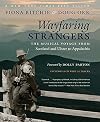
Wayfaring Strangers: The Musical Voyage from Scotland and Ulster to Appalachia (2014) 112 copies, 2 reviews
Tagged
Common Knowledge
- Gender
- female
- Nationality
- Scotland
- Places of residence
- North Carolina, USA
- Associated Place (for map)
- North Carolina, USA
Members
Reviews
This book took a lot of jigsaw pieces in my head and shook them all in to place. My years of listening to Ritchie’s Thistle & Shamrock show and bluegrass music and my knowledge of American and Scottish history all fell into place to give my brain a grand, coherent narrative of the subject.
I was acquainted with many of the musicians, singers, recordings, poets, and historical events mentioned, but there was plenty I learned:
◾Why American blacks became so dissociated with the instrument, show more the banjo, they brought from Africa.
◾How the final gatherings of family and friends before some crossed the sea became the inspiration for many songs.
◾Why the bagpipes did not cross the sea to America and how the dulcimer entered Appalachia music.
◾The efforts of American “songcatchers” to continue the work of Robert Burns and Walter Scott.
◾The differences in performance and recordings between bluegrass and “old time music”.
◾Why the 1927 recordings in Bristol, Tennessee/Virginia are considered the “Big Bang” of country music.
◾The relation of the Ulster Scots to the “regular Scots” and the immigrants who came to America. (My Scottish forbears were of the stream that went through Canada and not the Appalachians.)
◾The influence of Cherokee culture on Appalachian music and the close ties between the Cherokee and descendants of immigrant Scots. (Well, except Andrew Jackson.)
The book has a wealth of ancillary material: a discography of suggested recordings, biographies of the figures mentioned, a timeline putting the history and music into context, and notes for the accompany cd.
I have recordings by a lot of the people mentioned, but I picked up suggestions for future listening: the Carolina Chocolate Drops, Anais Miller, and Jefferson Hamer.
There are a few minor gripes. Some of the excerpted interviews with major figures involved in this story will have been heard by even casual listeners of Thistle & Shamrock. Bits of those interviews are also repeated in the main text. The authors overwork their river of culture metaphor. Pete Seeger, troubadour for dictators, gets let off too easy with the description “social activist”.
Still, I think anybody but a very knowledgeable scholar of the subject will learn something. And the accompanying cd is worthwhile too. I have a lot of bluegrass and Celtic music, but I was completely unfamiliar with the sean-nos style of accompanied singing developed in Ulster that’s featured on one-track. show less
I was acquainted with many of the musicians, singers, recordings, poets, and historical events mentioned, but there was plenty I learned:
◾Why American blacks became so dissociated with the instrument, show more the banjo, they brought from Africa.
◾How the final gatherings of family and friends before some crossed the sea became the inspiration for many songs.
◾Why the bagpipes did not cross the sea to America and how the dulcimer entered Appalachia music.
◾The efforts of American “songcatchers” to continue the work of Robert Burns and Walter Scott.
◾The differences in performance and recordings between bluegrass and “old time music”.
◾Why the 1927 recordings in Bristol, Tennessee/Virginia are considered the “Big Bang” of country music.
◾The relation of the Ulster Scots to the “regular Scots” and the immigrants who came to America. (My Scottish forbears were of the stream that went through Canada and not the Appalachians.)
◾The influence of Cherokee culture on Appalachian music and the close ties between the Cherokee and descendants of immigrant Scots. (Well, except Andrew Jackson.)
The book has a wealth of ancillary material: a discography of suggested recordings, biographies of the figures mentioned, a timeline putting the history and music into context, and notes for the accompany cd.
I have recordings by a lot of the people mentioned, but I picked up suggestions for future listening: the Carolina Chocolate Drops, Anais Miller, and Jefferson Hamer.
There are a few minor gripes. Some of the excerpted interviews with major figures involved in this story will have been heard by even casual listeners of Thistle & Shamrock. Bits of those interviews are also repeated in the main text. The authors overwork their river of culture metaphor. Pete Seeger, troubadour for dictators, gets let off too easy with the description “social activist”.
Still, I think anybody but a very knowledgeable scholar of the subject will learn something. And the accompanying cd is worthwhile too. I have a lot of bluegrass and Celtic music, but I was completely unfamiliar with the sean-nos style of accompanied singing developed in Ulster that’s featured on one-track. show less
Sized to be a coffee-table volume, this book is a collaboration among many more than its two credited creators, and those many include musicians and scholars on both sides of the Atlantic. The book rewards both start to finish reading and random reading of the interviews, chapter sections and apparatus at the book. Now that I've read it, and listened to the accompanying music CD, I want to own a copy.

Awards


You May Also Like


Statistics
- Works
- 8
- Members
- 193
- Popularity
- #113,336
- Rating
- 4.1
- Reviews
- 3
- ISBNs
- 22