
Ciaran Carson (1948–2019)
Author of The Tain (Penguin Classics)
About the Author
Ciaran Carson was born in 1948 in Belfast. He has been awarded the Irish Times Literature Prize, the T.S. Eliot Prize and the Yorkshire Post Prize
Image credit: Wake Forest University Press
Works by Ciaran Carson
Associated Works
Tagged
Common Knowledge
- Legal name
- Carson, Ciaran Gerard
- Birthdate
- 1948-10-09
- Date of death
- 2019-10-06
- Gender
- male
- Education
- St Marys CBGS Belfast
Queen's University Belfast - Occupations
- writer
poet
translator - Awards and honors
- Royal Society of Literature (Fellow)
- Nationality
- Ireland
- Birthplace
- Belfast, Northern Ireland, UK
- Places of residence
- Belfast, Northern Ireland, UK
- Place of death
- Belfast, Northern Ireland, UK
- Map Location
- Irlande
- Associated Place (for map)
- Belfast, Northern Ireland, UK
Members
Reviews

This should replace Beowulf on all syllabi immediately. It's funny and violent and completely bonkers. And it features a queen that likes to sweeten deals by offering "the friendship of her own thighs." What's not to love? Okay, the lists of warriors Cú Chulainn kills do get old after the first 100 or so deaths, but they can be skimmed over without losing any of the mad wonderfulness of this epic.
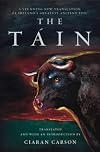
This ancient poem from Ireland is so entertaining even after these hundreds of years. If I had to compare it to anything, I would say its like Homer's Iliad but instead of a whining Achilles, you have this joke cracking, heart throbbing, berserker named Cu Chulainn who is so over the top I was laughing out loud throughout the whole book. It's basically a cattle raid that goes horribly wrong. Throw in some pagan gods, some sex, amazing feats of strength and acrobatics, faeries, enchanted show more weapons, druid spells and you got an amazing story. There are also lots of references to other myths from the Ulster Cycle with plenty of place name myths stories and "just-so" tales. It's a rare, great Pre-Christian story from the Celtic tradition of Ireland before the monks took over. Very fun. I look forward to investigating other remnants from the Ulster Cycle.
Furthermore, if you are a fan of the modern rock band "The Decemberists", check out their E.P. titled "The Tain" and then give this book a try. You won't be disappointed. show less
Furthermore, if you are a fan of the modern rock band "The Decemberists", check out their E.P. titled "The Tain" and then give this book a try. You won't be disappointed. show less
"Keeping people out and keeping people in, we are prisoners or officers in Bentham's Panopticon, except sorting out who's who is a problem for the naïve user, and some compilers are inclined to choke on the mixed mode - panopticons within panopticons -" "Intelligence"
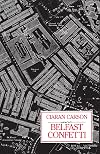
Boundaries, identity and surveillance are prominent themes in this poetry collection. Growing up in Belfast during "The Troubles," Carson creates images of the daily violence and disruption, of the stories and the memories show more fueled by the long history of partisanship. His title Belfast Confetti refers to the homemade bombs and the nails, pieces of bricks and other detritus that armed them.
His pieces are varied: haiku that he translates from the Japanese masters, like Buson and Basho, prose essays, and poems with very long lines. I have learned that those lines are about 17 syllables long (the length of a haiku). Carson wanted each line to feel like a haiku. This helped my reading and understanding a lot. It also helped me understand why he included the other translations of haiku.
I know that I missed a lot of the nuances in his poetry. It alludes to a lot of events that people from Belfast would know. His prose pieces, especially, taught me a lot. These pieces often dig deeper into Belfast's history. I think I will be returning to those to reread and ponder their beauty and significance.
I will end with a interesting tidbit. The poem "Hamlet" explains that the Irish fál can mean "hedge; Hence, any kind of enclosed thing" and later "fál, is also frontier, boundary." It is from this word that the Falls Road gets its name; it always meant a separation or a division.
These poems are powerful, but they are not an easy read linguistically or emotionally. show less
Boundaries, identity and surveillance are prominent themes in this poetry collection. Growing up in Belfast during "The Troubles," Carson creates images of the daily violence and disruption, of the stories and the memories show more fueled by the long history of partisanship. His title Belfast Confetti refers to the homemade bombs and the nails, pieces of bricks and other detritus that armed them.
His pieces are varied: haiku that he translates from the Japanese masters, like Buson and Basho, prose essays, and poems with very long lines. I have learned that those lines are about 17 syllables long (the length of a haiku). Carson wanted each line to feel like a haiku. This helped my reading and understanding a lot. It also helped me understand why he included the other translations of haiku.
I know that I missed a lot of the nuances in his poetry. It alludes to a lot of events that people from Belfast would know. His prose pieces, especially, taught me a lot. These pieces often dig deeper into Belfast's history. I think I will be returning to those to reread and ponder their beauty and significance.
I will end with a interesting tidbit. The poem "Hamlet" explains that the Irish fál can mean "hedge; Hence, any kind of enclosed thing" and later "fál, is also frontier, boundary." It is from this word that the Falls Road gets its name; it always meant a separation or a division.
These poems are powerful, but they are not an easy read linguistically or emotionally. show less
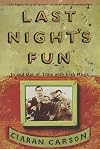
Constructed like a session, where each new chapter picks up the thread of the previous "song," this was a delightful read. Just fun, as the title suggests. And, as someone who attempts to play mandolin, it was exciting to see the background offered about performances and influence.
Lists
Awards


You May Also Like


Associated Authors
Statistics
- Works
- 40
- Also by
- 10
- Members
- 1,459
- Popularity
- #17,608
- Rating
- 4.1
- Reviews
- 18
- ISBNs
- 116
- Languages
- 5
- Favorited
- 5