
Félix Vallotton (1865–1925)
Author of Félix Vallotton
About the Author
Image credit: Félix Vallotton, 1885
Works by Félix Vallotton
Félix Vallotton 1 copy
L'Assiette au beurre 1 copy
Journal 1914-1921 1 copy
Associated Works
French Decadent Tales (Oxford World's Classics) (2013) — Cover artist, some editions — 131 copies, 4 reviews
Tagged
Common Knowledge
- Canonical name
- Vallotton, Félix
- Legal name
- Vallotton, Félix
- Other names
- Vallotton, Felix
- Birthdate
- 1865-12-28
- Date of death
- 1925-12-29
- Gender
- male
- Nationality
- Switzerland (birth)
France - Burial location
- Paris, France
- Associated Place (for map)
- France
Members
Reviews
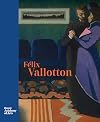
This is the well illustrated catalogue of the work of the Swiss-French artist Felix Vallotton with informative essays supporting an exhibition at the Royal Academy of Arts (London) in 2019. It subsequently transferred to the Metropolitan Museum of Art in New York.
Vallotton is more than a foot note in the history of French art if less than a great master. He is most famous for the dramatic innovation of radical contrast in wood-engraving accompanied by a wry satirical view (from an anarchist show more perspective) of French bourgeois culture under the Third Republic.
This work was concentrated in the 1890s as commissions for French journals with a small reach into the Anglo-Saxon world where he was respected. Although he returned to illustration in response to war in 1915, he would probably have liked to have been thought of as a painter.
As a painter, he might best be characterised as versatile with experiments in many styles. Perhaps his involvement with the Nabis, while real enough, has been slightly exaggerated in order to build him up as relevant to the standard narrative history of fin de siecle art.
The fact that he was a very good artist at almost everything he attempted (ironically, some, though only some, of his Nabis-related work is his least interesting), what makes him most interesting is the way he combined his wry psychological insights with his technique.
There is an overlap of content between the detached satire of his observations of French sexuality in series such as the prints called 'Intimacies' of 1897/1898 and a series of similarly focused paintings in 1898/1899. However, there is a stylistic aspect that could be overlooked by the casual observer.
Just as he uses dramatic blocks of black and white in his prints to draw the viewer's attention to specific 'intimacies' in ways that are truly beyond words (intimation being one of the purposes of art) so he translates this block approach across to colour in the remarkable 1909 paintings.
His 'The Provincial' is his woodcuts brought to life as painting. His masterful 'The Theatre Box' spares everything down to psychological suggestion between two blocks of yellow and black. This is not quite abstraction and not quite realism but something else - psychological realism perhaps.
The problem with Vallotton is not that he is not very good but that, other than this experimental approach to using dark and light to evoke moments (Augenblicken perhaps), the bulk of his work is so various in intent and style that we are left sometimes only with the idea of his potential.
My personal favourite, the portrait of the engraver Felix Jasinski, has the clarity of Ingres and yet introduces a massive block of the black to make its point so the 'idea' was clearly settled early in Vallotton's mind. Ingres was a hero of his who could bring him to tears. He painted this at only 22.
Another favourite, a painting of Editor Felix Feneon at work, intent and earnest, of 1896 (in the midst of Vallotton's woodcut experimentation) has this same quality of capturing the psychological moment amidst blocks of black and in a dark, almost abstract, context. There are other such experiments.
Ingresian clarity, fashionable symbolism, sarcastic anarchism, Nabis experimentation, touching moments of domesticity, a colder quasi neo-classicism, landscapes that edge towards abstraction in the 1910s, something close to a dramatised neo-realism avant la lettre. He is his own man. show less
Vallotton is more than a foot note in the history of French art if less than a great master. He is most famous for the dramatic innovation of radical contrast in wood-engraving accompanied by a wry satirical view (from an anarchist show more perspective) of French bourgeois culture under the Third Republic.
This work was concentrated in the 1890s as commissions for French journals with a small reach into the Anglo-Saxon world where he was respected. Although he returned to illustration in response to war in 1915, he would probably have liked to have been thought of as a painter.
As a painter, he might best be characterised as versatile with experiments in many styles. Perhaps his involvement with the Nabis, while real enough, has been slightly exaggerated in order to build him up as relevant to the standard narrative history of fin de siecle art.
The fact that he was a very good artist at almost everything he attempted (ironically, some, though only some, of his Nabis-related work is his least interesting), what makes him most interesting is the way he combined his wry psychological insights with his technique.
There is an overlap of content between the detached satire of his observations of French sexuality in series such as the prints called 'Intimacies' of 1897/1898 and a series of similarly focused paintings in 1898/1899. However, there is a stylistic aspect that could be overlooked by the casual observer.
Just as he uses dramatic blocks of black and white in his prints to draw the viewer's attention to specific 'intimacies' in ways that are truly beyond words (intimation being one of the purposes of art) so he translates this block approach across to colour in the remarkable 1909 paintings.
His 'The Provincial' is his woodcuts brought to life as painting. His masterful 'The Theatre Box' spares everything down to psychological suggestion between two blocks of yellow and black. This is not quite abstraction and not quite realism but something else - psychological realism perhaps.
The problem with Vallotton is not that he is not very good but that, other than this experimental approach to using dark and light to evoke moments (Augenblicken perhaps), the bulk of his work is so various in intent and style that we are left sometimes only with the idea of his potential.
My personal favourite, the portrait of the engraver Felix Jasinski, has the clarity of Ingres and yet introduces a massive block of the black to make its point so the 'idea' was clearly settled early in Vallotton's mind. Ingres was a hero of his who could bring him to tears. He painted this at only 22.
Another favourite, a painting of Editor Felix Feneon at work, intent and earnest, of 1896 (in the midst of Vallotton's woodcut experimentation) has this same quality of capturing the psychological moment amidst blocks of black and in a dark, almost abstract, context. There are other such experiments.
Ingresian clarity, fashionable symbolism, sarcastic anarchism, Nabis experimentation, touching moments of domesticity, a colder quasi neo-classicism, landscapes that edge towards abstraction in the 1910s, something close to a dramatised neo-realism avant la lettre. He is his own man. show less
You May Also Like
Associated Authors
Statistics
- Works
- 30
- Also by
- 4
- Members
- 106
- Popularity
- #181,886
- Rating
- 3.8
- Reviews
- 1
- ISBNs
- 31
- Languages
- 6