
Lee Bermejo
Author of Joker
About the Author
Image credit: Doczilla STOMP!
Series
Works by Lee Bermejo
The Joker 80th Anniversary 100-Page Super Spectacular (2020) #1 (Batman (2016-)) (2020) — Illustrator — 15 copies
Suiciders #1 — Author — 2 copies
DC Sneak Peek: We Are...Robin #1 2 copies
Lex Luthor: Man of Steel #4 2 copies
Lex Luthor: Man of Steel #5 2 copies
Lex Luthor: Man of Steel #2 2 copies
Lex Luthor: Man of Steel #3 2 copies
We Are Robin (2015-) #2 1 copy
Han Solo #1 1 copy
We are...Robin 1 copy
Suiciders #2 1 copy
Suiciders #3 1 copy
We Are Robin (2015-) #8 1 copy
Associated Works
9-11: The World's Finest Comic Book Writers & Artists Tell Stories to Remember (2002) — Illustrator — 256 copies, 1 review
Secret Origins [2014] #6 — Cover artist — 2 copies
Tagged
Common Knowledge
- Canonical name
- Bermejo, Lee
- Birthdate
- 1950
- Gender
- male
- Nationality
- USA
- Associated Place (for map)
- USA
Members
Reviews
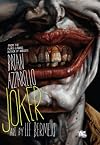
Damn you comic book industry, this graphic novel would have been an excellent one had it not been for the problematic use of it's female characters.
The art is beautiful. Solid lines, brilliant compositions, incredibly good coloring with a variety of tones to match each mood, immersive atmosphere, excellent pacing, skillful alternating between more and less detailed/realistic faces, aesthetically cohesive work of art.
The main characters are well constructed, three dimensional, believable and show more interesting and so are their conversations. It's true that the point of view is a much used one, especially in film and comics, where a rookie follows and obeys a much revered mysterious character who, for some reason, trusts him as his go-to guy. But the story is gory, creepy, interesting and full of excitement and by Cthulhu this is one of the best Jokers I have ever read or seen.
Spoiler Alert!
The main and biggest problem of this GN is Harley Quinn, or to be precise, her portrayal. We first see Harley, whose backstory in the DCU is that she was Joker's psychiatrist, in a strip club, dressed as a stripper, where *shocker* she strips....in order to distract some of Joker's unfaithful ex-partners in crime. The next time we see her she is in her underwear holding and comforting a crying Joker. She then poses while holding a gun in some later action sequence, dresses as a gorilla and then is attacked in her house by Batman while wearing a revealing outfit were underboob is shown.
It is highly important to note that she NEVER, not even ONCE, speaks in this comic. She doesn't even say "Ok" or "Ah" or even nod.
I repeat:
In "Joker" Harley Quinn, who is a former psychiatrist, doubles as a stripper and never says a word for the entire duration of this graphic novel.
This is highly problematic because while she remains mute, her body is used in more than 3 occasions to "grace" a page, so that the reader can enjoy her beautiful almost naked female body. A mute who never speaks, or has an opinion, but simply obeys, follows, loves and protects like both a mother and a lover the Joker. And this is not because this is her main character trait or her gimmick. In the other comics she talks, she has an opinion, she agrees, she argues, she laughs, she frowns, she cries, she shows emotions. Here she only exists to give emotional depth to Joker and provide mild sexual fan-service.
She could have easily been missing from this novel, or better yet take the narrator's place, or AT LEAST interact with the narrator, or well SOMEONE. All of Joker's minions and enemies and subordinates have at least a speech bubble, Harley has none because she is not written as a character, she is not made of flesh and bones. She is Joker's sweet comfort and permanent ally, his cry-pillow, one of his feel-good pills, I don't know, but whatever she is, she most definitely is not a person.
Let us not forget that there is only ONE other female character in the GN, the narrator's ex-wife, who is abducted by Two-Face. Yes, the only woman that talks in this comic is damseled and abducted. Could it be a coincidence?
It's a story about men, written by men and for men and apparently for these men women are either objects to be looked at, or objects to be rescued. Fuck you comics industry for continually excluding me and representing me as a thing. And double fuck you 'cause despite of this I still enjoyed this comic. Maybe this is why I'm so pissed. This could easily have been on my comic top 30 had it not been for the obvious sexism.
Bermejo had the following to say on his particular take on Harley:
"Visually, I threw her in a vinyl outfit and made her look as much like a junkie as possible. Harley Quinn is like a stripper to me. I don't want to know her name, I don't want to hear about her life, and I sure as hell don't want her to talk. Just dance, baby..."
Well it's good to know that his intention to portray her as an object is not our misinterpretation. He is sexist and is not afraid to show it. Awesome...
This quote is important because it's important to know and understand that it is not by chance that women in comics are portrayed the way they are. It is not a random occurrence that female characters are sexualized, it's because they are often thought of as objects. We don't see them as humans, we see them as beautiful things and to show a semi naked young and thin female body is a sure way to beautify a spread. And what is one to do with beautiful things? Look at them, own them, protect or discard them, pretty much like they way they were handled here.
The really sad part is that more often than not, this is the conscious choice of the creators and even if/when they try to justify it as an exception for that particular character, or a facilitation to the main plot, the fact remains that the portrayal of such characters in this and similar ways is treading on a thin line from plain old sexism to misogyny.
So please comics industry, what say you? Can we please see all women written as people and written with the respect each human being, even fictional ones, deserve? Pretty please? show less
The art is beautiful. Solid lines, brilliant compositions, incredibly good coloring with a variety of tones to match each mood, immersive atmosphere, excellent pacing, skillful alternating between more and less detailed/realistic faces, aesthetically cohesive work of art.
The main characters are well constructed, three dimensional, believable and show more interesting and so are their conversations. It's true that the point of view is a much used one, especially in film and comics, where a rookie follows and obeys a much revered mysterious character who, for some reason, trusts him as his go-to guy. But the story is gory, creepy, interesting and full of excitement and by Cthulhu this is one of the best Jokers I have ever read or seen.
Spoiler Alert!
The main and biggest problem of this GN is Harley Quinn, or to be precise, her portrayal. We first see Harley, whose backstory in the DCU is that she was Joker's psychiatrist, in a strip club, dressed as a stripper, where *shocker* she strips....in order to distract some of Joker's unfaithful ex-partners in crime. The next time we see her she is in her underwear holding and comforting a crying Joker. She then poses while holding a gun in some later action sequence, dresses as a gorilla and then is attacked in her house by Batman while wearing a revealing outfit were underboob is shown.
It is highly important to note that she NEVER, not even ONCE, speaks in this comic. She doesn't even say "Ok" or "Ah" or even nod.
I repeat:
In "Joker" Harley Quinn, who is a former psychiatrist, doubles as a stripper and never says a word for the entire duration of this graphic novel.
This is highly problematic because while she remains mute, her body is used in more than 3 occasions to "grace" a page, so that the reader can enjoy her beautiful almost naked female body. A mute who never speaks, or has an opinion, but simply obeys, follows, loves and protects like both a mother and a lover the Joker. And this is not because this is her main character trait or her gimmick. In the other comics she talks, she has an opinion, she agrees, she argues, she laughs, she frowns, she cries, she shows emotions. Here she only exists to give emotional depth to Joker and provide mild sexual fan-service.
She could have easily been missing from this novel, or better yet take the narrator's place, or AT LEAST interact with the narrator, or well SOMEONE. All of Joker's minions and enemies and subordinates have at least a speech bubble, Harley has none because she is not written as a character, she is not made of flesh and bones. She is Joker's sweet comfort and permanent ally, his cry-pillow, one of his feel-good pills, I don't know, but whatever she is, she most definitely is not a person.
Let us not forget that there is only ONE other female character in the GN, the narrator's ex-wife, who is abducted by Two-Face. Yes, the only woman that talks in this comic is damseled and abducted. Could it be a coincidence?
It's a story about men, written by men and for men and apparently for these men women are either objects to be looked at, or objects to be rescued. Fuck you comics industry for continually excluding me and representing me as a thing. And double fuck you 'cause despite of this I still enjoyed this comic. Maybe this is why I'm so pissed. This could easily have been on my comic top 30 had it not been for the obvious sexism.
Bermejo had the following to say on his particular take on Harley:
"Visually, I threw her in a vinyl outfit and made her look as much like a junkie as possible. Harley Quinn is like a stripper to me. I don't want to know her name, I don't want to hear about her life, and I sure as hell don't want her to talk. Just dance, baby..."
Well it's good to know that his intention to portray her as an object is not our misinterpretation. He is sexist and is not afraid to show it. Awesome...
This quote is important because it's important to know and understand that it is not by chance that women in comics are portrayed the way they are. It is not a random occurrence that female characters are sexualized, it's because they are often thought of as objects. We don't see them as humans, we see them as beautiful things and to show a semi naked young and thin female body is a sure way to beautify a spread. And what is one to do with beautiful things? Look at them, own them, protect or discard them, pretty much like they way they were handled here.
The really sad part is that more often than not, this is the conscious choice of the creators and even if/when they try to justify it as an exception for that particular character, or a facilitation to the main plot, the fact remains that the portrayal of such characters in this and similar ways is treading on a thin line from plain old sexism to misogyny.
So please comics industry, what say you? Can we please see all women written as people and written with the respect each human being, even fictional ones, deserve? Pretty please? show less

It's a well-established fact that Lex Luthor is my favorite comic book villain of all time. Superman's my favorite hero, and Luthor is the perfect opposite for him:a self-made man, through and through. Both see themselves as wanting the best for everyone around them, but the difference is that for Luthor, what's best for everyone else is always also best for him. I also love his casual arrogance, his manipulation of those around him... which is deserved, because he actually is the smartest show more man in the room. My preferred Luthor is the accomplished, brilliant businessman-- that's the one I grew up on in the Superman cartoon-- but I also admit a fondness for the Gene Hackman/Kevin Spacey version, who I think still has the same fundamental core. The highest compliment I can give to a villain is to compare them to Lex Luthor; I like to try to do this in graduate seminars, and have thus far succeeded with the man in the yellow suit in Tuck Everlasting and Madame Beck in Villette. But the threat to Luthor is simple and strong: Superman.
The threat that Superman poses to Luthor is something that Lex Luthor: Man of Steel aims to explore. It's a Lex Luthor comic book, told almost entirely from his perspective. What are his adventures? What does he think? Why is he such an utter bastard?
As Brian Azzarello paints it-- and this I agree with, it's how I see Luthor as well-- Lex Luthor thinks that Superman is a threat to humanity. Not because Superman is openly antagonistic or anything like that, but because the idea of Superman threatens humanity. As an outsider, Superman cuts off humanity's potential. Why should humanity aspire to do greater, if Superman is out there, doing it for them? Lex rejects the concepts of fate and destiny: "All of us-- everyone-- deserves a chance at greatness. All that takes is the belief that it exists. But his existence threatens not just that belief... but our existence. I believe there's something inherently dangerous when something real becomes something mythic. I believe when that happens, we lose the part of ourselves that yearns to be great. Because when faced with a myth? We can't win." Superman threatens that achievement time and again... and the possibility of humanity to achieve is something Luthor spends all his time in Man of Steel trying to prove.
The event that's going on in the background of this book is Lexcorp's construction of the Science Spire, a gigantic research facility in the heart of Metropolis. The book doesn't have one strong overarching storyline, but a couple smaller ones, interspersed with moments of Lex Luthor being Lex Luthor. It's one of these moments that's my favorite: Luthor learns that his office janitor's son is interested in science, but that he cuts class frequently, so he's not making the grades he should be. Luthor gives the janitor an invitation for the opening of the Science Spire, one he can only pass on if the son gets an A. But after the janitor leaves, Luthor instructs his personal assistant, Mona, to ensure that the son gets one of twelve spots in the incoming class at Von Rauch Academy, a very exclusive private school. Mona objects that the school's picked its incoming class already; Luthor tells her to make it work. That's Lex Luthor. He's a man who believes every human being has great potential within... and will do totally unethical things to realize that potential.
My other favorite small moment is when Luthor brutally dismisses Mona and her advances:
MONA: Lex, can I talk freely?
LUTHOR: I sign your checks, Mona.
MONA: Do you want to know what I think about this?
LUTHOR: No. Here's what you think: "My boss is getting dangerously close to making a mistake that could ruin him. He's been touched by an ideal, when all I want is for him to touch me. Despite the way I dress, he won't notice me. He only has eyes for his ideal. How can I change that? How can I make myself... ideal?"
MONA: You're a bastard.
LUTHOR: No, Mona... I'm an idealist.
It's one of these small moments that's also my least favorite. The Science Spire is going overbudget, but Lexcorp can't renegotiate its contracts with its construction workers because they have a strong union, so Luthor has Mr. Orr intimidate the union boss and threaten to throw him over the side of the building. Though this is the sort of problem-solving the ever-crude Mr. Orr might partake in, it seems a little bit beneath Luthor, using a bludgeon when a scalpel will suffice. Threatening murder just to get a building finished on time and on budget seems to be overdoing it-- especially when he's thinking about incorporating the Science Spire as a nonprofit and doesn't care about the money he makes! So why all this then?
The best extended plotline is Luthor's trip to Gotham, to meet with one of his business partners... a certain Bruce Wayne. It's a well-done chapter, cutting between Luthor's conversation with Wayne and a Batman/Superman fight precipitated by the visit: Luthor gives Wayne a piece of kryptonite, and Superman's not too happy about that. Does Luthor know that Wayne is Batman? It's never directly said... but it seems strongly implied. He knows that Wayne has something going on, though, and is willing to take a chance to get what he wants. It's a fantastic conversation. To an utterly innocent outside observer, Luthor would appear to be a forward-thinking idealist, Wayne a lackadaisical playboy. Yet, underneath, neither is the man they pretend to be.
The dedication of the Science Spire corresponds with Luthor's revelation of his own, homegrown hero: Hope. Hope is a woman created in one of Lexcorp's labs to be the ultimate superhero. You see, she's human, and the pinnacle of human achievement. Humans created her with human technology. There's a brief time where she supplants Superman in the hearts and minds of Metropolis. And as for Luthor, how does he react? Hope is the ultimate expression of his every desire. How could he react but to fall in love with her? Dang, Lex Luthor, but you're creepy. But it's believable, because Luthor's really in love with one person beneath it all: himself. He is the best humankind has to offer, and he created Hope. The sheer arrogance of that name-- who other than Lex Luthor could believe that he'd personally created hope itself?
But Hope is part of a more elaborate plot, and this is where the book loses me again. She's just not an artificial superhero: she does artificial good. The initial disaster she helps fight is manufactured by Luthor via Mr. Orr (who gets the Toyman to do it for him, in a rare good use of the character). And the book climaxes with Hope apprehending the Toyman for his crime... and dropping him, her body operating at Luthor's will. Superman saves the Toyman, of course, and a battle between the two "heroes" ensues. And during that fight, Luthor causes her to detonate, collapsing the Science Spire himself. I love the idea of a man willing to destroy is own greatest achievements for the greater good. But the justification is weak: "What the world watched you do tonight... if it only changes one mind about what you are..." That's it? Turning one mind against Superman is worth that? I don't buy it; Luthor is too calculating for that. And the fight just doesn't work either; why would saving the Toyman escalate into something like that? It's a disappointing ending, even if it does yield another fantastic Lex Luthor line: "I know I can't beat you... alone. But then, I'm not alone. There are six and a half billion of me... and only one of you."
The art's usually great. Lee Bermejo's work is rough and harsh, perfect for the world of Lex Luthor. Even if he does look a little too craggy from time to time. His Luthor is perfectly expressive, able to go from warm and friendly to cold and calculating and still be the same person. He does a good job at all the other characters, too. There is one very weird sequence with a redhead being reflected in a glass wall that I found confusing, but I eventually puzzled my way through what was happening there. The occasionally switching style is nice, too: the issue that intercuts Lex talking to Bruce with Batman fighting Superman uses a different style for each strand-- the Batman/Superman one looks more painted-- which is very effective. The colors by Dave Stewart really help, too: a lot of dark grays and greens, muddy colors for Lex's world. Superman is brighter than everything else... but only relatively. It's still a dim world.
Superman is an ominous presence in Lex Luthor: Man of Steel, and that works immensely well. He hovers outside Luthor's office, fights Batman, reports on the Science Spire, and battles Hope for the Toyman. His glowing red eyes are a recurring motif. But he only has one line of dialogue: "You're wrong... I can see your soul." It's a line that chills Luthor to the bone, because he knows it's true. Lex Luthor might be the better human being... but Superman is the better person and always will be. And they both know it, even if Luthor will never admit. Luthor will go on fighting that good fight, trying to serve humanity the best he can: the most unethical way possible. And that is why I love him. show less
The threat that Superman poses to Luthor is something that Lex Luthor: Man of Steel aims to explore. It's a Lex Luthor comic book, told almost entirely from his perspective. What are his adventures? What does he think? Why is he such an utter bastard?
As Brian Azzarello paints it-- and this I agree with, it's how I see Luthor as well-- Lex Luthor thinks that Superman is a threat to humanity. Not because Superman is openly antagonistic or anything like that, but because the idea of Superman threatens humanity. As an outsider, Superman cuts off humanity's potential. Why should humanity aspire to do greater, if Superman is out there, doing it for them? Lex rejects the concepts of fate and destiny: "All of us-- everyone-- deserves a chance at greatness. All that takes is the belief that it exists. But his existence threatens not just that belief... but our existence. I believe there's something inherently dangerous when something real becomes something mythic. I believe when that happens, we lose the part of ourselves that yearns to be great. Because when faced with a myth? We can't win." Superman threatens that achievement time and again... and the possibility of humanity to achieve is something Luthor spends all his time in Man of Steel trying to prove.
The event that's going on in the background of this book is Lexcorp's construction of the Science Spire, a gigantic research facility in the heart of Metropolis. The book doesn't have one strong overarching storyline, but a couple smaller ones, interspersed with moments of Lex Luthor being Lex Luthor. It's one of these moments that's my favorite: Luthor learns that his office janitor's son is interested in science, but that he cuts class frequently, so he's not making the grades he should be. Luthor gives the janitor an invitation for the opening of the Science Spire, one he can only pass on if the son gets an A. But after the janitor leaves, Luthor instructs his personal assistant, Mona, to ensure that the son gets one of twelve spots in the incoming class at Von Rauch Academy, a very exclusive private school. Mona objects that the school's picked its incoming class already; Luthor tells her to make it work. That's Lex Luthor. He's a man who believes every human being has great potential within... and will do totally unethical things to realize that potential.
My other favorite small moment is when Luthor brutally dismisses Mona and her advances:
MONA: Lex, can I talk freely?
LUTHOR: I sign your checks, Mona.
MONA: Do you want to know what I think about this?
LUTHOR: No. Here's what you think: "My boss is getting dangerously close to making a mistake that could ruin him. He's been touched by an ideal, when all I want is for him to touch me. Despite the way I dress, he won't notice me. He only has eyes for his ideal. How can I change that? How can I make myself... ideal?"
MONA: You're a bastard.
LUTHOR: No, Mona... I'm an idealist.
It's one of these small moments that's also my least favorite. The Science Spire is going overbudget, but Lexcorp can't renegotiate its contracts with its construction workers because they have a strong union, so Luthor has Mr. Orr intimidate the union boss and threaten to throw him over the side of the building. Though this is the sort of problem-solving the ever-crude Mr. Orr might partake in, it seems a little bit beneath Luthor, using a bludgeon when a scalpel will suffice. Threatening murder just to get a building finished on time and on budget seems to be overdoing it-- especially when he's thinking about incorporating the Science Spire as a nonprofit and doesn't care about the money he makes! So why all this then?
The best extended plotline is Luthor's trip to Gotham, to meet with one of his business partners... a certain Bruce Wayne. It's a well-done chapter, cutting between Luthor's conversation with Wayne and a Batman/Superman fight precipitated by the visit: Luthor gives Wayne a piece of kryptonite, and Superman's not too happy about that. Does Luthor know that Wayne is Batman? It's never directly said... but it seems strongly implied. He knows that Wayne has something going on, though, and is willing to take a chance to get what he wants. It's a fantastic conversation. To an utterly innocent outside observer, Luthor would appear to be a forward-thinking idealist, Wayne a lackadaisical playboy. Yet, underneath, neither is the man they pretend to be.
The dedication of the Science Spire corresponds with Luthor's revelation of his own, homegrown hero: Hope. Hope is a woman created in one of Lexcorp's labs to be the ultimate superhero. You see, she's human, and the pinnacle of human achievement. Humans created her with human technology. There's a brief time where she supplants Superman in the hearts and minds of Metropolis. And as for Luthor, how does he react? Hope is the ultimate expression of his every desire. How could he react but to fall in love with her? Dang, Lex Luthor, but you're creepy. But it's believable, because Luthor's really in love with one person beneath it all: himself. He is the best humankind has to offer, and he created Hope. The sheer arrogance of that name-- who other than Lex Luthor could believe that he'd personally created hope itself?
But Hope is part of a more elaborate plot, and this is where the book loses me again. She's just not an artificial superhero: she does artificial good. The initial disaster she helps fight is manufactured by Luthor via Mr. Orr (who gets the Toyman to do it for him, in a rare good use of the character). And the book climaxes with Hope apprehending the Toyman for his crime... and dropping him, her body operating at Luthor's will. Superman saves the Toyman, of course, and a battle between the two "heroes" ensues. And during that fight, Luthor causes her to detonate, collapsing the Science Spire himself. I love the idea of a man willing to destroy is own greatest achievements for the greater good. But the justification is weak: "What the world watched you do tonight... if it only changes one mind about what you are..." That's it? Turning one mind against Superman is worth that? I don't buy it; Luthor is too calculating for that. And the fight just doesn't work either; why would saving the Toyman escalate into something like that? It's a disappointing ending, even if it does yield another fantastic Lex Luthor line: "I know I can't beat you... alone. But then, I'm not alone. There are six and a half billion of me... and only one of you."
The art's usually great. Lee Bermejo's work is rough and harsh, perfect for the world of Lex Luthor. Even if he does look a little too craggy from time to time. His Luthor is perfectly expressive, able to go from warm and friendly to cold and calculating and still be the same person. He does a good job at all the other characters, too. There is one very weird sequence with a redhead being reflected in a glass wall that I found confusing, but I eventually puzzled my way through what was happening there. The occasionally switching style is nice, too: the issue that intercuts Lex talking to Bruce with Batman fighting Superman uses a different style for each strand-- the Batman/Superman one looks more painted-- which is very effective. The colors by Dave Stewart really help, too: a lot of dark grays and greens, muddy colors for Lex's world. Superman is brighter than everything else... but only relatively. It's still a dim world.
Superman is an ominous presence in Lex Luthor: Man of Steel, and that works immensely well. He hovers outside Luthor's office, fights Batman, reports on the Science Spire, and battles Hope for the Toyman. His glowing red eyes are a recurring motif. But he only has one line of dialogue: "You're wrong... I can see your soul." It's a line that chills Luthor to the bone, because he knows it's true. Lex Luthor might be the better human being... but Superman is the better person and always will be. And they both know it, even if Luthor will never admit. Luthor will go on fighting that good fight, trying to serve humanity the best he can: the most unethical way possible. And that is why I love him. show less
Batman:Noel is a one-shot graphic novel making its debut for this Holiday season. Essentially, the novel is a re-imagining of Dicken's A Christmas Carol, casting Batman/Bruce Wayne as Scrooge, justifying his willingness to use a man named Bob, a man who is stuck in a dead-end job and chooses to carry packages for the Joker in order to handle the expenses of the medical bills for his son, Tim (see the parallels?). Batman weaves a plan to exploit Bob and use him as bait to bring the Joker out show more of hiding, despite the fact that this will endanger Tim, as well as Bob. Batman sees this as a valid tactic, because the goal of taking villainy off the streets of his city justifies any method, including risking those he sees as guilty, and their families.
And thus, from the beginning, Bermejo presents the reader with a bitter Batman, a hero lost and consumed in his passion to defeat evil at any cost, including potential harm to innocents. We see a Batman who has permitted his own tragic history to place his soul at risk. We see Scrooge in the Dark Knight, placing his plan in motion on Christmas Eve, because its just another day, a day like any other.
Of course, staying true to the classic story line, Batman is thus visited by three people who attempt to show him where he has gone off track, and who attempt to win him back over to being the hero he once was at this most sacred time of year, the Christmas Holiday. Catwoman appears as the Ghost of Christmas Past, leading Batman to re-live the passion, optimism, and principles that he once held. Superman appears as the Ghost of Christmas Present, gently breaking the Batman's self-perception of being the respected bringer of justice who is beyond question by permitting him to overhear the true concerns about how he is about to go over the edge that are voiced by Commissioner Gordon and members of his police force. Lastly, the Joker finally appears, drawn in beautifully terrifying and hideous form, as the Ghost of Christmas Future, attacking Batman and leading him to imagine, in an unconscious state, the future as it might play out should he continue down the path that he is traveling. This sequence takes place in a hellish dream state that is in marked contrast to the cool, dark, and foreboding art that makes up the rest of the novel.
Bermejo hints at a love for Dicken's work in his dedications, and this feels like a expertly-crafted homage to the author he seems to identify as such a huge influence on him. He captures the essence of Dicken's story here, making it all the more poignant by presenting Scrooge's tragically flawed nature in one we have come to know as a hero. He encapsulates his story of redemption in a statement from the narrator in the beginning of the novel, a statement that is the thesis of Bermejo's work here:
This is particularly fascinating as we see Batman drifting in danger of becoming an anti-hero. Bermejo is presenting us with the hero who has always seen every human being, even the worst of villains, as being candidates for redemption , now desperately needing that redemption himself. Watching the Dark Night Detective move through the journey to that redemption is powerful, and complete with a theological statement of re-birth in a striking half-page panel as Batman rises from the grave in which the Joker has left him, returning to a new life and purpose from the death that his bitterness has brought about, resurrected, as it were, to a clearer...and more heroic...purpose.
The art throughout the novel is pristine and brilliant, with floating fonts superimposed over the panels as the unseen narrator moves us through the story. Bermejo's dialogue shines as much as his overall storyline, making a graphic novel that is difficult to put down.
For any superhero fan, and certainly for any Batman fan, Batman:Noel is an exploration of redemption in the truest Christmas fashion. In fact, if you're new to graphic novels altogether, this would be a great place to start. show less
And thus, from the beginning, Bermejo presents the reader with a bitter Batman, a hero lost and consumed in his passion to defeat evil at any cost, including potential harm to innocents. We see a Batman who has permitted his own tragic history to place his soul at risk. We see Scrooge in the Dark Knight, placing his plan in motion on Christmas Eve, because its just another day, a day like any other.
Of course, staying true to the classic story line, Batman is thus visited by three people who attempt to show him where he has gone off track, and who attempt to win him back over to being the hero he once was at this most sacred time of year, the Christmas Holiday. Catwoman appears as the Ghost of Christmas Past, leading Batman to re-live the passion, optimism, and principles that he once held. Superman appears as the Ghost of Christmas Present, gently breaking the Batman's self-perception of being the respected bringer of justice who is beyond question by permitting him to overhear the true concerns about how he is about to go over the edge that are voiced by Commissioner Gordon and members of his police force. Lastly, the Joker finally appears, drawn in beautifully terrifying and hideous form, as the Ghost of Christmas Future, attacking Batman and leading him to imagine, in an unconscious state, the future as it might play out should he continue down the path that he is traveling. This sequence takes place in a hellish dream state that is in marked contrast to the cool, dark, and foreboding art that makes up the rest of the novel.
Bermejo hints at a love for Dicken's work in his dedications, and this feels like a expertly-crafted homage to the author he seems to identify as such a huge influence on him. He captures the essence of Dicken's story here, making it all the more poignant by presenting Scrooge's tragically flawed nature in one we have come to know as a hero. He encapsulates his story of redemption in a statement from the narrator in the beginning of the novel, a statement that is the thesis of Bermejo's work here:
"'Cuz for this story to make sense...for it to mean anything...you have to believe in something. Something very important. You have to believe that people can change."
This is particularly fascinating as we see Batman drifting in danger of becoming an anti-hero. Bermejo is presenting us with the hero who has always seen every human being, even the worst of villains, as being candidates for redemption , now desperately needing that redemption himself. Watching the Dark Night Detective move through the journey to that redemption is powerful, and complete with a theological statement of re-birth in a striking half-page panel as Batman rises from the grave in which the Joker has left him, returning to a new life and purpose from the death that his bitterness has brought about, resurrected, as it were, to a clearer...and more heroic...purpose.
The art throughout the novel is pristine and brilliant, with floating fonts superimposed over the panels as the unseen narrator moves us through the story. Bermejo's dialogue shines as much as his overall storyline, making a graphic novel that is difficult to put down.
For any superhero fan, and certainly for any Batman fan, Batman:Noel is an exploration of redemption in the truest Christmas fashion. In fact, if you're new to graphic novels altogether, this would be a great place to start. show less
I'd put off reading this a while, despite a lot of good critical reviews. I wish I hadn't, as I enjoyed this a lot but there's a silver lining in my delay.
Reading a Dickens' Christmas Carol pastiche via Batman in June with temps in the 90's didn't mute the effectiveness of the story and in some ways showed me how well done it was.
Yes, Batman as Scrooge is a staging that seemed strange at first blush but it grew in its work and still told a good tale with a few strains of credulity in there show more (moreso than the usual)--Other than authorial conceit and Clark's role as the Ghost of Christmas Present, why doesn't Superman return to help Batman when the Batmobile blows up seconds after his departure?
I'll be looking for more works by Lee Bermejo, and that's about the highest praise I give for contemporary creatives. show less
Reading a Dickens' Christmas Carol pastiche via Batman in June with temps in the 90's didn't mute the effectiveness of the story and in some ways showed me how well done it was.
Yes, Batman as Scrooge is a staging that seemed strange at first blush but it grew in its work and still told a good tale with a few strains of credulity in there show more (moreso than the usual)--Other than authorial conceit and Clark's role as the Ghost of Christmas Present, why doesn't Superman return to help Batman when the Batmobile blows up seconds after his departure?
I'll be looking for more works by Lee Bermejo, and that's about the highest praise I give for contemporary creatives. show less
Lists
Awards


You May Also Like


Associated Authors
Statistics
- Works
- 51
- Also by
- 17
- Members
- 2,320
- Popularity
- #11,062
- Rating
- 3.7
- Reviews
- 84
- ISBNs
- 118
- Languages
- 14
- Favorited
- 2