
Jean Sprackland
Author of Strands: A Year of Discoveries on the Beach
About the Author
Image credit: Caroline Forbes
Works by Jean Sprackland
Associated Works
Answering Back: Living Poets Reply to the Poetry of the Past (2007) — Contributor — 118 copies, 1 review
Tagged
Common Knowledge
- Birthdate
- 1962
- Gender
- female
- Education
- University of Kent
- Organizations
- The Poetry Archive (chair)
- Nationality
- UK
- Birthplace
- Burton upon Trent, Staffordshire, England, UK
- Places of residence
- London, England, UK
- Map Location
- England, UK
Members
Reviews
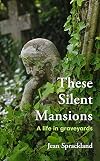
Near where I grew up, is a place called Brookwood Cemetery. For years this 500-acre site was the largest burial ground in the world and when it was first set aside it even had its own railway line and platform at Waterloo Station. I spent many an afternoon walking around there, and whilst some might find that morbid, there was a peacefulness to the place.
Sprackland is another person who fascinated by graveyards, so much so that she remembers the places that she has lived and significant show more family moments by the graveyards that were nearby. She has fond memories of these places and uses them to root her in the locality. Going back over people’s past make her want to travel back through her life, to the towns and cities that she has lived before. In each of the graveyards, she finds a glimpse of a life that has long ceased to exist but still has a story to tell of the people who once walked the streets that she now walks again.
Her journey will take her from Oxford to Devon, London to Norfolk. But also back into the past to learn about a drowned lad, the owner of a steam fairground, bodies used for medical research and a young lady who died after her clothes caught fire.
Wherever I have lived, I have found them – some like cities, others like gardens, or forests of stone – and they have become the counterparts of those lived places: the otherworlds which have helped make sense of this world.
Each of these stories is told with Sprackland’s keen eye for detail in the lives that were once lived and their final resting place as she traces the inscriptions in the stone. Death is still a taboo object, however, there is something peaceful about graveyards, not only are they are a haven of quiet in a relentless world, but they are one of those thin places where you feel closer to other worlds. It is beautifully written as I have come to expect with all of her books, she has immensely powerful prose. Even though it is about the dead, it not morbid at all, rather she is curious about the past and the relics that we leave to remember someone. show less
Sprackland is another person who fascinated by graveyards, so much so that she remembers the places that she has lived and significant show more family moments by the graveyards that were nearby. She has fond memories of these places and uses them to root her in the locality. Going back over people’s past make her want to travel back through her life, to the towns and cities that she has lived before. In each of the graveyards, she finds a glimpse of a life that has long ceased to exist but still has a story to tell of the people who once walked the streets that she now walks again.
Her journey will take her from Oxford to Devon, London to Norfolk. But also back into the past to learn about a drowned lad, the owner of a steam fairground, bodies used for medical research and a young lady who died after her clothes caught fire.
Wherever I have lived, I have found them – some like cities, others like gardens, or forests of stone – and they have become the counterparts of those lived places: the otherworlds which have helped make sense of this world.
Each of these stories is told with Sprackland’s keen eye for detail in the lives that were once lived and their final resting place as she traces the inscriptions in the stone. Death is still a taboo object, however, there is something peaceful about graveyards, not only are they are a haven of quiet in a relentless world, but they are one of those thin places where you feel closer to other worlds. It is beautifully written as I have come to expect with all of her books, she has immensely powerful prose. Even though it is about the dead, it not morbid at all, rather she is curious about the past and the relics that we leave to remember someone. show less
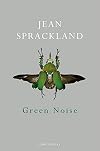
I have only read one of Jean Sprackland's books before, her wonderful Strands, about her year of discoveries on a beach in the north west of England. That was non-fiction, but I have never read her poetry until this one.
The first thing to note is that the cover is very striking. At first glance, it looks like an insect, but on careful examination, you can see tiny brass cogs and gears. From that beginning, I knew that this was not going to be a conventional poetry book. This collection show more resonates with what she calls ‘Green noise’, some of the poems are seeking our place in the natural world, others are glimpses of a time now gone.
Has found instead a television
Flat out in the mud, and rimmed with moss.
He stands and watches a while
As clouds and crows flicker over the screen
It is quite something this book. This is the first of her poetry collections that I have read and this reinforces my original thought that Sprackland has an impressive command of the language which I had learnt from Strands. It draws from the undercurrents that are deep in the landscape and reflects our modern life. It is prose that deserves to be read out loud too.
Three Favourite Poems:
Remembering
Elderflower
Human Things
The striking image on the front cover is from this artist: https://www.mecre.ch/gallery/. show less
The first thing to note is that the cover is very striking. At first glance, it looks like an insect, but on careful examination, you can see tiny brass cogs and gears. From that beginning, I knew that this was not going to be a conventional poetry book. This collection show more resonates with what she calls ‘Green noise’, some of the poems are seeking our place in the natural world, others are glimpses of a time now gone.
Has found instead a television
Flat out in the mud, and rimmed with moss.
He stands and watches a while
As clouds and crows flicker over the screen
It is quite something this book. This is the first of her poetry collections that I have read and this reinforces my original thought that Sprackland has an impressive command of the language which I had learnt from Strands. It draws from the undercurrents that are deep in the landscape and reflects our modern life. It is prose that deserves to be read out loud too.
Three Favourite Poems:
Remembering
Elderflower
Human Things
The striking image on the front cover is from this artist: https://www.mecre.ch/gallery/. show less
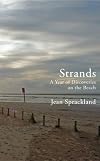
Interesting concept, not wholly realised. Strayed into territory it wasn't equipped to address. Better if it had been a shorter, more simply poetic account, rather than trying to also incorporate essay-ish bits about plastic use, etc.
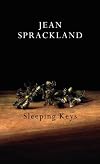
My favourite poems are those that help you see the everyday in a new light, and there are plenty which do that here. A particular theme in this collection is endings and beginnings, especially in moving home, and that rare beast, the poem about DIY. Well worth the 6 year wait since her last collection.
Awards


You May Also Like
Associated Authors
Statistics
- Works
- 11
- Also by
- 4
- Members
- 168
- Popularity
- #126,678
- Rating
- 3.7
- Reviews
- 6
- ISBNs
- 17