
Mark Gruenwald (1953–1996)
Author of Squadron Supreme
About the Author
Image credit: Mark Gruenwald at a comic convention in NYC in the early 1990s, photo by Alex Louzupone
Series
Works by Mark Gruenwald
The Official Handbook of the Marvel Universe, Volume 1: Abomination to Circus of Crime (1986) — Author — 24 copies
The Official Handbook of the Marvel Universe, Volume 5: Mister Fear to Quicksilver (1987) — Author — 23 copies
The Official Handbook of the Marvel Universe, Volume 4: Karkas to Mister Fantastic (1987) — Author — 18 copies
The Official Handbook of the Marvel Universe, Volume 3: Galactus to Kang (1986) — Author — 17 copies
Marvel Masterworks, Volume 315: The Amazing Spider-Man Volume 23 [#238-251 + Annual #17 + Spectacular Spider-Man #85] (2021) 15 copies
The Official Handbook of the Marvel Universe, Volume 7: Stingray to Wendigo (1990) — Author — 14 copies
The Official Handbook of the Marvel Universe, Volume 8: Werewolf to Zzzax, Plus Book of the Dead: Air-Walker to Dorcus, Dr. Lemuel (1992) — Author — 14 copies
The Official Handbook of the Marvel Universe, Volume 6: Radioactive Man to Stiltman (1992) — Author — 12 copies
Marvel Masterworks, Volume 296: Marvel Two-in-One Volume 5 [#47-60 + Annual #4] (2020) — Author — 12 copies
The Official Handbook of the Marvel Universe, Volume 9: Book of the Dead: Dorma to Patriot (1990) 11 copies
The Official Handbook of the Marvel Universe, Volume 10: Book of the Dead: Phantom Eagle to Zuras (1992) — Author — 10 copies
CAPTAIN AMERICA BY MARK GRUENWALD OMNIBUS VOL. 1 ZECK CAPTAIN AMERICA VS. WOLVER INE COVER (Captain America Omnibus, 1) (2024) 9 copies
The Official Handbook of the Marvel Universe, Deluxe Edition, Vol. 2, No. 6, May 1986: Human Torch To Ka-Zar (1985) 7 copies
The Avengers, Vol. 1 #187 — Author — 5 copies
The Official Handbook of the Marvel Universe, Deluxe Edition, Vol. 2, No. 1, December 1985: Abomination to Batroc's Brigade (1985) 5 copies
Daredevil, Vol. 1 #234 5 copies
The Official Handbook of the Marvel Universe, Deluxe Edition, Vol. 2, No. 4, March 1986: Doctor Strange to Galactus (1986) 5 copies
Quasar, Vol. 1, No. 14 A 4 copies
Quasar #1 : The Price of Power 4 copies
The Official Handbook of the Marvel Universe, Book of the Dead Deluxe Edition, Vol. 2, No. 18, October 1987: Hyperion to Nighthawk (1987) 4 copies
The Official Handbook of the Marvel Universe, Deluxe Edition, Vol. 2, No. 8, July 1986: Magus to Mole Man (1986) 4 copies
Thor, Vol. 1, # 299 4 copies
The Official Handbook of the Marvel Universe, Book of the Dead Deluxe Edition, Vol. 2, No. 19, December 1987: Nuke to Obadiah Stane (1987) 4 copies
The Official Handbook of the Marvel Universe, Book of the Dead Deluxe Edition, Vol. 2, No. 20, February 1988: Stick to Zuras (1988) 4 copies
The Official Handbook of the Marvel Universe, Deluxe Edition, Vol. 2, No. 14, January 1987: Unicorn to Wolverine (1987) 4 copies
The Official Handbook of the Marvel Universe, Book of the Dead Deluxe Edition, Vol. 2, No. 16, June 1987: Air-Walker to Death-Stalker (1987) 4 copies
The Official Handbook of the Marvel Universe, Deluxe Edition, Vol. 2, No. 2, January 1986: Beast to Clea (1986) 4 copies
Quasar #3 3 copies
The Official Handbook of the Marvel Universe, Deluxe Edition, Vol. 2, No. 15, March 1987: Wonder Man to Zzzax Plus Appendix to Alien Races (1987) 3 copies
The Official Handbook of the Marvel Universe, Deluxe Edition, Vol. 2, No. 13, December 1986: Super-Adaptoid to Umar (1986) 3 copies
The Official Handbook of the Marvel Universe, Deluxe Edition, Vol. 2, No. 10, September 1986: Paladin to The Rhino (1986) 3 copies
Quasar #2 3 copies
Quasar (1989) #5 3 copies
The Official Handbook of the Marvel Universe, Deluxe Edition, Vol. 2, No. 7, June 1986: Khoryphos to Magneto (1986) 3 copies
Quasar, Edition# 4 3 copies
Quasar, Edition# 11 3 copies
The Official Handbook of the Marvel Universe, Deluxe Edition, Vol. 2, No. 3, February 1986: Cloak to Doctor Octopus (1986) 3 copies
The Official Handbook of the Marvel Universe, Vol. 1, No. 5, May 1983: Hangman to Juggernaut (1983) 3 copies
The Official Handbook of the Marvel Universe, Deluxe Edition, Vol. 2, No. 9, August 1986: Molecule Man to Owl (1986) 3 copies
Squadron Supreme [1985] #04 3 copies
Quasar (1989) #10 3 copies
The Official Handbook of the Marvel Universe, Deluxe Edition, Vol. 2, No. 5, April 1986: Gardener to the Hulk (1986) — Author — 3 copies
Captain America [1968] #314 — Author — 3 copies
D.P.7 #5 - Exorcism 3 copies
The Avengers, Vol. 1 #186 — Author — 3 copies
The Avengers, Vol. 1 #185 — Author — 3 copies
The Official Handbook of the Marvel Universe, Book of the Dead Deluxe Edition, Vol. 2, No. 17, August 1987: Destiny to Hobgoblin — Author — 3 copies
D.P.7 #4 - Wompus 3 copies
Quasar #15 3 copies
Quasar #9 2 copies
Squadron Supreme [1985] #11 2 copies
Captain America [1968] #307 2 copies
Captain America [1968] #368 — Author — 2 copies
Captain America [1968] #378 2 copies
Squadron Supreme [1985] #06 2 copies
Squadron Supreme [1985] #09 2 copies
Squadron Supreme [1985] #10 2 copies
Squadron Supreme [1985] #12 2 copies
Quasar #19 — Author — 2 copies
Quasar #20 2 copies
Captain America [1968] #310 2 copies
The Avengers, Vol. 1 #325 2 copies
Spider-Woman [1978] #13 2 copies
Quasar #18 2 copies
Captain America [1968] #309 2 copies
Captain America [1968] #408 2 copies
Quasar #29 2 copies
Spider-Woman [1978] #19 — Author — 2 copies
Captain America [1968] #335 — Author — 2 copies
Thor, Vol. 1, # 281 2 copies
Captain America [1968] #339 2 copies
Captain America [1968] #340 — Author — 2 copies
Quasar, Vol. 1, No. 13 A 2 copies
The Official Handbook of the Marvel Universe, Vol. 1, No. 3, March 1983: The Collector to Dracula (1982) 2 copies
Squadron Supreme [1985] #02 2 copies
Thor, Vol. 1, # 282 2 copies
Thor Annual # 10 2 copies
Captain America [1968] #365 - Acts of Vengeance - Submission — Author — 2 copies
Quasar #12 2 copies
Captain America [1968] #363 — Author — 2 copies
Quasar #8 2 copies
Quasar #7 2 copies
Quasar #6 2 copies
Captain America [1968] #316 — Author — 2 copies
Thor, Vol. 1, # 304 2 copies
Captain America [1968] #318 — Author — 2 copies
Captain America [1968] #317 2 copies
Thor, Vol. 1, # 302 2 copies
Thor, Vol. 1, # 306 2 copies
Captain America [1968] #334 1 copy
Captain America No. 440 1 copy
Captain America No. 441 1 copy
Quasar Special #3 1 copy
Captain America [1968] #421 1 copy
D.P.7 #23 - Convergence 1 copy
The Avengers #186 (CB) 1 copy
Captain America [1968] #350 — Author — 1 copy
Captain America [1968] #399 1 copy
Over The Edge #2 1 copy
Captain America [1968] #429 1 copy
Captain America [1968] #352 1 copy
Captain America [1968] #398 1 copy
Captain America [1968] #400 1 copy
D.P. 7 1 copy
The Avengers #301 (CB) 1 copy
The Avengers #302 (CB) 1 copy
The Avengers #303 (CB) 1 copy
The Avengers #325 (CB) 1 copy
Quasar Special #1 1 copy
Quasar Special #2 1 copy
Defenders (1972-1986) #111 1 copy
Quasar (1989-1994) #12 1 copy
Quasar (1989-1994) #13 1 copy
Thor (1966-1996) #302 1 copy
Thor (1966-1996) Annual #10 1 copy
The Official Handbook of the Marvel Universe, Vol. 1, No. 4, April 1983: Dragon Man to Gypsy Moth 1 copy
Captain America [1968] #379 1 copy
Captain America [1968] #320 1 copy
Captain America [1968] #312 — Author — 1 copy
Quasar #28 1 copy
Captain America [1968] #315 — Author — 1 copy
Captain America [1968] #357 1 copy
Captain America [1968] #358 1 copy
Quasar #17 1 copy
Quasar #16 1 copy
Captain America [1968] #319 — Author — 1 copy
Quasar #51 1 copy
Quasar #52 1 copy
Captain America [1968] #313 — Author — 1 copy
Captain America [1968] #322 — Author — 1 copy
The Official Handbook of the Marvel Universe, Vol. 1, No. 12, December 1983: Valkyrie to Zzzax 1 copy
The Hangman 1 copy
Captain America [1968] #441 1 copy
Captain America [1968] #325 — Author — 1 copy
Captain America [1968] #324 — Author — 1 copy
Captain America [1968] #321 — Author — 1 copy
Captain America [1968] #323 1 copy
Captain America [1968] #338 1 copy
Captain America [1968] #341 1 copy
Captain America [1968] #342 1 copy
Quasar #53 1 copy
D.P.7 #13 - New Management 1 copy
D.P.7 #12 - Redemption 1 copy
Quasar #58 1 copy
Spider-Woman [1978] #16 1 copy
USAgent #1 1 copy
USAgent #4 1 copy
D.P.7 #17 - Madhouse 1 copy
D.P.7 #9 - Dream 1 copy
USAgent #3 1 copy
USAgent #2 1 copy
Captain America [1968] #426 1 copy
D.P.7 #14 - Cliques 1 copy
Thor, Vol. 1, # 305 1 copy
Captain America [1968] #370 — Author — 1 copy
Quasar #21 1 copy
The Official Handbook of the Marvel Universe, Vol. 1, No. 9, September 1983: Quasar to She-Hulk (1983) 1 copy
Captain America [1968] #343 1 copy
Captain America [1968] #405 1 copy
U.S. Agent #1 1 copy
Captain America [1968] #410 1 copy
Captain America [1968] #397 1 copy
Captain America [1968] #401 1 copy
Marvel Two-in-One [1974] #64 - The Thing and Stingray — Author — 1 copy
Associated Works
Marvel Masterworks, Volume 127: Deathlok Volume 1 [Astonishing Tales #25-28 + #30-36 + Marvel Spotlight #33 + Marvel Team-Up #46 + Marvel Two-In-One #27 + #54 + Marvel Fanfare #4… (2008) — Contributor — 28 copies
Machine Man by Kirby & Ditko: The Complete Collection (2016) — Assistant Editor — 22 copies, 1 review
The Transformers 129: Buster Witwicky and the Car Wash of Doom (part two) (1987) — Editor — 1 copy, 1 review
The Transformers 128: Buster Witwicky and the Car Wash of Doom (part one) (1987) — Editor — 1 copy, 1 review
The Transformers 80: Target: 2006 (Part 2: "Construction Time Again!") (1986) — Editor — 1 copy, 1 review
The Transformers 79: Target: 2006 (Part 1: "Apocalypse Then...Now!") (1986) — Editor — 1 copy, 1 review
The Transformers 77: In the National Interest! (Part 4: "The Dinobots' Last Stand?") (1986) — Editor — 1 copy, 1 review
The Transformers 76: In the National Interest! (Part 3: "Holocaust") (1986) — Editor — 1 copy, 1 review
The Transformers 75: In the National Interest! (Part 2: "Gauntlet!") (1986) — Editor — 1 copy, 1 review
The Transformers 83: Target: 2006 (Part 5: "The Devil You Know...") (1986) — Editor — 1 copy, 1 review
Tagged
Common Knowledge
- Birthdate
- 1953-06-18
- Date of death
- 1996-08-12
- Gender
- male
- Occupations
- writer
penciller
editor - Organizations
- Marvel Comics
- Cause of death
- heart attack
- Nationality
- USA
- Birthplace
- Oshkosh, Wisconsin, USA
- Place of death
- Pawling, New York, USA
- Associated Place (for map)
- USA
Members
Reviews
This book is so underrated. It truly does take a look at what a world with superhumans might actually be like, if editorial edicts didn't force that a status quo be maintained. There are other series that do this as well, but few as well, and this was one of the first. Furthermore, many of those series are mature audience series, while this comic explores these realities in a way that is all ages and can be enjoyed by anyone. It's also tempting, in stories like this, to kill characters show more without reason, just because you can. The consequences of the actions in these issues always seem organic and never exploitative. One of my favorite Marvel comics. show less
Mark Gruenwald seems like he was a pretty lovely guy. Certainly by all accounts he was greatly liked, and his enthusiasm for the life he led and the greater stories he was involved in spinning comes through in every page. And so when you hear that he wanted his ashes mixed with Squadron Supreme, specifically, it disposes you well toward it.
But it's good on its own merits. JLA pastiche--in a much more direct way then I realized reading these as a kid--and predating Watchmen or Kingdom Come, show more it's the earliest book I know looking at what would happen if the superheroes decided to return and run shit, rule the world.
Being the first, and coming in that pre-Watchmen, pre-Dark Night Returns, whatever else, era, Squadron wears its innocence a little. These are Silver Age heroes trying to run a black-and-white world with no shades of grey, not the highly sophisticated Bendis Daredevils and Norman Osborn-in-Dark Reigns of today. They're a bunch of mid-20th century upper-middle-class American professionals, decent and naive, and yeah they're superheroes but you know the plastic's still on the couch at home. Whizzer is even a mailman. And the kind of equal-opportunity engineering-based way they solve their problems, and the non-partisan, "get with the team, chum!" way they bust opposition, is just to be expected. And Gruenwald could have done something with this, but he doesn't really--barely hints at how all fascism is brightly coloured and "chum"-based in ways. The end comes not because twelve superheroes could never keep the whole thing down forever, but because Kyle Richmond, a dopey second-rate Batman, kills a bunch of Squadroners with climactic fisticuffs (after getting beaten down by Captain America in a pointless worldhopping guest shot, just so we can see that he's second rate). That's what makes the impression. The deaths of friends. And then rather than try to salvage something (public health insurance?) from the debacle, they dismantle it all so humanity can find its own way, somehow oblivious that that's just as much meddling. But they have a Main Street, my superhero friends are the milkman and Bill from the branch office and we play poker conception of the world, so it makes sense really. In real life tyrants cause chaos by nature.
So it's not real life, but it's good social-engineering-Utopia allegory and superhero soap opera. Even if ultimately what you're left with is that this could not succeed, but that the Squadron were not enough to do it. They're not smart, dude. they're manipulating each other with the most bald-faced pretexts, they're refusing to take even the simplest of consultative or precautionary measures personally or politically, which when you've set yourself up as oligarchy is just criminally irresponsible. and even just in regular life--oh man, you should see Tom Thumb with his many PhD's invade the future empire with just one reformed criminal and a stun gun and try to find the cure for cancer. He knows nothing about the language, the people, the security setup--he just bumbles in and does it, showing that they are as incompetent 4000 years forward. You should see how he behaves with his life on the line. They're all like enormous children with zero capacity for forethouhgt or planning. I'm with Iron Man: register 'em. I guess that's why the superhero registration act stuck around. Anyway, this is kind of like a double pastiche, then, because if it were described to you it could sound completely credible, but when you see the things they say and do, you get that they're behaving within limits set by the soon-to-be-exploded superhero conventions of the day, i.e., like they're slightly retarded. But that's no different from a lot of great stories, and Gruenwald was first to put these incredibly productive issues into the air. show less
But it's good on its own merits. JLA pastiche--in a much more direct way then I realized reading these as a kid--and predating Watchmen or Kingdom Come, show more it's the earliest book I know looking at what would happen if the superheroes decided to return and run shit, rule the world.
Being the first, and coming in that pre-Watchmen, pre-Dark Night Returns, whatever else, era, Squadron wears its innocence a little. These are Silver Age heroes trying to run a black-and-white world with no shades of grey, not the highly sophisticated Bendis Daredevils and Norman Osborn-in-Dark Reigns of today. They're a bunch of mid-20th century upper-middle-class American professionals, decent and naive, and yeah they're superheroes but you know the plastic's still on the couch at home. Whizzer is even a mailman. And the kind of equal-opportunity engineering-based way they solve their problems, and the non-partisan, "get with the team, chum!" way they bust opposition, is just to be expected. And Gruenwald could have done something with this, but he doesn't really--barely hints at how all fascism is brightly coloured and "chum"-based in ways. The end comes not because twelve superheroes could never keep the whole thing down forever, but because Kyle Richmond, a dopey second-rate Batman, kills a bunch of Squadroners with climactic fisticuffs (after getting beaten down by Captain America in a pointless worldhopping guest shot, just so we can see that he's second rate). That's what makes the impression. The deaths of friends. And then rather than try to salvage something (public health insurance?) from the debacle, they dismantle it all so humanity can find its own way, somehow oblivious that that's just as much meddling. But they have a Main Street, my superhero friends are the milkman and Bill from the branch office and we play poker conception of the world, so it makes sense really. In real life tyrants cause chaos by nature.
So it's not real life, but it's good social-engineering-Utopia allegory and superhero soap opera. Even if ultimately what you're left with is that this could not succeed, but that the Squadron were not enough to do it. They're not smart, dude. they're manipulating each other with the most bald-faced pretexts, they're refusing to take even the simplest of consultative or precautionary measures personally or politically, which when you've set yourself up as oligarchy is just criminally irresponsible. and even just in regular life--oh man, you should see Tom Thumb with his many PhD's invade the future empire with just one reformed criminal and a stun gun and try to find the cure for cancer. He knows nothing about the language, the people, the security setup--he just bumbles in and does it, showing that they are as incompetent 4000 years forward. You should see how he behaves with his life on the line. They're all like enormous children with zero capacity for forethouhgt or planning. I'm with Iron Man: register 'em. I guess that's why the superhero registration act stuck around. Anyway, this is kind of like a double pastiche, then, because if it were described to you it could sound completely credible, but when you see the things they say and do, you get that they're behaving within limits set by the soon-to-be-exploded superhero conventions of the day, i.e., like they're slightly retarded. But that's no different from a lot of great stories, and Gruenwald was first to put these incredibly productive issues into the air. show less

I liked this comic series, very enterteining!
The drawings didn't totally satisfy me, I was able to recognize the characters only by their clothes, otherwise they seemed all the same. Also, I think they're not very fluid in their movements.
This story is set in the 80s, so the clothes are as weird as they should be, neverthless I find the costumes really funny! XD I found expecially impractical Mockingbird's one, how can superheroes do their jobs with such wide sleeves?! XD
I liked the stories, show more they aren't boring, and the action is fast and interesting. I think it's too funny that both heroes and villains tend to describe in words every action they are making, but luckily it's not annoying!
I liked the two main chracters, a lot! Hawkeye, although still a bit too pretentious sometimes, is adorable in his bad luck and his love for arrows! :) I also liked him because we can see a very dark moment in his life, in which he even lacks his infallible aim, but we also see him performing in some extraordinary shots! We also discover something new: his bow, like Ulysses', can only be stretched by himself, if someone else tries it, they fail!
This was the first time I read about Mockingbird, and she was a very pleasant surprise! So much so that now I'm curious bout her and I'd like to read more!
A satisfying comic series that really makes me want to continue! :)
Mi è piaciuto un sacco questo fumetto!
I disegni ancora non mi convincono, trovo i personaggi poco caratterizzati, si distinguono solo per gli abiti altrimenti mi paiono un po’ tutti uguali, e li trovo anche poco fluidi nei movimenti. Però noto già qualche aspetto un po’ più moderno rispetto ai fumetti vecchi, come le vignette non più perfettamente squadrate, o gli effetti speciali nelle parole onomatopeiche. I costumi li trovo buffi, però vabbè qui erano gli anni 80, ci può stare! XD Anche se trovo quello di Mockingbird poco pratico per un supereroe con quelle maniche così larghe!
Le storie mi sono piaciute, non sono noiose, l’azione è rapida e interessante. Ancora trovo troppo buffo il fatto che sia gli eroi che i cattivi tendono a descrivere a parole ogni azione che stanno compiendo, ma non è troppo fastidioso!
I due protagonisti mi sono piaciuti parecchio! Hawkeye, seppure ogni tanto ancora un po’ troppo presuntuoso, è adorabile nella sua sfigataggine e amore per le frecce! show less
The drawings didn't totally satisfy me, I was able to recognize the characters only by their clothes, otherwise they seemed all the same. Also, I think they're not very fluid in their movements.
This story is set in the 80s, so the clothes are as weird as they should be, neverthless I find the costumes really funny! XD I found expecially impractical Mockingbird's one, how can superheroes do their jobs with such wide sleeves?! XD
I liked the stories, show more they aren't boring, and the action is fast and interesting. I think it's too funny that both heroes and villains tend to describe in words every action they are making, but luckily it's not annoying!
I liked the two main chracters, a lot! Hawkeye, although still a bit too pretentious sometimes, is adorable in his bad luck and his love for arrows! :) I also liked him because we can see a very dark moment in his life, in which he even lacks his infallible aim, but we also see him performing in some extraordinary shots! We also discover something new: his bow, like Ulysses', can only be stretched by himself, if someone else tries it, they fail!
This was the first time I read about Mockingbird, and she was a very pleasant surprise! So much so that now I'm curious bout her and I'd like to read more!
A satisfying comic series that really makes me want to continue! :)
Mi è piaciuto un sacco questo fumetto!
I disegni ancora non mi convincono, trovo i personaggi poco caratterizzati, si distinguono solo per gli abiti altrimenti mi paiono un po’ tutti uguali, e li trovo anche poco fluidi nei movimenti. Però noto già qualche aspetto un po’ più moderno rispetto ai fumetti vecchi, come le vignette non più perfettamente squadrate, o gli effetti speciali nelle parole onomatopeiche. I costumi li trovo buffi, però vabbè qui erano gli anni 80, ci può stare! XD Anche se trovo quello di Mockingbird poco pratico per un supereroe con quelle maniche così larghe!
Le storie mi sono piaciute, non sono noiose, l’azione è rapida e interessante. Ancora trovo troppo buffo il fatto che sia gli eroi che i cattivi tendono a descrivere a parole ogni azione che stanno compiendo, ma non è troppo fastidioso!
I due protagonisti mi sono piaciuti parecchio! Hawkeye, seppure ogni tanto ancora un po’ troppo presuntuoso, è adorabile nella sua sfigataggine e amore per le frecce! show less

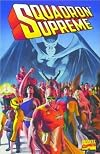
Mark Gruenwald’s Squadron Supreme collects issues nos. 1-12 of the titular series that were published between September 1985 and August 1986 as well as Captain America no. 314 from February 1986. The team originally appeared as the Squadron Sinister in Avengers no. 70 as a pastiche of the Justice League of America, but here Gruenwald tells a story examining the logical result of a superpowered group dedicating itself to bettering the world. Hyperion, a Superman-like character, leads the show more team in creating a Utopia Program to assume control of the United States government and fundamentally reshape society. Nighthawk, a Batman-type character, votes against the plan and leaves the team, later creating his own superpowered group to resist the Squadron.
Over the course of a year, the Squadron Supreme institutes massive changes to American society, beginning with the public reveal of their secret identities in order to gain the public’s trust. They disarm the public and then the military, create behavior-modification technology to re-program the minds of convicted criminals, and, when genius Tom Thumb cannot find a cure for all disease, the Squadron creates a form of cryogenic preservation in order to preserve the dead until such time as a cure may be found. Gruenwald examines the temptation for his all-too-human heroes to exploit these technologies, with Golden Archer (Green Arrow) using the behavior modification device to make Lady Lark (Black Canary) love him. Nuke discovers that his parents’ deadly cancer was caused by his powers and dies fighting Doctor Spectrum (Green Lantern). When Nighthawk brings his group to confront the Squadron, the final conflict results in seven more deaths, representing the consequences of such ideological conflict.
Gruenwald’s miniseries appeared slightly before Alan Moore and Dave Gibbons’ Watchmen, though it remains overshadowed by that later work. Gruenwald engaged with many of the same issues and offered a similarly serious take on the superhero genre, portraying his characters with domestic lives, moral conflicts, sexuality, and capable of dying. His Squadron Supreme deserves the same level of recognition for how it subverted the familiar superhero tropes, in many ways dramatizing the transition of the Bronze Age of comics to the Modern Age. This edition of Squadron Supreme appeared shortly after Mark Gruenwald’s death and features tributes from Tom DeFalco, Mike Carlin, Alex Ross, Mark Waid, Kurt Busiek, Ralph Macchio, and Gruenwald’s widow, Catherine, who explains in her introduction that, per Mark’s last wishes, his ashes were “mixed in with the printer’s ink during the printing process” of this volume. show less
Over the course of a year, the Squadron Supreme institutes massive changes to American society, beginning with the public reveal of their secret identities in order to gain the public’s trust. They disarm the public and then the military, create behavior-modification technology to re-program the minds of convicted criminals, and, when genius Tom Thumb cannot find a cure for all disease, the Squadron creates a form of cryogenic preservation in order to preserve the dead until such time as a cure may be found. Gruenwald examines the temptation for his all-too-human heroes to exploit these technologies, with Golden Archer (Green Arrow) using the behavior modification device to make Lady Lark (Black Canary) love him. Nuke discovers that his parents’ deadly cancer was caused by his powers and dies fighting Doctor Spectrum (Green Lantern). When Nighthawk brings his group to confront the Squadron, the final conflict results in seven more deaths, representing the consequences of such ideological conflict.
Gruenwald’s miniseries appeared slightly before Alan Moore and Dave Gibbons’ Watchmen, though it remains overshadowed by that later work. Gruenwald engaged with many of the same issues and offered a similarly serious take on the superhero genre, portraying his characters with domestic lives, moral conflicts, sexuality, and capable of dying. His Squadron Supreme deserves the same level of recognition for how it subverted the familiar superhero tropes, in many ways dramatizing the transition of the Bronze Age of comics to the Modern Age. This edition of Squadron Supreme appeared shortly after Mark Gruenwald’s death and features tributes from Tom DeFalco, Mike Carlin, Alex Ross, Mark Waid, Kurt Busiek, Ralph Macchio, and Gruenwald’s widow, Catherine, who explains in her introduction that, per Mark’s last wishes, his ashes were “mixed in with the printer’s ink during the printing process” of this volume. show less
Lists
Awards


You May Also Like


Associated Authors
Statistics
- Works
- 331
- Also by
- 43
- Members
- 2,091
- Popularity
- #12,305
- Rating
- 3.6
- Reviews
- 43
- ISBNs
- 114
- Languages
- 4
- Favorited
- 4