
James H. Stronge
Author of Qualities of Effective Teachers
About the Author
James H. Stronge is president and CEO of Stronge and Associates Educational Consulting, LLC, an educational consulting company that focuses on teacher and leader effectiveness with projects internationally and in many U.S. states. Additionally, he holds a distinguished professorship-the Heritage show more Professor of Education-in the Educational Policy, Planning, and Leadership (EPPL) Area at the College of William and Mary, in Williamsburg, Virginia. He teaches doctoral courses within the School of Education's EPPL Program, with a particular focus on human resource leadership, legal issues in education, and research design. show less
Works by James H. Stronge
Tagged
Common Knowledge
There is no Common Knowledge data for this author yet. You can help.
Members
Reviews
Designing Effective Assessments -Accurately Measure Students' Mastery of 21st Century Skills; Learn How Teachers Can Better Incorporate Grading into the Teaching and Learning Process by James H. Stronge
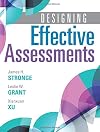
Designing Effective Assessments by James Stronge, Leslie Grant and Xianxuan Xu outlines 10 assessment of learning principles. The book is written for three different groups: 1) teachers who want to improve their assessment practice, 2) teachers who are supporting other teachers, and 3) leaders who are supporting teachers. At the end of each chapter, the authors provide reproducible handouts designed to start or strengthen conversations about these assessment principles. Many of these show more end-of-chapter tools are self-assessment tools.
Each principle is explained with a structure in each chapter that includes: research about the principle, a section on praxis – the ideas that support turning research into practice, call outs to implementation challenges on multiple topics, and practical examples. As assessment is a topic that I read about often, it was nice to be introduced to research that was new to me. One of the unique features of this book is that the authors provide some technical details about different aspects of assessment such as discrimination index and difficulty index. Big ideas about the following concepts are also included in the book:
- Involving students in the entire assessment process
- Examining grading practices and policies
- Changing ideas about test-taking skills
This last topic made me reflect about how we can go ahead and teach to the test – not the content per se, but more about the idea of how to be prepared for any assessment. Who knows? Perhaps even better prepared for a driving test.
Logically organized and written with an academic bent, this book can assist educators to deepen their knowledge of assessment literacy. From technical aspects like stanines to improving communication through standards-based grading and developing rubrics to deepen student feedback, Stronge, Grant and Xu have outlined how to incorporate these principles into classroom practice. show less
Each principle is explained with a structure in each chapter that includes: research about the principle, a section on praxis – the ideas that support turning research into practice, call outs to implementation challenges on multiple topics, and practical examples. As assessment is a topic that I read about often, it was nice to be introduced to research that was new to me. One of the unique features of this book is that the authors provide some technical details about different aspects of assessment such as discrimination index and difficulty index. Big ideas about the following concepts are also included in the book:
- Involving students in the entire assessment process
- Examining grading practices and policies
- Changing ideas about test-taking skills
This last topic made me reflect about how we can go ahead and teach to the test – not the content per se, but more about the idea of how to be prepared for any assessment. Who knows? Perhaps even better prepared for a driving test.
Logically organized and written with an academic bent, this book can assist educators to deepen their knowledge of assessment literacy. From technical aspects like stanines to improving communication through standards-based grading and developing rubrics to deepen student feedback, Stronge, Grant and Xu have outlined how to incorporate these principles into classroom practice. show less
You May Also Like


Statistics
- Works
- 22
- Members
- 275
- Popularity
- #84,338
- Rating
- 4.0
- Reviews
- 1
- ISBNs
- 92