

Andrew Langley
Author of Medieval Life (Eyewitness Books)
About the Author
Andrew Langley was born in 1949 in Britain. He has dedicated his career to penning educational books that meet the needs of young readers. Langley's first books were primarily straightforward works designed to explain day-to-day facts; in his "Behind the Scenes" series, for example, he explores show more what goes on at various familiar locations, such as a hotel and police station. As his career has progressed, Langley has increasingly focused on the subject that most interests him - history. He has produced biographies of a broad range of people from history as well as historic overviews such as The Roman News, Medieval Life, Renaissance, and Ancient Egypt. (Bowker Author Biography) show less
Image credit: via Goodreads
Series
Works by Andrew Langley
Hurricanes, Tsunamis, and Other Natural Disasters (Kingfisher Knowledge) (2006) 347 copies, 2 reviews
The Hundred Days Offensive: The Allies' Push to Win World War I (Snapshots in History) (2008) 12 copies
Tiananmen Square: Massacre Crushes China's Democracy Movement (Snapshots in History) (2009) 10 copies
Chris Hadfield and Living on the International Space Station (InfoSearch: Adventures in Space) (2015) 9 copies, 1 review
Explorers 3 copies
Timeless Spirit 2 copies
A Vida na Idade Média 2 copies
Hej, Lilla Kanin! 1 copy
Roma Antiga 1 copy
Post Office 1 copy
Tagged
Common Knowledge
- Birthdate
- 1949-10-26
- Gender
- male
- Education
- University of London
- Nationality
- UK
- Associated Place (for map)
- UK
Members
Reviews
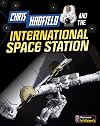
"Adventures in Space" is an excellent four-book series telling the history of human space travel as experienced by four famous astronauts: Yuri Gagarin and the Race to Space; Neil Armstrong and Getting to the Moon; Sally Ride and the Shuttle Missions; and Chris Hadfield and the International Space Station. The books are absolutely packed with information, and yet the stories are told with drama. Sidebars and pull-quotes contain even more facts. Pictures and illustrations are perfectly show more matched to the text. These are not complete biographies of the four astronauts, but rather use the astronauts as characters in human exploration history to engage readers in the story. The device works very well. show less

Penguin always find a way of making their catalogues interesting and readable. I think it is because they are presented like a magazine, crammed with interesting articles on great writers and abstract editorials on War, Psychology or even Fighting Fantasy, to give a few examples.
Full colour, and with hundreds of photos of the actual book covers to drool over. My wife jokingly called it a porn mag for bibliophiles the other day! I can't argue with that. ;)
Full colour, and with hundreds of photos of the actual book covers to drool over. My wife jokingly called it a porn mag for bibliophiles the other day! I can't argue with that. ;)
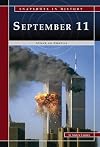
Being a prospective history teacher who was in high school on September 11, 2001, it was with great anticipation that I selected this book to review. I looked forward to finding out how the passing of time had shaped the narrative of the event, and I was eager to see what it was like to read history when I had been around while it happened (which was not an option in high school). Furthermore, I was curious to see how such a sensitive topic could be addressed toward students. While I doubt show more anyone could review a book on the topic with complete dispassion, I will try to find its faults and strengths just the same.
The book starts with a quick description of the events of that day, with attention to numbers. At what time to the minute did something happen? How many seconds did something take to happen? How many people here and there, and at what floor of the building? The focus on numbers is in some ways admirable. It fills the narrative with concrete details, and allows for the creative student to perform calculations to understand the material. However, I wonder if this tends to obscure some of the big ideas, as a secondary student may not be able to make these numbers meaningful in a way an adult can. Students may not have gone down enough flights of stairs, or interacted with enough groups of people in different contexts to relate a period of time or a number of people. As an afterthought, I was surprised at how little this narrative had changed, from the days when I was reading it in the papers. While obviously the facts are more certain in a book published five years later, the only difference I could feel was a map illustrating the routes of the planes. Ironically, the details on the map are probably not different from the maps in the newspapers then, and I think the difference must be the finer resolution of pixels in a published book versus a newspaper. The map looks like a textbook map and thus has become history, the story of the day itself has undergone surprisingly little development. Perhaps this is an effort to try to communicate to a student who did not experience the event how it felt, by recreating the memories as closely as possible?
The next two chapters are a survey of the causes of 9/11, primarily through history. It is an excellent, deep (starting with the development of monotheism, through the crusades, the fall of Ottaman Turkey, etc.), and fairly well-balanced. A few exceptions or problems are: a box containing quotes entitled "How Some Muslims See the United States" (Negatively. It would have been better balanced were there an additional box called 'How Other Muslims See the United States'), little attention paid to the ongoing occupation of Palestine, and finally a map of part of the Eastern Hemisphere called "The Muslim World." Every country in Africa and Asia is dutifully labeled, but no country in Europe is named regardless of whether is shaded and thus majority Muslim. If I made a map called "The Muslim World," I would definitely label Albania or Bosnia-Herzegovina before Namibia or Gabon.
The final three chapters describe the details of how the plot was organized and executed, as well as the U.S. response (militarily and in cleaning up) immediately after and through 2005. This was balanced (may I quote from page 84, "No evidence of WMDs has ever been found, even after careful searching. Though a dangerous dictator had been removed from power, no link between Iraq and the events of September 11 has been discovered.") and fairly broad, though a few unfortunate omissions were made. While Guantanamo Bay was mentioned, very little of the civil rights issues that the event caused were mentioned, much less addressed. The effects of all planes in the U.S. being grounded or the New York Stock exchange being closed are ignored as well, though these were tremendous immediate effects of the attacks. In particular, I would think that the effects of the attacks on the economy would bear some mentioning. Also ignored are nationwide changes, such as changes in airport security, and incidences of violence against American Muslims (or Americans who look Muslim) and the issues relevant to that community.
These being said, the book is a balanced, detailed, and accurate account of the event. While I began to tire of picture after picture of the smoking buildings and the rubble at Ground Zero (though in a called September 11, I guess that is to be expected) there were many effective and powerful pictures as well. The sources and references are very clearly organized, and there is further reading, a glossary, and a timeline. I am sure there are many worse books a student could read on the topic. show less
The book starts with a quick description of the events of that day, with attention to numbers. At what time to the minute did something happen? How many seconds did something take to happen? How many people here and there, and at what floor of the building? The focus on numbers is in some ways admirable. It fills the narrative with concrete details, and allows for the creative student to perform calculations to understand the material. However, I wonder if this tends to obscure some of the big ideas, as a secondary student may not be able to make these numbers meaningful in a way an adult can. Students may not have gone down enough flights of stairs, or interacted with enough groups of people in different contexts to relate a period of time or a number of people. As an afterthought, I was surprised at how little this narrative had changed, from the days when I was reading it in the papers. While obviously the facts are more certain in a book published five years later, the only difference I could feel was a map illustrating the routes of the planes. Ironically, the details on the map are probably not different from the maps in the newspapers then, and I think the difference must be the finer resolution of pixels in a published book versus a newspaper. The map looks like a textbook map and thus has become history, the story of the day itself has undergone surprisingly little development. Perhaps this is an effort to try to communicate to a student who did not experience the event how it felt, by recreating the memories as closely as possible?
The next two chapters are a survey of the causes of 9/11, primarily through history. It is an excellent, deep (starting with the development of monotheism, through the crusades, the fall of Ottaman Turkey, etc.), and fairly well-balanced. A few exceptions or problems are: a box containing quotes entitled "How Some Muslims See the United States" (Negatively. It would have been better balanced were there an additional box called 'How Other Muslims See the United States'), little attention paid to the ongoing occupation of Palestine, and finally a map of part of the Eastern Hemisphere called "The Muslim World." Every country in Africa and Asia is dutifully labeled, but no country in Europe is named regardless of whether is shaded and thus majority Muslim. If I made a map called "The Muslim World," I would definitely label Albania or Bosnia-Herzegovina before Namibia or Gabon.
The final three chapters describe the details of how the plot was organized and executed, as well as the U.S. response (militarily and in cleaning up) immediately after and through 2005. This was balanced (may I quote from page 84, "No evidence of WMDs has ever been found, even after careful searching. Though a dangerous dictator had been removed from power, no link between Iraq and the events of September 11 has been discovered.") and fairly broad, though a few unfortunate omissions were made. While Guantanamo Bay was mentioned, very little of the civil rights issues that the event caused were mentioned, much less addressed. The effects of all planes in the U.S. being grounded or the New York Stock exchange being closed are ignored as well, though these were tremendous immediate effects of the attacks. In particular, I would think that the effects of the attacks on the economy would bear some mentioning. Also ignored are nationwide changes, such as changes in airport security, and incidences of violence against American Muslims (or Americans who look Muslim) and the issues relevant to that community.
These being said, the book is a balanced, detailed, and accurate account of the event. While I began to tire of picture after picture of the smoking buildings and the rubble at Ground Zero (though in a called September 11, I guess that is to be expected) there were many effective and powerful pictures as well. The sources and references are very clearly organized, and there is further reading, a glossary, and a timeline. I am sure there are many worse books a student could read on the topic. show less
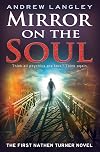
I kinda like stories about “fake” psychics and the “real” supernatural. Jamie Vegas is one of my favorite characters in Kelley Armstrong’s Women of the Otherworld series, and I always wanted a sequel to the movie Ghost about Whoopie Goldberg’s character dealing with her newfound ability to talk to the dead (I loved Mentalist, too, but no supernatural there).
So Mirror on the Soul, by Andrew Langley, seemed right up my alley! Mirror starts out in Las Vegas where Nathan Turner is show more attending a psychic convention. He does a few readings while he’s there, so the reader gets to learn about the tricks Nathan uses to “read” his customers. This is the part about fake psychics I like; I want to know how they can dupe people so well–partly because the psychology is so interesting and partly to better educate myself on how not to be duped. Not that I see psychics a lot, but still. Forewarned is forearmed, right?
After leaving Las Vegas, with its bright lights and blatant commercialism, Nathan returns home to Whitby in England, a beautiful gothic town on the coast – the town where Bram Stoker wrote Dracula, actually. A town in which it would be very easy to believe in the supernatural. Easier than in Vegas, anyway. Any supernatural activity in Vegas is focused solely on parting you from your money, I’m sure.
In Whitby, the “real” supernatural comes calling for Nathan, and from this point on, it’s a classic vengeance ghost story with a slight Japanese twist. Yay for vengeance!
Mirror on the Soul is available tomorrow–Halloween!–on Amazon, Amazon UK, and Barnes & Noble, and it will be available from other retailers soon. It’s a perfect Halloween pick for fans of ghost stories, so don’t miss it!
Copy provided by author/publisher in exchange for an honest review. Review courtesy of onebooktwo.com | one book, two reviews. show less
So Mirror on the Soul, by Andrew Langley, seemed right up my alley! Mirror starts out in Las Vegas where Nathan Turner is show more attending a psychic convention. He does a few readings while he’s there, so the reader gets to learn about the tricks Nathan uses to “read” his customers. This is the part about fake psychics I like; I want to know how they can dupe people so well–partly because the psychology is so interesting and partly to better educate myself on how not to be duped. Not that I see psychics a lot, but still. Forewarned is forearmed, right?
After leaving Las Vegas, with its bright lights and blatant commercialism, Nathan returns home to Whitby in England, a beautiful gothic town on the coast – the town where Bram Stoker wrote Dracula, actually. A town in which it would be very easy to believe in the supernatural. Easier than in Vegas, anyway. Any supernatural activity in Vegas is focused solely on parting you from your money, I’m sure.
In Whitby, the “real” supernatural comes calling for Nathan, and from this point on, it’s a classic vengeance ghost story with a slight Japanese twist. Yay for vengeance!
Mirror on the Soul is available tomorrow–Halloween!–on Amazon, Amazon UK, and Barnes & Noble, and it will be available from other retailers soon. It’s a perfect Halloween pick for fans of ghost stories, so don’t miss it!
Copy provided by author/publisher in exchange for an honest review. Review courtesy of onebooktwo.com | one book, two reviews. show less
Lists
Awards


You May Also Like


Associated Authors
Statistics
- Works
- 246
- Members
- 5,460
- Popularity
- #4,558
- Rating
- 3.9
- Reviews
- 37
- ISBNs
- 699
- Languages
- 18
- Favorited
- 1