
Alev Lytle Croutier
Author of Harem: The World Behind the Veil
About the Author
Born in Turkey, Alev Croutier has written and directed award-winning independent films and was awarded a Guggenheim Fellowship for her work on "Tell Me a Riddle". She is the author of the internationally acclaimed bestseller "Harem: The World Behind the Veil". She divides her time between San show more Francisco and Paris. (Bowker Author Biography) Alev Lytle Croutier is the author of the internationally acclaimed bestseller "Harem: The World Behind the Veil" (translated into fifteen languages) & "Taking the Waters." Born in Turkey, she has written & directed award-winning independent films in Japan, Turkey, Europe, & the United States. For many years she was the executive editor of Mercury House. She now divides her time between San Francisco & Paris. (Bowker Author Biography) show less
Image credit: Red Room
Works by Alev Lytle Croutier
Associated Works
I Should Have Stayed Home: The Worst Trips of the Great Writers (1994) — Contributor — 187 copies, 5 reviews
Tagged
Common Knowledge
- Birthdate
- 1944
- Gender
- female
- Education
- Robert College, Istanbul
Oberlin College - Occupations
- publisher
writer
film director - Organizations
- Mercury House
- Awards and honors
- Guggenheim Fellowship
- Nationality
- Turkey (birth)
- Birthplace
- Izmir, Turkey
- Places of residence
- Turkey (birth)
San Francisco, California, USA
Paris, France - Associated Place (for map)
- Turkey
Members
Reviews

Harem: The World Behind the Veil by Alev Lytle Croutier is a gratifying find among the many historical books written about the harem life of the Ottoman Empire. A harem was not a hidden, decadent enclave of the Sultan’s stunning concubines. It was simply where the women lived in the palace. All of the women lived there, including the Sultan’s own mother, known as the “Valide Sultan.” She was the most powerful figure in the empire after the Sultan himself. Croutier doesn’t show more exclusively cover the Turkish harem, or Seraglio as it is known, and addresses the topic of the harem in general. However, since Croutier is Turkish and has a personal linkage to this past, naturally the majority of her book covers the Ottoman harem.
Reading this book is like watching a documentary. Decorated with lush photography and paintings, it animates the women who lived in this time and place. Croutier covers all elements of the harem life: the baths that were a quotidian ritual, the poetry of the women’s voices, an emotional life as multifaceted as the gems adorning them, the princesses, high-ranking concubines, and the eunuchs who surrounded them. There is also mention of the ordinary harem of domestic households. This rich history is laid out like a damask tapestry. The author’s first person narrative makes the prose all the more alluring.
The harem life was not easy. It was an imprisoned life, a segregated complex of buildings populated mostly by foreign slaves. A Muslim Turk could not be a consort to the Sultan as slavery was forbidden in Islam. Women were kidnapped or sold into the slave market just as cattle were. In some ways, the Turks are still ashamed of such a history, and it was abolished in the early twentieth century. Even Mustafa Kemal Ataturk, the revolutionary leader and creator of the modern Turkish republic, had said: “Is it possible that, while one half of a community stays chained to the ground, the other half can rise to the skies?” Women could rarely leave the walls of the harem, but as oppressive as it could be, it was still a place of rich culture where a network of women turned to each other for comfort and enjoyed as much of its splendor as they could.
Researched extensively, Harem offers a rare glimpse into the fascinating yet misunderstood heritage of women in the Ottoman Empire. show less
Reading this book is like watching a documentary. Decorated with lush photography and paintings, it animates the women who lived in this time and place. Croutier covers all elements of the harem life: the baths that were a quotidian ritual, the poetry of the women’s voices, an emotional life as multifaceted as the gems adorning them, the princesses, high-ranking concubines, and the eunuchs who surrounded them. There is also mention of the ordinary harem of domestic households. This rich history is laid out like a damask tapestry. The author’s first person narrative makes the prose all the more alluring.
The harem life was not easy. It was an imprisoned life, a segregated complex of buildings populated mostly by foreign slaves. A Muslim Turk could not be a consort to the Sultan as slavery was forbidden in Islam. Women were kidnapped or sold into the slave market just as cattle were. In some ways, the Turks are still ashamed of such a history, and it was abolished in the early twentieth century. Even Mustafa Kemal Ataturk, the revolutionary leader and creator of the modern Turkish republic, had said: “Is it possible that, while one half of a community stays chained to the ground, the other half can rise to the skies?” Women could rarely leave the walls of the harem, but as oppressive as it could be, it was still a place of rich culture where a network of women turned to each other for comfort and enjoyed as much of its splendor as they could.
Researched extensively, Harem offers a rare glimpse into the fascinating yet misunderstood heritage of women in the Ottoman Empire. show less
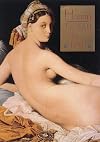
Here, author Alev Lytle Croutier draws upon first hand accounts and her own family history to take us into the closed world of the harem.
It wasn't just Ottoman Sultans who had harems ... many middle class men also had them. This is not a Western European view of the harem, and the author dispels many of the myths built up around the secluded world. It is highly informative and highly recommended reading.
It wasn't just Ottoman Sultans who had harems ... many middle class men also had them. This is not a Western European view of the harem, and the author dispels many of the myths built up around the secluded world. It is highly informative and highly recommended reading.
A visually gorgeous and lush book full of wonderful images of harems both realistic and fantastical.
The authors unique access to the culture and history through her family provides a realistic and enthralling look at what life was really like in a harem as well as looking at the fantasy version as imagined by Westerners.
Her writing style is highly informative without being dry and academic and makes you feel as if you are a part of the world she is describing.
The authors unique access to the culture and history through her family provides a realistic and enthralling look at what life was really like in a harem as well as looking at the fantasy version as imagined by Westerners.
Her writing style is highly informative without being dry and academic and makes you feel as if you are a part of the world she is describing.
Opening Sentence: "... I was born in a konck (old house), which once was the harem of a pasha..."
For almost 400 years, until 1909, the Grand Harem in Istanbul's Topkapi Palace was home to thousands of women who often had been bought at slave markets for a price lower than a good horse. In fact the horse probably had a better life than the harem dwellers.
Author Alev Lytle Croutier relates the day-to-day experiences of the women who inhabited these chambers: what they ate, the clothes they show more wore, the games they played together, the passions, the treachery, and the opium-induced reveries in which they passed long hours. One of her grandmothers had been brought up in a harem and Croutier's interest stemmed from this; she then went on to research the world of the harem in more detail.
The book is lavishly illustrated with reproductions of photographs and artworks depicting the life that Croutier describes. The history is very superficial - really just an overview of what life may have been like generally for women who lived this way of life - but still informative. It left me wanting to know more. I had it as a bedside book and and was able to 'dip' in and out of it over quite a few months.
She does go into details about the different types of eunuchs and their operations - I defy any male to read this chapter and not squirm :) I did wonder though, despite her close links with Turkey, if she didn't give a western look at harem life. The artwork she chose - although wonderful, were mostly by western artists who probably had never even set foot in a harem let alone faithfully reproduce one accurately. show less
For almost 400 years, until 1909, the Grand Harem in Istanbul's Topkapi Palace was home to thousands of women who often had been bought at slave markets for a price lower than a good horse. In fact the horse probably had a better life than the harem dwellers.
Author Alev Lytle Croutier relates the day-to-day experiences of the women who inhabited these chambers: what they ate, the clothes they show more wore, the games they played together, the passions, the treachery, and the opium-induced reveries in which they passed long hours. One of her grandmothers had been brought up in a harem and Croutier's interest stemmed from this; she then went on to research the world of the harem in more detail.
The book is lavishly illustrated with reproductions of photographs and artworks depicting the life that Croutier describes. The history is very superficial - really just an overview of what life may have been like generally for women who lived this way of life - but still informative. It left me wanting to know more. I had it as a bedside book and and was able to 'dip' in and out of it over quite a few months.
She does go into details about the different types of eunuchs and their operations - I defy any male to read this chapter and not squirm :) I did wonder though, despite her close links with Turkey, if she didn't give a western look at harem life. The artwork she chose - although wonderful, were mostly by western artists who probably had never even set foot in a harem let alone faithfully reproduce one accurately. show less
Lists
You May Also Like


Associated Authors
Statistics
- Works
- 10
- Also by
- 1
- Members
- 1,070
- Popularity
- #24,040
- Rating
- 3.8
- Reviews
- 21
- ISBNs
- 47
- Languages
- 13