
Andrew M. Greeley (1928–2013)
Author of Emerald Magic: Great Tales of Irish Fantasy
About the Author
Roman Catholic priest Andrew M. Greeley was the author of more than 100 non-fiction works of theology, sociology, prayer, and poetry; a professor of sociology; a newspaper columnist; and a successful novelist, writing in several genres, including mystery and science fiction. He was born on February show more 5, 1928 and was a native of Chicago. Greeley studied at Archbishop Quigley Preparatory Seminary and earned an AB from St. Mary of the Lake Seminary in 1950, a Bachelor of Sacred Theology in 1952, and a Licentiate of Sacred Theology in 1954. He went on to receive a Master of Arts in 1961 and a Ph D in 1962. Greeley's fiction, which often told stories of crime and scandal in the Roman Catholic church, can be violent and lurid and are considered controversial by many Church leaders. Greeley wrote on such issues as homosexuality in the clergy, pedophilia, and papal politics, and he created the popular mystery series starring Father Blackie Ryan, as well as another featuring the character Nuala McGrail. Greeley was awarded honorary degrees from the University of Arizona, Bard College (New York State) and the National University of Ireland, Galway. In 1981, he received the F. Sadlier Dinger Award, which is presented each year by educational publisher William H. Sadlier, Inc. in recognition of his outstanding contribution to the ministry of religious education in America. Greeley died on May 29, 2013 at his Chicago home. He was 85. (Bowker Author Biography) show less
Image credit: from wikipedia
Series
Works by Andrew M. Greeley
The Catholic Revolution: New Wine, Old Wineskins, and the Second Vatican Council (2004) 71 copies, 1 review
The Irish: Photographs by Andrew M. Greeley-- Along With Poems, Proverbs, and Blessings (1990) 16 copies
The Denominational Society: A Sociological Approach to Religion in America (1975) — Author — 15 copies, 1 review
Call to the Father 3 copies
A fresh look at vocations 3 copies
The sociology of the paranormal: A reconnaissance (Studies in religion and ethnicity) (1975) 2 copies
Os pecados Cardeais 2 copies
Angels of September 1 copy
Bishop Blackie Ryan 1 copy
Future to Hope In 1 copy
Friendship Game 1 copy
Michigan Avenue Saint 1 copy
The Bishop and the Hit Man 1 copy
DONT READ 1 copy
Common Ground 1 copy
Peace in Heaven? 1 copy
The Sociology of Andrew M. Greeley (South Florida-Rochester-St. Louis Studies in Religion and the Social Order) (1994) 1 copy
El señor de la danza 1 copy
Superando Problemas... 1 copy
Associated Works
Writers on Writing, 2: More Collected Essays from the New York Times (2003) — Contributor — 201 copies, 3 reviews
The Life of Meaning: Reflections on Faith, Doubt, and Repairing the World (2007) — Contributor — 132 copies, 5 reviews
Lead us not into temptation : Catholic priests and the sexual abuse of children (1992) — Foreword, some editions — 69 copies, 1 review
Dissent, Winter 1972: Special Issue: The World of the Blue Collar Worker — Contributor — 1 copy
Tagged
Common Knowledge
- Canonical name
- Greeley, Andrew M.
- Legal name
- Greeley, Andrew Moran
- Birthdate
- 1928-02-05
- Date of death
- 2013-05-29
- Gender
- male
- Education
- St. Mary of the Lake Seminary (AB|1950 ∙ STB|1952 ∙ STL|1954)
University of Chicago (MS|1961 - Sociology ∙ Ph.D|1962 - Sociology) - Occupations
- priest
sociologist
university professor - Organizations
- Roman Catholic Church (ordained 1954)
University of Chicago
University of Illinois at Chicago
University of Arizona - Awards and honors
- F. Sadlier Dinger Award (1981)
- Nationality
- USA
- Birthplace
- Oak Park, Illinois, USA
- Place of death
- Chicago, Illinois, USA
- Map Location
- Illinois, USA
Members
Reviews
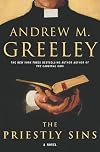
THE PRIESTLY SINS, by Andrew Greeley.
I bought this 2004 book at a library sale for half a buck. Worth every penny, and maybe a little more. I'd never read anything by Andrew Greeley, although I knew about him. A Catholic priest who was often at the center of controversy, Greeley wrote dozens of books, including several novels like this one, as well as a series of mysteries starring Bishop Blackie Ryan (a la the Father Dowling mysteries, I suspect), and many others. I was sad to find that show more Greeley died in 2013, because I would have liked to have contacted him and talked about writers and books. Would have asked him if he was a fan of Ralph McInerny's Dowling books, or if he'd read the same author's now nearly forgotten potboiler, THE PRIEST - a book I read and enjoyed back in the 70s. Or, certainly, J.F. Powers's work, especially his darkly comic classic, MORTE D'URBAN.
In any case, THE PRIESTLY SINS was a most entertaining and near-gripping sort of story, with a most likeable and very human protagonist in Father Herman Hugh Hoffmann, whose life story we pretty much get here. Hugh grew up in a loving Volga Deutsche, or Russian German, family in the Prairie State - obviously Illinois, Greeley's own stomping ground. We learn of his youthful affair with a red-haired Irish Girl, Kathleen, and then of his strong vocation and commitment to the priesthood. The crux of the story is how Hugh becomes a whistle-blower on a fellow priest who is a serial and sadistic pedophile; how the Archdiocese turns on Hugh, ostracizes him and tries - natch - to brush it all under the rug. It's a great story, Greeley is a fine writer and a masterful storyteller.
The story was marred only by a kitschy twist of Hugh 'seeing' a long-dead great grandmother here and there at various times, an attempt to lend the tale a supernatural or ghost-story effect, I suppose. I just found it annoying and dumb, and tried to overlook it. Otherwise a very good book, one that brought to mind Canadian author Linden MacIntyre's Nova Scotia trilogy with its middle book, THE BISHOP'S MAN (which I think is a better book than Greeley's). But if you want an entertaining and thought-provoking book about the Catholic Church's sex abuse scandals, here's a good one. Highly recommended. show less
I bought this 2004 book at a library sale for half a buck. Worth every penny, and maybe a little more. I'd never read anything by Andrew Greeley, although I knew about him. A Catholic priest who was often at the center of controversy, Greeley wrote dozens of books, including several novels like this one, as well as a series of mysteries starring Bishop Blackie Ryan (a la the Father Dowling mysteries, I suspect), and many others. I was sad to find that show more Greeley died in 2013, because I would have liked to have contacted him and talked about writers and books. Would have asked him if he was a fan of Ralph McInerny's Dowling books, or if he'd read the same author's now nearly forgotten potboiler, THE PRIEST - a book I read and enjoyed back in the 70s. Or, certainly, J.F. Powers's work, especially his darkly comic classic, MORTE D'URBAN.
In any case, THE PRIESTLY SINS was a most entertaining and near-gripping sort of story, with a most likeable and very human protagonist in Father Herman Hugh Hoffmann, whose life story we pretty much get here. Hugh grew up in a loving Volga Deutsche, or Russian German, family in the Prairie State - obviously Illinois, Greeley's own stomping ground. We learn of his youthful affair with a red-haired Irish Girl, Kathleen, and then of his strong vocation and commitment to the priesthood. The crux of the story is how Hugh becomes a whistle-blower on a fellow priest who is a serial and sadistic pedophile; how the Archdiocese turns on Hugh, ostracizes him and tries - natch - to brush it all under the rug. It's a great story, Greeley is a fine writer and a masterful storyteller.
The story was marred only by a kitschy twist of Hugh 'seeing' a long-dead great grandmother here and there at various times, an attempt to lend the tale a supernatural or ghost-story effect, I suppose. I just found it annoying and dumb, and tried to overlook it. Otherwise a very good book, one that brought to mind Canadian author Linden MacIntyre's Nova Scotia trilogy with its middle book, THE BISHOP'S MAN (which I think is a better book than Greeley's). But if you want an entertaining and thought-provoking book about the Catholic Church's sex abuse scandals, here's a good one. Highly recommended. show less
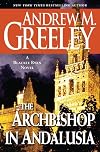
Another good Blackie Ryan mystery. Ryan is in Spain to prevent a murder as a dispute among a family of nobles heats up. The target is La Dona Teresa, but can he identify the potential murderer and stop it before it happens? Greeley does a great job with the setting and exploration of Seville, Spain adding quite a bit of historical background and capturing the beauty of a once great and glamorous culture that had known its share of turmoil and war. It is a good read, but it drags in places show more and is a bit predictable. Greeley adds enough color and interesting characters to hold the reader's attention despite the slower pace in places. I found the historical references and the descriptions of the locale to be engaging and the characters, as usual, were well done. show less
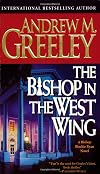
Great farce of a mystery novel!! Really, it got so I was disappointed when Greeley did not use outlandish adjectives such as "purgatorial," "cardinalatial," and "orotund."
At first I thought Greeley was using as a template JFK, Bill Clinton, or even Barack Obama, but clearly he wasn't using any of them, so I must apologize for thinking so....
He clearly knew Chicago and Chicago politics. May even have attended Notre Dame University (I say this because of his "name dropping"), but I doubt he show more ever has actually been to DC or did any research or ever even read a book about it. Several times he mentioned being "in the Beltway." It sounds pretty painful to me. Although for those who deal with Beltway traffic, they may sometimes feel they are indeed "in" it. The phrase, dear author, is INSIDE THE BELTWAY.
For the record, American University, while an admirable liberal arts school (and my alma mater), does not have, and has never had, a HOSPITAL associated with it.
And, as anyone who has ever watched the news in the years between when Ronald Reagan was shot and Dick Cheney had his last heart attack, it is GEORGE WASHINGTON UNIVERSITY HOSPITAL that is used for emergencies (and in case Greeley plans another foray into DC politics, they go to BETHESDA NAVAL for routine and scheduled exams)--not Georgetown, Catholic though that may be. Actually Jesuit, hmmm. Okay, I won't quibble.
Finally, I wonder in which universe it is that young women (in high school or in college, or even White House staffers) speak so "extreme uncool." LY. Adverbs often have endings of their own, even in today's lingua franca.
Well, I learned much about liturgical vestments and other props; about ancient civilizations and medieval times, so I suppose I owe Greeley a word of thanks.
But I cannot do it without feeling adjectivally inadequate. Sigh. show less
At first I thought Greeley was using as a template JFK, Bill Clinton, or even Barack Obama, but clearly he wasn't using any of them, so I must apologize for thinking so....
He clearly knew Chicago and Chicago politics. May even have attended Notre Dame University (I say this because of his "name dropping"), but I doubt he show more ever has actually been to DC or did any research or ever even read a book about it. Several times he mentioned being "in the Beltway." It sounds pretty painful to me. Although for those who deal with Beltway traffic, they may sometimes feel they are indeed "in" it. The phrase, dear author, is INSIDE THE BELTWAY.
For the record, American University, while an admirable liberal arts school (and my alma mater), does not have, and has never had, a HOSPITAL associated with it.
And, as anyone who has ever watched the news in the years between when Ronald Reagan was shot and Dick Cheney had his last heart attack, it is GEORGE WASHINGTON UNIVERSITY HOSPITAL that is used for emergencies (and in case Greeley plans another foray into DC politics, they go to BETHESDA NAVAL for routine and scheduled exams)--not Georgetown, Catholic though that may be. Actually Jesuit, hmmm. Okay, I won't quibble.
Finally, I wonder in which universe it is that young women (in high school or in college, or even White House staffers) speak so "extreme uncool." LY. Adverbs often have endings of their own, even in today's lingua franca.
Well, I learned much about liturgical vestments and other props; about ancient civilizations and medieval times, so I suppose I owe Greeley a word of thanks.
But I cannot do it without feeling adjectivally inadequate. Sigh. show less
"... the God of Jesus is a God so deeply in love with his creatures that if humans should behave the same way, they would be deemed crazy.
Any theology that questions this insight has no claim to be Christian."
I picked this book up while browsing through our library's religion/philosophy shelves. Andrew Greeley is a Catholic priest. He's also a journalist, sociologist, and New York Times Bestselling Author. His name was familiar to me, but this is the first book of his I have read. It came as show more a nice revelation that I, a non-Catholic, and a Catholic priest, had so much in common with our views of Jesus and Christianity than differences. What was even more surprising was what I learned from this little book.
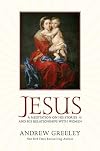
Greeley's book is about exactly what the title says it is. Greeley's point about Jesus' relationship with women is that we fail to grasp how absolutely revolutionary it was that Jesus treated women with such respect and honor. Not only did he respect and honor them, but elevated them. Who was the first to have contact with the resurrected Jesus? A woman.
"The radical equality of everyone in the kingdom of God was an idea that was beyond their comprehension. It was absurd to think that Jesus would appear first of all to a woman and an unstable one at that - absurd and scandalous. We find it acceptable today only because the scene in the garden outside the tomb has become commonplace We have heard it told so often on Easter morning that we take it for granted. Same story as last year. We don't notice that it is the kind of story that a radical feminist might have composed."
The "stories" Greeley is referring to are mostly Jesus' parables. I always appreciate it when someone can point out something in the Bible from a different angle. His perspective on these old familiar "stories" (at least familiar to those of us who have ever spent any amount of time in a church pew, Catholic or otherwise) is quite interesting. Some of these stories have become so familiar that they have lost their intended point and impact and are simply used for mere "homilies." The best example is the story of the Prodigal Son. You all know the story, junior gets his inheritance and goes off and squanders it on women and drinking and then when the money and fun runs out, repents and goes back home. It's fairly common for those in the pulpit to say, "see, junior had a change of heart, felt sorry, and went home." The truth of the matter is junior wasn't sorry at all; he was hungry! And he had a speech all ready to impress his "push-over" daddy with. A careful reading of the story shows that junior's manipulative speech never even made it out of his mouth; his daddy ran out to meet him while he was still on the road. A joyful father now reunited with his lost son, kills the fatted calf and has a large feast. This annoys the oldest son who, according to himself, has done everything right and nobody ever threw a party for him. (whine, whine). The emphasis on this story is often put on the returning son, this poor Jewish kid having to take care of the pigs, but "As John Shea remarks, if anyone in this story is a prodigal, it's the father. ... a generous and loving man with two sons who are losers, the one a wastrel, the other a rigid accountant of grievances. He spoils the two boys rotten and continues his excessive love even though they are miserably ungrateful in return...." The one thing I learned here is that there is a definitive pattern to Jesus' parables: "... the God person (the father), the helpless person - in this case a passive-aggressive and scheming wretch (the first son), and the third man (the second son)." By looking at the Parables from a different angle, they take on a new and more powerful meaning. These stories become elevated from nice little Sunday school lessons on how to behave and treat other people into insights into the personality of the God that Jesus was trying to show us.
While the book itself is exactly what it says it is, Greeley does find ways to talk about the Church as a whole, the Catholic Church, forgiveness, politics, and even the death penalty. Some of the stances he takes (especially when criticizing his own organization) are pretty brave. Even though I don't agree with him 100 percent on everything, I certainly admire his chutzpah and I surely learned quite a bit in this little book. show less
Any theology that questions this insight has no claim to be Christian."
I picked this book up while browsing through our library's religion/philosophy shelves. Andrew Greeley is a Catholic priest. He's also a journalist, sociologist, and New York Times Bestselling Author. His name was familiar to me, but this is the first book of his I have read. It came as show more a nice revelation that I, a non-Catholic, and a Catholic priest, had so much in common with our views of Jesus and Christianity than differences. What was even more surprising was what I learned from this little book.
Greeley's book is about exactly what the title says it is. Greeley's point about Jesus' relationship with women is that we fail to grasp how absolutely revolutionary it was that Jesus treated women with such respect and honor. Not only did he respect and honor them, but elevated them. Who was the first to have contact with the resurrected Jesus? A woman.
"The radical equality of everyone in the kingdom of God was an idea that was beyond their comprehension. It was absurd to think that Jesus would appear first of all to a woman and an unstable one at that - absurd and scandalous. We find it acceptable today only because the scene in the garden outside the tomb has become commonplace We have heard it told so often on Easter morning that we take it for granted. Same story as last year. We don't notice that it is the kind of story that a radical feminist might have composed."
The "stories" Greeley is referring to are mostly Jesus' parables. I always appreciate it when someone can point out something in the Bible from a different angle. His perspective on these old familiar "stories" (at least familiar to those of us who have ever spent any amount of time in a church pew, Catholic or otherwise) is quite interesting. Some of these stories have become so familiar that they have lost their intended point and impact and are simply used for mere "homilies." The best example is the story of the Prodigal Son. You all know the story, junior gets his inheritance and goes off and squanders it on women and drinking and then when the money and fun runs out, repents and goes back home. It's fairly common for those in the pulpit to say, "see, junior had a change of heart, felt sorry, and went home." The truth of the matter is junior wasn't sorry at all; he was hungry! And he had a speech all ready to impress his "push-over" daddy with. A careful reading of the story shows that junior's manipulative speech never even made it out of his mouth; his daddy ran out to meet him while he was still on the road. A joyful father now reunited with his lost son, kills the fatted calf and has a large feast. This annoys the oldest son who, according to himself, has done everything right and nobody ever threw a party for him. (whine, whine). The emphasis on this story is often put on the returning son, this poor Jewish kid having to take care of the pigs, but "As John Shea remarks, if anyone in this story is a prodigal, it's the father. ... a generous and loving man with two sons who are losers, the one a wastrel, the other a rigid accountant of grievances. He spoils the two boys rotten and continues his excessive love even though they are miserably ungrateful in return...." The one thing I learned here is that there is a definitive pattern to Jesus' parables: "... the God person (the father), the helpless person - in this case a passive-aggressive and scheming wretch (the first son), and the third man (the second son)." By looking at the Parables from a different angle, they take on a new and more powerful meaning. These stories become elevated from nice little Sunday school lessons on how to behave and treat other people into insights into the personality of the God that Jesus was trying to show us.
While the book itself is exactly what it says it is, Greeley does find ways to talk about the Church as a whole, the Catholic Church, forgiveness, politics, and even the death penalty. Some of the stances he takes (especially when criticizing his own organization) are pretty brave. Even though I don't agree with him 100 percent on everything, I certainly admire his chutzpah and I surely learned quite a bit in this little book. show less
Lists
Awards

You May Also Like


Associated Authors
Statistics
- Works
- 206
- Also by
- 13
- Members
- 15,242
- Popularity
- #1,497
- Rating
- 3.7
- Reviews
- 142
- ISBNs
- 725
- Languages
- 13
- Favorited
- 23